
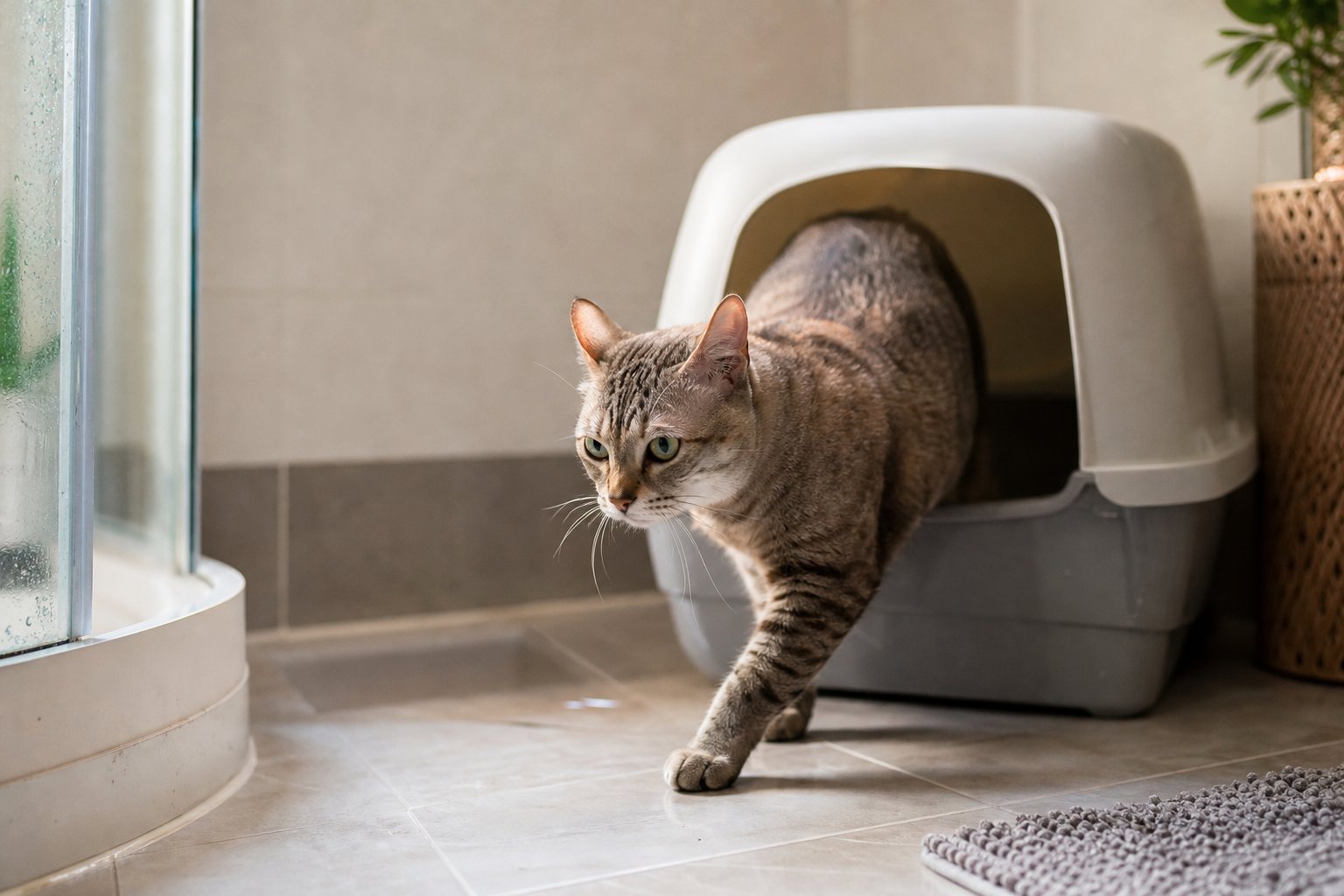
Quick answer: Tofu litter is the safest all-round choice for most Malaysian cat homes — low dust, decent odour control and flushable in small amounts. Keep kittens away from bentonite mineral litter, which can swell in the gut if swallowed. Crystal silica suits sensitive or senior cats but never clumps. Choose by budget, your cat's age and how well your home ventilates, then stick to a daily scooping routine.
The five litter types compared
Most litter sold locally falls into five families. Understanding what each one is actually made from tells you most of what you need to know about how it behaves.
| Litter type | Made from | Strengths | Weaknesses | Flushable |
|---|---|---|---|---|
| Tofu | Soybean pulp | Low dust, good odour control, safe if swallowed, biodegradable | Costs more, clumps soften in humid weather, light grains track out of the box | Yes, small amounts |
| Mineral (bentonite) | Clay | Strong clumping, cheap, high absorbency | Dusty, not flushable, unsafe if kittens swallow it, not eco-friendly | No |
| Cassava | Tapioca starch | Very low dust, excellent odour control, flushable | Usually the priciest option | Yes, small amounts |
| Crystal | Silica gel | Highest absorption, almost dust-free, long interval between changes | Does not clump, so solids must be picked out by hand, not flushable, some cats dislike the texture | No |
| Paper | Recycled paper | Most eco-friendly, very low dust, safest if swallowed | Weak clumping, average odour control, needs frequent changing | Check label |
A few practical notes sit behind that table. Tofu and cassava are plant-based, so they break down in water and in soil — useful if you prefer not to bin large volumes of litter. Mineral litter's clumping strength is genuinely hard to beat, which is why it stays popular in multi-cat homes where urine volume is high. Crystal litter trades clumping for absorption: liquid disappears into the beads, so you scoop solids daily and replace the whole bed roughly monthly. Paper litter is the gentle option often recommended during recovery, when dust and hard grains are the last thing you want near a wound.
Tofu, mineral or crystal: what actually differs
If you are narrowing it down to two or three bags, this is the comparison that matters.
| Factor | Tofu / plant litter | Mineral bentonite | Crystal silica |
|---|---|---|---|
| Clumping | Good to very good | Excellent | None — no clumps form |
| Odour control | Good | Good when scooped daily | Good for urine, weaker for solids |
| Dust level | Low | High | Almost none |
| Flushable | Yes, little by little | Never | Never |
| Safe if swallowed | Generally yes | Risky, especially for kittens | Not intended for eating |
| Cost per bag | Higher | Lower | Mid to higher |
| Best for | Small homes, kittens, sensitive cats | Budget, multi-cat, heavy use | Cats with respiratory sensitivity, seniors |
The honest trade-off is this: the cheaper the litter, the more work and the more dust you usually take on; the more comfortable the litter is for your cat and your household air, the more you tend to pay. Local shelf prices vary between retailers and change with promotions, so compare the price per litre rather than per bag — larger bags are not always better value once you check the volume printed on the packaging.
Three steps: budget, cat age, home setup
Step one — set a monthly budget. Work out how many bags your household actually uses in a month before you fall for a headline price. If you are cost-conscious, mineral litter is normally the cheapest per litre. If you want plant-based litter, expect to pay more per bag but use less, because good clumping means you remove only the soiled portion. Ask your pet shop or vet which brands are currently in stock and at what price — prices move too fast to quote reliably.
Step two — match the litter to your cat's age. Kittens under six months do best on tofu or paper litter: low dust, and far lower risk if they swallow a few grains out of curiosity. Adult cats can use almost anything, provided the texture suits them — cats are fussy about grain size and feel, and a texture they dislike can lead to refusing the box entirely. Senior cats, generally around seven years and older, should be on a low-dust litter to protect ageing lungs, in a box with a low entry step for stiff joints.
Step three — read your home. A one-bedroom unit with limited floor space and a single window suits a strongly performing tofu litter placed near cross-ventilation. A landed terrace with a utility yard gives you more room for a larger box and better airflow. A multi-cat household burns through litter fast, so clumping strength and cost per litre matter more than eco credentials. Households that prioritise sustainability should look at paper, tofu or cassava, all of which are renewable or recycled.
The routine that matters more than the brand
No litter performs well without a routine behind it. These are the habits that control odour, in order of impact:
- Scoop daily. Remove urine clumps and faeces every single day. This does more for smell than buying any premium litter.
- Keep a depth of 5–7 cm. Too thin and urine sticks to the base of the box; too deep and you waste litter while cats dig it onto the floor.
- Full change and wash. Tofu and plant litter: every two to three weeks. Mineral litter: every three to four weeks. Crystal: roughly monthly. Wash the box with mild detergent and dry it fully before refilling.
- Store litter off the floor and sealed. In humid weather, an opened bag of plant litter left in a bathroom will soften and can go mouldy. Keep it in a sealed container, off the ground, and check the grains before topping up.
- Watch humidity closely. During long rainy spells, clumps in plant litter take longer to dry out and the box can smell damp. Move the box to the airiest spot you have and shorten the change interval by a few days until the weather improves.
- Lay a litter mat. A mat outside the box catches the grains cats kick out, which cuts down sweeping enormously.
- Never mask odour with spray. Air fresheners and scented sprays around the box irritate the respiratory system and are a common reason cats stop using the box. An air purifier near the area can help, but it is support, not a substitute for scooping.
- Line the base for easier cleaning. For an open box, a thin layer of baking paper or a dedicated liner under the litter stops clumps sticking and makes full changes faster.
If you mix litters — for example, a base of tofu with a lighter top layer of mineral to boost clumping — remember the mix is no longer flushable, because one bentonite grain is enough to cause pipe problems.
Situational quick-reference
| Your situation | Suggested litter | Why |
|---|---|---|
| Small unit, box tucked in a bathroom | Tofu | Flushable in small amounts, strong odour control |
| Multi-cat home, high usage | Mineral or a controlled mix | Strong clumping, lower cost per use |
| Household with a young kitten | Tofu or paper | Low dust, low risk if swallowed |
| Senior cat or cat with a sensitive chest | Crystal or low-dust tofu | Minimal dust, easier on the airways |
| Sustainability is the priority | Paper, tofu or cassava | Renewable or recycled materials, biodegradable |
| You travel for two or three days | Crystal, single cat only | High absorption, longer change interval — solids still need daily removal |
| Post-surgery or skin wounds | As advised by your vet | Often a dust-free paper option or a temporary substitute |
Switching litter the gradual way
Cats are creatures of habit, and an abrupt swap is one of the fastest routes to litter box refusal. Blend the new litter in over seven to ten days:
- Days 1–3: Put fresh litter on top of the existing layer, keeping the familiar scent and texture underneath.
- Days 4–6: Move to roughly half old, half new, and watch for hesitation at the box entrance.
- Days 7–9: New litter makes up about 70% of the box, with the old litter phasing out.
- Throughout: Keep a second box holding only the old litter. If your cat refuses the new mix completely, step back a stage and progress more slowly.
Expect to see occasional digging without squatting, or a cat stepping in and out — that is evaluation, not misbehaviour. Give the transition the full ten days before judging the result.
Kittens, adult cats and senior cats
Kittens (under six months): Use tofu or paper litter. Kittens learn box use largely by imitation, so set a shallow, low-sided box up on the day they arrive. Keep bentonite mineral litter out of the house entirely while a kitten is young — swallowed grains can absorb fluid and form a blockage in the intestine, which is an emergency rather than something to wait and see about.
Adult cats: The widest choice. Judge on odour control, flushability and price, but never underestimate texture. A cat that has used fine-grained litter for years may reject coarse pellets, and vice versa.
Senior cats (seven years and above): Low dust becomes a hard requirement, for the lungs and because stiff joints make digging harder. Choose a box with a low entry lip. Seniors are also more prone to kidney and urinary problems, so make a habit of glancing at the urine clumps as you scoop — a sudden drop in clump size or number is often the earliest sign something has changed.
Cats recovering from surgery or with skin wounds: Follow your vet's instructions, which may mean a dust-free paper litter or a temporary alternative instead of the usual litter. Do not carry on with the everyday product out of habit.
When to see a vet
The litter box is a health monitor, and some signals are not about litter quality at all. Contact a vet promptly if you notice:
- Pink-tinged urine or visible blood in urine clumps.
- Repeated trips to the box with little or no urine produced, crying while straining, or a completely empty box for over 24 hours — a blocked cat is an emergency that can become fatal quickly.
- Faeces that stay bloody or mucus-covered over several days.
- A cat that stops using the box, or avoids it after previously being reliable.
- Odour that does not clear even after a full change and wash of the box and litter.
- Any swelling, straining or vomiting alongside litter box changes.
Also record the date, urine clump size and stool condition when something looks off; a written log is far more useful to a vet than a memory of "it seemed off last week".
This article is for general information only and is not a substitute for veterinary advice. For any health concern about your cat, consult a registered veterinarian.