
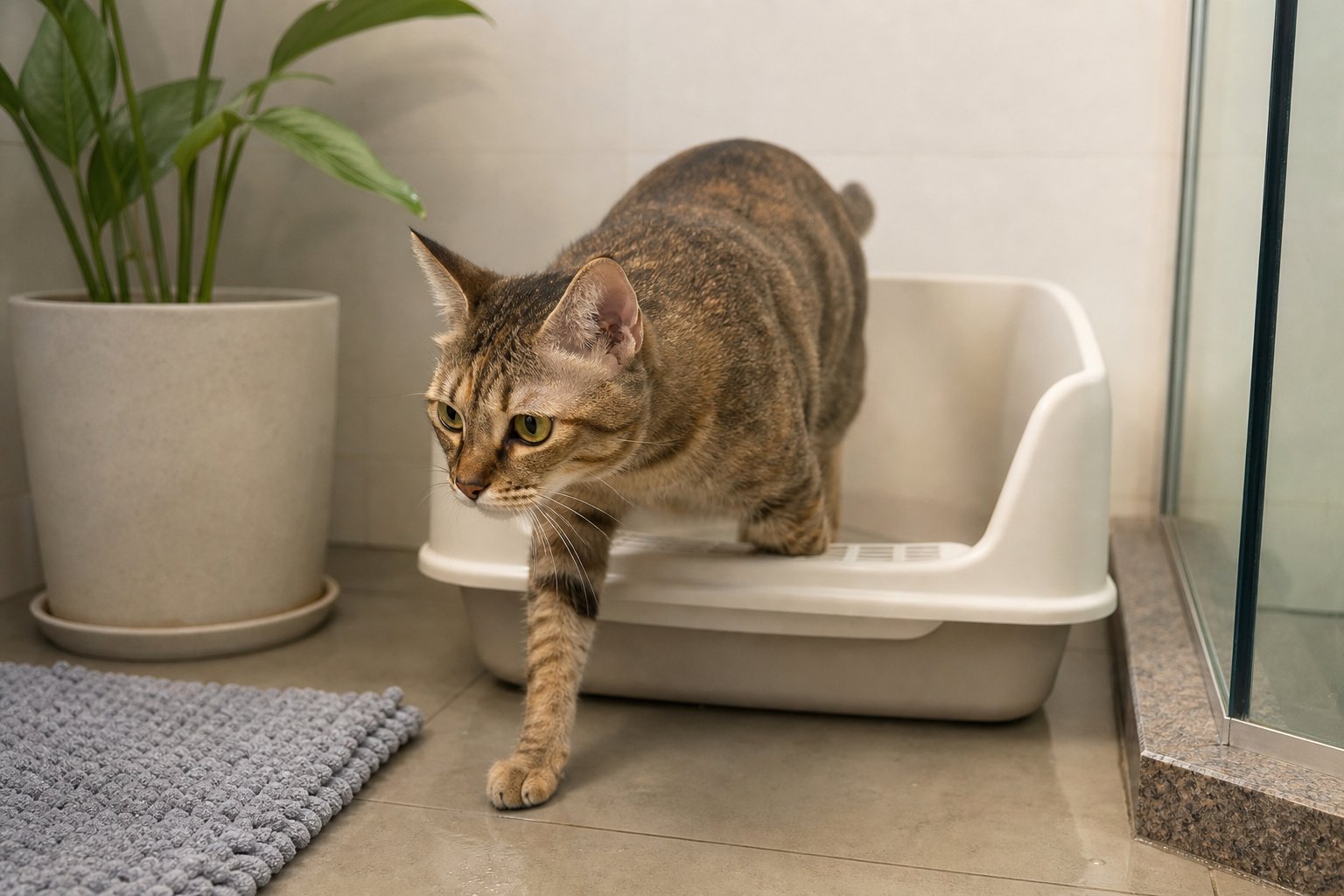
Quick answer: N1's tofu litter series is a low-dust, budget-priced option that can be flushed in small scoops, which makes it genuinely convenient for apartments. Odour control is decent rather than class-leading, and clumps set slightly soft, so litter depth and patience matter. The mineral series suits anyone who wants stronger odour binding and never needs flushing. Local prices vary, so check current listings with your nearest pet retailer.
N1 at a glance
N1 is a value-focused litter brand with two product families: a tofu (bean-curd residue) line and a mineral (bentonite clay) line. Both are sold in several pack sizes, so you can match the bag to your household size instead of over-committing to one large sack.
| Item | Detail |
|---|---|
| Series | Tofu series, mineral series |
| Main material | Compressed bean-curd residue (tofu); bentonite clay (mineral) |
| Typical pack sizes | 6L, 7L, 10L |
| Flushing | Tofu series: small amounts only; mineral series: never |
| Dust level | Tofu: very low; mineral: moderate |
| Clump firmness | Tofu: medium-firm, softens if damp; mineral: firm |
| Best suited to | Budget-conscious homes, sensitive cats, small spaces |
The practical takeaway is that N1 is positioned as an everyday, affordable litter rather than a premium imported one. You are paying for volume and consistency, not boutique packaging. That trade-off works well as long as you manage two known weaknesses: odour control that needs a ventilated spot, and clumps that benefit from a short setting time before scooping.
Tofu series versus mineral series
Tofu series
- Odour control: good. It absorbs well but does not bind smell as aggressively as clay. Place the tray in an airy spot and scoop promptly and the difference narrows.
- Clumping: good, slightly soft. Clumps hold together but can crumble if you scoop too early or the layer is too thin.
- Dust: excellent. This is the strongest argument for the tofu line, especially for cats that sneeze around clay litters.
- Flushing: possible in small amounts. The material softens in water, which is why it can go down the toilet a scoop at a time.
Mineral series
- Odour control: very good. Bentonite traps ammonia efficiently, which helps in warm, closed rooms.
- Clumping: firm. Clumps lift cleanly, so daily maintenance feels faster.
- Dust: moderate. Pouring and scratching will release more particles than the tofu line.
- Flushing: never. Clay hardens on contact with water and is a classic cause of blocked household pipes.
A simple decision rule: if your priority is clean air, easy disposal and a small living space, take the tofu series. If your priority is odour lock-down and you are laying litter across a balcony or a large tray, take the mineral series. Both occupy a similar price band, so you are choosing features rather than saving money by switching.
How N1 compares with other litters
| Attribute | N1 [tofu | N1 mineral](/articles/cat-litter-guide-hong-kong-2026-malaysia "mylink") | Premium imported tofu |
|---|---|---|---|
| Odour control | Good | Very good | Good to very good |
| Clump firmness | Medium-firm | Firm | Firm |
| Dust | Very low | Moderate | Very low |
| Flushable | Small amounts only | No | Sometimes, check pack |
| Relative price | Budget | Budget | Higher |
| Pack choice | 6L / 7L / 10L | Similar range | Often fewer sizes |
No single litter suits every cat or every household. Imported tofu litters may offer firmer clumps or stronger fragrances, but they usually cost more per litre. Clay litters win on odour binding yet fail on dust and disposal. The realistic approach is to buy one small pack of whichever type you are considering, run it for a fortnight, and judge it on three things your cat cannot fake: whether they use the tray willingly, how the room smells at the end of the day, and how cleanly clumps lift.
Pros, cons and who it suits
Strengths
- Affordable enough that monthly litter spending does not sting.
- Very low dust, which is gentler on cats with sensitive airways.
- Tofu line can be flushed in small scoops, reducing bagged waste.
- Multiple pack sizes let a trial buyer start small and a heavy user buy in bulk.
Weaknesses
- Odour control trails the mineral series, so tray placement matters.
- Clumps are softer; scooping immediately after use leads to crumbling.
- Being an organic material, it absorbs ambient moisture and needs sealed storage in humid weather.
Households it suits best
- Apartment living, where a low-dust, low-odour tray in a compact room is the goal.
- Budget-first owners who want predictable costs without downgrading to a dusty fill-everything clay.
- Cats with sensitive noses or airways, where dust is a real trigger.
- First-time litter triallers, because switching away from an inexpensive litter is a low-cost experiment.
- Multi-cat homes, which benefit from low dust but must accept faster consumption and more frequent full changes.
Getting clumps right: depth, waiting time, base layer
Soft clumping is the most common complaint about tofu litters, and in most cases it is a technique problem rather than a defective product. Three fixes solve it in the majority of homes.
- Lay the right depth. Aim for 5–7cm. Too shallow and urine reaches the tray floor, so the clump sticks to the base and breaks apart the moment you lift it.
- Wait before you scoop. Give the clump 10–20 seconds to set after your cat leaves the tray. Clumps that feel crumbly immediately after use usually firm up noticeably with that short pause.
- Add a base layer. A thin sprinkling of baking soda, or a dedicated litter tray mat at the bottom, helps absorb moisture and stops sticking. Refresh it whenever you wash the tray.
If all three still leave you scooping fragments, moisture is likely the culprit — check where you store the bag, or move to a litter with tighter moisture control. Litter is never objectively good or bad; it either suits your home's climate and your cat's habits, or it does not.
Depth also affects cost in a way people miss. A thin layer looks economical but forces more full changes because clumps reach the floor. Keeping 5–7cm actually extends the usable life of each bag.
Flushing, disposal and storage in humid weather
Flushing rules are simple and worth memorising because getting them wrong is expensive:
- Tofu series only, small amounts only. One scoop at a time, never a whole tray at once. Let the material break down before flushing again.
- Mineral series never. Bag it and bin it. Bentonite swells and hardens in pipes.
- Mixed litter never. Some owners layer mineral underneath with tofu on top to combine odour lock-down with easy clean-up. That works in the tray, but it makes the whole tray unflushable — dispose of it as waste.
- When in doubt, read the ingredients. If bentonite appears in the list, do not put it down the toilet.
Storage is the other half of the equation. Tofu litter is hygroscopic, so an open bag in a bathroom or utility corner will pick up humidity, clump prematurely in the bag and lose performance. Keep unopened packs off the floor in a dry area, transfer opened ones into a sealed container, and use opened litter reasonably promptly. In genuinely humid spells, expect to refresh the tray more often and check the bag for any damp clumping before you pour.
Who should think twice
N1 is not the right choice for everyone. Skip it, or at least trial cautiously, if your cat has a strong preference for fine sand-like textures — some cats reject tofu pellets outright and then start eliminating outside the tray. If your home has poor ventilation and you cannot move the tray to an airy spot, the mineral series will be easier to live with. And if you have plumbing you would rather not risk, ignore the flushable claim entirely and bin everything.
Switching to N1: a 7–10 day plan
Never change litter overnight. Cats are creatures of texture and scent, and a sudden swap is the most common trigger for tray refusal. Use this gradual schedule:
- Days 1–3: three parts old litter, one part new.
- Days 4–6: roughly half and half.
- Days 7–10: mostly new litter with a little old on top.
Throughout the transition, keep the tray in exactly the same spot — moving location and changing texture together is a double shock. Place the tray along a route your cat already uses, not tucked into a dark unused corner, because openness strongly improves acceptance.
Watch for warning signs during the switch: eliminating outside the tray, over-licking paws, hesitating at the entrance, or scratching the walls instead of the litter. Any of these means slow down and stay at the current ratio for a few more days rather than pushing ahead.
When to see a vet
Litter choice interacts with your cat's health, so involve a veterinarian rather than blaming the product when things change suddenly.
See a vet promptly if your cat:
- Stops using the tray, or strains, yelps or repeatedly enters without passing urine — urinary blockage is an emergency, especially in male cats.
- Urinates far more or far less than usual, or drinks noticeably more water.
- Develops persistent sneezing, coughing, wheezing or eye discharge that began after a litter change.
- Has blood in urine or stool, or stool that stays soft despite a consistent diet.
- Grooms excessively, chews at paws, or develops bald patches after switching litter.
- Becomes lethargic, off food or hides — any sudden behaviour change in a cat deserves assessment.
Also ask your vet for advice before changing litter if your cat is recovering from surgery, has a chronic kidney or urinary condition, or is a very young kitten, since these cases need a litter that supports monitoring and easy cleaning.
Vet disclaimer: This article is general educational information about cat litter selection and is not a substitute for veterinary advice. For diagnosis, treatment or guidance about your individual cat, consult a licensed veterinarian.
Related reading
- Cat Litter Guide Malaysia 2026: Types, Costs and How to Choose
- Cat Litter in Malaysia: How to Choose the Right Type for Your Cat and Home
- Cat Litter in Malaysia: 5 Types Compared and How to Pick the Right One
- Mineral Cat Litter (Bentonite) Guide for Malaysia 2026: Dust, Clumping Power and Real Costs
- Pine Cat Litter in Malaysia: Why a Double-Layer Tray Matters (2026 Guide)
- Plant-Based Cat Litter in Malaysia: What It Is Made Of, Pros and Cons, and How to Choose
- Auto Litter Box in Malaysia: What to Check Before You Buy (2026 Guide)
- Automatic Litter Box Malaysia 2026: Noise Data, Small-Home Fit, Safety and Monthly Running Costs