
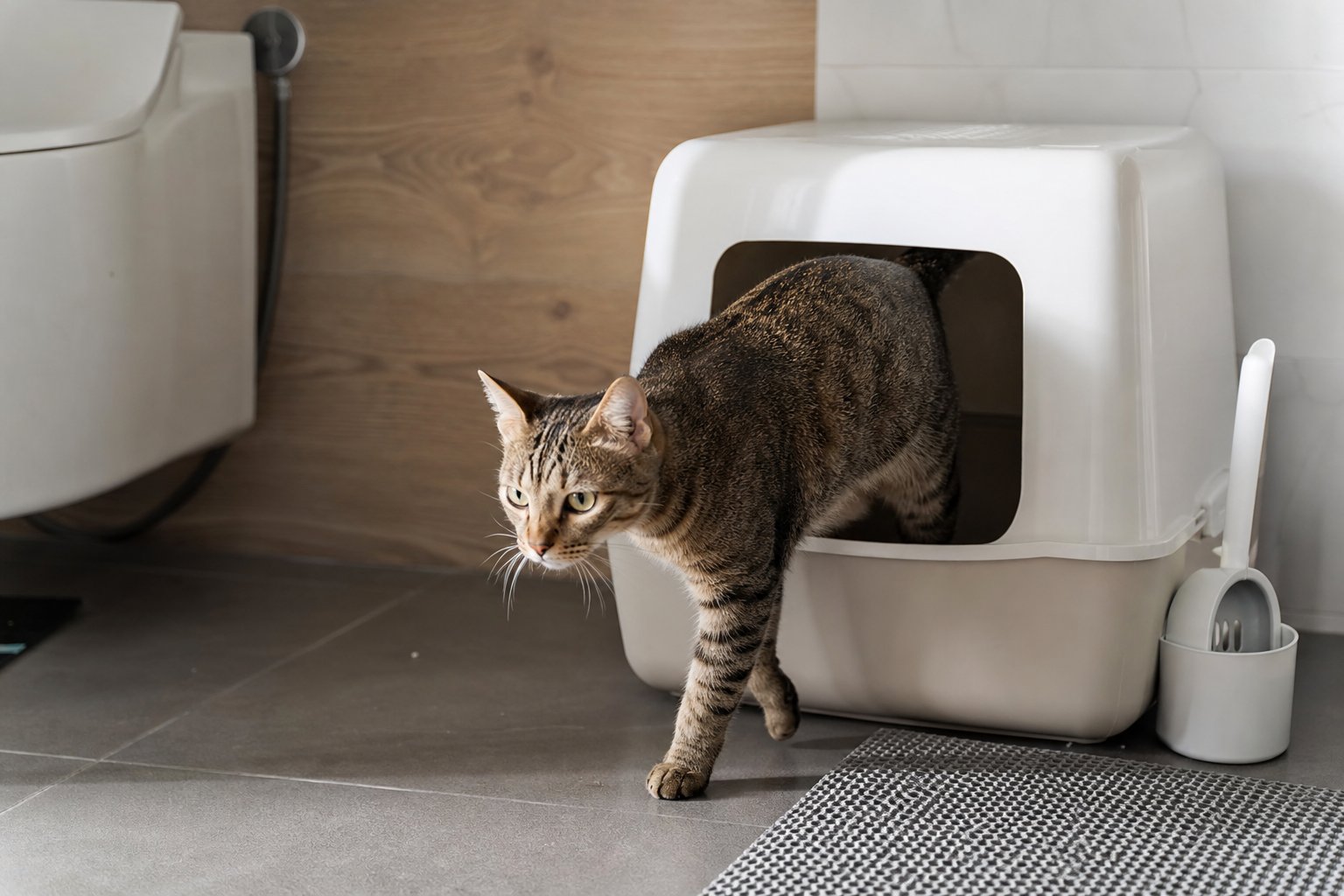
Quick answer: Tofu cat litter is compressed soybean fibre that swells and clumps on contact with urine, producing very little dust and breaking down in water. Pure formulas can be flushed in small batches. Its weaknesses are a higher price than mineral litter and a tendency to absorb moisture in humid weather, so store it dry and replace the whole tray every two to three weeks.
What Tofu Litter Is and Why It Clumps
The main ingredient is soybean fibre — a by-product of tofu and soy milk production. The fibre is heat-treated, dried and extruded into short cylindrical pellets. Inside each pellet is a porous structure that draws in liquid quickly; as it absorbs, the pellets swell and the starches on their surfaces bind neighbouring granules together into one solid clump you can lift out with a slotted scoop.
Because the material is water-soluble and biodegradable, a pure soybean litter will disperse in water rather than swelling into a hard mass. That single property is what makes the "flushable" claim possible — and it is also the property that is lost the moment mineral clay or bentonite is blended in.
A typical bag contains three things:
- Soybean fibre — the absorbent body of the pellet
- A starch binder — holds the pellet together and drives clumping
- Optional deodorising additives — activated carbon, green tea extract, probiotics or charcoal
Brands differ in the ratios, which is why some litters form rock-hard clumps while others crumble, and why some dissolve faster than others. Check the ingredient list rather than the front-of-pack marketing: if "bentonite" or "mineral" appears anywhere, treat the litter as non-flushable.
The Real Advantages and Trade-offs
Where tofu litter performs well
- Low dust. Pelleted formats produce far less airborne powder than clay, which matters for cats with sensitive airways and for anyone sweeping the house afterwards.
- Good odour absorption. Soybean fibre traps ammonia rather than simply masking it, and carbon or charcoal versions add a second layer of control.
- Flushable (pure formulas). Convenience for indoor households, provided you flush in small amounts.
- Biodegradable. The material breaks down naturally instead of sitting in landfill indefinitely.
- Safer if nibbled. Small accidental ingestions of plain soybean fibre are generally not a concern, unlike scented chemical clumps.
- Lightweight to carry. A bag of tofu litter is noticeably easier to haul up a lift or staircase than an equivalent volume of clay.
Where it struggles
- It costs more. Expect to pay a premium over basic mineral litter; the exact gap depends on brand, pack size and where you shop, so compare price per litre rather than price per bag.
- It absorbs ambient moisture. In humid periods the pellets can soften, clump prematurely inside the bag and eventually go musty.
- It can go mouldy. Because the material is organic, damp storage equals mould.
- It tracks. Light, elongated pellets cling to paws and are carried out of the tray more readily than heavier clay granules.
Choosing the Grain Size: 1.5mm vs 2.0mm vs 3.0mm
Pellet diameter is the single most practical decision you will make, because it changes clumping speed, tracking and how quickly your cat accepts the litter.
| Grain size | Clumping | Tracking out of tray | Cat acceptance | Best for |
|---|---|---|---|---|
| 1.5mm fine | Fastest, firmest clumps | Highest — sticks to paws | Soft underfoot; some cats prefer it | Large trays where you want maximum clump strength |
| 2.0mm medium | Fast, reliable | Moderate | The most versatile, and the easiest first try | Most households and first-time tofu users |
| 3.0mm coarse | Slightly slower but still firm | Lowest | Noticeable texture; a few cats hesitate at first | Small homes, multi-cat trays, tracking-averse owners |
Practical guidance: if your cat is switching from mineral litter, start with 1.5mm or 2.0mm — the finer texture feels closer to clay and is accepted sooner. If your main frustration is litter scattered across the floor, go for 3.0mm and add a tracking mat outside the tray. Multi-cat homes burn through litter quickly, so the coarser, larger packs usually work out better on cost.
Can You Flush It? Do It This Way
Flushable: 100% soybean or tofu litter with no mineral blend. Even then, use the litter sparingly: one small scoop at a time, wait for it to disperse in the bowl, flush, then repeat. Dumping a whole tray in at once will challenge any plumbing.
Not flushable: anything containing bentonite, clay or a "mineral blend". Bentonite expands into a cement-like block when wet, and clearing a blocked drain costs far more than a year of bagged litter disposal.
Before you flush anything, check three things:
- The ingredient list — 100% tofu or soybean fibre only
- Your building's plumbing — older or narrow pipework is less forgiving, so bin the litter instead
- The quantity — small, repeated flushes only; never a full tray
When in doubt, bag it and bin it. A flushable label is not a guarantee against blockages if you pour too much in at once.
Stopping Mould in Humid Weather
Soybean fibre plus humidity is the recipe for mould. Darkening pellets, a musty smell or visible fuzz means the batch is compromised — discard it entirely rather than mixing it with fresh litter. Mould spores are a real irritant for a cat's respiratory system and skin.
Five habits prevent most problems:
- Store bags dry. Keep them off bathroom floors, away from laundry areas and out of damp store rooms. A raised shelf or sealed plastic bin beats a corner on a wet floor.
- Buy a size you will finish. Large economy bags are cheaper per litre, but if the weather is humid, a smaller pack opened and used within a couple of weeks is the safer buy.
- Never pour into a damp tray. Wash the tray, then let it air-dry completely before adding fresh litter. A wet base pre-conditions the new litter to clump and spoil.
- Use a lidded storage bin with a desiccant sachet. Food-grade silica gel packets inside a sealed container keep the remaining litter usable.
- Never top up over spoiled litter. If the existing granules have hardened, discoloured or smell off, the fibre is already spent — full change, wash, dry, refill.
Tofu vs Mineral vs Blended Litter
| Situation | Best fit |
|---|---|
| Litter tray indoors in a compact apartment | Tofu — low dust, flushable, easier to manage odour in a small space |
| Tray on a balcony or well-ventilated spot | Mineral — stronger odour control and cheaper per use |
| Many cats, high litter volume | Mineral on cost, or a blend as a compromise |
| Cat with asthma or a sensitive nose, or an owner with allergies | Pure tofu |
| Older building with narrow plumbing | Mineral or blend, bagged and binned — avoid flush risk |
| Tracking drives you crazy | 3.0mm tofu with a tracking mat, or heavier mineral granules |
Blended litters try to split the difference: mineral clay supplies hard, cheap clumps while tofu fibre softens the dust and adds some flushability. They are a reasonable middle ground, but they are not flushable in practice — treat them as bin-only.
Depth, Scooping and the Full Change Routine
Fill depth: 5–7cm. Too shallow and clumps bond to the plastic base, leaving residue that is hard to lift and unpleasant for your cat to stand on. The elongated shape of tofu pellets means adequate depth keeps clumps whole when you scoop.
Daily: remove solids and clumps immediately, then top up to maintain depth. The sooner an organic clump is out, the less odour it can release.
Every two to three weeks: empty the tray completely, wash with warm water and a mild odour remover, rinse, and air-dry thoroughly before refilling. Avoid chlorine-based bleach soaks — the lingering chemical smell is off-putting to cats and can put them off the tray entirely. Plastic trays absorb urine over time; if the tray still smells after washing, replace the tray rather than the litter.
Scent control checklist
- Scoop at least once daily, twice if you have more than one cat
- Do not let a full-change date slip past three weeks
- Wash and dry the tray at every full change
- Position the tray in a ventilated area, away from food and water bowls
- Covered trays contain litter better but trap ammonia — clean them more often, not less
Switching From Mineral Litter Over 7–10 Days
Cats rarely reject tofu litter on merit; they reject sudden change. Blend the two gradually:
- Days 1–4: three parts old litter to one part tofu
- Days 5–9: half and half
- Days 10 onwards: mostly tofu, with the old litter phased out
Do not move the tray to a new location during the transition — one change at a time. If your cat starts eliminating outside the tray, clean the accident site thoroughly with an enzymatic odour remover that specifically targets urine, then slow the transition down. Lingering scent marks will otherwise keep drawing the cat back to the wrong spot.
If refusal persists beyond a couple of weeks, step back to a finer grain size or a different texture before giving up on tofu entirely.
When to See a Vet
Litter choice is husbandry, not medicine — but litter tray behaviour often reports health changes. Book a consultation promptly if you notice:
- Straining, frequent small attempts, crying in the tray
- Blood in urine or stools
- Urinating outside the tray with no obvious environmental change
- Repeated ingestion of litter, which can be linked to nutritional deficiency or a compulsive behaviour called pica
- Sneezing, coughing or eye discharge that worsens around litter changes
- Diarrhoea or vomiting alongside a litter change
Male cats in particular can develop a urinary blockage within hours, which is an emergency. Never wait to "see if it settles".
Vet disclaimer: This article is general husbandry guidance only and is not a substitute for advice from a registered veterinary practitioner who has examined your cat. Sudden changes in toileting, urination or appetite should be assessed by a vet.
Related reading
- Cat Litter Guide Malaysia 2026: Types, Costs and How to Choose
- Cat Litter in Malaysia: How to Choose the Right Type for Your Cat and Home
- Pine Cat Litter in Malaysia 2026: Double-Tier Boxes, Mould Control and Real Cost Math
- Automatic Litter Box Malaysia 2026: Noise Data, Small-Home Fit, Safety and Monthly Running Costs
- Cat Litter Guide Malaysia 2026: Tofu, Mineral, Pine, Tapioca and Blends Compared
- Cat Litter in Malaysia: 5 Types Compared and How to Pick the Right One
- Pine Cat Litter in Malaysia: Why a Double-Layer Tray Matters (2026 Guide)