
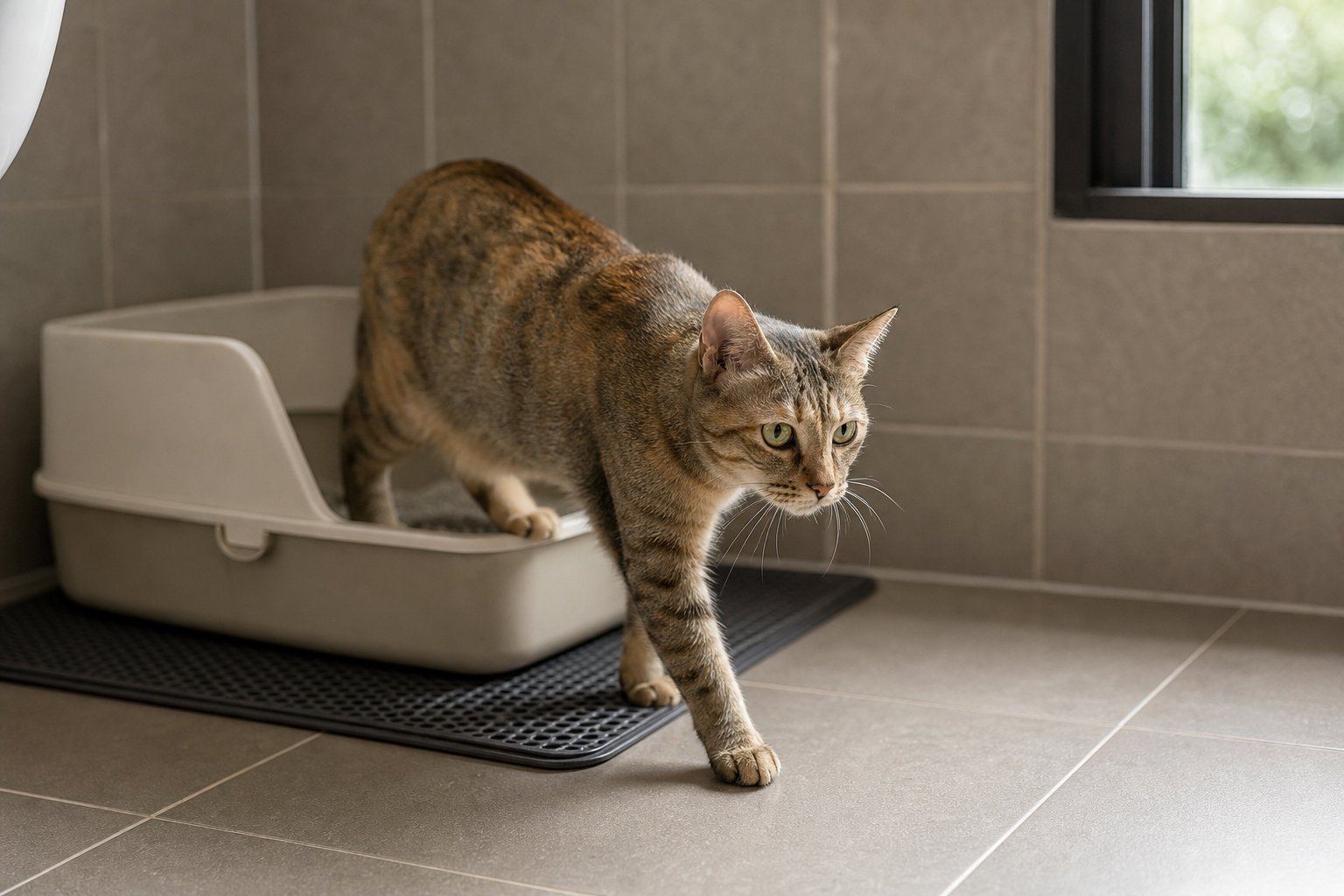
Mineral cat litter — the bentonite clay type — is usually the cheapest per litre, clumps harder than anything else, and is the litter most cats are raised on. The trade-offs are real: it is the dustiest type, the heaviest to carry, and it must never be flushed. If your cat breathes comfortably and you scoop daily, it is a sensible default. If your home is small, very humid, or your cat has a sensitive nose, pick a low-dust formula or switch to tofu or pine. Malaysian prices vary by retailer and season, so check current rates with your local pet shop or vet before buying.
What Mineral Litter Actually Is
At its core, mineral litter is natural clay that has been mined, dried and crushed into granules. The key ingredient in most products is bentonite, a clay that swells sharply when it meets water and binds the surrounding granules into a firm clump you can scoop out in one piece. Several variants exist, and they do not perform equally.
| Ingredient | How it works | Clumping | Dust | Weight | Notes |
|---|---|---|---|---|---|
| Sodium bentonite | Absorbs many times its own volume in water and bonds tightly | Excellent | High | Heavy | The strongest clumping base |
| Calcium bentonite | Swells less than sodium bentonite | Fair to good | Medium-high | Heavy | Often the budget option |
| Zeolite | Porous mineral that adsorbs ammonia | Usually an additive, not a base | Medium | Medium | Added mainly for odour control |
| Activated charcoal | Physically traps odour molecules | Does not change clumping | Medium-high | Heavy | Good for multi-cat smell |
| Mineral + plant fibre blend | Clay clumps, plant fibre lowers dust | Very good | Medium | Medium | A practical compromise for sensitive cats |
One point worth remembering: if the bag says "mineral" or "bentonite", the main component is clay no matter how strongly it is perfumed. Scent is an additive; it does not make the litter less dusty, and a heavily fragranced version may even put some cats off using the box.
Dust and Your Cat's Respiratory Health
Three facts about litter dust are worth knowing before you commit to a clay product.
-
The dustiest moment is pouring, not digging. The peak of airborne particles comes in the first few seconds when you tip the bag into the box, not when your cat scratches. Open a window or switch on a vent, pour slowly, and never pour right in front of your cat.
-
Low-dust formulas make a measurable difference. Products that have been screened, dedusted or pelletised during manufacturing release visibly fewer particles than plain crushed clay. Look for packaging that states "low dust", "99% dust-free" or similar wording, and compare two bags by pouring each from the same height.
-
Cats with existing breathing problems should avoid clay dust. Dust is a known irritant for cats with asthma or chronic airway inflammation. For those cats, a very low-dust option such as tofu or pine litter is the safer long-term choice, plus keeping the box out of the room where the cat sleeps.
A simple home check: pour a scoop from about 30 cm above the box. If you see a white haze, that bag is dusty regardless of the label. Repeat with a second brand to compare fairly.
How to Test Clumping Power at Home
Marketing claims are easy to make and hard to verify, so run these five tests yourself when you open a new bag. You need a scoop, a measuring cup and a bit of patience.
| Test | What to do | What to look for | Pass standard |
|---|---|---|---|
| Water drop | Pour about 50 ml of water onto a 3 cm layer of litter | Time to form a lump and its shape | Solid within about 10 seconds, holds together when lifted |
| Scoop test | Lift the lump from the bottom with the scoop | Breaking, sticking to the base | One intact piece, clean base underneath |
| Edge test | Pour water 2 cm from the box wall | Seepage under the litter | No liquid reaches the base, no sticky rim |
| Dust test | Pour litter from 30 cm height | Visible cloud in the air | No obvious haze |
| Odour test | Compare after a day without scooping (for testing only) | When ammonia smell appears | No sharp smell within the first day |
Do not judge on speed alone. Litter that clumps in seconds but shatters when you lift it makes daily cleaning harder, not easier. Clump hardness, sticking to the base and dust all matter together.
Mineral vs Tofu vs Pine vs Tapioca vs Blended Litter
Mineral litter does not exist in a vacuum. Here is how the five common types compare on the factors that actually affect daily life.
| Litter type | Odour control | Clumping | Dust | Flushable | Where it wins | Where it loses |
|---|---|---|---|---|---|---|
| Mineral (bentonite) | Very good | Excellent | High | Never | Cheapest per litre, hardest clumps | Dust, weight, disposal |
| Tofu | Very good | Good | Low | Yes, in small amounts | Low dust, easy disposal | Softer clumps, costs more |
| Pine | Fair | Crumbles instead of clumping | Very low | Sometimes | Gentlest for sensitive cats | Requires a sifting or two-layer box |
| Tapioca | Very good | Good | Low | Usually | Low dust with decent clumping | Higher price per pack |
| Blended (mineral + plant) | Excellent | Very good | Low | Usually | Keeps clay clumping, cuts dust | Mid-range price |
Mineral litter is the right pick when:
- Budget comes first. Per litre, clay is normally the cheapest option available, and that gap widens in multi-cat households.
- You have several cats. High turnover and frequent changes make clay the most economical base.
- Your cat will accept nothing else. Cats raised on clay often refuse a sudden switch; blending new litter into the old over one to two weeks usually works.
Mineral litter is the wrong pick when:
- Your cat has asthma, chronic bronchitis or a history of sneezing fits.
- Your home has little ventilation and you rarely open windows.
- You have to carry supplies up several flights of stairs — a 10-litre clay bag weighs several kilos, and a 20 kg bulk sack is a genuine strain.
Working Out the Real Cost
Malaysian retail prices shift between shops, online platforms and sale periods, so this guide deliberately does not quote figures — ask your pet retailer or vet for current pricing. What you can do is compare properly instead of being swayed by a big number on the front of the pack.
The per-litre method: divide the price on the shelf by the litres in the pack. A small bag can look cheap while costing more per litre than a larger one; a bulk sack often costs least per litre but only wins if you can store it dry and finish it before it clumps in the bag.
The monthly method: weigh or estimate how much one box uses over a month. Single-cat homes typically empty a box every three to four weeks with weekly top-ups; two cats in two boxes push usage up by roughly 60 to 80 per cent. Multiply monthly usage by the per-litre rate to get a realistic figure before you commit to a brand.
The waste factor: mineral litter in humid storage forms lumps inside the bag. Every clump you have to break up or throw away is money spent on litter you never used, which quietly erases the savings from a cheap bulk pack.
A practical buying rule: for a single cat, buy a size you will finish within a few weeks, keep the rest sealed, and compare per-litre rates rather than pack prices.
Storing Litter in Malaysian Humidity
Humidity is the one local condition that changes how clay behaves after you get it home. The good news is that inorganic clay is naturally resistant to mould — it has no organic nutrients for fungi to grow on, so it does not go off the way plant-based litters can. The bad news is that moisture still degrades performance.
What dampness does to mineral litter:
- Clumps turn soft and start sticking to the base of the box.
- Fine powder increases, so pouring becomes dustier.
- A crust forms on the surface and odour control drops.
What to do about it:
- Keep the bag sealed after every use — the original bag clipped shut, or a lidded plastic bin with the litter transferred in.
- Decant only about a week's worth into the box; store the rest away from the bathroom or any area with standing moisture.
- Add a desiccant sachet to the storage container if the room feels damp.
- Store the bin off the floor on a shelf, not directly on tiled ground that sweats in cool weather.
- Check the bag before you pour: any hard lumps at the top mean moisture has already got in.
Rainy stretches make this worse, because indoor humidity stays elevated for days at a time even with windows closed.
Litter Routine for Small Homes and Multi-Cat Households
A Kuala Lumpur apartment with one bathroom and limited balcony space is a common setup. Place an open box away from the sleeping area and the food station, put a litter-trapping mat under the entrance, and scoop twice a day. Consistent twice-daily scooping controls odour far more effectively than paying extra for a heavily perfumed litter — the fragrance masks smell, it does not remove the ammonia source.
Penang during the rainy season tests storage more than anything else. Expect clumps to soften and bags to absorb moisture if they sit unsealed; tighten your sealing routine, buy smaller packs more often instead of one bulk sack, and do a full litter change sooner if you notice ammonia smell or clumps that will not hold together.
Multi-cat basics worth following:
- Follow the rule of one box per cat plus one spare.
- Keep 8 to 10 cm of litter in each box so clumps form in depth rather than on a thin layer.
- Top up weekly, full change monthly — sooner if smell or stickiness appears.
- Carry smaller bags rather than one heavy sack if there is no lift; your back is part of the cost.
- Bag used clay litter tightly and bin it the same day in warm weather; never flush it.
Litter change checklist
- Scoop clumps at least once daily, ideally twice
- Top up fresh litter weekly to maintain depth
- Full change every three to four weeks
- Wash the box with mild detergent and dry thoroughly at each full change
- Re-seal the storage bag or bin immediately after topping up
- Check for soft lumps or crust before every pour
When to See a Vet
Litter choice intersects with cat health, so involve a vet when any of the following appear:
- Coughing, wheezing or open-mouth breathing — possible asthma or airway inflammation.
- Frequent sneezing, nasal discharge or pawing at the face shortly after using the box.
- Straining in the box, crying while urinating, or urinating outside the box — urinary tract problems are urgent and can escalate quickly.
- Sudden refusal to use the box after a litter change, which may indicate pain rather than pickiness.
- Blood in urine or stool, or a litter box visit with no urine passed at all.
If your cat has a diagnosed respiratory condition, ask which litter type your vet recommends before buying a new bag, and consider a trial of a low-dust alternative while keeping the box well away from the cat's resting spot.
Related reading
- Cat Litter Guide Malaysia 2026: Types, Costs and How to Choose
- Cat Litter in Malaysia: 5 Types Compared and How to Pick the Right One
- Cat Litter Guide Malaysia 2026: Tofu, Mineral, Pine, Tapioca and Blends Compared
- Cat Litter in Malaysia: How to Choose the Right Type for Your Cat and Home
- Plant-Based Cat Litter in Malaysia: What It Is Made Of, Pros and Cons, and How to Choose