
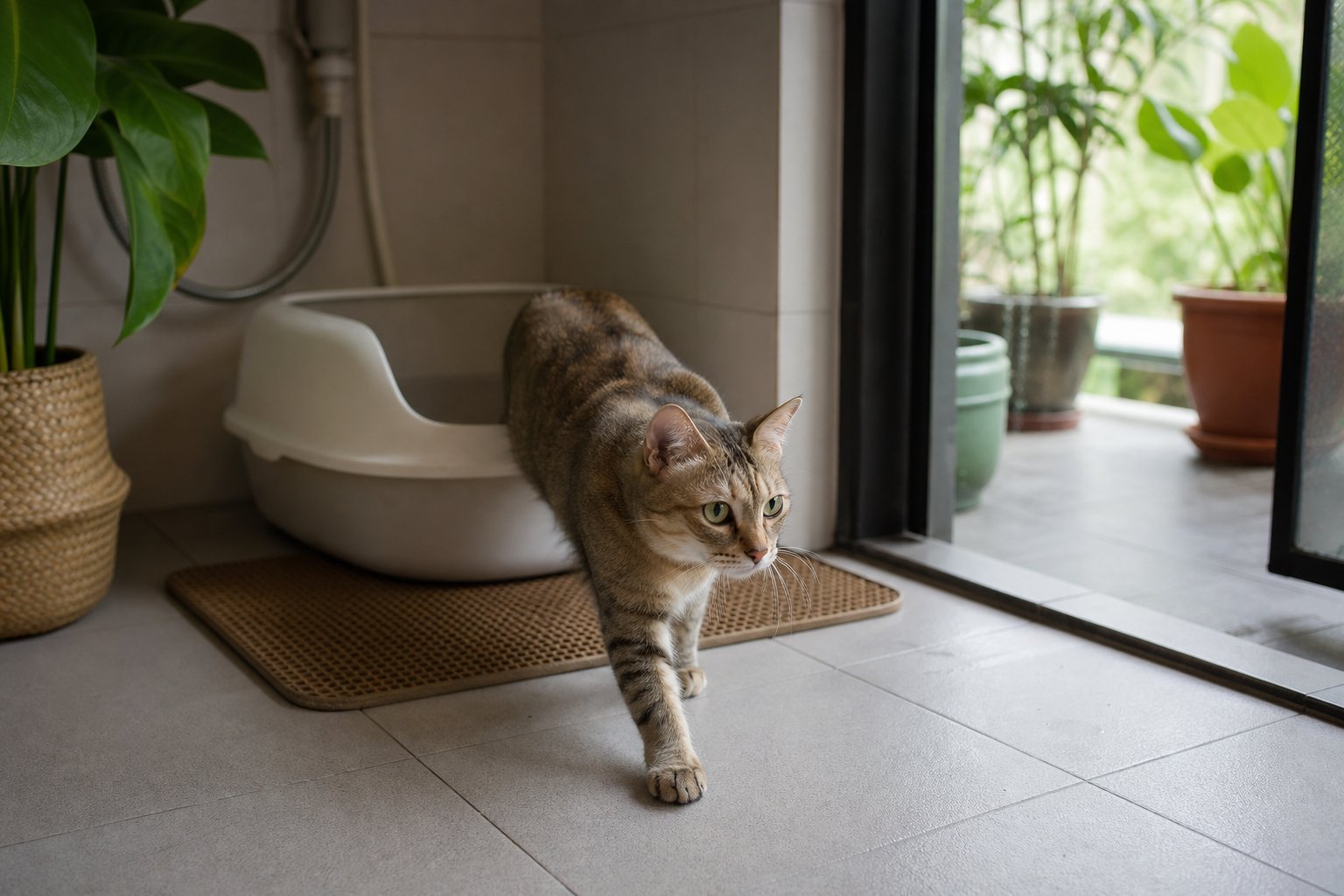
Quick answer: Probiotic tofu cat litter is ordinary bean-pulp litter with live bacteria added. The bacteria break down the odour-causing compounds in urine instead of masking them, so the smell stays away longer — particularly useful in small, poorly ventilated homes and in humid weather. It costs more than regular tofu litter, the bacteria must be stored correctly to stay alive, and it still will not rescue a tray that nobody scoops.
What exactly is probiotic tofu cat litter?
At its base, this is the tofu litter many cat owners already know: a clumping litter pressed from bean pulp and plant starches, low in dust, light to carry, and usually flushable in small quantities because it breaks down in water.
The difference is an added culture of live micro-organisms. The most commonly used organism in this category is Bacillus, a spore-forming soil bacterium that survives harsh conditions well — which is precisely why manufacturers choose it. Other blends use different bacterial or enzymatic cultures, but the marketing claim is the same: the litter does something active about the smell rather than simply sitting there.
Think of the litter in two layers. The tofu component handles the mechanics: it soaks up liquid, forms a firm clump you can scoop out, and keeps dust low. The probiotic component handles the chemistry: it works on the nitrogenous waste in urine and faeces and converts odour-producing compounds into less smelly ones.
Neither layer replaces the other. Litter with excellent bacteria but poor clumping will make cleaning a mess. Litter with superb clumping but dead bacteria is just regular tofu litter in a fancier bag.
How the deodorising actually works
Cat urine odour is not a single thing. Once urine is left in the tray, bacteria already present in it and in the environment break its nitrogen compounds down, and ammonia is released. That sharp, eye-watering smell is what owners notice, and it gets stronger the longer the clump sits and the warmer and damper the room is.
Probiotic litter attacks this process in three steps:
- It degrades the source. The added micro-organisms metabolise the organic compounds in urine before they can accumulate and release ammonia at full strength.
- It keeps working over time. As long as the organisms remain viable and have some moisture and organic material to act on, they continue this activity inside the tray.
- It avoids the masking effect. Fragrant litters cover smell with perfume, which eventually mixes with urine odour into something less pleasant and can irritate sensitive noses. Absorbent litters such as charcoal types hold odour molecules until their pores fill, then release them again. Degradation does not have that same rebound.
A useful way to remember it: regular tofu litter adsorbs; probiotic tofu litter degrades. Adsorption is storage — the smell comes back when capacity runs out. Degradation is disposal — the smell-producing material is converted to something else. In humid conditions, where ordinary litter seems to give up after a day, that difference is most noticeable.
The honest caveat: this is useful, not magical. The organisms need the right temperature, some humidity and regular removal of saturated waste. A tray in an air-conditioned room that is scooped twice daily behaves very differently from a tray in a muggy bathroom scooped once a week.
Probiotic tofu vs regular tofu litter
| Factor | Regular tofu litter | Probiotic tofu litter |
|---|---|---|
| Deodorising method | Absorbs and traps odour | Breaks down odour source |
| Longevity of odour control | Moderate | Longer, provided bacteria stay viable |
| Price | Lower | Higher — local prices vary, ask your nearest Malaysian retailer |
| Dust level | Low | Low |
| Flushable / biodegradable | Generally yes, in small amounts | Generally yes, in small amounts |
| Needs careful storage | No | Yes — heat and sunlight kill the culture |
| Extra features | None | None essential; some brands add fragrance unnecessarily |
Strengths: more durable odour control, plant-based and biodegradable, low dust that is gentler on human airways and on cats with mild respiratory sensitivity.
Weaknesses: costs more; the active ingredient has a shelf life; real-world performance still depends on how often you scoop, how many cats share the tray, and how humid your home is.
The three deodorising routes compared
Malaysian shelves offer several approaches to litter smell, and they are worth separating because they fail in different ways.
| Route | Principle | Typical examples | Weakness | |---|---|---| | Adsorption | Porous material locks odour molecules in place | Mineral/clay clumping litter, charcoal-blended litters | Works until the pores saturate, then odour returns or worsens | | Masking | Fragrance overrides the smell | Scented tofu or crystal litters | Mixed scent can irritate noses; cats often dislike it | | Degradation | Micro-organisms break down the odour source | Probiotic tofu litter, some enzymatic litters | Requires viable organisms and correct storage |
No route works on its own. Adsorption is perfectly adequate if the tray is emptied frequently, because saturation never arrives. Masking is a short-term cosmetic fix. Degradation is the only route that addresses the source, but it is also the only one with a living ingredient you can accidentally destroy.
Who should consider it — and who can skip it
A good fit:
- A Kuala Lumpur apartment where the litter tray sits in a bathroom with no window and the door stays closed most of the day. Air barely circulates, so nothing carries smell away, and degrading the source matters more than usual.
- Households with several cats, where several trays are producing waste daily and the odour load stacks up faster than any one person can scoop.
- Owners who are sensitive to smell themselves. This point is underrated: if the tray smells unbearable to you, you will scoop less willingly, and an unscooped tray is bad for the cat. An litter that makes cleaning tolerable indirectly benefits the animal.
- Homes without constant air-conditioning or dehumidifying, where warm, damp air accelerates ammonia release.
- Anyone who works long hours and can only manage one thorough clean per day.
Probably not necessary:
- A single-cat home with a tray in a breezy spot — a covered balcony corner, a laundry area with good cross-ventilation — where the owner already scoops reliably once or twice a day. Regular tofu litter will do the job at a lower cost.
- Owners whose current litter has produced no odour complaints at all. Do not fix what is not broken; spend the money on a second tray or a bigger scoop instead.
- Anyone unwilling to store the bag properly. If the only cupboard available is next to a water heater or a sun-facing window, you are paying for a feature that will be gone before you open the bag.
How to choose and use it so it actually works
Buying:
-
Pick an established brand that names its bacterial species rather than simply writing "contains probiotics" on the front. Vague labelling is a warning sign.
-
Read the ingredient list. The ideal short list is bean pulp, a plant starch binder, and the bacterial culture. Heavy fragrance and added dyes are unnecessary, and strong perfume layered over urine smell is usually worse than plain urine smell to both you and your cat.
-
Check clumping before committing. It is still tofu litter, so it should lift out in one firm piece. A litter that crumbles during scooping will contaminate the clean litter around it.
-
Buy one bag for a trial period rather than a bulk pack. Two to three weeks is long enough to judge odour performance and your cat's willingness to use it. Set a reminder to compare against your old litter, then decide.
-
Expect to pay more than ordinary tofu litter. Local prices vary between retailers and pack sizes, so check with your nearest Malaysian pet shop or online store rather than relying on any figure you have seen elsewhere.
Storage:
-
Keep unopened bags sealed, upright, and away from direct sunlight.
-
Avoid heat sources: laundry dryers, water heaters, sun-facing balconies, car boots left in the sun.
-
Store opened bags in a lidded container rather than leaving the top rolled open, because repeated exposure to air and humidity costs you viability.
-
Note the manufacture date where possible and buy reasonable quantities. Buying a year's supply during a sale is a false economy if the culture is inactive by month four.
In the tray:
-
Maintain a litter depth of about 5 to 7 cm. Too shallow and clumps stick to the tray floor, forcing you to scrape and replace the whole base more often.
-
Scoop once or twice daily, every day. No litter at any price compensates for neglect.
-
Replace the entire tray roughly every two to three weeks, sooner in a multi-cat home or during a long humid stretch.
-
Place the tray in a ventilated, dry area — but not in direct sun or in a spot blasted by constant heat.
-
Never spray air freshener or essential oil into or around the tray. The fragrances mix with the smell rather than replacing it, some essential oils are problematic for cats, and many cats will simply stop using the tray.
-
During very dry spells — for instance when the air-conditioning or a dehumidifier runs all day — the organisms have less moisture to work with. Compensate with a more frequent full change, perhaps every fortnight.
Three common doubts, answered honestly
"Do the bacteria actually do anything?"
Under controlled conditions, Bacillus cultures do break down nitrogenous waste — the same principle has been used in composting and waste treatment for decades. But a litter tray is not a laboratory. Temperature, moisture, contamination and scooping frequency all change the result. Treat it as a genuine extra layer of protection, not a device that keeps the room smell-free indefinitely.
**"It smells pleasant on opening — is that fragrance?"
Sometimes yes. Some manufacturers add a light scent to improve the first-impression experience. If a strong perfume hits you when you open the bag, look at the ingredient panel before buying. A neutral, slightly bean-like smell is normal; a floral or musky cloud usually means added fragrance.
"What happens if the bacteria die?"
The litter becomes ordinary tofu litter. It is harmless, still clumps, still low-dust — you simply lose the premium feature. This is why storage is a cost issue as much as a quality one: the difference between storing a bag in a shaded cupboard and on a hot balcony is the difference between what you bought and what you got.
Realistic expectations: read probiotic litter as a backup layer working alongside good habits. Daily scooping, correct depth, sensible placement and a two-to-three-week full change are the foundation; the culture is what sits on top. If your current routine is chaotic, changing to a more expensive bag will not fix the smell, because the tray's state reflects the routine more than the product.
When to see a vet
Do not blame the litter too quickly. A litter tray is one of the cheapest health monitors in the house, and daily scooping doubles as a free check-up.
Book a veterinary consultation if you notice:
-
Litter that has suddenly become dramatically more pungent than usual, with no change in diet or product.
-
Urine clumps that are noticeably larger or more frequent than normal, or a cat visiting the tray far more often and producing only small amounts.
-
Blood in the urine, or urine with an unusually sharp ammonia smell.
-
Straining, crying or vocalising while squatting, repeatedly entering the tray with little or nothing to show for it, or urinating outside the tray after previously being reliable.
-
Increased water drinking paired with changed urination patterns.
These can point to urinary tract infection, kidney disease or diabetes, all of which alter urine volume, concentration and smell. A male cat that strains and cannot pass urine may have a blocked urethra — that is a genuine emergency, not a "wait until morning" situation.
If you have adjusted cleaning habits for about a week with no improvement, or if any of the signs above appear, arrange a consultation with a registered veterinary surgeon in Malaysia rather than trialling yet another litter.
What to do from today
-
Identify the actual source of your smell: is the product weak, or is the tray being scooped too rarely? Fix the habit before upgrading the bag.
-
If you want to try probiotic litter, buy a single bag, run it for two weeks, and compare honestly against your current one.
-
Inspect your storage spot now. Move the bag away from heat and window light.
-
Check clump size and colour during every scoop. Turn it into a thirty-second daily health check.
-
Keep the tray depth at 5 to 7 cm and the full-change interval at two to three weeks.
-
If you share your home with several cats, add trays rather than expecting any single product to handle the load of multiple animals.
Bottom line: Probiotic tofu litter is worth considering when odour is a real, persistent problem in your home — especially in a small, closed-up space or during long humid stretches. It degrades the source of the smell instead of covering it, which gives it an edge over ordinary tofu litter in staying power. The trade-off is a higher price and the need to store the bag so the culture survives. Weigh how much the smell actually bothers you, and decide from there.
Related reading
- Cat Litter Guide Malaysia 2026: Types, Costs and How to Choose
- Cat Litter in Malaysia: How to Choose the Right Type for Your Cat and Home
- Automatic Litter Box Malaysia 2026: Noise Data, Small-Home Fit, Safety and Monthly Running Costs
- Cat Litter Guide Malaysia 2026: Tofu, Mineral, Pine, Tapioca and Blends Compared
- Cat Litter in Malaysia: 5 Types Compared and How to Pick the Right One
- Mineral Cat Litter in Malaysia: A Practical Guide to Bentonite, Dust and Clumping
- Mineral Cat Litter (Bentonite) Guide for Malaysia 2026: Dust, Clumping Power and Real Costs
- Pine Cat Litter in Malaysia: Why a Double-Layer Tray Matters (2026 Guide)
- Pine Cat Litter in Malaysia 2026: Double-Tier Boxes, Mould Control and Real Cost Math