
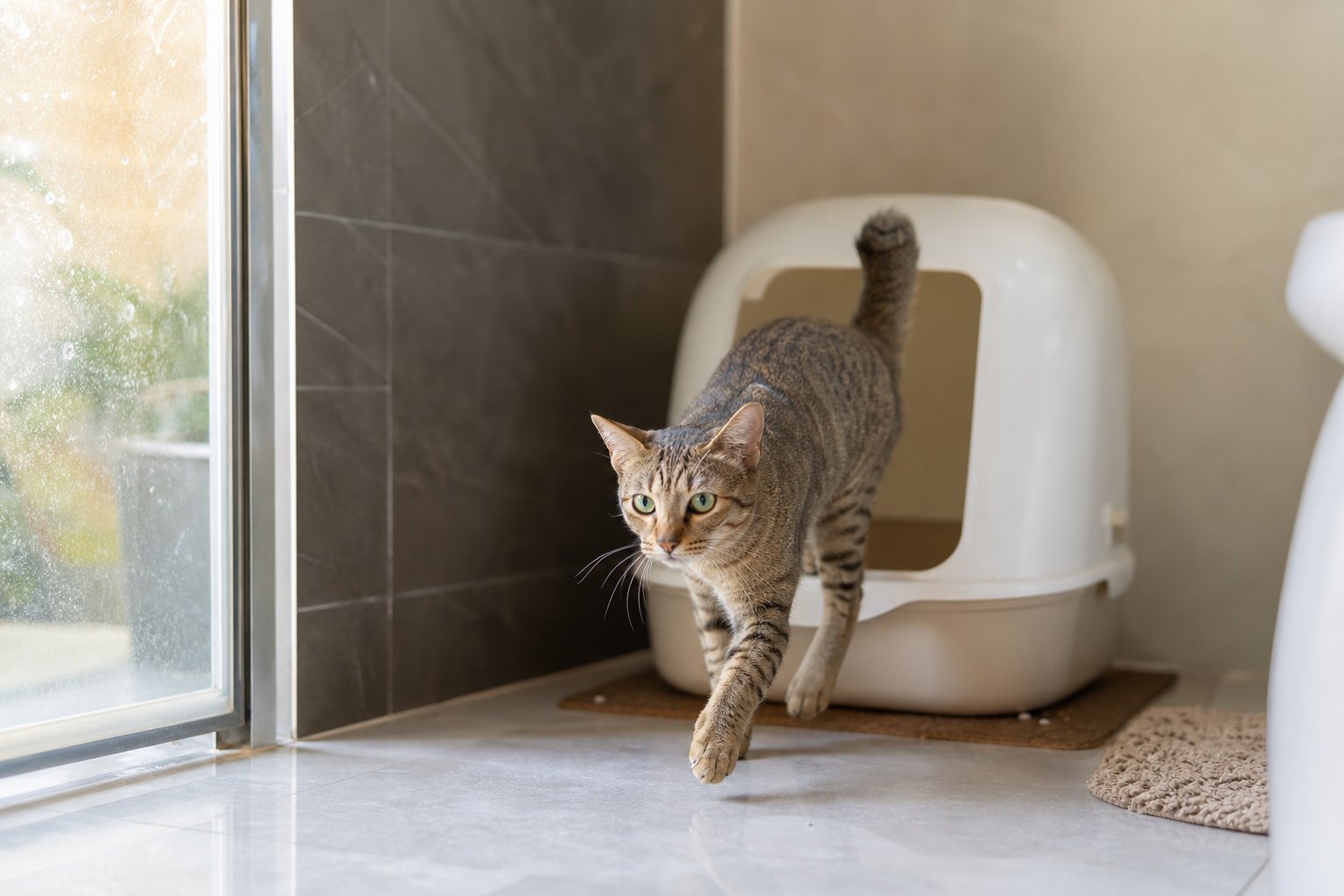
Quick answer: Your cat is not being spiteful. Litter box avoidance almost always traces back to four things — pain or illness, a tray that is dirty, too small or badly placed, stress from recent household changes, or competition in a multi-cat home. Start with a vet visit, because a male cat straining without passing urine is a life-threatening emergency. Then fix the box, the routine and the environment, in that order.
The Four Main Reasons a Cat Stops Using the Box
Nearly every case of a cat toileting outside the tray falls into one of four categories. The useful part is that they are dealt with in a fixed sequence, never mixed together.
Health. When urinating hurts, the cat links that pain to the tray and quietly finds somewhere softer and safer to go — a bed, a pile of laundry or a bathtub.
The tray itself. A box that is unclean, too cramped, unstable when the cat steps in, or scented with a strong fragrance is simply rejected. Cats are fastidious by nature and most will hold on rather than use something they find offensive.
Stress. Moving home, renovations, a new pet, a new baby or even a change in your work hours can disrupt a cat's sense of routine. Changes to the tray or litter type count as stressors too.
Territory. In multi-cat households, a confident cat may guard the tray entrance and block a shyer cat from using it. The timid cat then toilets elsewhere — not out of stubbornness, but because the route feels unsafe.
The practical rule: health first, environment second, behaviour last. Adjusting the tray will not cure an infection, and medication will not fix a tray squeezed beside a roaring washing machine.
Health Comes First: What a Vet Needs to Rule Out
Book a veterinary examination before you rearrange anything. Your vet will typically check for urinary tract infection, bladder stones, kidney disease, diabetes and joint pain, and may ask for a urine sample or blood work.
Certain conditions show up in specific patterns:
- Urinary tract infection or stones — painful urination, small frequent deposits, blood visible in the urine, or crying while straining.
- Kidney disease — increased drinking and increased urination, so the cat simply cannot make it to the tray in time.
- Arthritis or joint stiffness — common in older cats; stepping over a high rim or turning around inside the tray becomes uncomfortable.
- Diabetes — excessive thirst and volume, leading to accidents between trips.
Watch for these red-flag signs and treat them as urgent:
- Repeated trips to the tray with little or no urine produced
- Straining, hunching or crying while attempting to urinate
- Blood in the urine
- Licking the genitals excessively after toileting
- Hiding, vomiting, refusing food, or sudden lethargy
A male cat showing any of the first three signs needs a vet the same day. Urinary blockages can become fatal within a short window, and waiting overnight is not an option.
Older cats that have reliably used a tray for years and suddenly start missing it deserve particular attention, since arthritis and declining kidney function are the usual suspects.
Sorting Out the Litter Box Itself
Once your vet has cleared your cat medically, audit the tray. Most owners find at least two issues here.
Size. The tray should be roughly one and a half times your cat's length from nose to tail, so it can enter, turn around and dig comfortably without its back pressing against the walls.
Height of the rim. Low-entry trays suit kittens, senior cats and any cat with joint trouble. High-sided designs keep litter from spraying out but can become a barrier.
Litter type. Most cats prefer a fine-grained, unscented, clumping mineral litter. Scented versions, coarse textures and sudden brand switches are common triggers for refusal. If you want to change litter, mix the new type with the old over seven to ten days rather than switching overnight.
A useful test: set up two trays side by side with different litters and let your cat vote. What it chooses is what it wants, regardless of what you prefer.
Cleanliness. Scoop solids and urine clumps at least once daily. A tray left full for days is the single most reported reason cats walk away from a box they previously loved.
Location. Choose a quiet, well-ventilated spot that is easy to reach, with more than one exit so the cat never feels cornered. Keep it away from food and water bowls — cats instinctively avoid toileting near their meals — and away from noisy appliances, foot traffic and strong draughts.
Stability. A tray that shifts or rattles when the cat steps in can be enough to put it off permanently. Place it on a level, non-slip surface.
Covered or open? Many cats dislike hooded trays because they trap odour and limit the view. If your cat has started refusing a covered box, try an open one.
Multi-Cat Homes: The N+1 Rule
For households with more than one cat, the standard guidance is simple: provide one litter box per cat, plus one extra. Two cats need three trays; three cats need four.
Equally important is placement. Spread the trays across different rooms or floors instead of lining them up together. Grouped trays can be guarded by the most dominant cat, effectively reducing the household to a single usable toilet.
Give each cat its own food station, water bowl and resting spot as well, and make sure there is more than one route through the home so a shy cat never has to squeeze past a housemate to reach anything.
If tension is obvious — chasing, hissing near the tray, one cat consistently waiting outside the bathroom — revisit introductions and provide extra vertical territory such as cat trees, shelves and window perches so cats can share space without direct confrontation.
Stress, Change and How to Calm Things Down
Cats are creatures of habit, and disruptions register quickly. Recent triggers worth reviewing include:
- House moves, new furniture or renovation noise
- A new pet, a new family member, or visitors staying over
- Changes to your own schedule
- Punishment, shouting, or being forced into the tray
- A tray or litter brand that was swapped without transition
Steps that help:
- Keep feeding, play and interaction times as consistent as possible.
- Offer safe retreats: a cardboard box on its side, a covered bed, a quiet upstairs room.
- Add height and hiding places so cats can avoid each other.
- Use a calming pheromone diffuser in the main living area for a few weeks.
- Introduce new animals gradually, with scent swapping and separate rooms before any face-to-face meeting.
Never punish a cat for toileting outside the tray. Shouting, scruffing or pushing its face toward the mess does not create an association with the accident — it creates fear of you and of being watched, which makes the cat more anxious and more likely to repeat the behaviour out of sight.
Cleaning So the Accident Does Not Repeat
Cats have a powerful sense of smell. If a trace of urine remains in a rug, mattress or sofa cushion, the cat reads that spot as an established toilet and returns to it.
Household disinfectants and bleach generally mask or leave behind residues rather than breaking the urine down. Use an enzymatic cleaner formulated for pet urine: it digests the proteins that carry the odour.
Practical approach:
- Blot up fresh urine immediately with absorbent paper — do not rub, which pushes the liquid deeper.
- Apply the enzyme cleaner generously and let it work for the time stated on the label.
- For washable items, use the hottest cycle the fabric allows and dry thoroughly.
- For mattresses or upholstered pieces, treat, dry fully, and consider a waterproof barrier afterwards.
- Avoid ammonia-based products, since ammonia resembles a component of urine and can reinforce the message.
Once a spot is genuinely clean and odour-free, block access for a few days while the tray habit re-forms.
Litter Box Maintenance Schedule
A simple rota keeps standards from slipping, especially in busy households where several people assume someone else has already scooped.
| Frequency | Task | Why it matters |
|---|---|---|
| Once or twice daily | Scoop solids and urine clumps, including damp litter | The main defence against refusal |
| Weekly | Top up litter to about five centimetres depth | Too little leaves residue stuck to the base |
| Every 2 to 4 weeks | Empty fully, wash with warm water and baking soda, dry completely, refill | Removes biofilm and built-up odour |
| Monthly | Inspect the tray for cracks, scratches and a rim that is too high | Damage traps bacteria; high rims trouble older cats |
| After any household change | Re-check location, noise levels and number of trays | New stressors often show up first as toileting problems |
Skip strongly fragranced cleaners when washing the tray. Rinse well and let it dry fully before refilling — damp litter clumps into a solid mass and will be rejected on sight.
Spraying versus Toileting Mistakes: How to Tell Them Apart
The two look different, and the fixes differ too.
| Feature | Spraying | Toileting accident |
|---|---|---|
| Posture | Standing, tail raised and quivering, slight backwards vibration | Squatting in a normal toileting position |
| Location | Vertical surfaces such as walls, doors and furniture sides | Horizontal absorbent surfaces such as beds, rugs and laundry piles |
| Amount | Small, scattered marks | Larger puddle or clump |
| Likely driver | Territory marking, insecurity, intact hormones | Pain, tray problems, anxiety |
| First response | Neutering or spaying, then reduce inter-cat tension | Vet check, then tray audit, then stress reduction |
Neutering or spaying substantially reduces marking in most cats, but it does not erase established habits on its own — the scent still has to be fully removed.
When to See a Vet
Arrange veterinary care promptly if you notice any of the following:
- Straining with little or no urine, especially in a male cat — same-day emergency
- Blood in the urine, or crying while urinating
- Sudden litter box avoidance lasting more than a day, particularly alongside appetite loss, vomiting or lethargy
- An older cat newly refusing the tray
- Increased drinking and urination
- Repeated accidents after two weeks of consistent tray, litter and environmental adjustments
In that last case, ask your vet about a referral to a feline behaviour professional. Persistent toileting problems that survive a proper environmental overhaul usually have a medical or anxiety component that needs targeted support.
Keep a short log for your appointment: how often your cat urinates, how much comes out, where accidents happen, what changed at home, and which litter and tray you use. This makes the consultation far more productive.
What You Can Do From Today
- Observe and record urination — frequency, volume, straining, vocalising, litter sticking to the tray.
- Book a vet check to rule out infection, stones, kidney trouble and arthritis.
- Scoop the tray thoroughly, top up the litter, and confirm the tray is large enough and stable.
- Move the tray to a quieter spot away from food, water and foot traffic.
- In a multi-cat home, add trays to reach N+1 and separate them across rooms.
- Buy an enzymatic cleaner and treat every previous accident site.
- Review the last fortnight for household changes, and set up one calm retreat for your cat.
- Stop any punishment immediately.
If you are bringing a new cat home, prevention is far easier than repair. Place the tray inside the cat's initial safe room for the first week, keep using the litter brand it already knows, gently set it in the tray once on arrival without pressing down, and leave a dim night light on so an unfamiliar layout does not become a midnight obstacle course.
This article is for general guidance only and does not replace a veterinary diagnosis. If your cat is straining, in pain, or unwell, please contact a registered Malaysian veterinarian as soon as possible.
Related reading
- Cat Litter Guide Malaysia 2026: Types, Costs and How to Choose
- Cat Spraying in Malaysia: Why Your Cat Marks Walls and How to Stop It
- Automatic Litter Box Malaysia 2026: Noise Data, Small-Home Fit, Safety and Monthly Running Costs
- Cat Litter Guide Malaysia 2026: Tofu, Mineral, Pine, Tapioca and Blends Compared
- Cat Litter in Malaysia: How to Choose the Right Type for Your Cat and Home
- Cat Litter in Malaysia: 5 Types Compared and How to Pick the Right One
- Cat Scratchers in Malaysia: How to Choose, Place and Save Your Furniture
- Cat Toys in Malaysia: Choosing, Rotating and Playing the Right Way