
The short answer
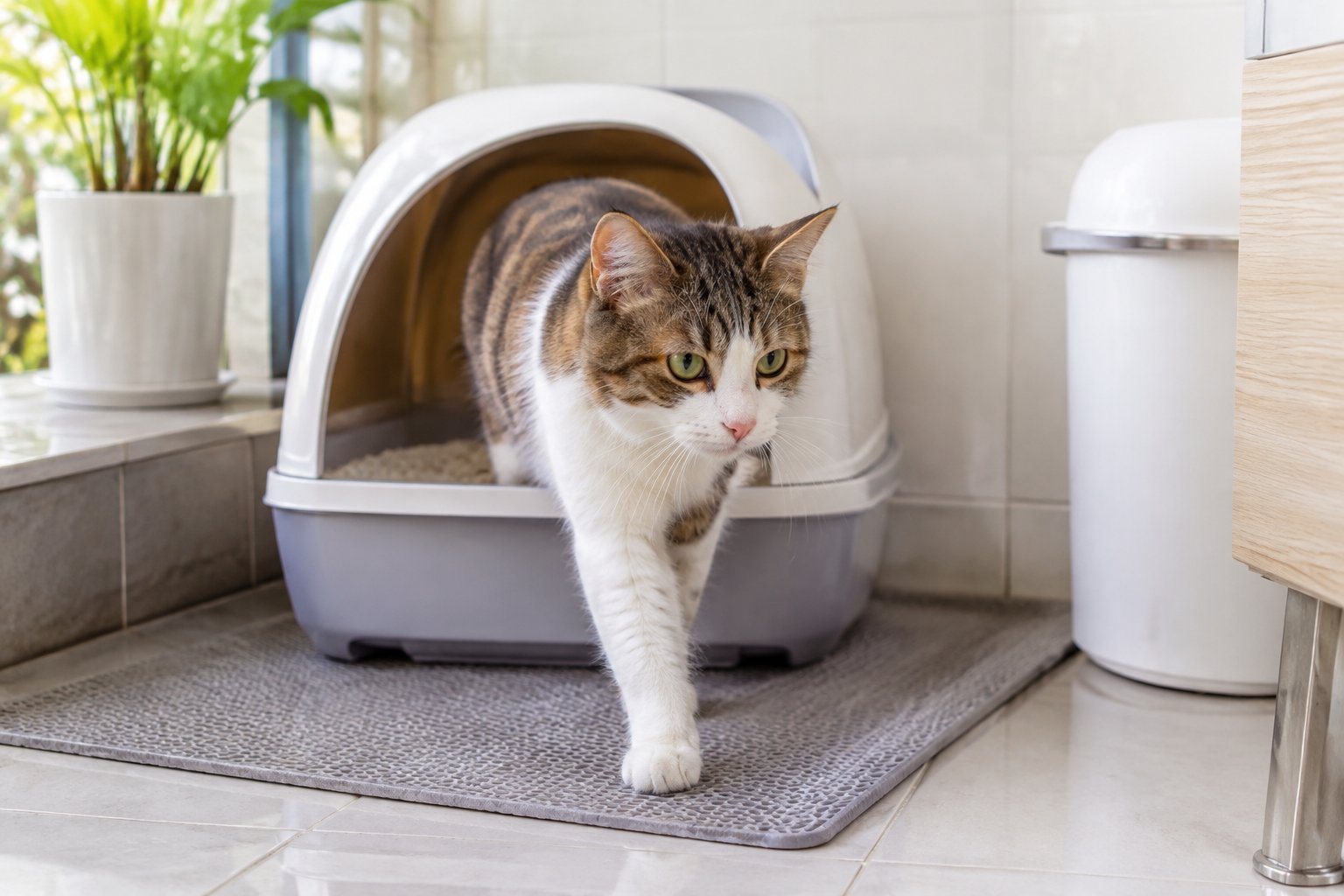
A litter mat is a simple product, but the wrong one wastes money and still leaves grit across your floor. For most Malaysian homes, the best choice is a two-layer honeycomb or mesh mat with a waterproof base, sized at least 60 x 45 cm, placed on the side your cat exits the box. It traps both coarse and fine granules, rinses clean, and dries faster in humid weather than deep-pile carpet mats.
This guide explains the main mat types, how to size and place them, how Malaysia's humidity changes the cleaning routine, and when litter box behaviour needs a vet rather than a new mat.
Why litter tracking happens
Cats dig, kick and jump. Litter sticks to paws, especially between the toes, and drops off as the cat walks away. Fine clumping litter and lightweight plant-based litters travel further because the granules are small and light. Long-haired cats and cats with furry paws carry more out of the box.
A mat works by giving granules somewhere to fall and by gently brushing the paws as the cat steps across it. No mat is perfect. The realistic goal is to reduce the amount of litter that reaches tiles, carpets and sofa cushions, and to make daily cleanup quick.
Three factors drive tracking:
- Litter type: fine clumping clay and lightweight tofu or corn litters track more than large-pellet or crystal litters.
- Box design: high-sided boxes and covered boxes with a front entry reduce scatter, but cats can still carry litter on their paws.
- Exit route: a cat that leaps from the box scatters more than one that steps out. A mat placed where the cat lands catches more.
The main types of litter mat
1. Two-layer honeycomb mats
These have a top layer with large holes and a lower tray that holds fallen granules. You separate the layers to pour the litter back into the box or into the bin. They handle both coarse and fine litter well, rinse easily, and dry quickly. Look for a rubber or non-slip base so the mat does not slide on tiles.
Best for: most homes, clumping clay, tofu and pine litters, and busy multi-cat households.
2. Mesh or loop mats
A textured mesh surface brushes paws as the cat walks. These are usually softer underfoot and easier to fold for shaking out. They trap fine litter reasonably well but can hold dampness if not dried properly.
Best for: cats that dislike hard surfaces, and homes where the box sits on tiles that get mopped often.
3. Carpet or fabric mats
These look like small rugs and trap fine litter well because the fibres grip granules. The trade-off is cleaning: hair, dust and moisture work into the pile. In humid conditions they can develop a musty smell if not dried fully.
Best for: dry, air-conditioned rooms and owners willing to vacuum often. Choose a rubber-backed version and avoid deep shag.
4. Waterproof or silicone mats
These are flat, easy to wipe and good at protecting floors from splashes and accidents. They do less to trap dry granules because there are no holes or fibres, but they are the easiest to sanitise.
Best for: kittens, senior cats, cats that miss the box, and homes that need quick daily wiping.
5. Grate or slatted mats
Rigid slats let granules fall through to a tray below. They are durable and easy to hose down, but some cats find the hard surface uncomfortable. Check that the edges are smooth and that the mat does not slide.
Best for: heavy shedders of litter and outdoor-adjacent utility areas where hosing down is easy.
Comparison table
| Mat type | Trapping ability | Ease of cleaning | Drying speed in humidity | Comfort for cats | Best use case |
|---|---|---|---|---|---|
| Two-layer honeycomb | High | High (separate and rinse) | Fast | Medium | Most Malaysian homes; clumping and tofu litter |
| Mesh or loop | Medium-high | Medium | Medium | High | Cats that prefer soft surfaces |
| Carpet or fabric | High for fine litter | Low (vacuum, spot clean) | Slow | High | Air-conditioned rooms; dry areas |
| Waterproof or silicone | Low-medium | Very high (wipe) | Very fast | Medium | Kittens, seniors, floor protection |
| Grate or slatted | Medium-high | High (hose down) | Fast | Low-medium | Utility areas, heavy tracking |
How to size and place the mat
Measure the exit side of your litter box, not the whole box. The mat should extend at least 30 cm beyond the exit so your cat takes two or three steps on it. A mat that is too small is barely better than bare floor.
Suggested sizing:
- Small cats and kittens: 45 x 60 cm minimum.
- Average adult cats: 60 x 45 cm to 75 x 50 cm.
- Large cats, Maine Coons, or covered boxes: 90 x 60 cm or larger.
- Multi-cat homes: one mat per box, or a long runner mat in front of a row of boxes.
Placement tips:
- Put the mat directly against the box entrance, with no gap where litter can fall.
- If your cat jumps out, place the mat where it lands, not only at the door.
- On tiles, choose a non-slip base or put a thin rubber grip underneath.
- Keep the mat flat. Curled edges become a trip hazard and let litter roll off.
- If you have two boxes in different rooms, use two mats.
Matching the mat to your litter
| Litter type | Tracking behaviour | Mat that suits it |
|---|---|---|
| Fine clumping clay | Travels far; sticks to paws | Two-layer honeycomb or carpet mat |
| Coarse clay pellets | Drops quickly near the box | Honeycomb or grate mat |
| Tofu or corn | Light; scatters and bounces | Large honeycomb mat with raised edges |
| Pine pellets | Sawdust and pellets spread | Grate mat or honeycomb mat |
| Crystal litter | Light granules roll | Honeycomb mat with a solid base |
| Paper pellets | Heavy; drops close to box | Any mat; waterproof mat is enough |
If you are switching litter, give your cat a transition period and expect tracking to change for a week or two.
Humidity, rain and cleaning in Malaysia
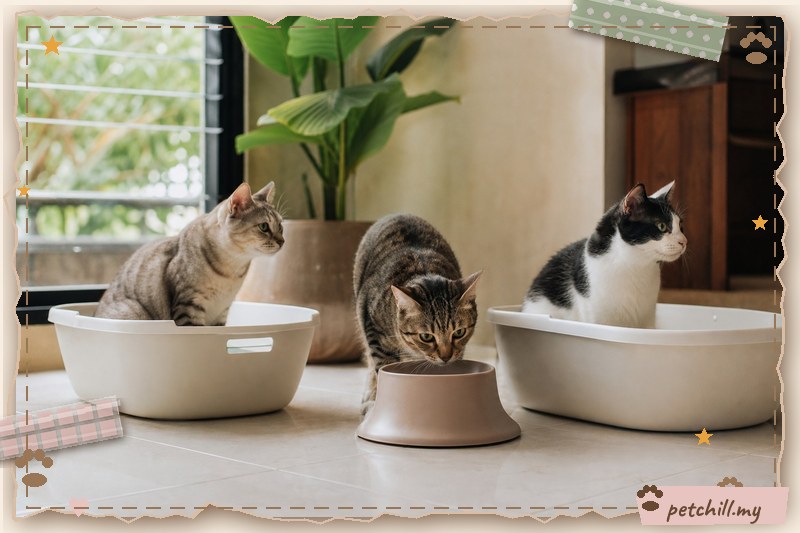
Malaysia's warm, humid climate affects how you maintain a mat. Damp mats develop odour, and fabric mats can grow mould if they stay wet. A practical routine:
Daily
- Shake the mat into a bin or back into the box.
- Wipe up any urine or vomit immediately with a pet-safe cleaner.
- Check that the mat is flat and dry.
Weekly
- Rinse honeycomb and mesh mats with mild soap and water.
- Scrub the lower tray, which collects fine dust and litter crumbs.
- Dry fully in the sun or under a fan before replacing.
Monthly
- Deep clean the mat and the floor underneath.
- Check for cracks, torn edges or worn non-slip backing.
- Replace mats that stay damp or hold odour after cleaning.
During the rainy season, or in homes with poor ventilation, dry mats indoors under a fan or in an air-conditioned room. Avoid leaving a wet mat on a tiled floor for hours; moisture trapped underneath is a common cause of smell.
Practical examples from Malaysian homes
Kuala Lumpur apartment: a cat box in a bathroom or utility corner on tiles. A two-layer honeycomb mat with a non-slip base works well because it rinses in the bathroom and dries under a fan. Keep a small hand vacuum nearby for daily shake-outs, and check the mat after mopping so it does not stay damp.
Johor terrace house: a box in a covered area near the kitchen or back door. Tracking spreads further because the cat walks through more rooms. Use a larger mat, consider a high-sided box, and place a second small mat at the doorway to catch the last granules. In wet weather, dry fabric mats in the sun before bringing them back inside.
Reducing tracking beyond the mat
A mat is one part of the solution. Combine it with:
- A high-sided or covered box to reduce kicking.
- A low-dust litter that clumps firmly and does not crumble.
- A settling zone: a short path from the box where the cat walks before reaching carpets.
- Regular scooping: a clean box means less digging and less scatter.
- Paw checks: trim long fur between paw pads if your cat carries a lot of litter.
- A second mat at the room doorway in larger homes.
What to check before buying
Use this checklist when comparing mats in a shop or online:
- Size is at least 60 x 45 cm, and wider than the box entrance.
- Two layers or a deep texture that traps fine granules.
- Waterproof or non-slip base.
- Edges lie flat and are not sharp.
- Material can be rinsed and dries within a day.
- No strong chemical smell when unpacked.
- Easy to separate layers for cleaning.
- Suitable for your litter type.
- Replacement parts or spare trays available if relevant.
- Price fits your budget; local prices vary, so compare retailers and ask a Malaysian pet shop for current pricing.
When to see a vet
Litter box problems are not always about the mat. See a vet if you notice:
- Your cat urinates or defecates outside the box suddenly.
- Straining, crying or licking the genital area.
- Blood in urine or frequent small urination attempts.
- Diarrhoea, vomiting or weight loss.
- A cat that avoids the box, especially if it previously used it well.
- Swelling, pain or discharge around the paws or bottom.
Urinary blockages in male cats are emergencies. If your cat is straining and producing little or no urine, seek veterinary care immediately.
Bottom line
For most Malaysian homes, a two-layer honeycomb mat with a waterproof, non-slip base is the most practical choice. Size it generously, place it where your cat actually exits or lands, and build a weekly cleaning routine that accounts for humidity. Pair the mat with a suitable box and litter, and treat sudden litter box changes as a health question first.
This article is general information only and is not a substitute for veterinary advice. If your cat shows signs of illness or pain, consult a licensed veterinarian.

