The short answer
Scented litter is a convenience for people, not a need for cats. The best choice for most Malaysian homes is a low-dust clumping litter with mild odour control, used alongside daily scooping and at least one unscented tray while your cat adjusts. Strong perfumes, citrus and eucalyptus are the ones to skip.
Why scent matters more to your cat than to you
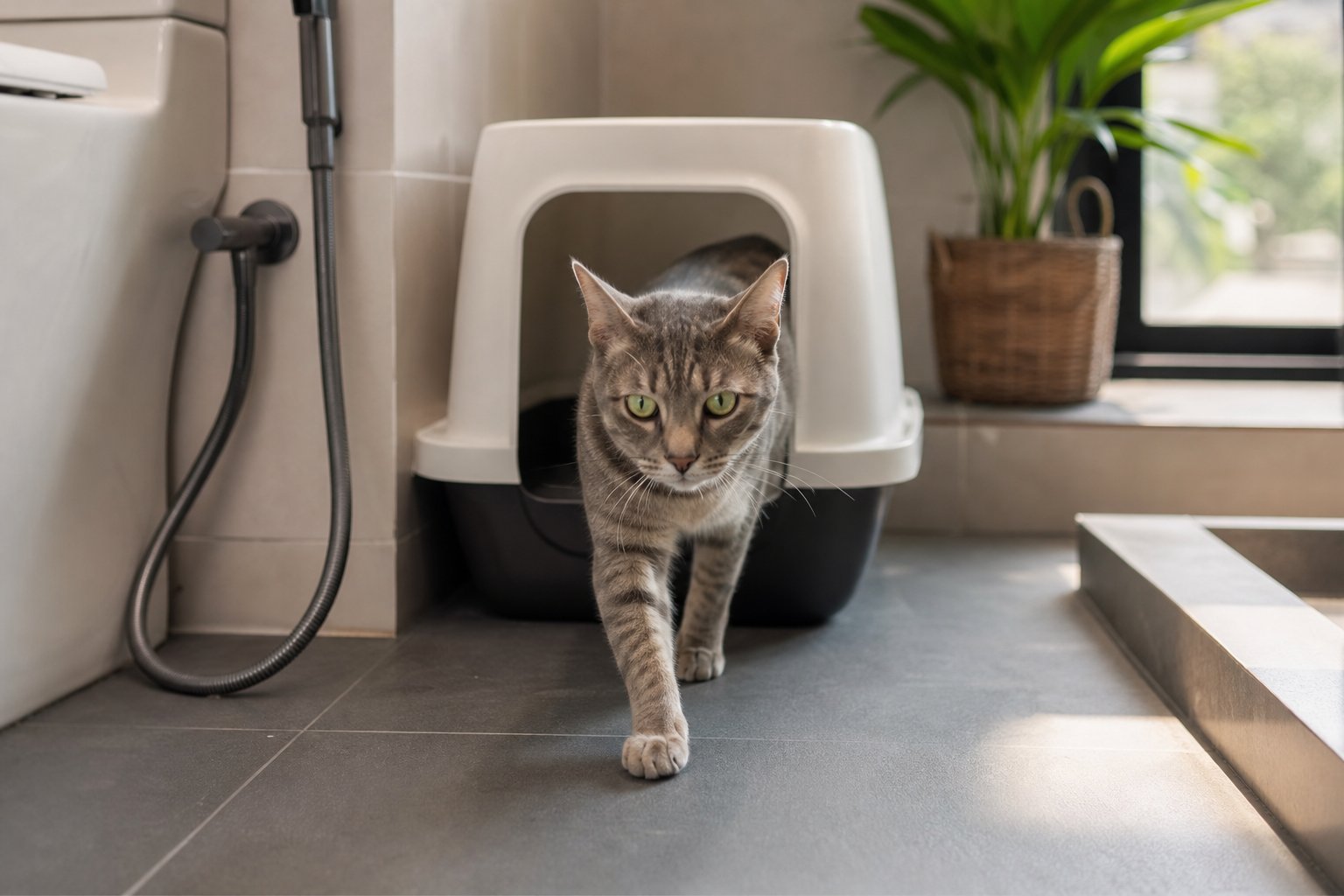
Cats rely heavily on smell to decide whether a place is safe. A litter tray is a vulnerable spot: a cat needs to feel secure enough to squat, dig and stay for a moment. If the tray smells sharply of perfume, pine cleaner or citrus, many cats simply look for somewhere quieter, such as a corner of the sofa, a laundry basket or behind the washing machine.
That does not mean every scented litter is a problem. Mild odour-control ingredients, such as baking soda or charcoal, are usually tolerated well. The trouble comes from strong fragrance oils and heavily perfumed litters that smell like air freshener. Your nose adapts within minutes; your cat's does not.
A useful rule: if the litter smells strongly to you when you pour it, it is probably too strong for your cat.
What "scented" actually means on a litter bag
Litter labels are loose with words. In practice, scented products fall into a few groups:
| Type | What it usually contains | Odour approach | Best for | Watch out for |
|---|---|---|---|---|
| Perfumed clumping litter | Fragrance oils, sometimes floral or baby-powder notes | Masks smell with a stronger smell | People who scoop daily and want a fresh scent in the room | Sensitive cats, asthma-prone cats, kittens |
| Baking-soda blends | Sodium bicarbonate, sometimes with clumping clay | Neutralises some acid odours | Most households, especially small apartments | Dust if the litter is poor quality |
| Charcoal or carbon blends | Activated charcoal or carbon | Adsorbs odour molecules | Multi-cat homes, humid rooms | Can be darker and harder to see changes in urine |
| Plant-based scented [litter | Tofu](/articles/cat-litter-guide-hong-kong-2026-malaysia "mylink"), pine, corn, paper or cassava with mild fragrance | Clumps and composts, light scent | Owners avoiding clay dust | Some cats chew or eat plant litters |
| Unscented plus tray deodoriser | Plain litter with a separate powder or liner | You control the strength | Cats that reject scented litter | Powders can be dusty; use sparingly |
If a bag says "fresh scent" without listing the source, treat it as perfumed until proven otherwise. Look for a short ingredient list and a clear statement about dust.
Choosing a scented litter for a Malaysian home
Malaysia's heat and humidity change how litter behaves. Clumping clay can absorb moisture from the air, plant litters can turn damp faster, and a closed tray in a warm room becomes a scent trap. When you shop, weigh these factors:
- Clumping strength. Firm clumps scoop cleanly and leave less residue, which matters more for odour than fragrance. Weak clumps break up and leave urine in the tray.
- Dust level. Low-dust litter is kinder to cats and to anyone in the household with asthma or allergies. Pour litter slowly from a low height to reduce the dust cloud.
- Scent strength. Mild is better. Baking soda, charcoal and light plant-based scents are usually safer than heavy floral perfumes.
- Particle size. Fine litter feels soft but tracks more; larger pellets track less but may not suit picky cats. Most cats prefer a fine, sand-like texture.
- Weight and disposal. Clay is heavy and goes in general waste. Plant litters are lighter but may need different disposal. Check local building rules for what goes in which bin.
- Cost per tray change. Compare by volume, not just bag price. A cheap litter that needs changing twice as often is not cheap.
Local prices vary widely by brand, bag size and retailer, so ask your regular pet shop or vet clinic for a current recommendation rather than relying on online prices from elsewhere.
How to switch litters without a litter-box strike
Cats dislike sudden change. A new texture and a new smell at the same time is a lot to ask. Use a gradual plan:
- Keep the old tray running. Do not remove your cat's usual litter on day one.
- Add a second tray with the new scented litter nearby, so your cat can choose.
- Mix gradually if you only have one tray: about one part new litter to three parts old for the first week, then half and half, then mostly new.
- Scoop both trays daily. A dirty tray undermines any litter test.
- Watch for signals. Sneezing, paw shaking, hovering at the tray edge, covering nothing, or toileting beside the tray all mean slow down.
- Keep one unscented tray permanently if you live with a sensitive cat or a multi-cat household. It costs little and prevents a lot of stress.
If your cat refuses the new litter completely, go back to the old one for two weeks and try a milder scented product later, or accept unscented litter and focus on tray hygiene instead.
Scent is not the same as hygiene
A common mistake is using fragrance to cover a tray that needs cleaning. Scented litter can make the room smell pleasant for an hour, but urine and faeces continue to produce odour, especially in warm, humid conditions. The basics do more than any fragrance:
- Scoop solids at least once a day, ideally twice in a multi-cat home.
- Stir the litter so wet spots are not buried and missed.
- Top up clumping litter to keep a depth of roughly 5 to 8 cm, which gives cats enough to dig and bury.
- Do a full change and wash the tray with mild, unscented soap and water. Avoid strong disinfectants, especially pine and citrus cleaners, which cats can find irritating.
- Let the tray dry fully before refilling.
- Place trays away from food and water, and away from noisy appliances.
A deep tray with high sides reduces urine spraying over the edge and keeps odour contained better than a shallow one. In a small apartment, a covered tray can concentrate smell, so check it daily rather than assuming the lid solves the problem.
Matching litter to your home
Different Malaysian living situations call for slightly different choices:
- Kuala Lumpur apartment. Space is tight and rooms are often closed up with air-conditioning. A mild baking-soda or charcoal clumping litter, a deep tray and daily scooping work better than a heavily perfumed litter that fills the whole room. Keep the tray away from the kitchen and sleeping area.
- Johor terrace house. You may have more room and better airflow, but trays in a warm utility area or covered courtyard can still smell. Low-dust clumping litter plus a lidded bin beside the tray makes scooping quick and keeps the area tidy.
- Penang rainy season. Damp air makes some litters clump poorly and plant litters absorb moisture. Store litter in a sealed container, keep the tray dry, and change the full tray a little more often during wet spells.
- Multi-cat household. Use one tray per cat plus one extra, and consider charcoal or baking-soda blends. Scented litter alone will not keep up with several cats.
- Senior or arthritic cat. Choose a tray with a low entry and a soft, fine litter. Avoid strong scents, because older cats can be more sensitive and less willing to tolerate change.
When to see a vet
Litter and scent choices cannot fix a medical problem. Contact a veterinarian if you notice any of the following:
- Your cat urinates more often, strains, cries out or produces only small amounts of urine. This can be urgent, especially in male cats.
- There is blood in the urine, or the urine smells unusually strong or sweet.
- Your cat stops using the tray entirely, or starts urinating outside it after previously being reliable.
- There is diarrhoea, constipation, or a sudden change in how often your cat defecates.
- Your cat sneezes, coughs, wheezes or has watery eyes around a particular litter.
- Your cat is over-grooming, scratching or losing fur around the hindquarters.
- A kitten or senior cat suddenly avoids the tray.
Sudden litter-box avoidance is often a sign of pain or illness rather than fussiness. A vet can rule out urinary, digestive or joint problems before you spend more on new litter.
A simple buying checklist
Before you buy a scented litter, run through this list:
- Does the bag state the scent source, such as baking soda or charcoal, rather than only "fresh"?
- Is it described as low-dust?
- Does it clump firmly within a minute or two?
- Is the particle size fine enough for a picky cat?
- Can you buy a small bag first?
- Will you keep at least one unscented tray during the switch?
- Can you store it sealed and dry in your home?
- Have you checked current local pricing with a Malaysian retailer or vet clinic?
If you can answer yes to most of these, you are in good shape. If not, start with a small pack and test before committing to a large bag.
Bottom line
The best scented cat litter for cats in Malaysia is the mildest one your cat will accept. Choose a low-dust clumping litter with baking-soda or charcoal odour control, introduce it slowly, keep an unscented option available, and rely on daily scooping and regular full changes for the real odour control. If your cat's toilet habits change, see a vet rather than reaching for a stronger scent.
This article is general information only and is not a substitute for veterinary advice. If your cat has health or behaviour concerns, consult a licensed veterinarian in Malaysia.
Related reading
- Cat Litter Guide Malaysia 2026: Types, Costs and How to Choose
- Best Paper Cat Litter for Cats in Malaysia: A Practical Buying Guide
- Best Pine Cat Litter for Cats in Malaysia: A Practical Buying Guide
- Crystal Cat Litter for Cats: Pros and Cons Every Malaysian Owner Should Know
- Litter Box for Cats: Pros and Cons Every Malaysian Owner Should Know
- Pine Cat Litter for Cats: Pros and Cons Every Malaysian Owner Should Know