
The short answer
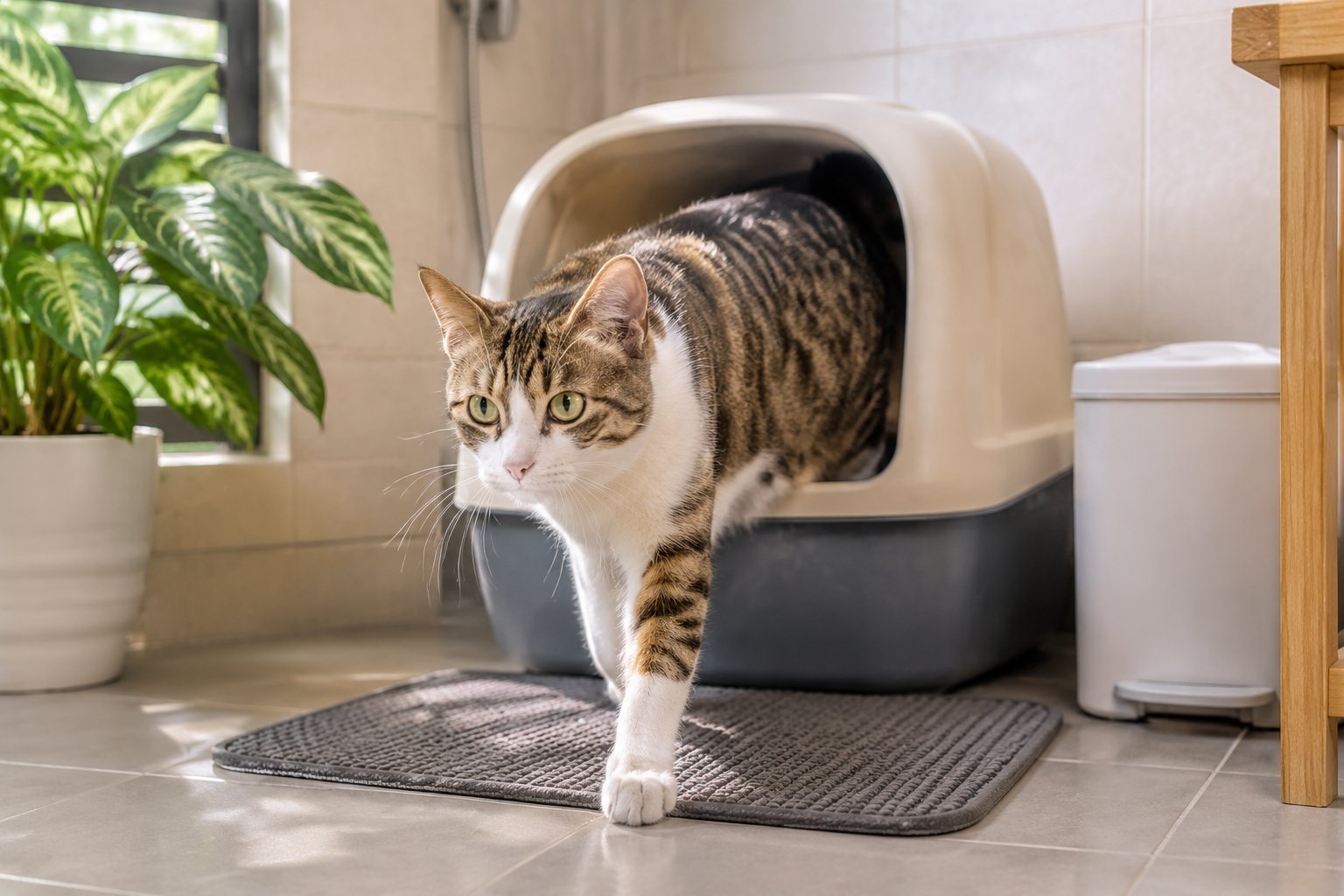
A litter mat is a simple tool that catches loose litter from your cat's paws as it leaves the box. It reduces tracking, protects floors and makes daily cleanup faster. But it is not a cure-all: some cats dislike the texture, mats need regular washing, and no mat stops every granule. The best choice depends on your cat's paws, your litter type and how much cleaning you are willing to do.
What a litter mat actually does
Cats walk out of the litter box with granules stuck between their paw pads and fur. A mat gives those granules somewhere to fall before they reach your floor. Most mats work in one of three ways:
- Textured surface: bumps or ridges loosen litter from paws.
- Mesh or woven top: litter falls through into a tray or lower layer.
- Deep pile or carpet-like surface: traps granules in the fibres.
No mat is 100% effective. Litter still travels on fur, especially in long-haired cats, and very fine litter can pass through mesh. Think of a mat as one part of a litter management system, not a standalone solution.
The pros: where a litter mat earns its place
1. Less litter on your floors
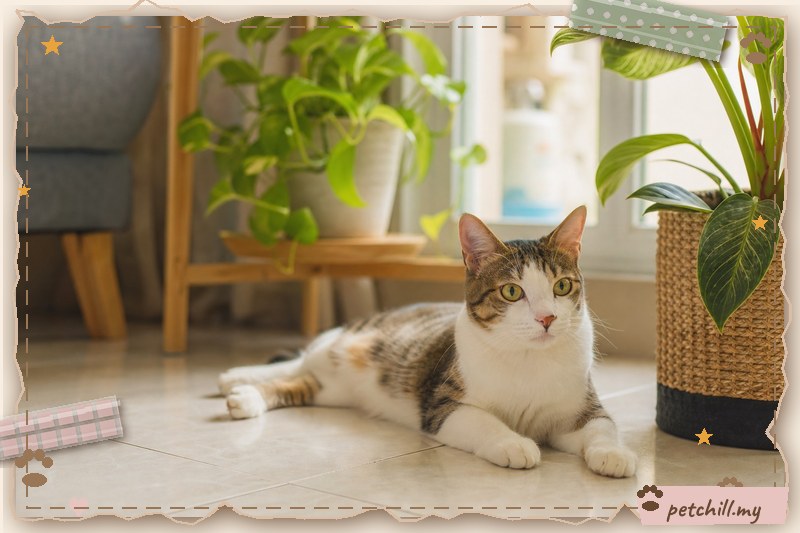
The main benefit is obvious: fewer granules scattered around the box. In a Malaysian home with tiled floors, even a small amount of litter is noticeable and can be uncomfortable underfoot. A mat placed at the box entrance catches a good share of what would otherwise spread.
2. Easier daily cleaning
Instead of sweeping the whole room, you shake or vacuum the mat. Many mats can be lifted, tipped into a bin and rinsed. This is quicker than chasing granules across a large floor area.
3. Protects flooring and reduces grit
Litter granules can scratch softer flooring over time and feel gritty on bare feet. A mat creates a buffer zone. It also helps keep litter out of cracks and grout lines, which are common in Malaysian bathrooms and utility areas.
4. Helps contain odour and mess near the box
A mat keeps the mess concentrated in one area. That makes it easier to spot accidents, clean promptly and notice changes in your cat's litter habits, which can be an early sign of health issues.
5. Useful for kittens and senior cats
Kittens and older cats may be less precise about exiting the box. A low-profile mat gives them a stable surface and catches litter they drag out. For senior cats, choose a mat with a gentle texture and no high edges to step over.
6. Cheap and low-tech
A litter mat requires no electricity, no installation and no training. It is one of the simplest additions you can make to a cat's bathroom area.
The cons: what a mat will not fix
1. It adds another cleaning task
Mats collect litter, dust and sometimes hair. They need shaking, vacuuming or rinsing. If you choose a mat with deep grooves, cleaning takes longer. Some mats trap odour if not dried properly, especially in humid conditions.
2. Some cats refuse the texture
Cats are sensitive to how surfaces feel under their paws. A spiky or hard mat can make a cat hesitate, jump over it or avoid the box altogether. This is a real risk: if your cat starts eliminating outside the box after you add a mat, remove the mat and observe.
3. Not all mats suit all litter types
Fine clumping litter can slip through mesh mats and scatter. Large pellet litter may not fit into small grooves. A mat that works well with one litter may be useless with another. Match the mat to your litter.
4. Mats can become a hiding place for mess
If a mat is not cleaned regularly, litter and dust build up underneath. In humid weather, damp mats can develop odour or mildew. This is especially relevant in Malaysian homes where bathrooms and utility areas stay damp.
5. No mat stops tracking completely
Long-haired cats, cats that leap out of the box, and very fine litter will still spread granules. A mat reduces the problem but does not solve it. You will still need to sweep or vacuum around the box.
6. Cost and space
Mats range from simple inexpensive sheets to larger textured designs. Prices vary widely in Malaysia, so check with local pet retailers. A large mat also takes up floor space, which matters in smaller apartments.
Types of litter mats compared
| Mat type | How it works | Best for | Watch out for |
|---|---|---|---|
| Textured rubber or silicone | Bumps and ridges loosen litter from paws | Most cats, easy rinsing | Can feel sharp to sensitive paws |
| Mesh or two-layer | Litter falls through to a lower tray | Fine clumping litter | Small granules can pass through |
| Woven fabric or carpet-like | Fibres trap granules | Long-haired cats | Holds odour if not dried well |
| Foam or soft mat | Gentle surface, light trapping | Senior cats, kittens | Less effective at trapping |
| Large tray-style mat | Deep sides catch scatter | Cats that kick litter | Bulky, harder to store |
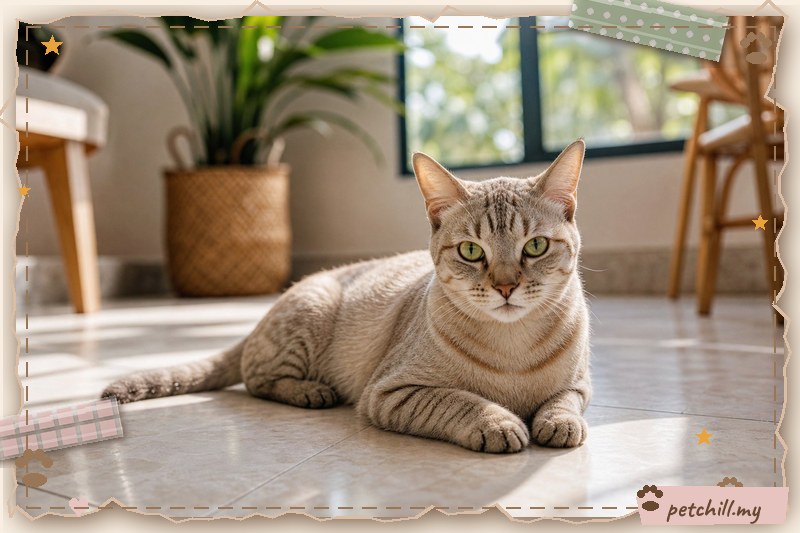
There is no single best type. The right mat depends on your cat's age, fur length, litter type and your willingness to clean it.
How to choose a litter mat for a Malaysian home
Malaysian homes often have tiled floors, humid bathrooms and limited space. Keep these points in mind:
- Grip matters. Choose a mat with a non-slip base. Tiles can be slippery, especially when wet.
- Drying time matters. In humid weather, choose a mat that drains and dries quickly. Avoid thick foam that stays damp.
- Size matters. The mat should be at least as wide as the box entrance. For cats that leap, a larger mat helps.
- Texture matters. Start with a moderate texture. Avoid very spiky mats if your cat is older or sensitive.
- Cleaning matters. Pick a mat you can shake, rinse and dry easily. If it is hard to clean, you will clean it less often.
Placement: small details that make a big difference
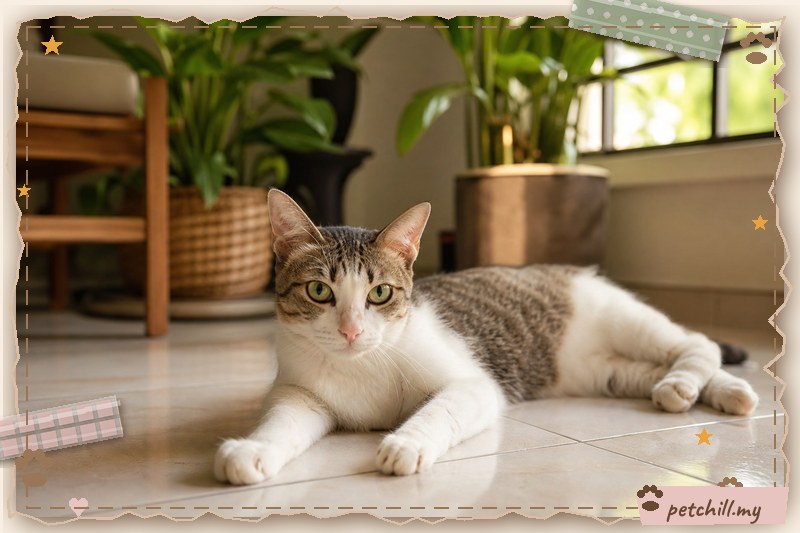
Place the mat directly at the box entrance, flat on the floor. If your cat jumps out, extend the mat further out. Keep it stable: a mat that slides or bunches up can deter a cat. Avoid placing the mat on a slope or over a drain. Keep it away from food and water bowls.
In a Kuala Lumpur apartment, space may be tight. A mat that fits neatly in front of the box without blocking the walkway is practical. In a Johor terrace house, you may have more room, but humidity and rain can make drying mats harder, so choose a quick-drying material.
Cleaning routine that actually works
A simple routine keeps a mat useful:
- Daily: shake the mat into a bin or outside. Pick up any clumps.
- Weekly: vacuum or rinse the mat. If using soap, rinse thoroughly and dry completely.
- Monthly: deep-clean with pet-safe cleaner. Check underneath for trapped litter.
- As needed: replace the mat if it smells, tears or stops trapping litter.
In the rainy season, dry mats indoors or in a well-ventilated area. Do not put a damp mat back under the box.
When a mat is not the answer
A mat is not a substitute for good litter box hygiene. If your cat is tracking a lot of litter, check:
- Is the litter box large enough?
- Is the litter deep enough?
- Is the box cleaned often enough?
- Is the litter type suitable?
- Is the box in a quiet, accessible place?
If your cat is avoiding the box, eliminating outside it, or showing signs of discomfort, a mat will not fix the underlying issue. Address the cause first.
When to see a vet
See a vet if your cat:
- Starts urinating or defecating outside the box suddenly
- Strains to urinate or defecate
- Cries while using the box
- Has blood in urine or stool
- Litters outside the box after a change such as a new mat
- Shows pain or sensitivity in the paws
These signs can indicate medical problems, including urinary issues, arthritis or paw injuries. Do not assume it is behavioural until a vet has ruled out health causes.
Practical checklist before you buy
- Measure the space in front of the [litter box.
- Check](/articles/auto-litter-box-malaysia "mylink") your litter type: fine, clumping, pellet or crystal.
- Consider your cat's age and fur length.
- Choose a mat with a non-slip base.
- Check whether it can be rinsed and dried quickly.
- Start with one mat and observe your cat.
- Keep the receipt in case your cat refuses it.
Bottom line
A litter mat is a useful, low-cost tool that reduces tracking and makes cleanup easier. It is not a cure-all. Choose a mat that suits your cat's paws, your litter and your home, clean it regularly, and watch for signs of discomfort. If your cat avoids the box or shows health changes, speak to a vet.
This article is general information only and is not a substitute for veterinary advice. Consult a licensed veterinarian for concerns about your cat's health or behaviour.

