
What is paper cat litter and who is it for?
Paper cat litter is made from recycled paper, often pressed into pellets or soft flakes. It is lightweight, low-dust and gentle on paws. It absorbs liquid and holds solids on the surface, which makes scooping simple. Because it does not clump hard like clay, it suits cats that need a softer surface: kittens, senior cats with joint stiffness, cats recovering from surgery, and cats with sensitive paws or respiratory sensitivity.
It is not the best choice for every household. Paper litter is lighter, so it tracks more easily, and it controls odour less strongly than clumping clay or crystal litter. In Malaysia's warm, humid climate, that matters. The practical approach is to use paper litter where it fits your cat's needs, and to manage odour with routine rather than relying on the litter alone.
This guide covers setup, transition, daily scooping, odour control, storage, and when paper litter is the right or wrong choice. It also explains when a litter problem is really a health problem that needs a vet.
Setting up a paper litter tray correctly
A good setup prevents most litter problems. Cats are particular about location, depth and cleanliness.
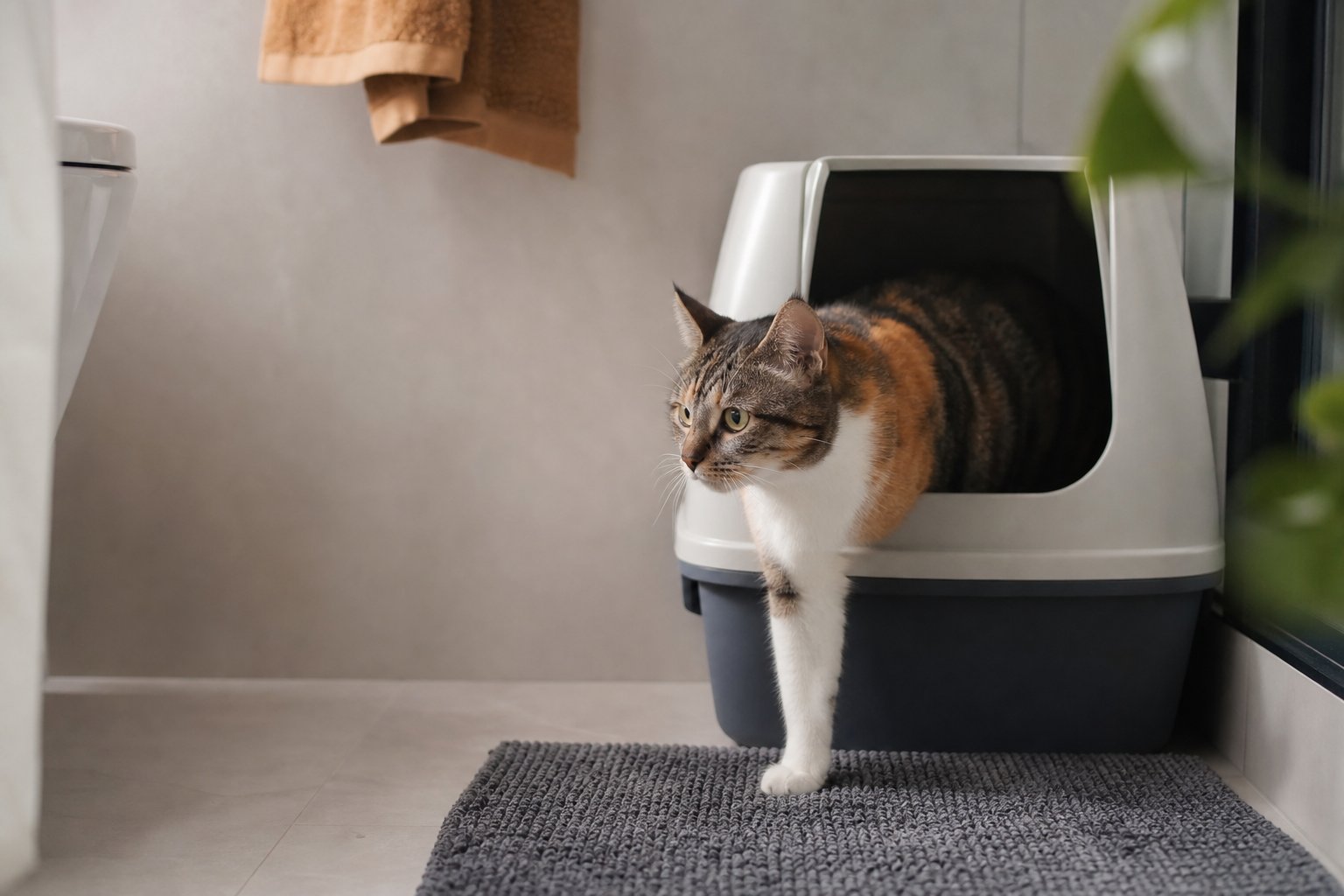
Choose the right tray. Use a tray large enough for your cat to turn around in. A shallow tray works for kittens and senior cats; a deeper tray with low entry works for most adults. Avoid covered trays if your cat seems reluctant, because they trap odour.
Fill to the right depth. Paper litter works best at about 3–5 cm deep. Too little and urine reaches the tray bottom; too much and cats sink or kick litter out. Pellets may need slightly less depth than flakes.
Pick a quiet spot. Place the tray away from food and water, in a low-traffic area. Cats dislike being startled while toileting. In a Kuala Lumpur apartment, a bathroom corner or a quiet balcony area often works better than a busy hallway.
Use one tray per cat plus one. Two cats need three trays. This reduces competition and accidents.
Keep it stable. Do not move the tray around. Cats learn its position and may avoid a tray that keeps changing location.
Setup checklist
- Tray large enough for your cat to turn around
- 3–5 cm of paper litter
- Quiet, low-traffic location away from food
- One tray per cat plus one extra
- Scoop and bag nearby
- Liner only if your cat does not chew or dig at it
How to transition your cat to paper litter
Cats are creatures of habit. A sudden switch can cause stress, accidents or even a temporary refusal to urinate, which is a health risk. Transition slowly over 7–10 days.
Step 1: Mix a small amount. Add about one-quarter paper litter to three-quarters of the old litter. Stir gently so the textures mix.
Step 2: Increase every two to three days. Move to half paper, then three-quarters, then all paper. Watch your cat's behaviour at each step.
Step 3: Keep everything else the same. Do not change the tray, its location or your scooping routine during the switch. Only the litter should change.
Step 4: Reward calm use. If your cat uses the mixed tray calmly, keep going. If your cat avoids the tray, go back one step and slow down.
Step 5: Watch for warning signs. Repeatedly sniffing the tray and walking away, urinating outside the tray, or straining are reasons to pause and check with a vet.
Transition schedule
| Day | Paper share | Old litter share | What to watch |
|---|---|---|---|
| 1–3 | 25% | 75% | Sniffing, digging, calm use |
| 4–6 | 50% | 50% | Accidents outside tray |
| 7–9 | 75% | 25% | Straining or avoidance |
| 10 | 100% | 0% | Normal routine resumes |
If your cat is stressed by change, extend each stage. There is no prize for speed.
Daily scooping and weekly cleaning routine
Paper litter does not clump, so solids sit on top and are easy to remove. Scoop at least once a day, ideally twice. Remove solids and any wet patches. Stir the remaining litter to distribute moisture and keep the surface dry.
Replace the whole tray weekly, or sooner if odour builds. In humid weather, paper litter can hold dampness and smell sour. If you notice a sour smell, change the tray immediately rather than topping up.
Wash the tray with mild soap and warm water, rinse well and dry it fully before refilling. Avoid strong disinfectants or bleach smells, which can deter cats. A dry tray also prevents mould and bacteria growth.
Daily and weekly routine
| Task | Frequency | Notes |
|---|---|---|
| Scoop solids | Daily, ideally twice | Bag and bin; do not flush |
| Stir litter | Daily | Keeps surface dry |
| Top up litter | As needed | Keep 3–5 cm depth |
| Full tray change | Weekly or sooner | More often in humid weather |
| Wash tray | With each full change | Mild soap, rinse, dry fully |
Odour control in Malaysian humidity
Paper litter absorbs liquid but does not neutralise odour as strongly as clumping clay. In Malaysia's warm, humid climate, odour can build faster. Manage it with routine and ventilation.
- Scoop solids daily; do not wait for the weekly change.
- Change the full tray weekly, and more often if the tray smells sour.
- Keep the tray in a ventilated area, but away from strong drafts.
- Avoid covered trays if odour lingers; they trap smells.
- Store unused litter in a dry, sealed container. Damp litter smells and can grow mould.
- Wash the tray thoroughly and dry it in the sun if possible before refilling.
If your home has a rainy-season damp problem, as in Penang during the wet months, check the litter more often. Damp paper litter is unpleasant for cats and can discourage tray use.
Paper litter vs other litter types
| Feature | Paper litter | Clumping clay | Crystal litter |
|---|---|---|---|
| Dust | Low | Moderate to high | Low |
| Weight | Light | Heavy | Moderate |
| Odour control | Moderate | Strong | Strong |
| Clumping | No | Yes | Yes |
| Paw comfort | Soft | Variable | Firm |
| Best for | Kittens, seniors, post-surgery | Most adult cats | Odour-sensitive homes |
| Tracking | Moderate | Moderate | Low to moderate |
Paper litter is not a downgrade; it is a different tool. If your cat is healthy and you want strong odour control, clumping clay may suit you better. If your cat has sensitive paws, recent surgery or is very young, paper litter is often the kinder choice.
Paper litter for kittens, seniors and post-surgery cats
Kittens. Paper litter is soft and low-dust, and it is less likely to stick to paws or be swallowed. Use a shallow tray with low sides so kittens can step in easily. Supervise young kittens and clean the tray often, because kittens toilet frequently.
Senior cats. Older cats may have arthritis and struggle to climb into deep trays. Use a low-entry tray and soft paper litter. Keep the tray close to where your cat rests, and scoop daily so your cat does not avoid a dirty tray.
Post-surgery cats. Vets often recommend paper litter after surgery because it is low-dust and less likely to irritate incisions or stick to wounds. Follow your vet's specific instructions. Keep the tray clean and change it more often during recovery.
Cats with respiratory sensitivity. Low-dust paper litter can be easier on cats that sneeze or cough around dusty clay litter. If your cat has breathing problems, ask your vet before changing litter.
Common mistakes and how to fix them
Mistake 1: Switching too fast. Fix it by mixing over 7–10 days. Slow transitions prevent accidents.
Mistake 2: Filling the tray too deep. Fix it by keeping 3–5 cm of litter. Deep litter makes cats sink and feel unstable.
Mistake 3: Skipping daily scooping. Fix it by scooping twice a day. Cats avoid dirty trays.
Mistake 4: Using a covered tray in a humid room. Fix it by removing the lid or improving ventilation. Trapped odour discourages use.
Mistake 5: Storing litter in a damp place. Fix it by keeping unused litter sealed and dry. Damp litter smells and can grow mould.
Mistake 6: Ignoring accidents. Fix it by checking for health problems and reviewing tray setup. Repeated accidents are not naughtiness.
When to see a vet
Litter habits are a health indicator. See a vet promptly if your cat:
- Strains to urinate, cries while urinating, or passes only small amounts
- Urinates outside the tray suddenly, especially on cool surfaces
- Has blood in the urine
- Stops using the tray altogether
- Shows pain, lethargy or loss of appetite
- Has diarrhoea or constipation that lasts more than a day or two
- Has a wound or incision that looks irritated after surgery
Urinary blockages are emergencies, especially in male cats. Do not wait to see if it improves. If your cat is unable to pass urine, seek veterinary care immediately.
Frequently asked questions
Can cats use paper cat litter every day? Yes. Scoop solids daily, stir the litter, and replace the tray weekly or when odour builds. Daily maintenance matters more than the litter type.
How do I switch my cat from clumping clay to paper litter? Mix paper into the old litter, starting with about one-quarter paper. Increase every two to three days over 7–10 days. Keep the tray in the same place and scoop daily.
Is paper cat litter good for kittens? Yes. It is soft, low-dust and less likely to be swallowed or stick to paws. Use a shallow tray and supervise very young kittens.
Does paper cat litter control odour well? It absorbs liquid but controls odour less strongly than clumping clay or crystal litter. Scoop daily, change weekly, and improve ventilation in humid weather.
Can I flush paper cat litter down the toilet? No. Cat waste can carry parasites, and litter can block plumbing. Bag it and bin it.
Why is my cat not using paper litter? Cats dislike change, deep litter, dirty trays or noisy locations. Mix gradually, keep the tray shallow, scoop daily and place it somewhere quiet. If your cat stops urinating or strains, see a vet.
Quick reference: paper litter at a glance
- Depth: 3–5 cm
- Scoop: daily, ideally twice
- Full change: weekly or sooner
- Transition: 7–10 days, mixed gradually
- Best for: kittens, seniors, post-surgery, sensitive paws
- Watch for: straining, blood in urine, sudden accidents
Paper litter is a practical, gentle option when used with a consistent routine. The key is gradual transition, daily scooping and a clean, quiet tray. If your cat's litter habits change suddenly, treat it as a health signal and speak to your vet.
This article is general information only and is not a substitute for veterinary advice. Always consult a licensed veterinarian about your cat's health, diet and litter needs.
Related reading
- Cat Litter Guide Malaysia 2026: Types, Costs and How to Choose
- How to Use Pine Cat Litter for Cats: A Complete Malaysian Guide
- Litter Box Buying Guide for Cat Owners in Malaysia: Size, Style, Litter & Placement
- Best Clumping Cat Litter for Cats in Malaysia: A Practical Buying Guide
- Best Litter Box for Cats in Malaysia: A Practical Buying Guide
- Best Pine Cat Litter for Cats in Malaysia: A Practical Buying Guide
- Best Scented Cat Litter for Cats in Malaysia: A Practical Buying Guide

