What is the best pine cat litter for cats in Malaysia?
For most Malaysian cats, the best pine cat litter is a low-dust, kiln-dried product that suits your cat's digging style and stays dry in humid weather. Pellets are tidy and low-tracking; soft clumping pine is better for cats that dislike pellets. Buy small first, transition slowly, and scoop daily.
Pine litter has become a common sight on Malaysian pet shelves, and for good reason. It is lightweight, often less dusty than fine clay, and has a natural woody smell that many owners find easier to live with in a warm, humid home. But "pine litter" covers several very different products, and the best choice for your cat depends on texture, dust, clumping behaviour, odour control and how your cat reacts to change.
This guide explains the main types of pine litter, how to judge quality, how to handle Malaysia's humidity, and how to switch your cat without triggering a litter-box strike. It is written for Malaysian cat owners in apartments, terrace houses and shared homes, where ventilation, space and laundry routines all affect which litter works best.
Pellet pine litter vs clumping pine litter
Pine litter usually comes in two broad forms. Understanding the difference is the fastest way to narrow your choice.
Pine pellets are compressed sawdust pellets. They are firm underfoot, low-tracking and slow to break down. When wet, pellets soften and turn into sawdust, which some owners sieve out. Pellets are popular in homes where tracking and dust are major annoyances. The trade-off is texture: some cats dislike standing on hard pellets, and pellets do not clump, so you cannot scoop a neat ball of urine.
Clumping pine litter is made from finer pine fibres that bind together when wet. It behaves more like clumping clay, making daily scooping familiar and easy. It is softer underfoot and often more acceptable to cats that have only used clay. The trade-off is that fine litter can track more and may be dustier if the product is poorly screened.
There is also non-clumping pine fibre or sawdust-style litter, which is soft and absorbent but can be messy and does not form scoopable clumps. This style can suit cats that like a soft surface, but it demands more frequent full changes.
| Feature | Pine pellets | Clumping pine litter | Soft pine fibre / sawdust style |
|---|---|---|---|
| Texture under paws | Firm, hard | Soft, sandy | Very soft |
| Tracking | Low | Moderate | Moderate to high |
| Dust | Usually low | Varies by brand | Can be higher |
| Odour control | Good, natural pine smell | Good when scooped daily | Moderate; needs frequent changes |
| Scooping | Sieve or remove softened pellets | Scoop clumps daily | Hard to scoop; full changes often |
| Best for | Tidy homes, low-tracking preference | Cats used to clumping clay | Cats that dislike pellets |
| Watch out for | Cats that refuse hard texture | Dust if poorly screened | Mess and faster odour build-up |
What makes a good pine litter for Malaysian homes
Malaysia's warm, humid climate changes how litter performs. A litter that works well in a dry, air-conditioned room may behave differently on a covered balcony or in a bathroom. Use these criteria when comparing products.
Low dust. Dust is not just a mess; it can irritate eyes and airways, and it settles on floors and shelves. Shake a small sample in a clear container or pour it slowly. A good pine litter should not create a visible cloud. Kiln-dried pine is preferable because it is heat-treated and drier.
Consistent pellet or granule size. Uneven pieces mean more breakage and more tracking. Pellets should hold their shape when dry and soften only when wet.
Natural pine scent, not perfume. Pine already has an aroma. Strong added fragrances may put cats off and can mask odour rather than control it. Cats rely on smell, so a mild, natural scent is usually better.
Good absorption and clump strength. For clumping pine, wet a small amount and check whether it forms a firm clump that lifts cleanly. Weak clumps break apart and leave wet litter behind.
Clear labelling. Look for kiln-dried pine, the intended litter depth, and whether the product is marketed for kittens or adult cats. If a label makes vague claims, ask the retailer for details.
Bag size that suits your routine. Large bags are economical but heavy and may absorb moisture after opening. In humid weather, store litter in a dry, sealed container rather than leaving an open bag in a bathroom.
Safety: what Malaysian cat owners should know
Pine litter is widely used, but safety depends on the product and the cat. Here is a practical checklist.
- Choose kiln-dried pine. Kiln drying removes moisture and reduces volatile compounds. Avoid untreated sawdust, fresh wood shavings or mixed workshop wood waste, which may contain irritants or contaminants.
- Be cautious with kittens and chewers. Kittens explore with their mouths, and some cats chew litter. Clumping litter can be risky if swallowed. Ask your vet before using clumping pine for very young kittens.
- Watch for respiratory signs. If your cat sneezes, wheezes or has watery eyes after a litter change, stop using the product and speak to your vet. Cats with asthma or sensitive airways may do better with a low-dust option.
- Do not use pine litter as bedding for small pets without advice. Different species have different sensitivities. This guide is about cats.
- Keep the bag away from food and water bowls. Cross-contamination and moisture are avoidable problems.
If you are unsure whether a particular pine product is suitable for your cat, especially a kitten, a senior cat or a cat with a health condition, ask your veterinarian. They can advise based on your cat's history rather than a general rule.
Odour control and humidity: making pine litter work in Malaysia
Pine litter controls odour best when it is kept dry and clean. In humid weather, litter can absorb moisture from the air, clumps can soften, and odour can build faster. These habits make a real difference.
Scoop at least once a day. Twice daily is better in a busy household or a small apartment. Remove solids promptly and lift urine clumps before they break apart.
Keep litter deep enough. A shallow layer allows urine to reach the box surface. Most cats do well with a few centimetres of litter, but follow the product's guidance and adjust for your cat's digging.
Place the box wisely. Avoid damp bathrooms and laundry areas if possible. A ventilated spot away from food and noisy appliances is better. In a Kuala Lumpur apartment, a utility area or a quiet corner with airflow may work better than a sealed cupboard.
Wash the box regularly. Empty the litter, wash the box with mild soap and water, dry it fully, then refill. Avoid strong disinfectants that leave a lingering smell.
Store litter dry. Keep the bag sealed and off the floor. In a Penang rainy season, humidity can be high for days; a sealed container protects the litter between changes.
Use a covered box with care. Covered boxes trap odour and humidity. If you use one, clean it more often and check that your cat is comfortable going inside.
How to switch your cat to pine litter without stress
Cats are creatures of habit. A sudden change of litter texture or smell can lead to accidents outside the box. A gradual switch is safer.
- Set up two boxes. Keep one box with the old litter and one with pine. Place them side by side or in the same area so your cat can choose.
- Mix gradually. Start with a small amount of pine mixed into the old litter, then increase the proportion over one to two weeks.
- Watch for preference. If your cat uses the pine box consistently, increase pine in the main box. If your cat avoids it, slow down.
- Keep the box clean. During the transition, scoop even more often. A dirty box can make a new litter seem worse than it is.
- Avoid other changes. Do not move the box, change food or introduce a new pet at the same time. One change at a time is easier to manage.
- Reward calm behaviour. Praise or treat your cat after it uses the box. Do not punish accidents; clean them with an enzymatic cleaner and review the setup.
If your cat continues to refuse the box after a gradual transition, consider a different pine texture, such as moving from pellets to clumping pine or vice versa. Some cats simply prefer a softer surface.
Choosing the right litter box setup
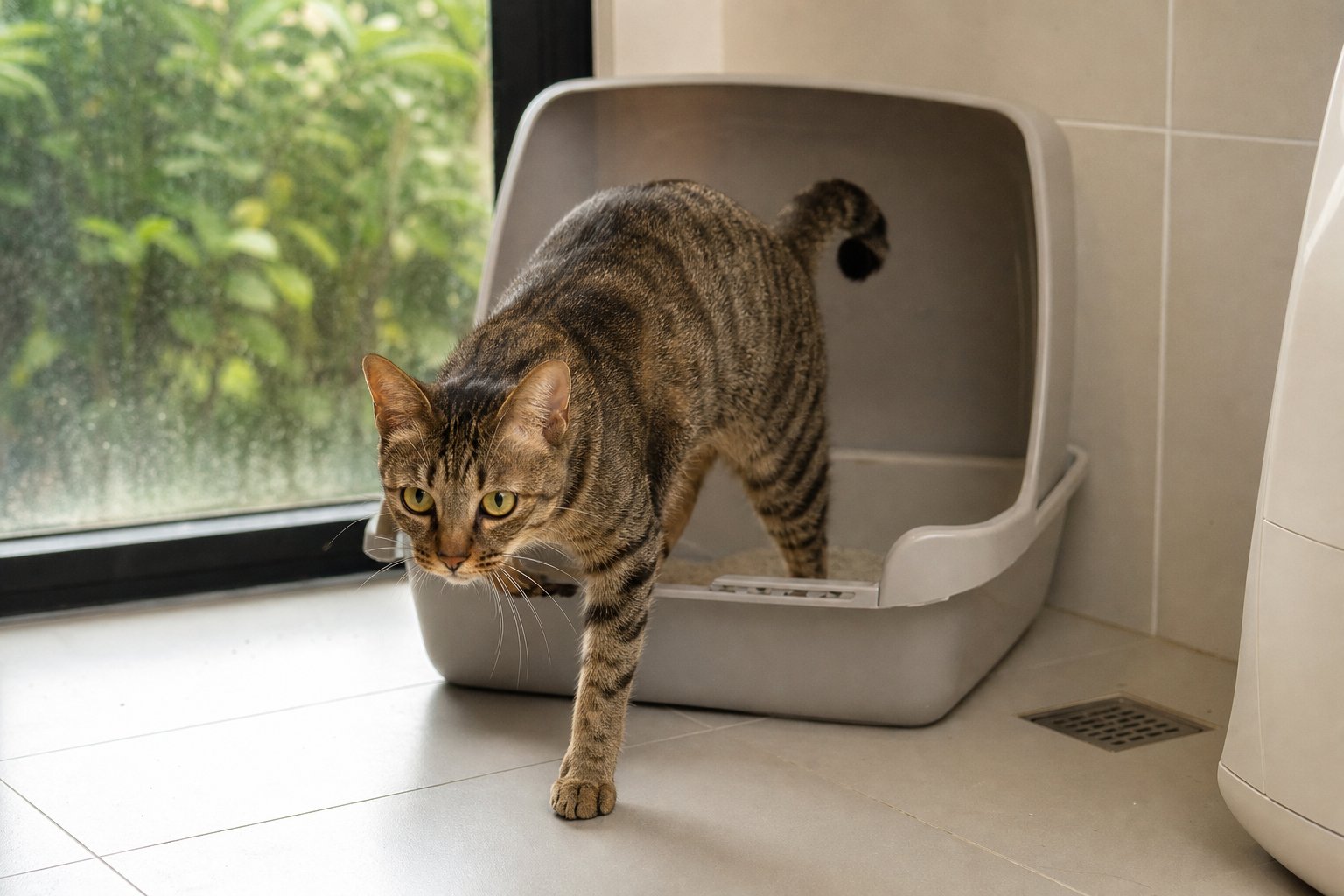
The best litter cannot fix a poor box setup. Malaysian homes vary widely, from compact apartments to terrace houses with utility areas, so match the setup to your space.
- Size: The box should be about one and a half times the length of your cat, with room to turn around.
- Number: A common guideline is one box per cat plus one extra. In a multi-cat home, this reduces competition and stress.
- Depth: Choose a box with high sides if your cat urinates high or digs vigorously. A low entry helps kittens and senior cats.
- Location: Quiet, accessible and away from food. Avoid placing the box next to a noisy washing machine or in a damp, dark corner.
- Liner: Liners can make cleaning easier but may deter cats that dislike the texture. Try without a liner first.
- Cleaning routine: Scoop daily, wash weekly, and replace litter fully as needed. Keep a spare box or tray for drying after washing.
In a Johor terrace house, a shaded outdoor utility area may offer good ventilation, but make sure the box is safe from rain and other animals. In a high-rise apartment, a bathroom or balcony corner can work if it is not too humid and your cat can access it easily.
Common mistakes to avoid
Even experienced owners make litter mistakes. Watch for these.
- Buying a large bag before testing. Your cat may reject the texture. Start small.
- Overfilling the box. Too much litter can make scooping harder and waste product. Follow the label and your cat's digging habits.
- Using strong fragrances or cleaners. Cats have sensitive noses. Mild, unscented cleaning is usually better.
- Ignoring sudden changes in litter-box behaviour. A cat that stops using the box may be in pain or stressed. This is a health signal, not just a preference.
- Storing litter in a damp place. Humidity clumps litter and encourages odour. Keep it sealed and dry.
- Mixing incompatible textures. Mixing fine clumping litter with large pellets can create a messy, hard-to-scoop blend. Transition gradually rather than blending permanently.
When to see a vet
Litter-box changes can reveal health problems. Contact a veterinarian if your cat:
- Strains, cries or takes a long time to urinate
- Passes blood in urine or stools
- Urinates outside the box suddenly, especially in small amounts
- Has diarrhoea, constipation or frequent vomiting
- Sneezes, wheezes or has eye discharge after a litter change
- Eats litter or shows unusual chewing behaviour
- Seems painful when squatting or avoids the box entirely
Urinary blockages, especially in male cats, are emergencies. Do not wait to see if the problem resolves. If you are unsure, call your vet for advice.
Frequently asked questions
Is pine cat litter safe for cats? Kiln-dried pine litter is generally safe for healthy adult cats. Avoid sawdust or untreated wood shavings, especially for kittens, pregnant cats or cats with respiratory issues. If your cat chews or eats litter, ask your vet before switching.
Is pine litter better than clay litter? Pine is lighter, often less dusty and naturally deodorising, but clumping clay may be easier for some cats to dig. The best choice depends on your cat's preference, your home's humidity and how often you can scoop.
How often should I change pine cat litter? Scoop solids daily, remove wet litter as soon as it appears, and fully replace the litter weekly or when odour persists. In humid Malaysian weather, check the box more often and top up dry litter as needed.
Does pine cat litter control odour well? Yes, pine has natural odour-absorbing properties, but odour control depends on daily scooping, enough litter depth and good ventilation. In humid homes, pair pine litter with a well-placed box and regular full changes.
Can kittens use pine cat litter? Kittens can use pine litter, but choose a low-dust, kiln-dried product and avoid clumping litter until they are old enough not to eat it. Ask your vet for advice, especially for very young or curious kittens.
Why does my cat refuse pine litter? Cats are sensitive to texture and smell. Pellets may feel uncomfortable under paws, or the pine scent may be too strong. Try a softer pine litter, mix it gradually with the old litter, or offer two boxes during the transition.
Bottom line
The best pine cat litter for your cat is the one your cat will use consistently, that keeps odour manageable in your home, and that fits your cleaning routine. Start with a small bag of low-dust, kiln-dried pine, offer a choice of textures during the transition, and keep the box clean and dry. If your cat shows signs of discomfort or illness, speak to your veterinarian rather than changing litter repeatedly.
This article provides general information for cat owners in Malaysia and is not a substitute for veterinary advice. Always consult a licensed veterinarian about your cat's health, diet and litter preferences.
Related reading
- Cat Litter Guide Malaysia 2026: Types, Costs and How to Choose
- Best Crystal Cat Litter for Cats in Malaysia: A Practical Buying Guide
- Best Paper Cat Litter for Cats in Malaysia: A Practical Buying Guide
- Best Scented Cat Litter for Cats in Malaysia: A Practical Buying Guide
- Cat Litter Guide Malaysia 2026: Tofu, Mineral, Pine, Tapioca and Blends Compared
- Crystal Cat Litter for Cats: Pros and Cons Every Malaysian Owner Should Know