
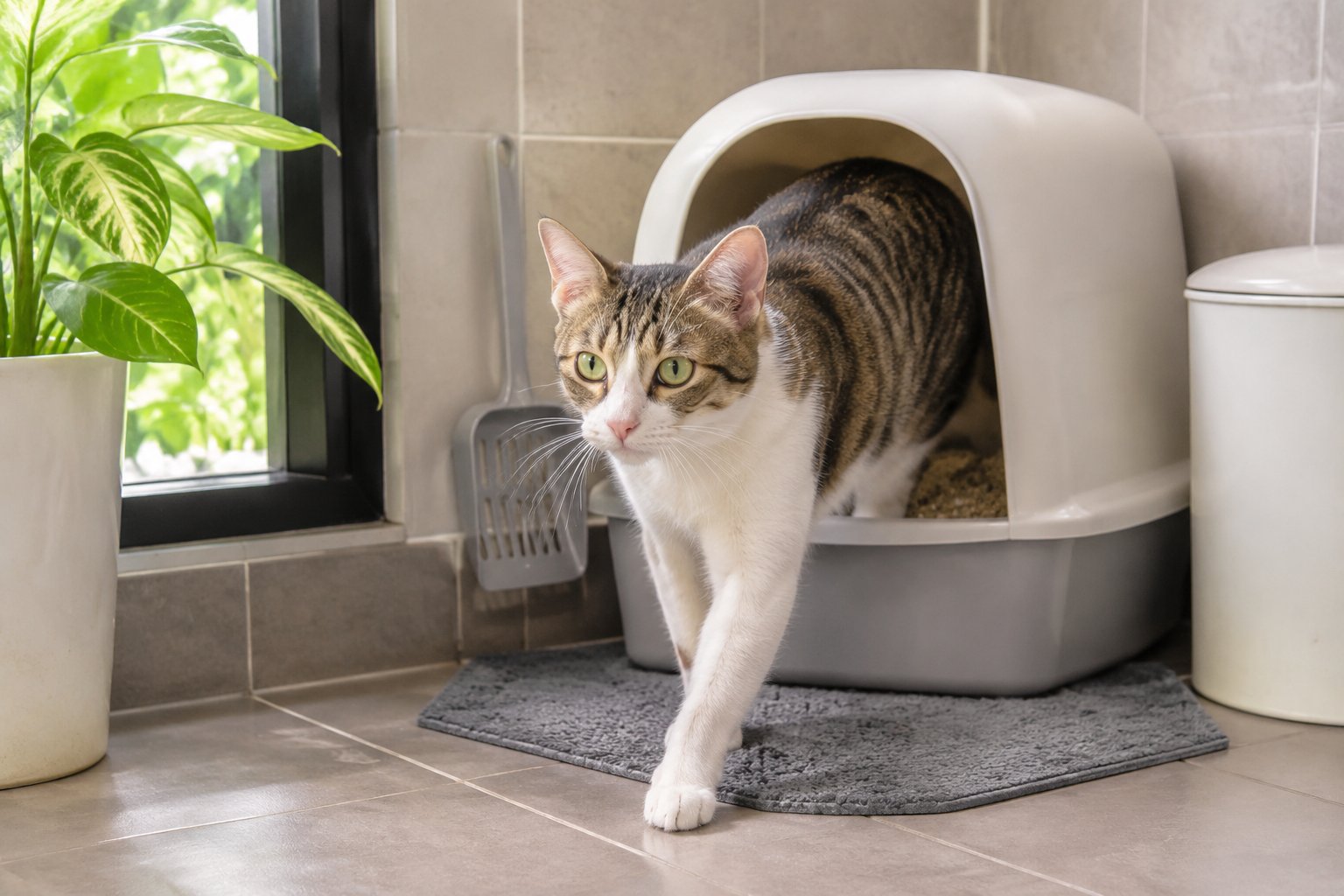
Start with the short answer
The best litter box for cats in Malaysia is the largest open-top box your space allows, filled with clumping litter and scooped daily. Hooded boxes help with kicking and odour but need extra ventilation in humid weather. Buy from local pet shops or online retailers, compare prices, and ask a Malaysian vet if your cat has health or behaviour issues.
Why the "best" box depends on your cat and your home
There is no single perfect litter box. The right choice depends on your cat's size, age, and habits, plus your home layout and climate. A box that is too small, too enclosed, or cleaned too rarely is a common cause of accidents and stress.
In Malaysia, humidity and warm temperatures matter. Litter and boxes can stay damp, odour builds faster, and enclosed boxes can become unpleasant. That is why ventilation, absorbency, and a consistent cleaning routine are central to choosing well.
Use this guide as a checklist. Start with size and openness, then choose litter, placement, and cleaning. Adjust as your cat tells you what works.
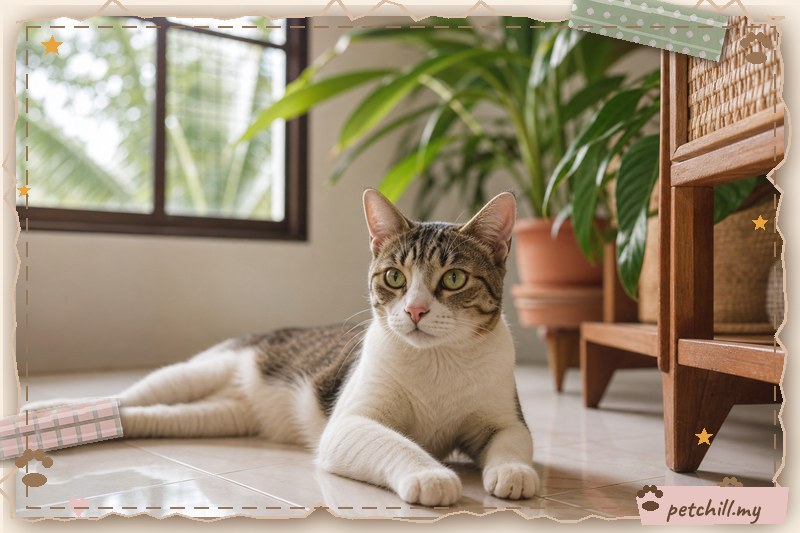
Size and shape: the most important factor
How to measure
Measure your cat from the tip of the nose to the base of the tail. The box should be at least 1.5 times that length. It should also be wide enough for your cat to turn around comfortably and deep enough to hold 5–8 cm of litter.
For most adult cats, that means roughly 60–75 cm long and 40–50 cm wide. Large cats, senior cats, and kittens need special consideration.
Entry height
- Kittens and senior cats: choose low-entry boxes (under 10 cm) or cut a doorway into a plastic storage box.
- Adult cats: standard entry is fine, but avoid very high sides that require jumping.
- Arthritic cats: low entry and soft litter help.
Open vs hooded
| Feature | Open-top box | Hooded box |
|---|---|---|
| Ventilation | Excellent | Poor unless filtered |
| Odour control | Moderate | Good if cleaned often |
| Kicking litter out | More likely | Contained |
| Privacy for cat | Less | More |
| Cleaning ease | Easy | More parts to wash |
| Suitability in humidity | Better | Needs extra care |
Open boxes are generally easier to keep fresh in Malaysia's climate. Hooded boxes suit cats that kick litter or prefer privacy, but they trap moisture and smell. If you choose a hood, pick one with a charcoal filter and clean it more often.
Top-entry and automatic boxes
Top-entry boxes can reduce tracking but may not suit seniors or large cats. Automatic self-cleaning boxes save time but cost more and need a power source. They are optional, not essential. Many cats do well with a simple large box.
Litter types and how they perform in Malaysia
Clumping clay
Clumping clay is popular because it forms solid clumps that are easy to scoop. It controls odour well. However, it can be dusty and heavy. In humid conditions, store it sealed and keep the box dry.
Tofu and plant-based litter
Tofu litter clumps and is often less dusty. It may be flushable in small amounts, but check local guidance and avoid flushing if unsure. It can be more expensive than clay.
Crystal (silica gel) litter
Crystal litter absorbs moisture and controls odour with less frequent full changes. It is low-dust but some cats dislike the texture. It is not clumping, so solid waste must be removed daily.
Pine and wood pellets
Wood pellets are economical and absorbent. They break down into sawdust when wet. Some cats accept them well; others prefer finer textures.
Paper litter
Paper litter is soft and low-dust, useful for post-surgery or sensitive cats. It controls odour less well and needs frequent changing.
Scented vs unscented
Choose unscented litter. Cats have sensitive noses, and strong fragrances can deter them from using the box.
Litter depth
Most cats prefer 5–8 cm of litter. Too little makes digging difficult; too much can be kicked out. Adjust based on your cat's behaviour.
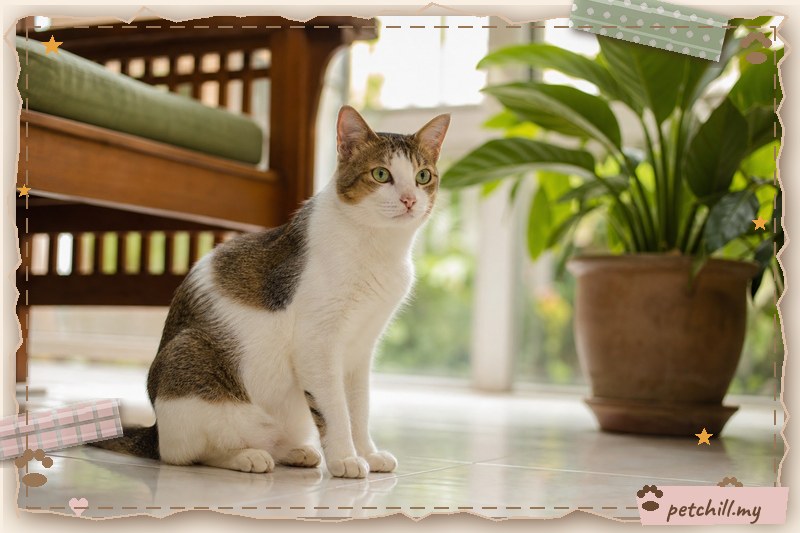
Placement: where the box goes matters
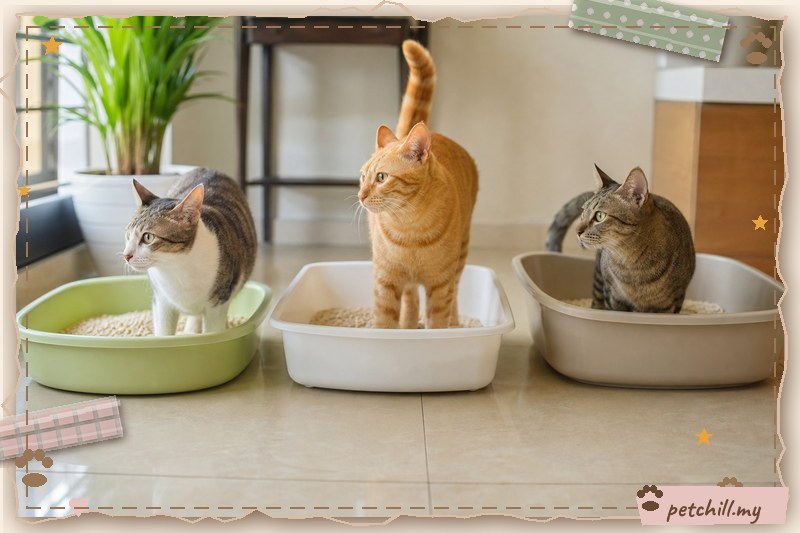
Place the box in a quiet, accessible spot away from food and water. Cats prefer not to eat near their toilet. Avoid busy walkways, noisy appliances, and areas where the cat can be cornered.
In Malaysian apartments, utility areas, bathrooms, and balconies are common. Ensure the spot is shaded and dry. Balconies can get hot and rainy, so provide shelter and check the box often.
For multi-cat homes, spread boxes across different rooms. Avoid placing all boxes in one corner, which can lead to guarding.
Checklist for placement
- Quiet and low-traffic
- Away from food and water
- Easy for the cat to reach
- Not next to noisy appliances
- Dry and shaded
- At least one box per floor in double-storey homes
Cleaning routine that actually works
Scoop solid waste at least once daily, ideally twice. Clumping litter should be topped up as needed. Do a full litter change every 2–4 weeks, or sooner if odour persists.
Wash the box with mild soap and warm water. Avoid harsh chemicals and strong disinfectants, which can leave irritating residues. Dry the box fully before adding new litter.
In humid weather, check for damp litter and clumping issues. Replace wet litter promptly. Store litter in a sealed container to keep it dry.
Daily, weekly, monthly
| Frequency | Task |
|---|---|
| Daily | Scoop solids, stir litter, top up |
| Weekly | Wipe surfaces, check for dampness |
| Every 2–4 weeks | Full litter change and box wash |
| Monthly | Inspect box for cracks and wear |
Common problems and fixes
Cat urinates outside the box
First, rule out medical issues with a vet. If health is fine, review box size, cleanliness, litter type, and placement. Add another box in a different location.
Cat kicks litter everywhere
Use a high-sided box or a hooded box with a mat outside. A litter mat traps tracked litter. Avoid overfilling.
Cat refuses hooded box
Remove the hood and see if the cat uses it. Some cats dislike enclosed spaces.
Odour in humid weather
Scoop more often, use unscented clumping litter, and ensure ventilation. Consider an open box or a hood with a filter.
Senior cat misses the box
Provide low-entry boxes and easier access. Place boxes on each floor. Consult a vet about arthritis or other conditions.
Buying in Malaysia: what to compare
Prices vary by brand, size, and material. Compare locally and ask a Malaysian vet or pet shop for advice. Do not assume online prices match store prices.
What to check before buying
- Dimensions and entry height
- Material thickness and durability
- Whether a hood is included or sold separately
- Filter availability
- Ease of cleaning
- Return policy
Where to buy
Pet shops, veterinary clinics, and online marketplaces stock litter boxes. Check reviews for size accuracy and durability. For litter, buy small bags first to test acceptance.
When to see a vet
See a vet if your cat stops using the box, strains to urinate, urinates outside the box suddenly, has bloody urine, cries while urinating, or shows pain. Urinary blockages, especially in male cats, are emergencies. Behaviour changes can also signal illness. Do not delay if your cat is straining or not passing urine.
Vet disclaimer
This article is general information, not veterinary advice. Every cat is different. Consult a licensed veterinarian in Malaysia for diagnosis and treatment of health or behaviour problems.

