
Start with fit, not features
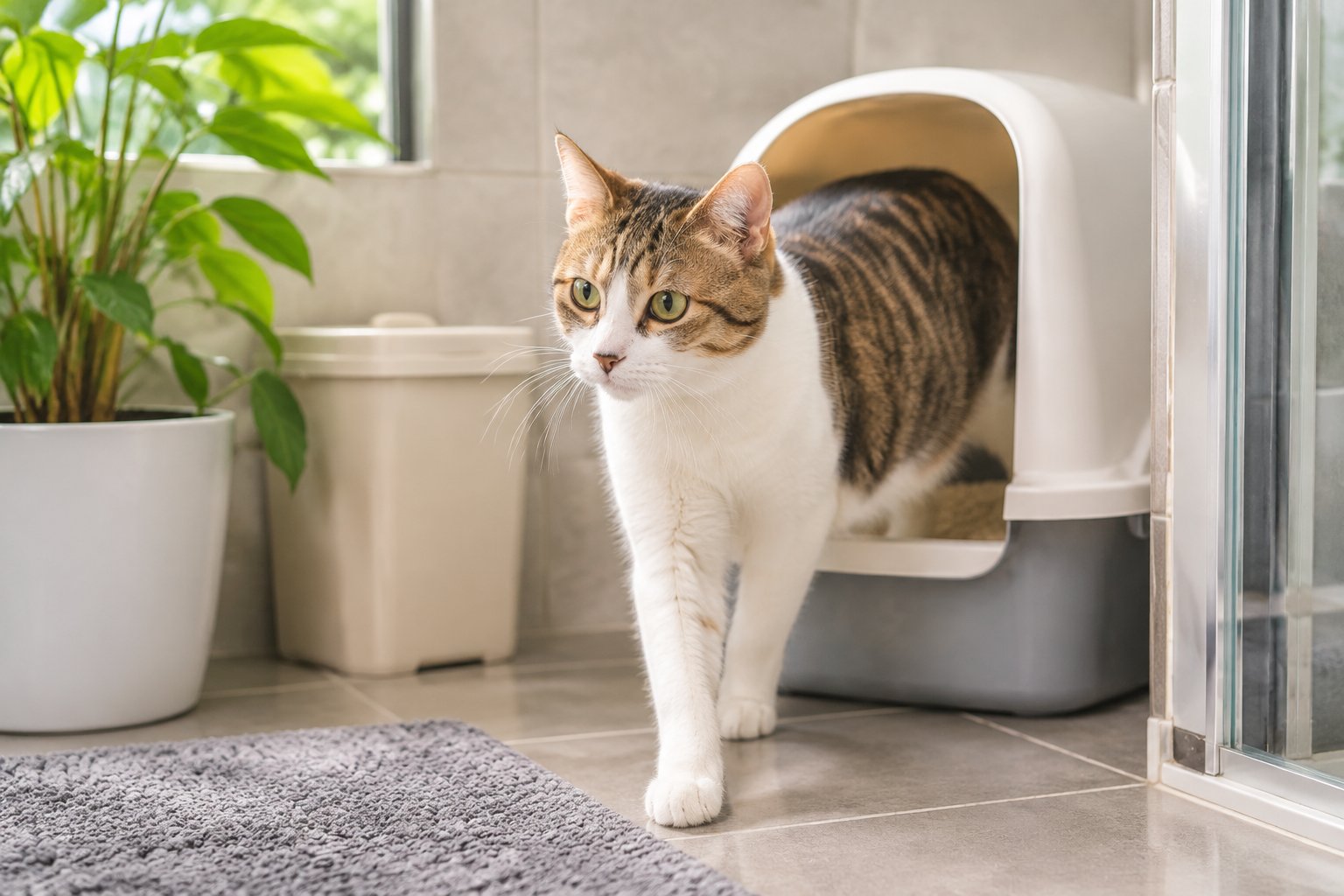
A litter box is not a decorative accessory; it is a daily-use bathroom. Cats are particular about size, surface and privacy, and most litter box problems start with a box that is too small, too dirty or in the wrong place. Before you compare hoods, filters and fancy scoops, measure your cat and your space.
A useful rule of thumb is that the box should be about 1.5 times your cat's length from nose to the base of the tail. For an average adult cat, that often means a box at least 60 cm long, and many commercial boxes sold in pet shops are smaller than that. If your cat is large, a senior or a growing kitten, size up. A cheap, large plastic storage tub with a doorway cut into one side can outperform an expensive small box.
This guide covers the practical buying decisions: size, style, litter, placement, cleaning routine and troubleshooting. It is written for Malaysian homes, from Kuala Lumpur apartments to Johor terrace houses, where heat, humidity and space all affect how a litter box performs.
Size and depth: the most important decision
How to measure
Use a soft tape or a piece of string. Measure your cat from the tip of the nose to the base of the tail while standing. Multiply by 1.5. That is your minimum box length. Width should allow the cat to turn around without stepping in waste, so a box that is at least as wide as your cat is long is a good target.
Side height
High sides reduce scatter, but they must be easy to step over. Kittens, senior cats and cats with arthritis need a low entry. A box with a low front and higher back is a practical compromise. If you already own a deep box and your cat struggles, cut a doorway into one side or add a small step.
Depth of litter
Most cats prefer a few centimetres of litter to dig in, not a shallow sprinkle. Too little litter leads to urine reaching the bottom and sticking. Too much can be kicked out. Start with about 5 cm and adjust based on your cat's digging style.
| Cat profile | Box length guide | Entry height | Notes |
|---|---|---|---|
| Average adult cat | About 1.5x body length | Medium | Open box with low front works well |
| Large breed or overweight cat | Larger than 1.5x if possible | Low to medium | Wide box; avoid narrow hoods |
| Kitten | Small but roomy | Very low | Shallow litter; avoid clumping if litter-eating |
| Senior or arthritic cat | 1.5x body length | Very low | Easy access; avoid high-sided hoods |
| Multi-cat home | One per cat plus one | Medium | Spread boxes across different rooms |
Open, hooded or top-entry?
Open boxes
Open boxes are the simplest and often the most accepted. They ventilate well, are easy to scoop and let you see changes in urine and stool, which matters for early detection of health problems. The trade-off is odour and scatter. A high-sided open box with a low entry reduces mess without trapping smells.
Hooded boxes
Hooded boxes appeal to owners because they hide the contents and contain scatter. However, a hood traps humidity and odour, especially in warm Malaysian weather. Some cats dislike the enclosed space, particularly if the box is small or the flap is noisy. If you choose a hood, pick a large one, remove or tape open the flap if your cat avoids it, and clean more often.
Top-entry boxes
Top-entry boxes can reduce tracking and suit some agile cats. They are a poor choice for kittens, seniors, overweight cats or any cat with joint pain, because jumping in and out can be difficult. If you want to try one, keep an open box available as an alternative.
Automatic boxes
Self-cleaning boxes can help owners with limited time or mobility, but they are not a substitute for daily observation. Some cats are startled by the motor or the moving rake. They also need regular deep cleaning. Buy only from a retailer with a clear return policy, and introduce the box gradually alongside the old one.
Litter choice: what most cats accept
Litter is part of the box system. The best litter is the one your cat uses consistently and you can maintain daily.
- Fine clumping litter: Widely accepted, easy to scoop, good odour control. Choose unscented versions. Dust varies by brand; if dust bothers you or your cat sneezes, try another.
- Non-clumping litter: Useful for kittens that may eat litter, and for some cats with sensitive paws. It needs more frequent full changes because urine is not removed in clumps.
- Pellet litter (wood or paper): Low tracking and low dust, but some cats dislike the texture. Pellets work well with a sieve-style box.
- Crystal litter: Highly absorbent and low tracking, but the texture and sound put some cats off. It is not ideal for kittens that might ingest it.
- Scented litter: Generally avoid. Cats have a strong sense of smell, and added fragrance can deter use.
If you are switching litter, do it gradually over a week or two by mixing old and new. Sudden changes can lead to avoidance. Never mix a litter change with a box change at the same time; change one thing at a time.
Placement: where the box goes matters
Placement is where many Malaysian homes run into trouble. Cats want a quiet, accessible spot with an escape route. They do not want to eat next to their toilet.
- Keep boxes away from food and water bowls.
- Avoid noisy areas near washing machines, air-conditioning compressors or busy doorways.
- Avoid completely enclosed cupboards where smells build up and the cat feels trapped.
- In multi-storey homes, put a box on each floor your cat uses.
- In apartments, a bathroom or utility area often works better than a living room corner.
- Keep the box away from direct sun and damp walls; humidity speeds up odour.
For a Kuala Lumpur apartment, a bathroom with a low-sided box and a washable mat is often the most practical setup. In a Johor terrace house, a utility room or covered area away from the kitchen keeps smells out of living spaces, but make sure the cat can reach it without passing through a closed door.
Cleaning routine that keeps cats using the box
A litter box is only as good as its maintenance. Cats are fastidious, and a dirty box is one of the most common reasons for avoidance.
- Scoop solids at least once daily, ideally morning and evening.
- Top up litter to the usual depth after scooping.
- Once a week, empty the box, wash it with mild unscented soap and warm water, rinse well and dry.
- Avoid strong disinfectants, bleach or scented cleaners; residue can deter cats and irritate paws.
- Replace worn boxes with scratches and cracks, because bacteria hide in them.
- Keep a spare box so you can swap while one dries.
In Malaysia's humid climate, damp litter and enclosed boxes can become smelly quickly. If you notice odour despite daily scooping, check for a full box, a hood trapping air, or a litter that is not clumping properly.
Common problems and practical fixes
| Problem | Likely cause | Practical fix |
|---|---|---|
| Cat urinates outside the box | Dirty box, small box, medical issue | Clean more often, size up, see a vet if new |
| Cat digs and scatters [litter | Box](/articles/cat-litter-box-malaysia "mylink") too shallow or litter too light | Add a high-sided box and a mat |
| Cat avoids hooded box | Enclosed space, smell, flap | Remove hood or flap; offer an open box |
| Kitten eats litter | Curiosity, diet, anaemia | Switch to non-clumping or pellet litter; see a vet |
| Senior cat misses the box | Arthritis, low entry needed | Low-sided box, easy access, vet check |
| Odour despite cleaning | Hood, humidity, old box | Ventilate, wash weekly, replace scratched box |
When to see a vet
Litter box avoidance is not always behavioural. If your cat is urinating outside the box, straining, crying while urinating, passing blood, urinating more often or in small amounts, or licking the genital area excessively, see a veterinarian promptly. Urinary blockages, especially in male cats, are emergencies. Sudden changes in stool, weight loss or increased thirst also warrant a check-up. Do not assume a new behaviour is just a litter box problem until illness is ruled out.
A simple buying checklist
- Measure your cat and choose a box at least 1.5 times its body length.
- Choose a low entry for kittens, seniors or arthritic cats.
- Start with an open, high-sided box and unscented fine clumping litter.
- Buy one box per cat plus one, placed in different quiet spots.
- Add a washable mat to reduce tracking.
- Keep a spare box and a spare scoop.
- Introduce changes gradually and watch your cat's response.
Prices vary widely by brand and retailer in Malaysia, so compare locally and ask your vet or a trusted pet retailer for advice suited to your cat's age and health.
This article provides general information only and is not a substitute for veterinary advice. If your cat shows signs of illness or pain, consult a licensed veterinarian.

