
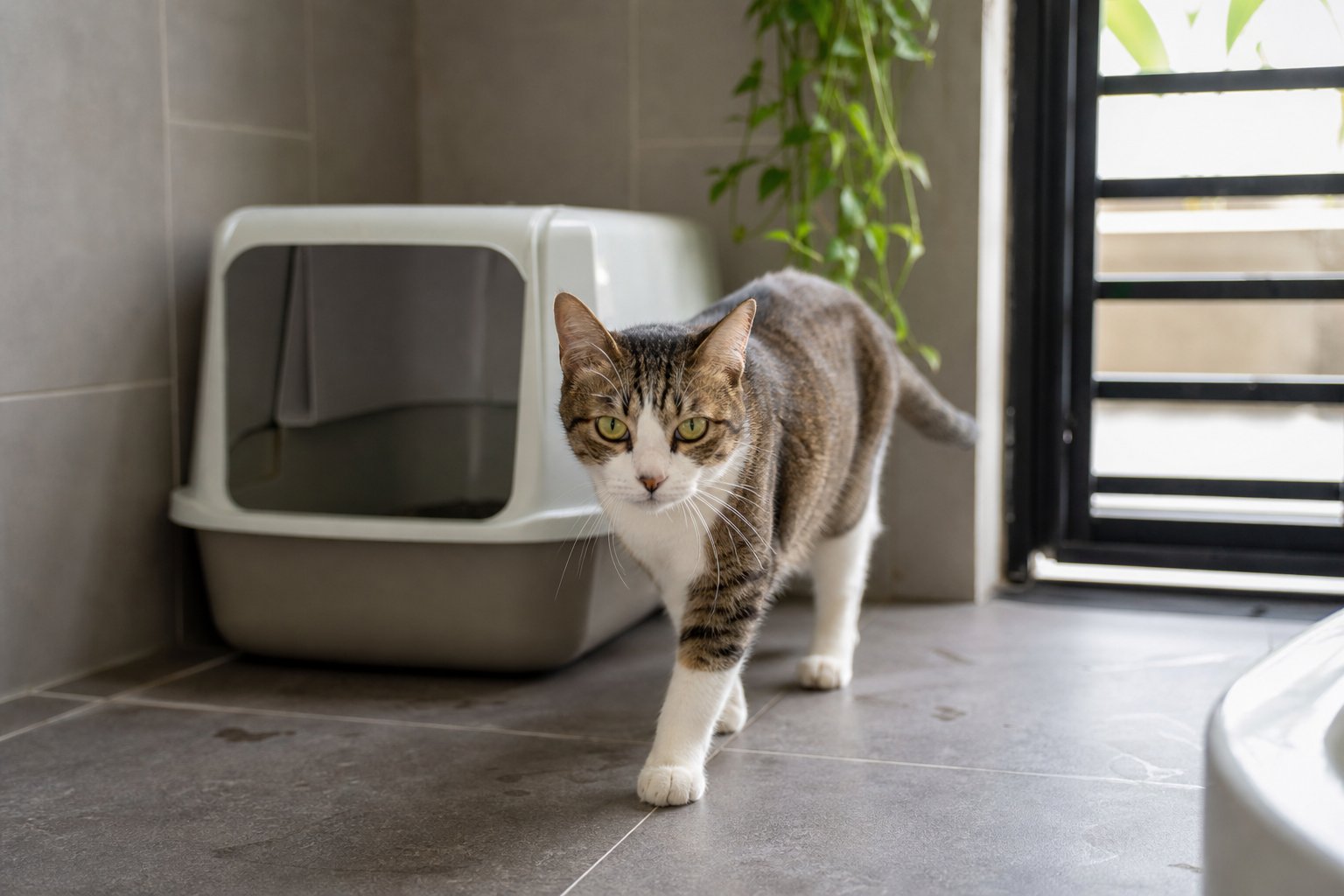
What tofu cat litter actually is
Tofu cat litter is a clumping litter made mostly from soybean curd residue, the pulp left after soy milk production, combined with plant fibres and a binder. It is formed into small cylindrical pellets or granules, dried, and sold as a biodegradable alternative to clay. When a cat urinates, the pellet absorbs liquid and forms a clump that can be scooped out.
The name can mislead. It is not food-grade tofu, and it is not edible in any useful sense. It is a plant-fibre litter. Some brands add corn starch, cassava, baking soda or fragrance. Quality varies widely, so the ingredient panel matters more than the marketing word "tofu".
For Malaysian owners, the appeal is straightforward: less dust in a small apartment, lighter bags, and the option to compost or bin the waste rather than sending heavy clay to landfill. The trade-offs are cost, tracking and how well it performs in humid weather.
The pros: why owners choose tofu litter
Low dust. Clay litters, especially cheap fine clumping clay, throw up dust when poured and when cats dig. Tofu pellets are heavier and denser, so the dust cloud is usually smaller. That matters in a Kuala Lumpur apartment where the litter box sits near a bedroom or living area.
Fast, firm clumps. Good-quality tofu litter absorbs urine quickly and holds the clump together, so scooping is clean and the tray stays drier. Weak clumps crumble and leave residue, which is a sign of a poor-quality product or an overfilled tray.
Biodegradable and lighter. Tofu litter breaks down more readily than clay and weighs less per bag. Carrying a bag up to a fourth-floor walk-up in Penang is noticeably easier than hauling bentonite.
Often flushable in small amounts. Many brands claim small clumps can be flushed. Treat this as a convenience claim, not a rule. Older plumbing and septic tanks in Malaysian homes may not cope, and flushing repeatedly is a bad habit.
Usually low fragrance. Unscented versions suit cats with sensitive noses and owners who dislike perfumed litter. Scented tofu litter exists, but unscented is the safer default.
Good for cats that dislike dusty clay. Some cats sneeze or avoid the box when clay dust is heavy. A low-dust tofu litter can bring them back, provided the texture is acceptable.
The cons: what nobody tells you
Higher running cost. Tofu litter generally costs more per kilogram than basic clumping clay, and because it is lighter, a bag may not last as long as it looks. Prices vary by brand and retailer in Malaysia, so compare cost per litre of litter rather than cost per bag, and ask your local pet shop for current pricing.
Tracking. The lightweight pellets stick to paws and scatter. You will find them on tiles, in bedding and along corridors. A litter mat at the box exit helps, but does not eliminate it.
Texture refusal. Cats raised on fine clay may reject chunky pellets. Tofu litter comes in different pellet sizes; finer granules are usually more acceptable to fussy cats.
Odour control in humidity. Tofu litter handles urine well when fresh, but in Malaysia's warm, humid climate it can develop a sour smell faster than clay if not scooped daily. Covered boxes trap moisture and make this worse.
Edible risk. Because it is plant-based, some cats and kittens chew or eat pellets. Small amounts usually pass, but large ingestion can cause swelling and blockage. This is a real concern for kittens and cats with pica.
Clump strength varies. Cheap tofu litter produces soft clumps that break apart during scooping, leaving urine-soaked litter behind. That shortens the tray's usable life and increases smell.
Not all cats accept change. A sudden switch can cause box avoidance, which is a behaviour problem with health consequences if the cat holds urine.
Tofu vs clay vs pine: a practical comparison
| Feature | Tofu litter | Clumping clay (bentonite) | Pine pellets |
|---|---|---|---|
| Main material | Soybean curd residue, plant fibre | Sodium bentonite clay | Compressed pine sawdust |
| Dust level | Low | Moderate to high | Low to moderate |
| Clumping | Yes, firm if good quality | Yes, very firm | No, breaks down to sawdust |
| Odour control | Good when fresh, weaker in humidity | Strong | Moderate, woody smell |
| Tracking | Moderate to high | Low to moderate | Moderate |
| Weight per bag | Light | Heavy | Medium |
| Biodegradable | Yes | No | Yes |
| Flushable claim | Sometimes, small amounts | No | No |
| Cost per month | Higher | Lower | Moderate |
| Best for | Low-dust homes, eco-conscious owners | Budget, strong odour control | Owners wanting non-clumping, low-dust option |
Use the table as a starting point, not a verdict. The best litter is the one your cat will use consistently and that you can maintain daily.
How to switch your cat to tofu litter
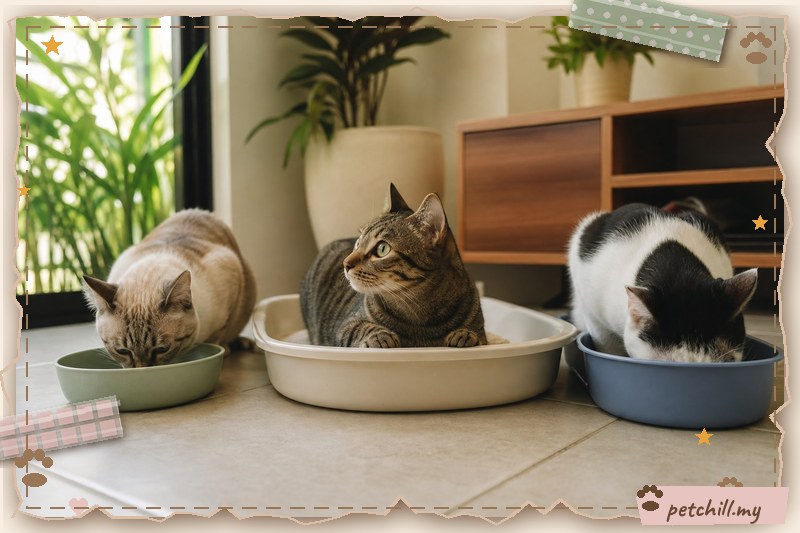
Cats are conservative about litter. A sudden change is the most common reason a cat stops using the box. Switch gradually over one to two weeks.
- Start with a mix. Fill the tray with about three-quarters old litter and one-quarter tofu litter.
- Increase every few days. Move to half-and-half, then three-quarters tofu, then full tofu.
- Keep the box in the same place. Do not move the tray and change litter at the same time.
- Use two trays if possible. Offer the old litter in one tray and the new litter in another, then remove the old one once the cat uses the new tray reliably.
- Scoop daily during the transition. Old urine smell in the mix can confuse the cat.
- Watch for refusal. If the cat avoids the box, urinates elsewhere or strains, slow down and consult a vet if straining occurs.
A useful checklist for the first week:
- Tray cleaned and fully dried before refilling
- Litter depth about 5 to 7 cm, enough to dig and bury
- Litter mat placed at the exit
- Box placed away from food and noisy appliances
- Daily scooping, twice daily if possible
- No strong air freshener near the box
Living with tofu litter in Malaysian homes
Malaysian homes vary a lot, and litter choice should match the home. In a Kuala Lumpur apartment with tiled floors and air-conditioning, low dust and low tracking matter most. Tofu litter reduces dust, but the light pellets travel on tiles, so a textured mat and a quick daily sweep help.
In a Johor terrace house with more space and natural ventilation, odour control is easier, but humidity is higher. Tofu litter can sour faster during the rainy season. Scoop twice daily, keep the box out of direct sun, and consider replacing the full tray every two to three weeks rather than monthly.
In Penang, where sudden rain and high humidity are common, store unused tofu litter in an airtight container. Moisture makes pellets clump in the bag and reduces their absorbency. Do not store the bag in a bathroom or wet kitchen area.
For multi-cat households, tofu litter works if you scoop often and use enough trays. A common guideline is one tray per cat plus one extra. Two cats need at least three trays, and tofu litter trays need more frequent full changes than clay because the plant fibre holds odour.
Health and safety points to know
Tofu litter is generally safe for healthy adult cats. The main risks are ingestion and litter box avoidance.
- Kittens: Very young kittens may taste litter. Clumping litter of any kind carries a risk if swallowed. Ask your vet before introducing clumping litter to a kitten under a few months old.
- Cats with pica: Some cats eat non-food items. Tofu pellets can swell, so keep the box clean and discuss the behaviour with your vet.
- Respiratory sensitivity: Low dust is a plus, but no litter is dust-free. If your cat sneezes or coughs around the box, try an unscented, low-dust product and see a vet if signs persist.
- Urinary health: Litter does not cause urinary disease, but a dirty box or an disliked litter can make a cat hold urine. That worsens urinary problems. Scoop daily and never punish a cat for accidents.
- Pregnancy and hygiene: Pregnant owners should avoid handling used litter where possible because of toxoplasmosis risk from cat faeces. Ask someone else to scoop, or wear gloves and wash hands.
When to see a vet
See a vet promptly if your cat shows any of these signs:
- Straining to urinate, crying in the box, or producing only small drops
- Blood in urine or frequent trips to the box with little output
- Urinating outside the box suddenly, especially on cool surfaces like tiles or in the bath
- Avoiding the box entirely after a litter change, with signs of discomfort
- Diarrhoea, vomiting or lethargy alongside litter box changes
- A kitten that has eaten litter and is vomiting, drooling or bloated
- Sneezing, wheezing or eye discharge that appears around litter dust
Urinary blockage in male cats is an emergency. If your cat is straining and nothing comes out, do not wait.
Choosing a tofu litter: a buyer's checklist
- Ingredient list: Soybean curd residue or plant fibre, with minimal additives. Avoid vague labels.
- Pellet size: Finer granules suit fussy cats; larger pellets track less but may be rejected.
- Clump test: Add a little water to a sample. Good litter clumps firmly within seconds.
- Dust test: Pour a handful into a bowl and watch for dust.
- Scent: Unscented is safest. Strong fragrance can deter cats.
- Packaging: Resealable bags or tubs help in humid weather.
- Local availability: Buy from a retailer you can reach easily, so you can restock without a long gap. Prices vary, so ask your local shop or vet clinic for current options.
Bottom line
Tofu cat litter is a solid choice for owners who want low dust, biodegradable waste and easy scooping. It is not automatically better than clay. It costs more, tracks more, and needs more frequent full changes in Malaysia's humidity. The deciding factor is your cat: if your cat accepts the texture and you can scoop daily, tofu litter can work well. If your cat refuses it or has a history of eating litter, choose a different option and speak to your vet.
This article is general information for Malaysian cat owners and is not a substitute for veterinary advice. If your cat has urinary, digestive or behavioural signs, consult a licensed veterinarian.

