
What crystal cat litter is and why it behaves differently
Crystal cat litter is made of porous silica gel beads. Instead of clumping into a solid ball when wet, the beads absorb urine into their structure and let moisture evaporate. Solid waste sits on top and is easy to lift out. That is the main reason people try it: less frequent full changes, lighter trays, and less dust than many clay litters.
The trade-off is that you cannot scoop urine. You manage the tray by removing solids, stirring the beads so wet patches are distributed, and replacing the whole batch when absorption fades. Crystal litter also feels different underfoot, and some cats object to the texture or the sound of beads shifting. Understanding these differences makes the setup and transition much easier.
Before you start: choose the right tray and spot
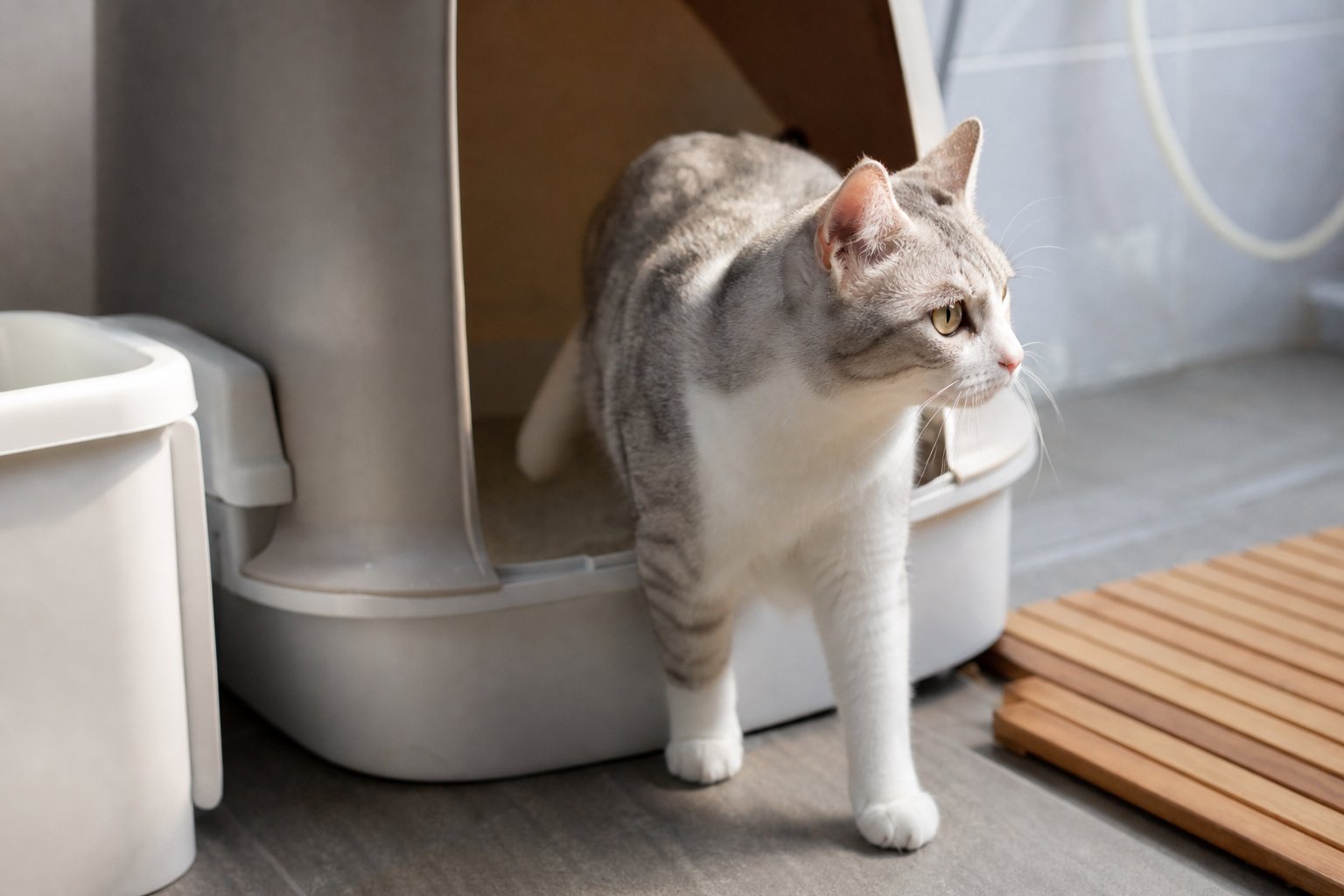
Crystal litter works best in a tray that is large enough for your cat to turn around in and has low enough sides for easy entry. A covered box can trap humidity, which slows drying and makes the tray smell sooner, so start open or leave the lid off until you know how the litter performs in your home.
Placement matters as much as the litter. Put the tray in a quiet, well-ventilated spot away from food and water. Cats prefer to toilet away from where they eat, and a noisy location such as beside a washing machine can cause avoidance.
A simple checklist before pouring:
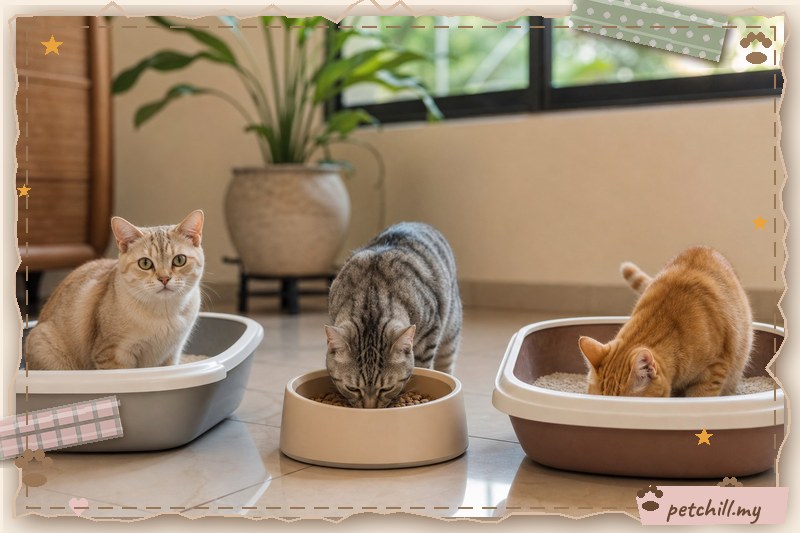
- One tray per cat plus one spare, placed in different areas where possible.
- A tray at least 1.5 times the length of your cat.
- A washable mat underneath to catch stray beads.
- A scoop with slots, kept beside the tray.
- A bin with a lid for daily waste.
Step-by-step: how to set up crystal cat litter
- Wash and dry the tray. Use warm water and a mild, unscented soap. Rinse well and dry completely; moisture under fresh crystals shortens their life.
- Pour 3–5 cm of crystals. A shallow layer lets urine drain and evaporate. For a large tray, spread the litter evenly rather than making a deep pile at one end.
- Do not overfill. More litter does not mean better odour control. Excess depth traps moisture and makes stirring harder.
- Place the tray on the mat. Keep the scoop and bags nearby so daily cleaning is quick.
- Show your cat the tray. Set the cat in or near the tray after meals and after waking. Praise calm sniffing; do not force the cat to stay.
- Scoop solids daily. Remove faeces and any clumped debris with the scoop. Bag and bin them.
- Stir the beads once a day. Gently turn the litter so damp patches are exposed to air. This is the step most people skip, and it is the one that keeps crystal litter working.
- Top up as needed. Add a little fresh litter if the level drops after scooping.
- Replace the whole batch when it stops absorbing. For one cat, expect roughly every 2–4 weeks, but humidity and cat habits change that.
Daily, weekly and monthly routine
| Task | How often | What to do |
|---|---|---|
| Scoop solids | Daily, ideally twice | Remove faeces and debris; bag and bin |
| Stir crystals | Daily | Turn beads so wet patches dry |
| Check depth | Weekly | Top up to 3–5 cm |
| Wash tray | Every full change, or sooner if soiled | Mild unscented soap, rinse, dry fully |
| Full litter change | Every 2–4 weeks for one cat | Replace all crystals; clean tray |
| Deep clean tray | Monthly or after illness | Wash, disinfect with a pet-safe product, dry |
In a multi-cat home, shorten the full-change interval. Two cats using one tray will saturate the crystals faster than one cat using two trays. Watch the beads rather than the calendar: if they look wet, clump together, or the tray smells when you stir, change the litter.
Odour control in Malaysian homes
Malaysia's warm, humid climate is the biggest practical challenge for crystal litter. High humidity slows evaporation, so trays can stay damp longer than expected. A few habits help:
- Keep the tray in a ventilated area, not a closed cupboard or a stuffy bathroom.
- Use an open tray or remove the lid during humid spells.
- Stir daily so wet patches are not left in one spot.
- Change the litter sooner during the rainy season or if the room feels damp.
- Wash the tray thoroughly at every full change; residue holds odour.
- Avoid strong air fresheners near the tray. Cats have sensitive noses, and masking smells can make the box unpleasant.
If the tray still smells soon after a full change, check whether the litter is too deep, the tray is too small, or your cat is urinating more than usual. Increased urination is a health question, not a litter question.
Transitioning your cat from clay or other litter
Cats are creatures of habit, and a sudden switch is a common reason for accidents outside the box. Transition over one to two weeks:
- Days 1–3: Mix about one part crystal litter with three parts old litter.
- Days 4–7: Move to half and half.
- Days 8–10: Use three parts crystal to one part old litter.
- After that: Use crystal litter only once your cat is consistently using the tray.
Keep a second tray with the old litter available during the transition. If your cat avoids the mixed tray, slow down and stay at the previous ratio for a few more days. Never remove all the old litter at once if your cat is sensitive.
Common mistakes and how to fix them
- Pouring too deep. Fix: level the litter to 3–5 cm and stir daily.
- Never stirring. Fix: stir once a day; this is essential for crystal litter.
- Skipping full changes. Fix: replace all crystals when absorption drops, not just when the surface looks clean.
- Using a covered box in a humid room. Fix: remove the lid or move the tray to a ventilated spot.
- Switching abruptly. Fix: mix with old litter over one to two weeks.
- Placing the tray next to food. Fix: separate eating and toileting areas.
- Flushing crystals. Fix: bag and bin; silica gel does not break down in pipes.
Safety, kittens and multi-pet homes
Crystal litter is generally low-dust, which many owners appreciate. Still, silica gel beads are not food. Keep the tray out of reach of dogs and very young kittens that mouth everything. If your cat eats litter repeatedly, that can be a sign of anaemia, nutritional imbalance or pica, and warrants a vet visit.
For kittens, wait until they are reliably eating solid food and are past the stage of tasting everything, usually around 8–10 weeks or older, and use a shallow tray with supervision. Ask your vet if you are unsure. In homes with cats and dogs, place the tray behind a baby gate or in a room the dog cannot enter, so the cat has a quiet toilet space.
When to see a vet
Crystal litter changes what you see, so pay attention to habits rather than only the tray. Contact a veterinarian if your cat:
- Strains, cries, or produces little or no urine.
- Urinates outside the box suddenly, especially after a stable routine.
- Has blood in the urine or frequently licks the genital area.
- Drinks and urinates much more than usual.
- Eats litter repeatedly, vomits, or seems lethargic.
- Has diarrhoea or constipation that lasts more than a day or two.
- Shows pain when urinating or avoids the tray entirely.
Urinary blockages, especially in male cats, are emergencies. Do not wait to see if it resolves.
Local context for Malaysian cat owners
In a Kuala Lumpur apartment, space is tight and ventilation varies. Keep the tray in a bathroom with an exhaust fan or a balcony corridor that is shaded and dry, and avoid sealing it in a closed utility cupboard. In a Johor terrace house, trays may sit in a laundry area or car porch; during the rainy season, move them under cover and check the beads more often, because damp air slows drying. Penang's humid spells have the same effect, so stir daily and change the full batch sooner if the tray stays wet.
Local prices for crystal litter vary by brand, bag size and retailer, so compare labels and ask a Malaysian pet shop or vet for guidance rather than assuming a fixed cost. Buy smaller bags first to see whether your cat accepts the texture before committing to a large one.
Frequently asked questions
See the FAQ section above for quick answers on depth, full changes, flushing, safety, kittens and refusal.
Vet disclaimer
This article is general information for cat owners and is not a substitute for veterinary advice. If your cat shows signs of illness, pain, urinary problems or sudden changes in toileting, consult a licensed veterinarian in Malaysia.
Related reading
- Cat Litter Guide Malaysia 2026: Types, Costs and How to Choose
- Best Litter Box for Cats in Malaysia: A Practical Buying Guide
- How to Use a Covered Litter Box for Cats: A Complete Guide for Malaysian Homes
- How to Use a Litter Box for Cats: A Complete Guide for Malaysian Owners
- How to Use Paper Cat Litter for Cats: A Complete Malaysian Guide
- How to Use Pine Cat Litter for Cats: A Complete Malaysian Guide
- How to Use Scented Cat Litter for Cats: A Practical Guide for Malaysian Owners
- How to Use Tofu Cat Litter for Cats: A Complete Malaysian Guide
- Scented Cat Litter for Cats: Pros and Cons Every Malaysian Owner Should Know

