What tofu cat litter actually is
Tofu cat litter is a clumping litter made mainly from soybean fibre — the pulp left after soy milk or tofu production — pressed into small cylindrical pellets. It clumps when wet, is usually lighter than clay, and is marketed as biodegradable and lower-dust. It is not edible and it is not a substitute for food, but it is plant-based and generally gentle on paws.
For Malaysian cat owners, the appeal is practical: it is lighter to carry home, produces less dust in a condo, and the clumps are easy to scoop. The trade-offs are real too — it can be more expensive per kilogram than basic clay, it absorbs humidity in our climate, and some cats take time to accept the different texture underfoot.
This guide covers how to set it up, how to run a daily and weekly routine, how to switch from clay without protest, and the mistakes that make people give up on tofu litter too early.
Before you start: choose the right tray and spot
Tofu litter works best when the basics are right. Get these sorted before you pour the first bag.
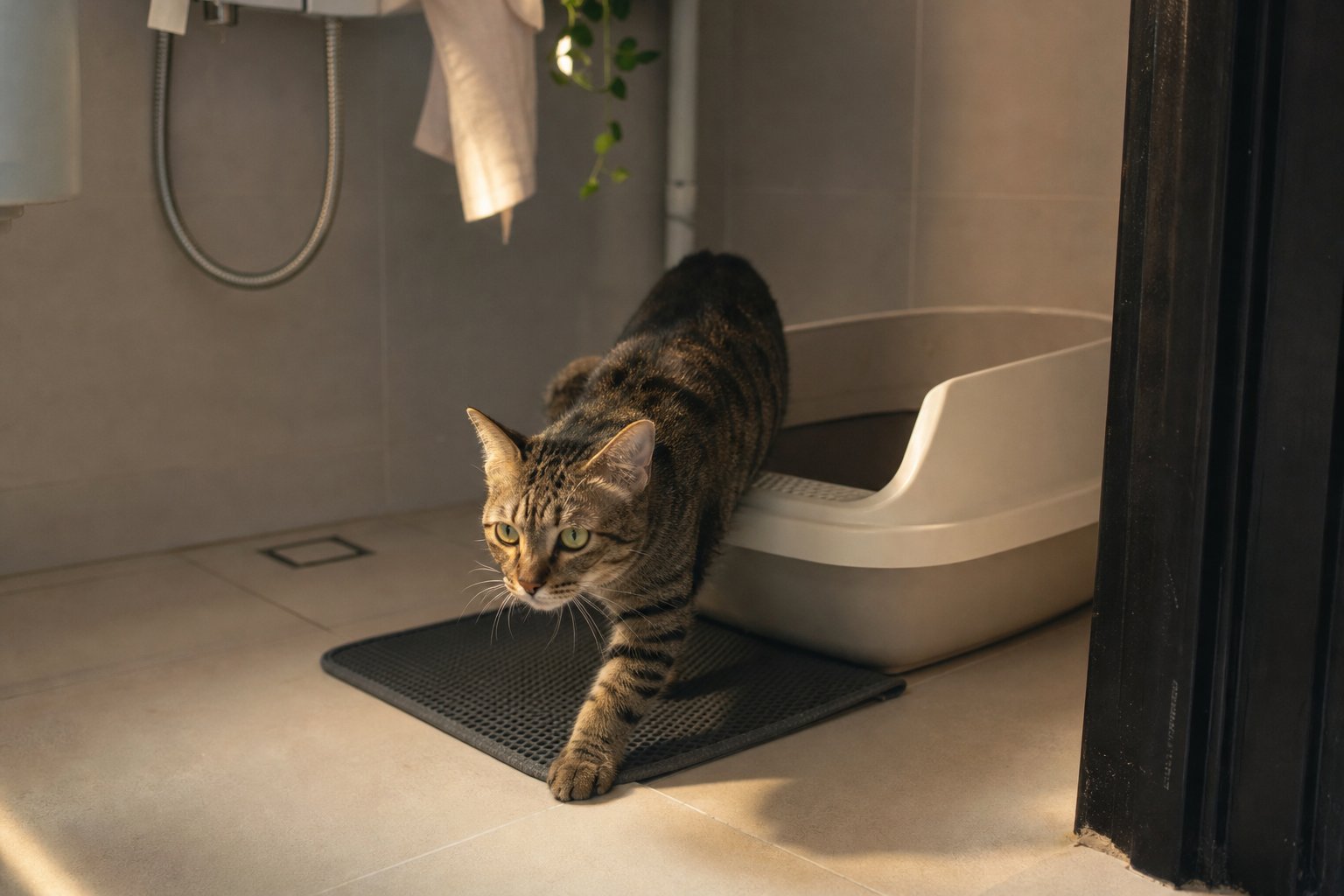
Tray size. The tray should be about one and a half times the length of your cat, nose to base of tail. Many Malaysian apartments have small trays because space is tight, but an undersized tray causes misses and stress. A large, open, high-sided tray is the safest default.
Tray type. Open trays are easier to monitor and suit most cats. Hooded trays control smell for humans but trap odour for cats and can discourage use. If you use a hood, clean it more often and remove the door flap if your cat hesitates.
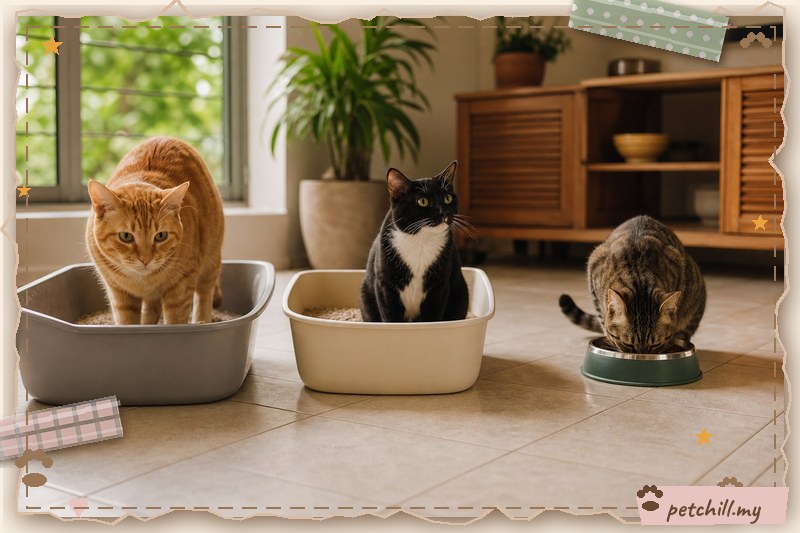
Location. Put the tray in a quiet, well-ventilated spot away from food and water. Cats prefer not to eat near where they eliminate. Avoid placing it next to a washing machine, a noisy corridor, or a spot where a dog can corner the cat.
Number of trays. The common rule is one tray per cat plus one extra. In a small flat, two trays for two cats is a reasonable compromise if space is limited.
Liner decision. Skip plastic liners with tofu litter. The litter is light and the liner tends to bunch up, and cats can catch claws. A plain tray is easier to wash.
Step-by-step: setting up tofu litter
- Wash and dry the tray. Use warm water and a mild, unscented soap. Rinse thoroughly — residual detergent smell can put cats off.
- Pour to depth. Fill to about 5–7 cm. For kittens, seniors or cats with arthritis, use 3–5 cm so stepping in is easy.
- Spread evenly. Level the surface; don't leave deep hollows where urine can pool.
- Place the tray. Set it on a washable mat to catch tracked pellets. Tofu pellets track less than fine clay but still travel on paws.
- Show your cat. Put the cat in the tray once, gently, then walk away. Don't hold the cat there or force the issue.
- Leave it alone. Most cats investigate within a day. Avoid hovering.
If your cat has never used tofu litter, expect a short adjustment period. Some cats dig immediately; others sniff and walk away for a few hours.
Daily routine: scooping and topping up
Tofu litter performs well only if you scoop consistently. The clumps are firm when fresh but soften if left sitting in damp litter.
Scoop at least once a day. Twice daily is better in warm, humid conditions. Remove solid waste and urine clumps. Use a slotted scoop with wide gaps — fine clay scoops clog with tofu clumps.
Stir gently. After scooping, lightly turn the litter so damp patches are mixed with dry pellets. This slows the build-up of a sour smell.
Top up weekly. Add fresh litter to maintain the 5–7 cm depth. Don't just pour on top of a damp, depleted tray — remove clumps first.
Watch the smell. A well-maintained tofu tray should not smell strongly. If it does, the cause is usually insufficient scooping, too little litter, or a tray that needs a full change.
Quick daily checklist
- Remove solids and clumps
- Stir the surface lightly
- Check depth and top up if low
- Wipe up any pellets outside the tray
- Check for signs of straining or blood in urine
Weekly and monthly maintenance
Weekly: wash the scoop with soapy water, wipe the tray rim, and check the mat. If the litter looks uniformly damp or smells sour despite scooping, do a full change early.
Every 2–4 weeks: empty the tray completely, wash it with mild unscented soap, dry it fully, and refill with fresh litter. In Malaysia's humidity, trays in bathrooms or near open windows may need changing closer to the two-week mark.
Storage: keep the bag sealed and stored in a dry cupboard, not on a balcony or in a bathroom. Tofu pellets absorb moisture from the air and clump poorly once damp. A clip or airtight container helps.
How to switch from clay to tofu litter
Cats are conservative about their toilet. A sudden switch is the most common reason people report "my cat won't use tofu litter." Do a gradual transition over 7–10 days.
| Day | Old [litter | Tofu](/articles/cat-litter-guide-hong-kong-2026-malaysia "mylink") litter |
|---|---|---|
| 1–2 | 75% | 25% |
| 3–4 | 50% | 50% |
| 5–6 | 25% | 75% |
| 7–10 | 0% | 100% |
Mix the two litters together rather than layering them in stripes. Watch for avoidance: if your cat starts urinating outside the tray, slow down and go back a step. Keep one tray with the old litter available during the transition if you have space.
Once the switch is complete, stop mixing. Long-term blends clump unevenly and make scooping frustrating.
Tofu litter vs other litters: a practical comparison
| Feature | Tofu litter | Clay clumping litter | Pine/wood pellets |
|---|---|---|---|
| Main material | Soybean fibre | Bentonite or similar clay | Compressed wood |
| Weight | Light | Heavy | Medium |
| Dust | Low | Moderate to high | Low |
| Clumping | Yes | Yes | Usually no (some clump) |
| Flushable claim | Some brands | No | No |
| Humidity tolerance | Moderate — absorbs moisture | Good | Good |
| Tracking | Low to moderate | Moderate | Moderate |
| Cost per kg | Usually higher | Usually lower | Varies |
Prices vary widely by brand and pack size in Malaysia. Check with local pet retailers and compare cost per kilogram rather than per bag, because bag weights differ.
Common mistakes and how to fix them
Too little litter. A thin layer lets urine reach the tray base and stick. Fix: top up to 5–7 cm.
Scooping with the wrong scoop. Fine clay scoops break tofu clumps apart. Fix: use a scoop with wider slots.
Storing the bag open in a humid room. Pellets absorb moisture and stop clumping. Fix: seal the bag and store it dry.
Changing the whole tray too often. Some owners dump everything every few days, which wastes litter and unsettles the cat. Fix: scoop daily, full change every 2–4 weeks.
Ignoring the cat's preference. If your cat consistently avoids the tray, the litter or tray setup is wrong for that cat. Fix: try a different depth, an open tray, or a slower transition.
Flushing without checking. Flushable claims vary and plumbing in Malaysian homes and apartments differs. Fix: bin the waste unless the label and your plumbing clearly allow flushing.
Tofu litter in Malaysian homes: practical notes
Humidity. In a Kuala Lumpur apartment with the bathroom window open, tofu litter can absorb moisture faster than in a dry climate. Keep the tray away from direct rain splash and consider changing the full tray closer to every two weeks during the rainy season.
Small spaces. In a condo, place the tray in a ventilated bathroom or utility area, not a closed cupboard. Use a mat and scoop twice daily to keep odour down.
Terrace houses. In a Johor terrace house, a covered outdoor corner can work if it is shaded, dry and safe from dogs and strays. Avoid spots that flood during heavy rain.
Kittens and seniors. Kittens need a shallow tray with low sides. Senior cats with arthritis may struggle with high-sided trays — provide a low-entry tray and keep the path clear.
Multi-cat homes. More cats means more scooping. With three cats, twice-daily scooping is not optional. Watch for one cat guarding the tray.
When to see a vet
Litter changes can reveal or trigger health problems. Contact a veterinarian if you notice:
- Straining to urinate, or frequent tiny urinations
- Blood in urine or on the litter
- Urinating outside the tray suddenly, especially in a previously reliable cat
- Diarrhoea, vomiting or loss of appetite
- Sneezing, wheezing or eye discharge that started after a litter change
- A cat that eats litter repeatedly
- A male cat straining with little or no urine — this is an emergency
Urinary blockages in male cats are life-threatening and progress quickly. Do not wait to see if it improves.
Frequently asked questions
See the FAQ section above for quick answers on depth, flushing, full changes, safety, clumping problems and mixing with clay.
Bottom line
Tofu cat litter is a workable, low-dust option for Malaysian cat owners who are willing to scoop daily and store the bag dry. Fill the tray 5–7 cm deep, scoop at least once a day, top up weekly, replace the whole tray every 2–4 weeks, and transition gradually from clay over 7–10 days. If your cat avoids the tray or shows urinary signs, treat it as a health question, not a litter problem.
This article is general information only and is not a substitute for veterinary advice. If your cat shows signs of illness, pain or urinary problems, consult a licensed veterinarian in Malaysia.
Related reading
- Cat Litter Guide Malaysia 2026: Types, Costs and How to Choose
- Best Crystal Cat Litter for Cats in Malaysia: A Practical Buying Guide
- Best Litter Box for Cats in Malaysia: A Practical Buying Guide
- Crystal Cat Litter Buying Guide for Cat Owners in Malaysia
- Crystal Cat Litter for Cats: Pros and Cons Every Malaysian Owner Should Know
- How to Use Clumping Cat Litter for Cats: A Complete Malaysian Guide