Quick answer
The best wet cat food for cats in Malaysia is a complete-and-balanced product with a named animal protein first, high moisture, no added sugar, and a nutritional adequacy statement. Choose pate, shreds or chunks based on your cat's preference, then adjust portions to keep your cat lean.
Why wet food deserves a place in your cat's bowl
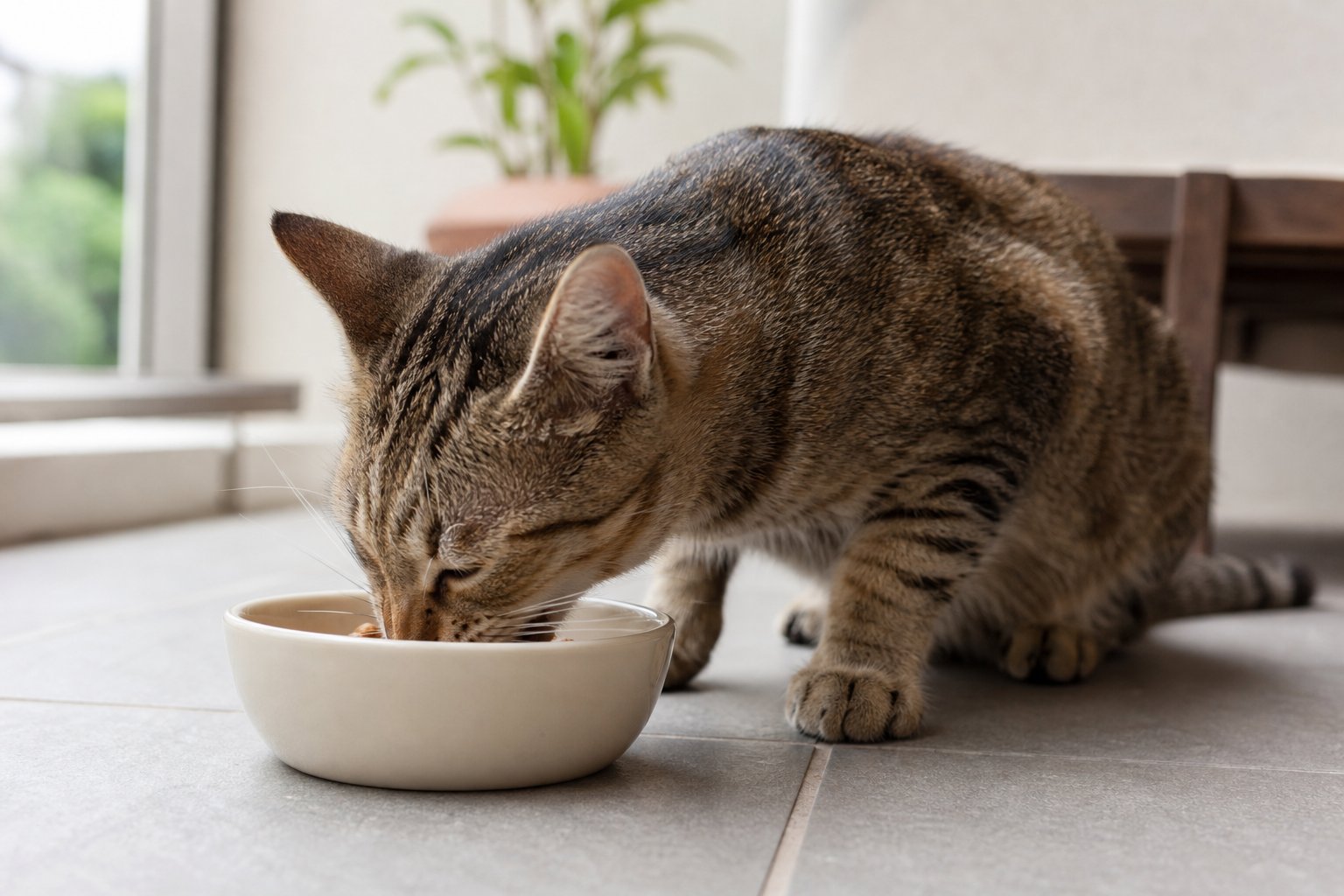
Cats evolved as desert hunters, so they have a low thirst drive. In Malaysia's hot and humid climate, dehydration can creep up quietly. Wet food typically contains 70–85% water, which helps maintain hydration without your cat needing to drink more. Good hydration supports urinary tract health and kidney function, and may reduce the risk of crystal formation.
Wet food is also useful for weight management. Its high water content makes it less calorie-dense than dry food, so a cat can eat a satisfying portion without taking in too many calories. For cats that are prone to hairballs, the extra moisture can help move hair through the digestive tract. And for picky eaters, the aroma and texture of wet food are often more appealing than kibble.
That said, wet food is not automatically better. Some products are high in carbohydrates, contain added sugars or use low-quality proteins. The key is to read labels and choose wisely.
How to read a wet cat food label like a pro
Labels can be confusing. Here is what to check:
- Named animal protein first. Look for specific meats like chicken, turkey, beef, salmon or tuna. Avoid vague terms such as 'meat', 'poultry' or 'fish' without specifying the species.
- Nutritional adequacy statement. A complete and balanced food will state which life stage it meets, e.g., 'complete and balanced for adult cats' or 'for all life stages'. This is usually based on AAFCO or FEDIAF standards.
- Guaranteed analysis. Check protein, fat, fibre and moisture. Protein should be high (typically 9–12% in canned food, but remember this is on a wet basis; dry matter basis gives a clearer picture).
- Ingredients to avoid. Added sugar, caramel colour, excessive fillers (like corn, wheat or soy) and artificial preservatives. Some cats are sensitive to certain gums (e.g., carrageenan), so monitor for digestive upset.
- Texture and form. Pate is smooth and often higher in meat; shreds and chunks may contain more broth or gravy. Choose based on your cat's preference and any dental issues.
Tip: Compare foods on a dry matter basis to get a fair comparison. To calculate protein on a dry matter basis: (protein % / (100 - moisture %)) x 100. For example, a food with 10% protein and 80% moisture has 50% protein on a dry matter basis.
Types of wet cat food: pate, shreds, chunks and more
| Texture | Typical characteristics | Best for |
|---|---|---|
| Pate | Smooth, dense, often higher meat content, less gravy | Cats that need to gain weight, cats with dental issues, those that prefer uniform texture |
| Shreds | Shredded meat in broth or gravy, lower calorie density | Picky eaters, cats that like to lap up liquid, weight management |
| Chunks | Pieces of meat in gravy, often higher carbohydrate | Cats that enjoy variety, those that need encouragement to eat |
| Mousse | Airy, soft texture, easy to lick | Kittens, senior cats, cats with mouth pain |
| Stew | Chunky with vegetables (avoid onions/garlic), high moisture | Cats that like variety, but check for toxic ingredients |
In Malaysia, you'll find these textures from both international and local brands. Popular international brands include Royal Canin, Hill's, Purina Pro Plan, Whiskas and Fancy Feast. Local brands may offer similar formats at different price points. Always check the label for completeness.
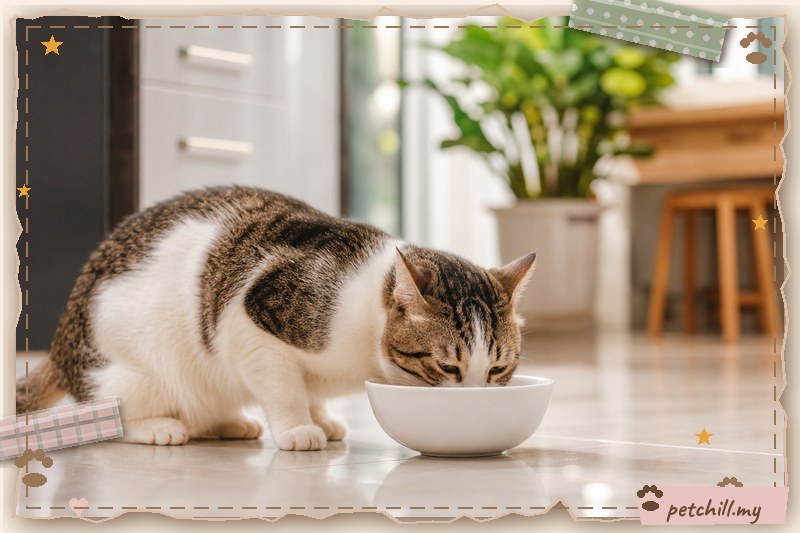
Complete and balanced: what it means and why it matters
A 'complete and balanced' claim means the food meets established nutrient profiles for a specific life stage. In Malaysia, look for statements referencing AAFCO (Association of American Feed Control Officials) or FEDIAF (European Pet Food Industry Federation) guidelines. These are international standards; Malaysian pet food regulations are overseen by the Department of Veterinary Services (DVS), but not all products carry a local certification mark.
If a food is labelled 'complementary' or 'for intermittent feeding only', it is not a sole diet. These are treats or toppers and should not make up more than 10% of your cat's daily calories.
Wet food vs dry food: a comparison
| Factor | Wet food | Dry food |
|---|---|---|
| Moisture | 70–85% | 6–10% |
| Protein | Often higher on dry matter basis | Variable, can be high |
| Carbohydrates | Usually lower | Often higher |
| Calorie density | Lower | Higher |
| Cost per calorie | Higher | Lower |
| Convenience | Requires refrigeration after opening | Shelf-stable |
| Dental benefits | Minimal | Some mechanical cleaning |
| Hydration support | Excellent | Limited |
Many Malaysian cat owners feed a mix of wet and dry. This can balance cost, convenience and hydration. If you feed both, reduce the dry portion to avoid overfeeding.
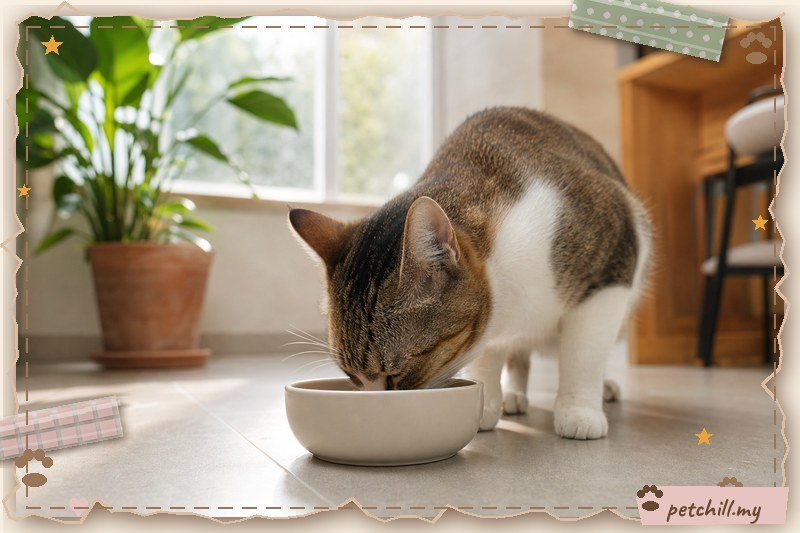
How much to feed: portioning and scheduling
Feeding guidelines on cans are a starting point. An average adult cat needs about 60–80 kcal per kg of body weight per day. Wet food typically contains 70–100 kcal per 100g, so a 4kg cat might need around 240–320 kcal daily, which could be 2–4 cans of 80g food depending on the brand. Always adjust based on body condition: you should be able to feel your cat's ribs without pressing hard, and see a waist from above.
Split the daily ration into at least two meals. Cats are natural grazers, but scheduled meals help control intake and make it easier to monitor appetite. If you leave wet food out, discard after 30–60 minutes, especially in Malaysia's warm climate where bacteria multiply quickly.
Sample daily schedule for an adult cat:
- Morning: 1/2 can wet food
- Afternoon: small portion of dry food (if feeding mixed)
- Evening: 1/2 can wet food
- Before bed: small wet treat or remaining portion
Adjust portions to maintain ideal weight. Consult your vet for a tailored plan.
Special considerations for Malaysian cats
Malaysia's tropical climate means food spoils faster. Always refrigerate opened cans and use within 24–48 hours. When feeding outdoors, avoid leaving food out for more than 30 minutes. If you have ants or stray animals, feed indoors or in a secure area.
Many Malaysian cats are indoor-only, which can lead to boredom and weight gain. Wet food can be used as enrichment: freeze small portions in ice cube trays for a cool treat, or use puzzle feeders designed for wet food.
Urinary issues are not uncommon in Malaysian cats, especially males. Wet food helps increase water intake, which dilutes urine and reduces the risk of crystals. If your cat has a history of urinary blockages, your vet may recommend a prescription wet diet.
Common mistakes to avoid
- Feeding only fish-based foods. Fish is fine occasionally, but a diet solely of fish can lead to nutrient imbalances and allergies. Rotate proteins.
- Ignoring the label. Not all wet foods are complete. Some are complementary and lack essential nutrients.
- Overfeeding. Wet food is not calorie-free. Measure portions and adjust for treats.
- Leaving food out too long. In Malaysia's heat, bacteria grow fast. Discard leftovers after 30 minutes.
- Sudden diet changes. Transition gradually over 7–10 days to avoid digestive upset.
- Assuming all wet food is high quality. Check for named proteins and avoid added sugars.
When to see a vet
Consult a veterinarian if your cat shows any of these signs:
- Refusing to eat for more than 24 hours
- Vomiting or diarrhoea lasting more than a day
- Straining to urinate or blood in urine (emergency)
- Sudden weight loss or gain
- Persistent scratching or hair loss (possible food allergy)
- Bad breath or drooling (dental issues)
A vet can help you choose a suitable wet food, especially if your cat has kidney disease, diabetes, allergies or urinary problems. They can also calculate a precise feeding plan.
Building a balanced feeding routine
Start by choosing a complete wet food that suits your cat's life stage and health needs. Offer a variety of proteins and textures to prevent pickiness. Measure portions and monitor body condition weekly. Keep fresh water available at all times, even with wet food. And remember that treats should not exceed 10% of daily calories.
If you feed both wet and dry, divide the daily calorie allowance between them. For example, if your cat needs 250 kcal, you might feed 150 kcal from wet food and 100 kcal from dry. Adjust based on your cat's response.
Conclusion
The best wet cat food for cats in Malaysia is one that is complete and balanced, rich in named animal protein, high in moisture and free from unnecessary additives. By reading labels, choosing appropriate textures and feeding sensible portions, you can support your cat's health and happiness. Always consult your vet for personalised advice, especially if your cat has special needs.
This article is for general information only and is not a substitute for veterinary advice. Always consult a licensed veterinarian for health concerns.
Related reading
- Cat Food Guide Malaysia 2026: How to Choose Dry, Wet & Prescription Food
- Best Dry Cat Food for Cats in Malaysia: A Practical Buying Guide
- Best Food Transition for Cats in Malaysia: A Step-by-Step Guide
- Best High-Protein Cat Food in Malaysia: How to Choose (2025 Guide)
- Best Raw Cat Food for Cats in Malaysia: A Practical Buying Guide
- Food for Picky Cats in Malaysia: A Practical Feeding Guide
- Food Transition for Cats in Malaysia: A Safe, Step-by-Step Guide
- High-Protein Cat Food Feeding Guide for Cats: How Much, Which Type, and What to Watch
- High-Protein Cat Food in Malaysia: A Practical Guide for Cat Owners
- How to Choose Dry Cat Food for Cats: A Malaysian Guide
- How to Choose High-Protein Cat Food for Cats: A Malaysian Owner's Guide
- How to Choose Raw Cat Food for Cats: A Practical Malaysian Guide