
The short answer
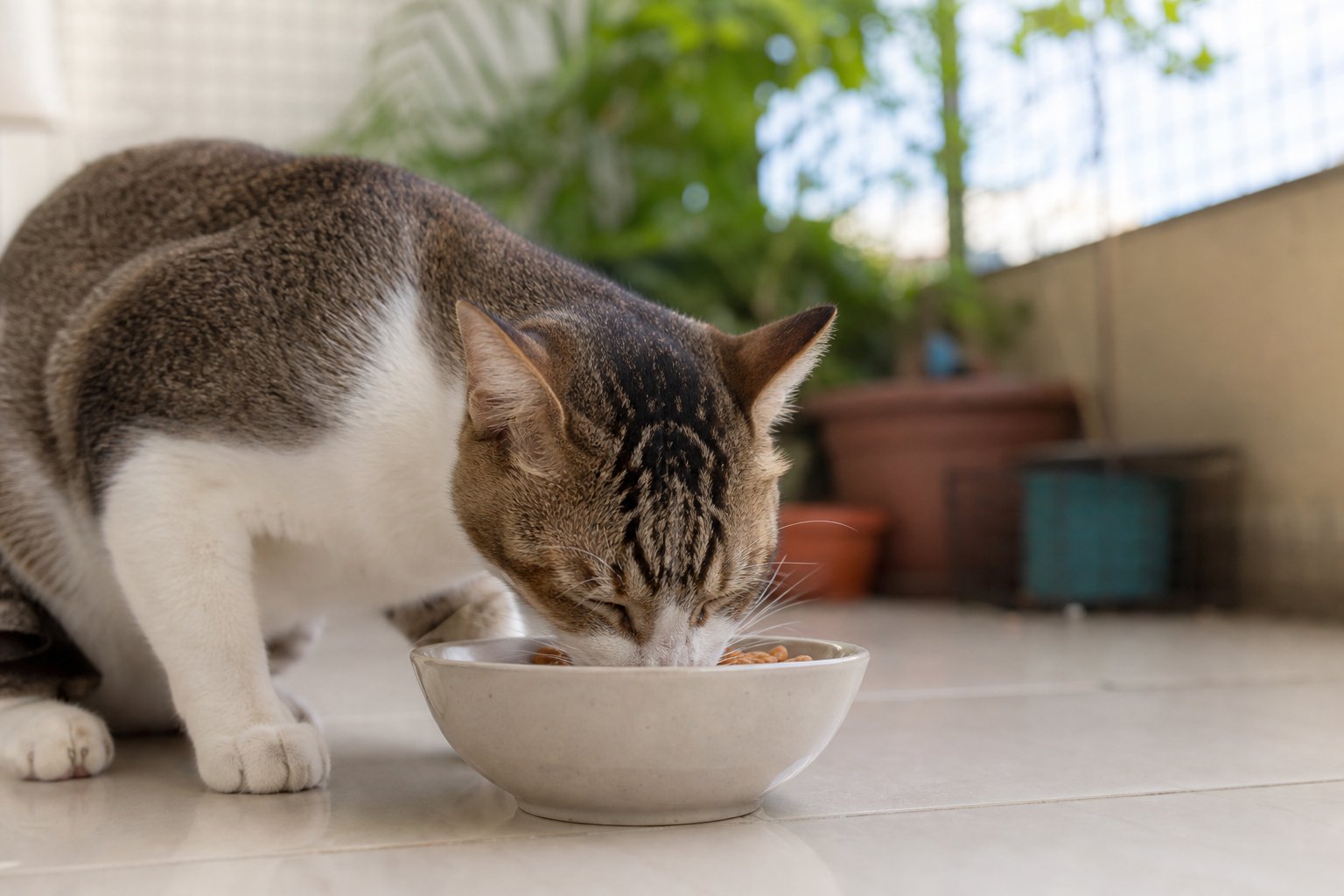
There is no single best halal cat food in Malaysia. The right choice is a complete-and-balanced food with a named animal protein near the top of the ingredient list, a formula matched to your cat's life stage and health, and, if halal status matters to you, a certificate you can verify. Marketing words like 'premium' or 'natural' tell you little; the label and the certificate tell you more.
This guide walks through what halal certification covers for pet food, how to read a Malaysian cat food label, how wet and dry foods compare, and how to build a feeding plan. It is written for Muslim cat owners who want both religious comfort and good nutrition, and for anyone shopping for a cat in a multi-cultural Malaysian household.
What halal certification means for cat food
Halal certification for pet food is not the same as halal certification for food you eat. The scope depends on the certifying body, but it generally covers three things:
- Animal ingredients and slaughter: whether animal-derived ingredients come from animals slaughtered according to halal requirements, and whether the species is permitted.
- Prohibited substances: whether the recipe or processing aids contain pork, alcohol, or other substances a certifier considers non-halal.
- Facility controls: segregation, cleaning and traceability at the plant, so halal and non-halal lines do not mix.
A logo on the pack is a claim, not proof. Reputable certifiers publish directories you can search. Check the certifier's name, the certificate number if shown, and which products or premises the certificate covers. Some certificates cover a factory; others cover a specific recipe. Ask the brand or retailer if the scope is unclear.
It also helps to separate two questions. First, is this food nutritionally suitable for my cat? Second, is it halal according to the standard I follow? A food can be excellent nutrition and not certified; another can carry a logo and still be a poor formula. Judge both.
How to read a cat food label in Malaysia
Labels are regulated but vary in detail. Use this order of reading:
- Complete and balanced statement. Look for wording that the food meets a recognised nutrient profile for a life stage, such as growth, adult maintenance, or all life stages. Treat 'complementary' or 'treat' foods as occasional, not a base diet.
- Ingredient list order. Ingredients are listed by weight before processing. A named protein such as chicken, fish, beef or lamb near the top is a good sign. Generic terms like 'meat and animal derivatives' are less transparent and may include pork.
- Guaranteed analysis. Check protein, fat, fibre, moisture and ash. To compare wet and dry fairly, convert to dry matter basis: divide the nutrient percentage by (100 minus moisture percentage) and multiply by 100.
- Life stage and health claims. Kitten, adult, senior, hairball, urinary and weight-control formulas differ. A health claim on a pack is not a diagnosis; ask your vet whether the formula suits your cat.
- Halal certificate and certifier. Note the certifying body and any certificate number, then verify.
- Country of manufacture and importer details. These help you trace recalls and ask questions.
A practical example: a wet food showing 10% protein and 78% moisture is about 45% protein on a dry matter basis. A dry food showing 30% protein and 10% moisture is about 33%. The wet food is not automatically 'better', but the comparison is fairer once moisture is removed.
Wet, dry, raw and home-cooked: a comparison
| Format | Strengths | Watch-outs | Halal considerations |
|---|---|---|---|
| Wet food (cans, pouches) | High moisture supports hydration; palatable; useful for cats that drink little | More packaging; opened food spoils quickly; cost per calorie often higher | Check meat source and certificate; some recipes use pork or non-halal meat |
| Dry food (kibble) | Convenient, calorie-dense, easy to portion and store | Lower moisture; some cats overeat; less aroma for fussy cats | Check for pork fat, lard or generic animal derivatives |
| Raw (commercial or home-prepared) | Owner controls ingredients | Bacterial and parasite risk; recipe balance is difficult; handling hygiene critical | Slaughter method and sourcing matter; verify supplier claims |
| Home-cooked | Full control of ingredients | Easy to unbalance without a veterinary nutritionist; time-consuming | Choose halal meat and avoid prohibited ingredients; get a recipe formulated |
For most Malaysian households, a complete wet food, a complete dry food, or a mix of both is the most practical base. Raw and home-cooked diets can work but need more planning and, ideally, a recipe formulated by a veterinary nutritionist.
Protein sources and what to look for
Cats are obligate carnivores. They need animal-source amino acids, particularly taurine, plus vitamin A and arachidonic acid from animal sources. A vegetarian or vegan cat food is not appropriate unless it is a properly formulated therapeutic diet used under veterinary supervision, and even then the topic is contested.
When comparing proteins:
- Named proteins beat generic ones. 'Chicken', 'chicken meal', 'ocean fish' and 'beef' are clearer than 'meat by-products'.
- Meal is concentrated, not inferior. Chicken meal is rendered chicken with much of the water removed, so it can appear high on the list without meaning the food is low quality.
- Fish is common in Malaysian cat foods. It is palatable and provides omega-3 fats, but some cats do better on poultry or a single protein. If your cat has itchy skin or digestive signs, a single-protein trial with your vet can help identify triggers.
- By-products are not automatically bad. They can include nutritious organs, but the term is broad and may include pork, which matters if you avoid pork.
- Grain-free is not a halal issue. It is a formulation choice. Some cats do well on grain-inclusive foods; others do not need grain-free at all.
If you want to avoid pork, scan for 'pork', 'lard', 'porcine', 'bacon' and vague 'animal fat' or 'meat and animal derivatives'. Ask the manufacturer to confirm the species used in fats and flavourings.
Building a feeding plan that works at home
Nutrition is only half the job; the feeding routine is the other half.
- Portion by weight, not by bowl. Use the pack's feeding guide as a starting point, then adjust based on body condition. You should be able to feel your cat's ribs without pressing hard and see a waist from above.
- Feed to life stage. Kittens need more frequent, energy-dense meals; seniors may need softer food and more frequent smaller portions.
- Water matters. Cats evolved to get much of their water from prey. Wet food, water fountains and multiple water bowls around the home help. In a Kuala Lumpur apartment, place bowls away from the litter tray and food bowl.
- Transition slowly. Over seven to ten days, mix increasing amounts of the new food into the old. Sudden switches can cause vomiting or diarrhoea.
- Keep a simple log. Note the food, amount, and any changes in stool, scratching or appetite. This makes vet conversations much more useful.
- Store properly. Opened wet food should be refrigerated and used within the time stated on the pack; dry food should be kept sealed and dry, especially in humid conditions.
A Johor terrace house with several cats may need separate feeding stations to prevent one cat eating another's portion. In a Penang rainy season, humidity rises and dry food can soften or spoil faster, so store it in an airtight container and buy smaller bags.
Common mistakes and how to avoid them
- Buying on logo alone. A halal logo does not guarantee a good formula. Check the complete-and-balanced statement and the protein source too.
- Assuming 'premium' means complete. Some premium-looking foods are complementary or treats. Read the feeding guide.
- Overfeeding wet food. Wet food is less calorie-dense by weight, so owners sometimes serve too much. Use the pack guide and body condition.
- Switching too fast. A sudden change is a common cause of digestive upset.
- Ignoring dental and weight checks. Dry food alone does not prevent dental disease, and free-feeding can lead to obesity.
- Trusting unverified raw suppliers. Ask about sourcing, freezing and hygiene, and handle raw food carefully.
When to see a vet
Contact a veterinarian if your cat shows any of the following:
- Vomiting or diarrhoea lasting more than a day or two, or repeated vomiting
- Refusing food for more than 24 hours, especially in overweight cats, which can be an emergency
- Weight loss or weight gain you did not plan
- Increased thirst or urination
- Itching, hair loss, or skin and ear problems that may relate to diet
- Straining to urinate, blood in urine, or frequent trips to the litter tray
- Any suspected reaction after a food change
Bring the food label and your feeding log. Your vet can assess body condition, discuss life-stage needs, and advise whether a therapeutic diet is appropriate. Do not start a therapeutic or home-cooked diet without veterinary guidance.
Quick checklist before you buy
- The pack states complete and balanced for your cat's life stage
- A named animal protein is near the top of the ingredient list
- No pork, lard or vague animal derivatives if you avoid pork
- Halal certifier named and certificate verifiable
- Feeding guide and calorie information present
- Country of manufacture and importer details clear
- You can buy it consistently where you live
- Your cat accepts it and stools remain normal during transition
Bottom line
The best halal cat food in Malaysia is the one that is nutritionally complete, transparent about its ingredients, verifiably halal according to the standard you follow, and practical for your household. Compare labels and certificates rather than slogans, transition slowly, and involve your vet for any health concern. Local prices and availability vary, so ask your Malaysian vet or retailer for current options rather than relying on overseas figures.
This article is general information, not veterinary advice. Always consult a licensed veterinarian for your cat's health and diet.
Related reading
- Cat Food Guide Malaysia 2026: How to Choose Dry, Wet & Prescription Food
- Best Kitten Food for Cats in Malaysia: A Complete Buying Guide
- Halal Cat Food Feeding Guide for Cats: What Malaysian Owners Need to Know
- Halal Cat Food for Cats in Malaysia: What It Really Means and How to Choose
- Best Dry Cat Food for Cats in Malaysia: A Practical Buying Guide
- Best Raw Cat Food for Cats in Malaysia: A Practical Buying Guide
- Best Senior Cat Food in Malaysia: A Practical Buying Guide
- Cat Food in Malaysia: How to Read the Label, Compare Protein and Budget Monthly
- Dry Cat Food Feeding Guide for Cats: How Much, How Often and How to Do It Right
- Dry Cat Food for Cats in Malaysia: A Practical Feeding Guide
- How to Choose Dry Cat Food for Cats: A Malaysian Guide

