
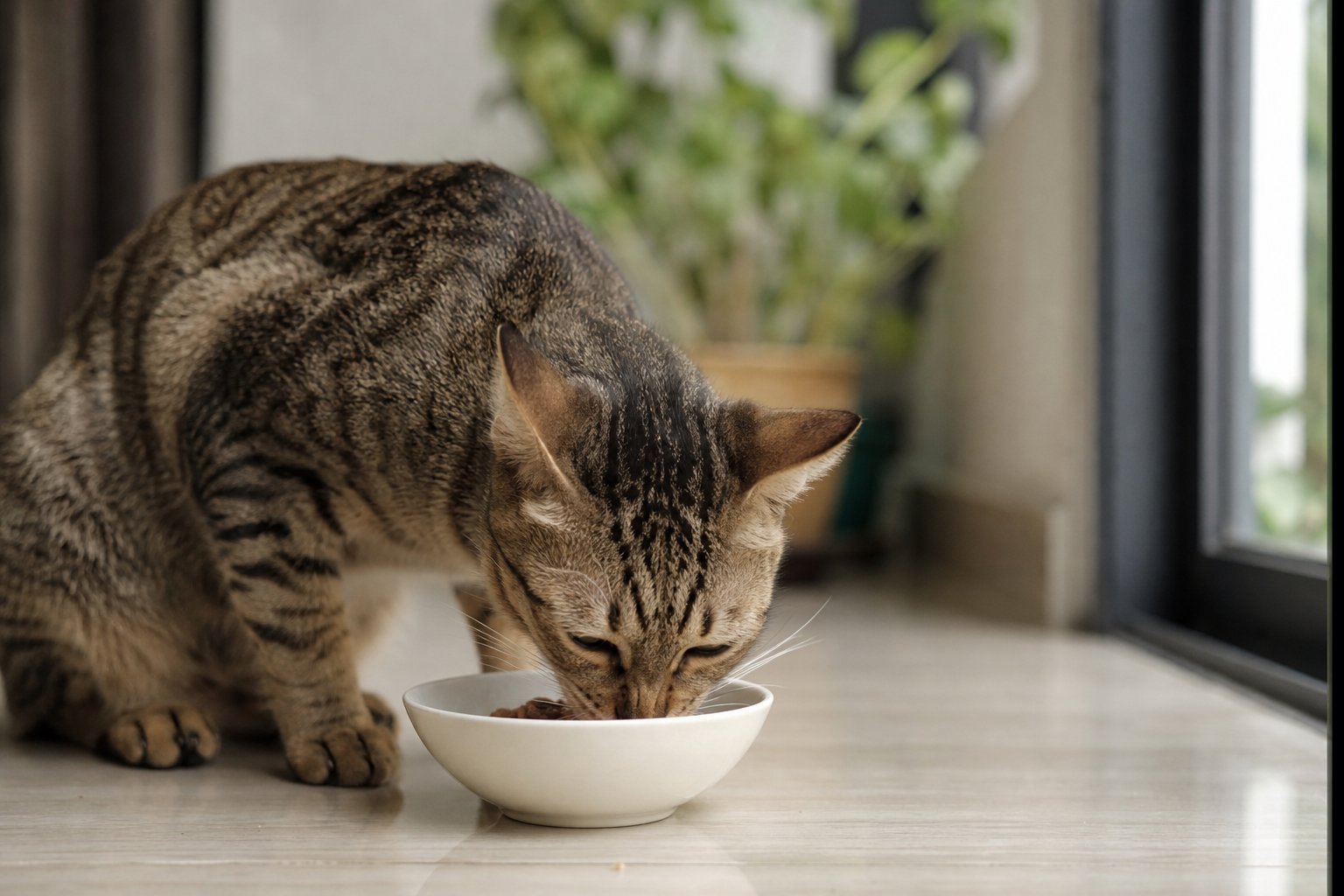
What hairball control food actually does
Hairball control food is a complete cat diet with adjusted fibre — usually a blend of insoluble and soluble fibre — designed to help swallowed hair move through the digestive tract rather than accumulate in the stomach. It is not a cure and not a medicine. It is a feeding strategy.
Cats swallow loose hair while grooming. Most of that hair passes through the gut and out in the stool. In some cats, hair collects in the stomach and is either vomited up as a tubular mass or, less often, causes constipation or a blockage. Hairball diets aim to reduce how often that happens by supporting normal gut movement.
The key point for Malaysian owners: hairball food works best as part of a routine that includes brushing, hydration and monitoring. Food alone rarely solves a serious hairball problem.
Why hairballs happen — and why food is only one lever
Hairballs are more common in long-haired breeds, heavy groomers, older cats with slower gut motility, and cats that shed a lot. In Malaysia's warm, humid climate, many cats shed year-round rather than in distinct seasons, so grooming load stays fairly constant.
Several factors drive hairball formation:
- Coat length and density. Persians, Maine Coons and domestic longhairs carry more loose hair.
- Grooming behaviour. Anxious or itchy cats over-groom and swallow more hair.
- Gut motility. Slower movement gives hair more time to clump.
- Hydration. Poor water intake can harden stool and slow passage.
- Diet. Low fibre may reduce the gut's ability to move hair along.
Hairball food addresses the diet and fibre part. Brushing addresses the coat part. Water addresses hydration. None of them works alone.
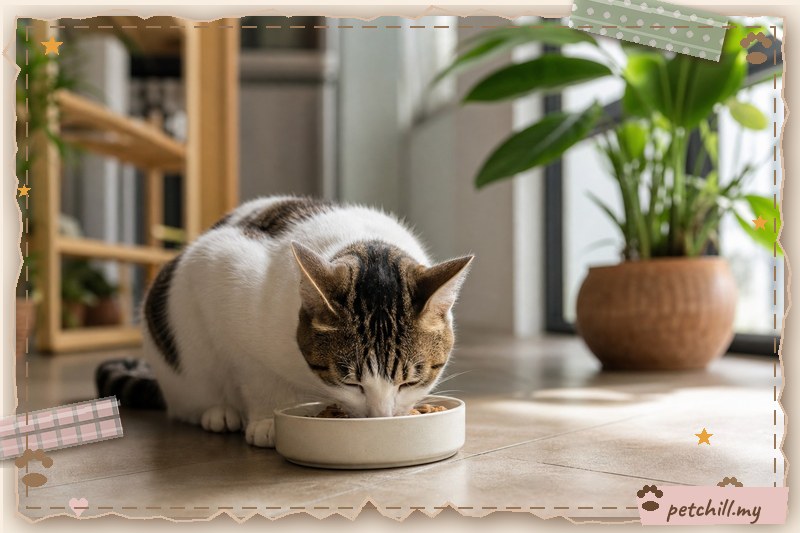
How much fibre is in hairball food, and how does it help?
Hairball formulas typically contain more crude fibre than standard maintenance diets. The exact percentage varies by brand, so read the label rather than assuming. Fibre helps in two ways: insoluble fibre adds bulk that stimulates gut movement, while soluble fibre supports stool consistency and moisture.
| Diet type | Typical fibre level | Main purpose | Best for |
|---|---|---|---|
| Standard adult maintenance | Lower crude fibre | Everyday complete nutrition | Cats with no hairball history |
| Hairball control | Higher crude fibre, often blended sources | Help hair pass through the gut | Regular hairball vomiters, heavy groomers |
| High-fibre / gastrointestinal | High fibre, sometimes prescription | Manage constipation or gut disease | Cats under veterinary care |
| Weight control | Moderate fibre, lower calories | Reduce calorie intake | Overweight cats, often combined with hairball needs |
Do not confuse hairball food with a prescription gastrointestinal diet. They serve different purposes. If your cat has chronic constipation or inflammatory bowel disease, a vet should choose the diet.
Choosing a hairball control food in Malaysia
Walk into any pet retailer and you will see several hairball formulas. Local prices vary widely by brand, pack size and whether the food is imported, so compare in-store or online rather than relying on a single figure. Ask the retailer or your vet about current pricing.
Use this checklist when comparing products:
- Complete and balanced claim. Look for a statement that the food meets a recognised nutrient profile for adult maintenance.
- Named fibre sources. Ingredients such as beet pulp, cellulose, psyllium or rice bran indicate deliberate fibre blending.
- Protein quality. Hairball diets should still be meat-based; fibre should not replace protein.
- Calorie density. Higher-fibre foods can be less calorie-dense, which matters for weight management.
- Life stage. Choose adult formulas for adult cats; kitten and senior needs differ.
- Palatability. A food your cat refuses helps no one. Buy the smallest bag first.
- Wet or dry format. Wet food supports hydration; dry food is convenient and often higher in fibre.
If your cat is on a prescription diet for kidney, urinary or thyroid disease, do not switch to a hairball formula without veterinary approval.
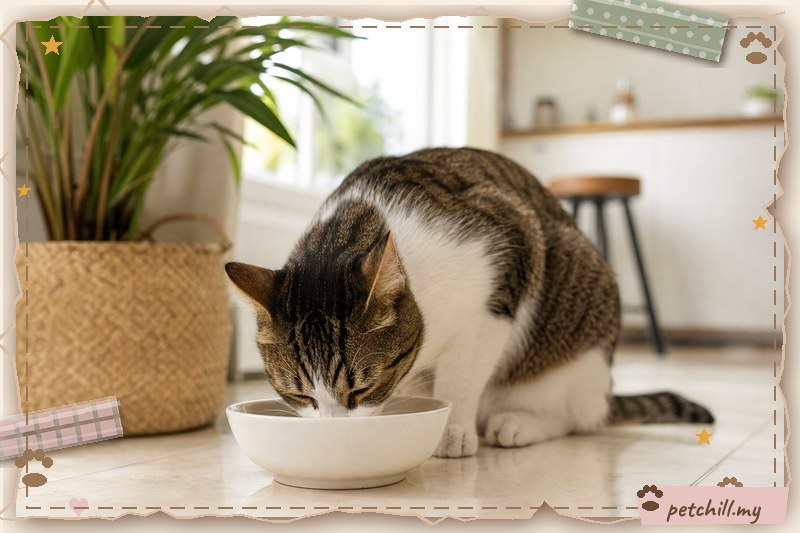
How to transition without upsetting the gut
A sudden switch can cause loose stool or vomiting, which owners often mistake for a hairball problem getting worse. Transition gradually over seven to ten days.
| Day | Old food | New food |
|---|---|---|
| 1–2 | 75% | 25% |
| 3–4 | 50% | 50% |
| 5–6 | 25% | 75% |
| 7–10 | 0% | 100% |
Feed the mixture in the same meals your cat already expects. If stool loosens, slow the schedule. Cats with sensitive stomachs may need two weeks. Keep notes on vomiting, stool and appetite during the transition so you can tell whether the food is helping.
Portion control: the part most owners get wrong
Hairball food is still food. Feeding it free-choice on top of treats and other meals is a common route to weight gain. Measure portions using a kitchen scale rather than a scoop, because scoop density varies.
Start with the feeding guide on the pack, adjusted for your cat's weight, age and activity. Then check body condition monthly. You should be able to feel the ribs easily without seeing them, and see a waist from above.
A simple routine:
- Weigh food daily for two weeks to calibrate.
- Split the daily ration into two or three meals.
- Count treats as part of the daily calorie total.
- Recheck weight monthly and adjust by about 10% if needed.
- Keep fresh water available at all times, and consider a water fountain for cats that drink little.
In a Kuala Lumpur apartment, where many cats live indoors with limited activity space, portion control matters even more. Indoor cats burn fewer calories, and hairball food is not a free pass to overfeed.
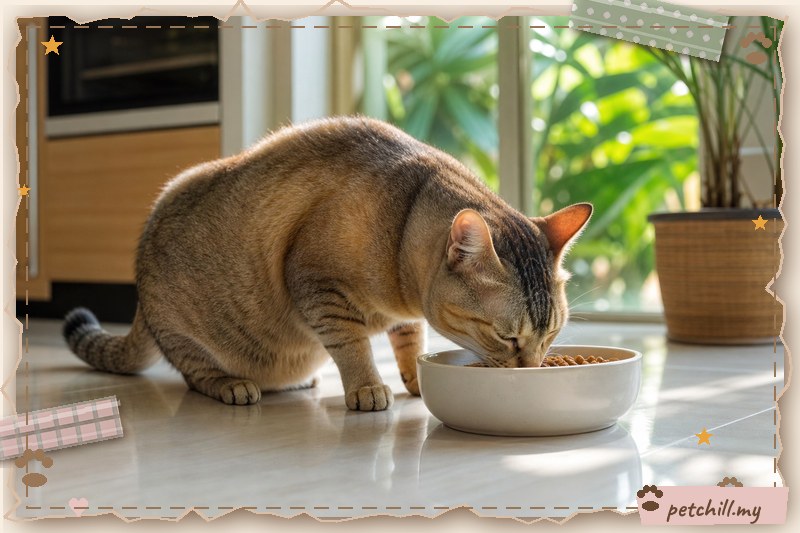
Feeding hairball food alongside wet food and treats
Many Malaysian owners feed a mix of dry and wet. That can work well: dry hairball food provides fibre, while wet food adds moisture. The important rule is to keep the total daily intake balanced and not to double-feed.
A practical split might be half the daily calories from dry hairball food and half from a complete wet food. Adjust based on your cat's weight and thirst. Avoid mixing hairball food with random table scraps, which unbalance the diet and add calories.
Treats should stay under about a tenth of daily calories. If you use hairball treats or gels, check with your vet first; some products are high in sugar or poorly regulated.
Grooming, hydration and environment: the other three levers
Food is one part of hairball management. The other parts are just as important.
Brushing. Brush your cat several times a week, daily during heavy shedding. Use a slicker brush or grooming glove suited to coat type. This removes loose hair before it is swallowed. In a Johor terrace house with cats that go outdoors, outdoor shedding and dirt increase grooming load, so brush after outdoor time.
Hydration. Cats evolved to get water from prey. Many drink little. Wet food, water fountains and multiple water bowls around the house help. Better hydration supports softer stool and easier hair passage.
Environment. Reduce stress and itching. Flea control matters, because itchy cats over-groom. Provide scratching posts and vertical space so cats can groom and rest normally.
Hairball remedies. Petrolatum-based gels and malt pastes are sold in Malaysia, but they are not a substitute for a proper diet and can add calories. Ask your vet before using them regularly.
Common mistakes and how to avoid them
- Feeding hairball food only after a hairball appears. It works best as a consistent daily diet, not an occasional fix.
- Switching too fast. Gradual transition prevents digestive upset.
- Ignoring portion size. Higher fibre does not mean unlimited.
- Skipping brushing. Food cannot remove hair from the coat.
- Assuming every vomit is a hairball. Vomiting can signal gut disease, parasites or obstruction.
- Using hairball food for kittens. Kittens need kitten food.
- Mixing with prescription diets. Always ask your vet.
When to see a vet
Hairballs are common, but some signs need veterinary attention. See a vet if your cat:
- Vomits hairballs more than about once every two weeks, or vomits frequently without producing hair.
- Loses weight, stops eating, or becomes lethargic.
- Has constipation, straining in the litter box, or no stool for more than two days.
- Shows abdominal pain, bloating or repeated unproductive retching.
- Over-grooms to the point of bald patches or skin irritation.
- Has a history of urinary or kidney disease and you are considering a diet change.
A vet can check for obstruction, parasites, skin disease and gut conditions that mimic hairball problems. Do not rely on food alone if symptoms persist.
A simple weekly routine for Malaysian cat owners
| Task | Frequency |
|---|---|
| Brush coat | 3–7 times weekly |
| Weigh food portions | Daily |
| Check water bowls and clean fountain | Daily |
| Weigh cat | Monthly |
| Review stool and vomiting log | Weekly |
| Vet check-up | Annually, or as advised |
This routine keeps hairball management practical and measurable. It also gives you clear information to share with your vet if problems arise.
Final thoughts
Hairball control food is a useful tool, not a magic fix. Choose a complete adult formula, transition slowly, measure portions, keep water available and brush regularly. In Malaysia's climate, year-round shedding makes grooming a habit worth building. If hairballs persist despite good feeding and grooming, get a veterinary diagnosis rather than switching foods repeatedly.
This article provides general information only and is not a substitute for veterinary advice. Always consult a licensed veterinarian about your cat's diet and health.
Related reading
- Cat Food Guide Malaysia 2026: How to Choose Dry, Wet & Prescription Food
- Best Food for Picky Cats in Malaysia: A Practical Feeding Guide
- Food for Picky Cats: A Feeding Guide for Malaysian Cat Owners
- Food for Picky Cats in Malaysia: A Practical Feeding Guide
- How to Choose Food for Picky Cats: A Malaysian Guide
- How to Choose Homemade Cat Food for Cats: A Malaysian Guide
- How to Choose Hypoallergenic Cat Food in Malaysia: A Practical Guide
- Urinary Care Cat Food for Cats in Malaysia: A Practical Guide

