
The short answer
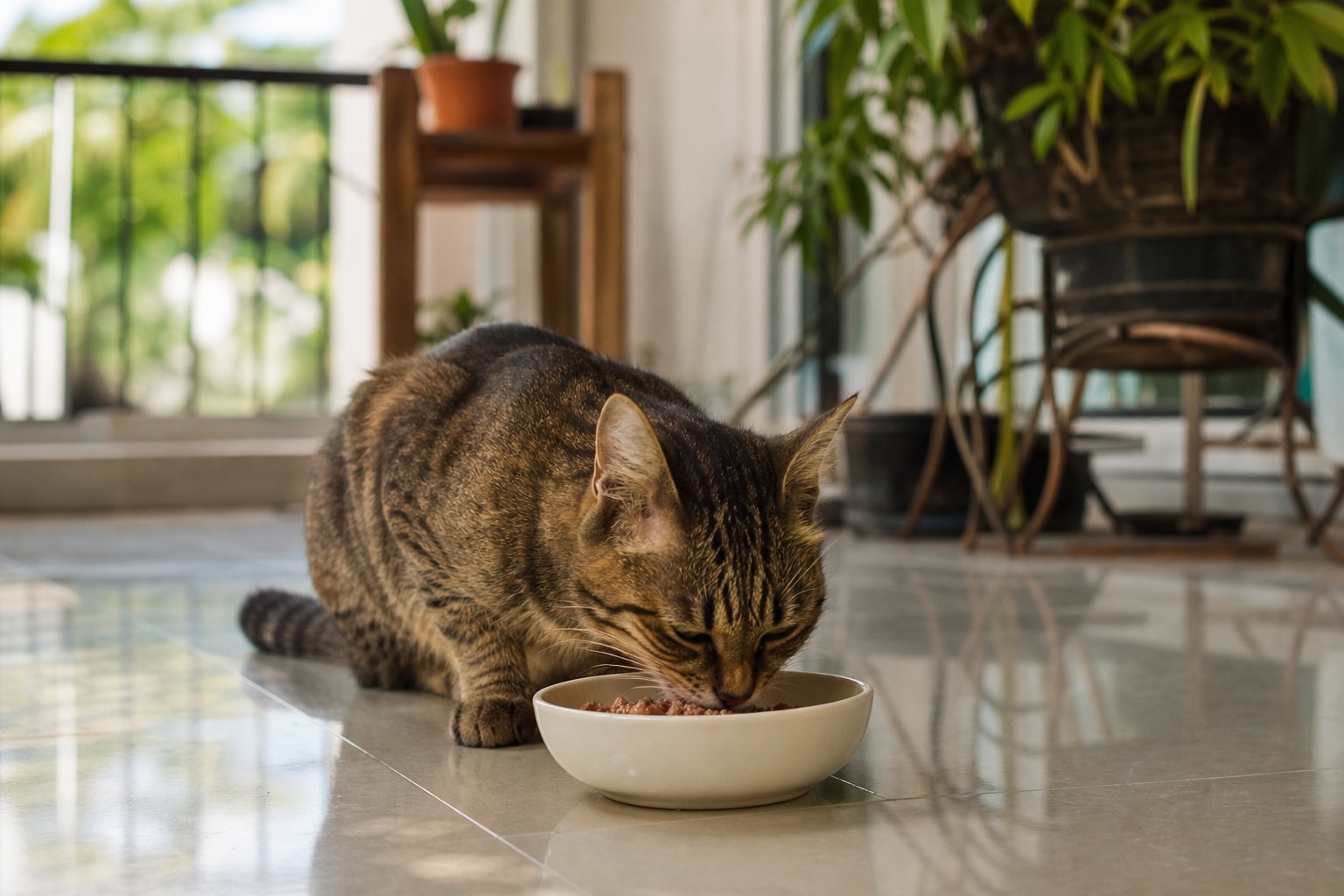
Homemade cat food is only as good as its recipe. The best homemade diet for a Malaysian cat is a vet-checked formula built on animal protein, balanced with a calcium source, taurine, omega-3 fats and a feline vitamin mix, then portioned to your cat's weight and body condition. Cooking gently is safer than raw for most homes, and no single meat, fish or organ should make up the whole bowl.
Why homemade food fails more often than it succeeds
Cats are obligate carnivores, but that does not mean "meat only" is a complete diet. In the wild a cat eats the whole prey animal: muscle, bone, organs, blood and gut contents. A bowl of minced chicken from the supermarket is only the muscle part. Feed that for months and the cat is quietly short of calcium, taurine, vitamin E, iodine and omega-3 fats.
Most homemade diet problems seen in practice are not dramatic poisonings. They are slow deficiencies: a cat that stops grooming, a coat that goes dull, a kitten that grows poorly, a cat that suddenly cannot jump because of weak bones. These changes take weeks to months to appear, which is exactly why the recipe matters more than the enthusiasm.
The other common failure is over-supplementing. Adding calcium without balancing phosphorus, or doubling a vitamin mix "to be safe", can cause its own problems. Balance is the whole point.
The nutrients a homemade cat diet must cover
| Nutrient | Why it matters | Typical homemade source | Watch out for |
|---|---|---|---|
| Taurine | Heart, eyes and reproduction | Supplement, plus dark meat and heart | Destroyed by heat and by freezing over long periods |
| Calcium | Bones, teeth, nerve function | Ground bone, calcium carbonate or eggshell powder | Must be balanced against phosphorus |
| Phosphorus | Paired with calcium | Meat and bone | Excess in all-meat diets |
| Vitamin A | Vision, skin, immunity | Liver | Too much liver is toxic over time |
| Vitamin D | Calcium absorption | Supplement or oily fish | Easy to overdose if supplementing blindly |
| Vitamin E | Antioxidant protection | Supplement, small amount of seed oil | Rancid oils destroy it |
| B vitamins | Energy metabolism | Fresh meat, especially heart | Lost in long cooking and storage |
| Omega-3 (EPA/DHA) | Skin, coat, joints, kidneys | Small oily fish or fish oil | Balance against omega-6 |
| Iodine | Thyroid function | Iodised salt or supplement | Rarely enough in plain meat |
| Water | Urinary and kidney health | Added water or broth | Cats are poor drinkers |
Notice how many rows depend on a supplement or an organ. That is the honest picture of homemade feeding: meat is the easy part, the balancing is the work.
Choosing proteins in Malaysia
Malaysian markets and wet markets give you good options, and the climate shapes how you handle them.
- Chicken. The workhorse. Thigh meat with skin gives fat and flavour; breast is lean and easy to overcook. Buy chilled, not refrozen, and cook the same day.
- Fish. Sardines, mackerel and other small oily fish add omega-3s and are widely available. Use them cooked, in moderation, and remove bones or use boneless canned fish in water with no added salt.
- Beef. Lean beef mince adds variety and iron. Choose a lean grind and drain excess fat.
- Eggs. Cooked egg is a good protein and choline source. Raw egg white binds biotin, so cook it.
- Organ meat. Liver and heart are essential in small amounts. Liver is the vitamin A source; heart is rich in taurine. Keep liver to a small fraction of the recipe, not a main ingredient.
- Avoid entirely. Onion, garlic, shallots, chives, leek and spring onion are toxic to cats, and they hide in many local marinades and broths. Also avoid grapes, raisins, chocolate, alcohol, xylitol, salty sauces, bone shards and heavy spices.
A practical rotation is chicken as the base, fish two or three times a week, and beef or egg occasionally, all inside the same balanced formula rather than as separate unbalanced meals.
Cooked or raw?
For most Malaysian households, gently cooked is the safer default. Cooking reduces bacterial load, which matters in a hot, humid climate where meat spoils quickly and kitchen surfaces stay warm. The trade-off is that heat destroys some taurine and B vitamins, so those go in after cooking, once the food has cooled.
Raw feeding is a choice some owners make deliberately. If you go that route, use fresh human-grade meat from a trusted supplier, keep it refrigerated until serving, freeze portions you will not use within a day, and clean boards, bowls and hands with hot soapy water. Do not feed raw in a home with a young child, an elderly person, a pregnant family member or anyone immunocompromised. Do not feed raw pork or raw wild-caught fish.
Whichever route you choose, the recipe must still be balanced. Raw does not fix a missing calcium source.
A simple framework for building a recipe
You do not need to invent a recipe from scratch. Ask a veterinarian for a formulated homemade recipe sized to your cat, or use a recipe from a qualified veterinary nutritionist. If you want to understand what you are looking at, most balanced homemade cat recipes follow a rough shape like this:
- Muscle meat base makes up the bulk of the bowl.
- Heart adds taurine and is treated as muscle meat in many formulas.
- A small amount of liver covers vitamin A and copper.
- A calcium source balances the phosphorus in the meat.
- A feline vitamin and mineral mix covers iodine, vitamin D, vitamin E and trace minerals.
- Fish oil or oily fish supplies omega-3s.
- Water or unsalted broth is stirred in for hydration.
Exact ratios vary by recipe and by your cat's health, which is why the numbers should come from your vet rather than a blog. What you can control is sourcing, hygiene, cooking method and consistency.
Portioning and body condition
A useful starting point for adult cats is roughly 2 to 4 percent of body weight in fresh food per day, split across two meals. That means a 4 kg cat eats about 80 to 160 g daily. Kittens, pregnant or nursing queens, and very active cats need more; sedentary indoor cats and overweight cats need less.
Use your hands, not just the scale. You should be able to feel the ribs easily under a thin fat layer, see a waist behind the ribs from above, and see a slight tummy tuck from the side. Weigh your cat monthly on a kitchen scale or at the vet, and adjust portions in small steps rather than big swings.
Homemade food is wet and water-rich, so it looks like a lot in the bowl. Do not compare the volume to dry kibble.
Storage and hygiene in a Malaysian kitchen
Heat and humidity are the main enemies here.
- Cook and cool food quickly, then refrigerate within two hours.
- Keep cooked homemade food in the fridge for no more than about two to three days. Freeze the rest in single-meal portions.
- Thaw in the fridge overnight, not on the counter.
- Discard anything that smells off, looks slimy or has been left out. Do not taste-test and guess.
- Wash bowls after every meal, and wash hands, knives and boards with hot soapy water after handling raw meat.
- Keep the food prep area separate from where you prepare human food, and never use the same board for raw meat and cooked food.
- Add supplements to cooled food, not to hot food, and mix them in evenly so every portion is balanced.
If you batch-cook on a Sunday, label containers with the date and the recipe version. When you change the recipe, start a fresh batch rather than mixing old and new.
Common mistakes to avoid
- Feeding only fish. Cats can become fixated on fish, and an all-fish diet is unbalanced and can contribute to urinary problems.
- Feeding only chicken breast. Lean, low in calcium, low in taurine once cooked, and boring enough that some cats refuse it.
- Skipping the calcium source. This is the single most common homemade diet error.
- Overdoing liver. Liver is nutrient-dense and easy to overfeed. Keep it small.
- Adding human supplements. Human multivitamins and calcium tablets are dosed for people, not cats.
- Using bones carelessly. Cooked bones splinter. If you use bone, use ground bone from a proper source, not leftovers from dinner.
- Changing the diet overnight. Transition over seven to ten days, mixing increasing amounts of the new food into the old.
- Ignoring the cat's reaction. Refusal, vomiting, diarrhoea or itching after a change deserves attention, not persistence.
When to see a vet
Contact a veterinarian promptly if your cat shows any of the following after starting or changing a homemade diet:
- Vomiting or diarrhoea that lasts more than a day or two
- Refusing food for more than 24 hours, especially in an overweight cat
- Weight loss, or a kitten that is not growing
- Weakness, wobbliness, reluctance to jump or a change in gait
- Dull coat, flaky skin or slow wound healing
- Increased thirst or urination
- Drooling, tremors, seizures or collapse, which are emergencies
- Any suspicion that your cat ate onion, garlic, chocolate, grapes, xylitol or a toxic plant
Also see a vet before starting homemade food if your cat is a kitten, pregnant or nursing, has kidney disease, diabetes, urinary crystals, pancreatitis, food allergies or a history of bladder stones. These cats need a recipe designed for their condition, not a general one.
A practical comparison
| Approach | Balance risk | Cost and effort | Best for |
|---|---|---|---|
| Complete commercial wet or dry food | Low, if from a reputable brand | Low effort, moderate cost | Most households, busy owners |
| Vet-formulated homemade, cooked | Low, if followed exactly | Higher effort, variable cost | Owners who want control and will commit |
| Vet-formulated homemade, raw | Low only with strict hygiene | High effort, higher risk | Experienced owners in low-risk homes |
| Meat plus rice or table scraps | High | Low | Nobody; this is not a diet |
| Single-protein only (chicken breast, fish) | Very high | Low | Nobody; use only short-term under vet advice |
Local prices for meat, fish, supplements and vet consultations vary by state, market and season. Ask your Malaysian vet or a trusted pet retailer for current costs rather than relying on figures from elsewhere.
Making the switch sensibly
Start with a vet conversation, not a shopping trip. Bring your cat's weight, age, health history and current food. Ask for a recipe, a portion target and a review date. Then buy one protein, cook one small batch, and transition slowly over a week or two.
Keep a simple log: what you fed, how much, and anything you noticed. At the next check-up, bring the log and the recipe. If your cat is doing well, body condition is stable, the coat is good and bloodwork is normal, you have evidence the diet is working. If not, adjust with your vet rather than adding more supplements by guesswork.
Homemade feeding is a commitment, not a shortcut. Done properly, it gives you full control over what your cat eats and can be a genuinely good diet. Done casually, it is one of the easiest ways to make a cat unwell without noticing.
This article is general information for Malaysian cat owners and is not a substitute for veterinary advice. Always consult a licensed veterinarian before changing your cat's diet, especially if your cat is young, pregnant, unwell or on medication.
Related reading
- Cat Food Guide Malaysia 2026: How to Choose Dry, Wet & Prescription Food
- Homemade Cat Food for Cats in Malaysia: A Practical, Vet-Informed Guide
- How to Choose Raw Cat Food for Cats: A Practical Malaysian Guide
- Best Raw Cat Food for Cats in Malaysia: A Practical Buying Guide
- Cat Staple Canned Food in Malaysia: How to Pick a Complete & Balanced Wet Food
- Halal Cat Food Feeding Guide for Cats: What Malaysian Owners Need to Know
- Raw Cat Food for Cats in Malaysia: A Practical, Vet-Informed Guide
- Best Dry Cat Food for Cats in Malaysia: A Practical Buying Guide
- Best Food Transition for Cats in Malaysia: A Step-by-Step Guide

