
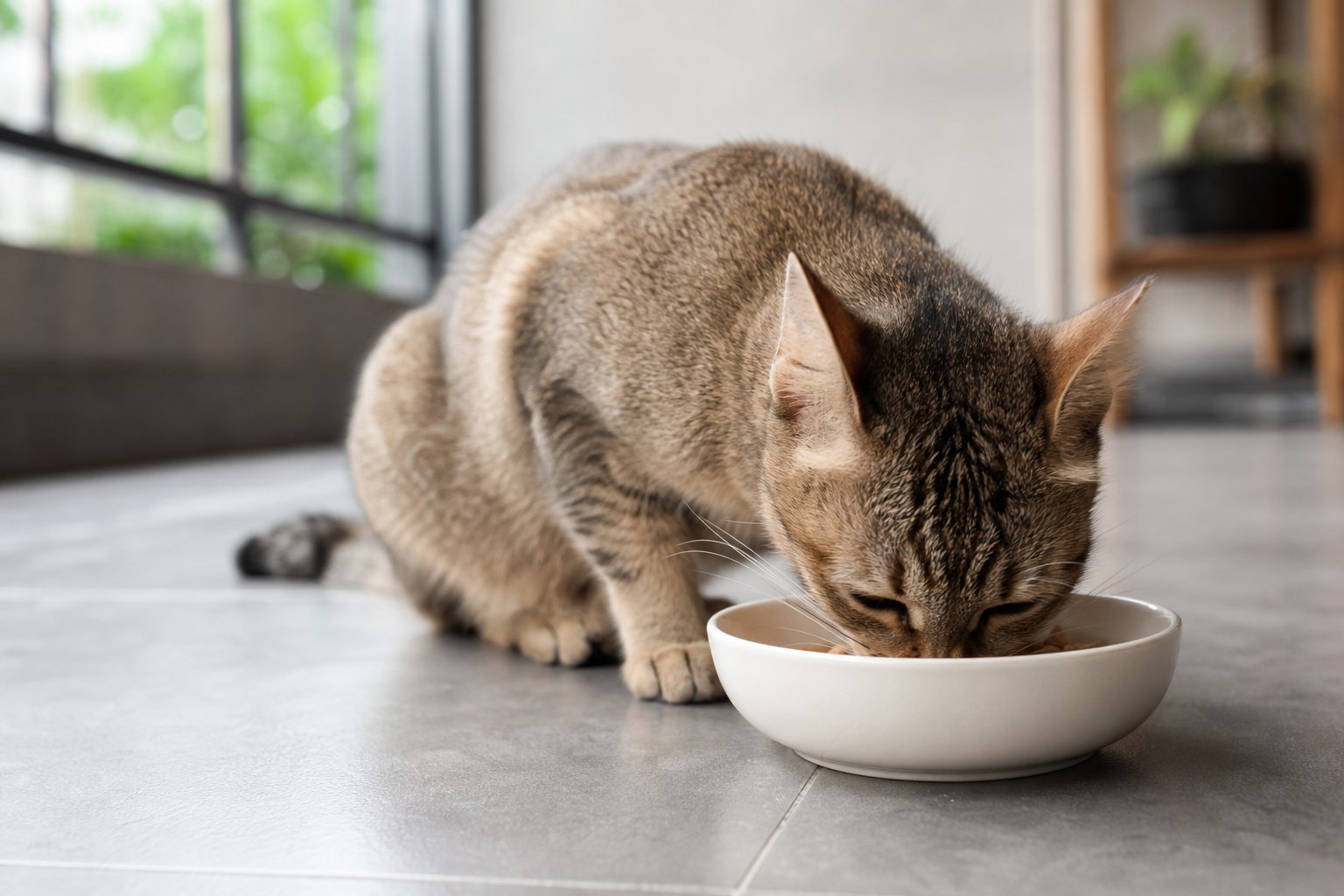
The short answer
There is no single best urinary care cat food in Malaysia. The right choice depends on what is actually wrong with your cat's urinary tract. Struvite crystals, calcium oxalate stones, idiopathic cystitis and stress-related FLUTD each call for a different strategy, and some diets that help one condition can worsen another. Prescription diets from your vet beat generic "urinary" kibble, and wet food usually beats dry for hydration.
Why urinary problems are so common in Malaysian cats
Urinary tract disease is one of the most frequent reasons cats are brought to clinics, and the pattern is familiar to most cat owners: repeated trips to the litter box, small urine clumps, licking the genital area, crying while urinating, or urinating outside the box.
The umbrella term is FLUTD, or feline lower urinary tract disease. It covers several distinct problems:
- Struvite crystals and stones — magnesium ammonium phosphate crystals that form more readily in concentrated, alkaline urine.
- Calcium oxalate stones — hard stones that form in acidic urine and cannot be dissolved by diet.
- Idiopathic cystitis — bladder inflammation with no infection or stone, strongly linked to stress.
- Urethral plugs and obstruction — most dangerous in male cats, where the urethra is long and narrow.
- Bacterial infection — less common in cats than in dogs, but real, especially in older cats.
Malaysia adds a few local pressures. Many households keep cats indoors in apartments with limited space, which can raise stress and reduce activity. Hot, humid weather makes dehydration easier, especially for cats eating only dry food. And multi-cat households in smaller homes can create litter box competition, so a nervous cat may hold urine rather than use a contested box.
The single most important factor: water
If you remember one thing from this guide, make it water. Concentrated urine is the common thread behind crystals, inflammation and many repeat episodes. Cats evolved as desert hunters and have a weak thirst drive, so they often drink less than they should, particularly on dry diets.
Practical ways to raise water intake:
- Feed wet food daily. Even partial wet feeding adds meaningful moisture. A typical canned food is around 75–80% water, compared with roughly 10% in dry kibble.
- Add warm water to meals. A tablespoon or two of warm (not hot) water stirred into wet food is often accepted without fuss.
- Use a water fountain. Many cats prefer running water, and fountains encourage repeated small drinks.
- Place water bowls away from food. Cats often avoid water next to their food source.
- Offer multiple bowls in different rooms, especially in multi-cat homes.
- Keep bowls clean and refill twice daily in warm weather.
A simple monitoring trick: count litter clumps. A cat producing several good-sized clumps a day is likely well hydrated. A cat producing few, small, hard clumps needs more fluid and a vet check.
Prescription versus off-the-shelf urinary food
This is where many owners go wrong. Supermarket and pet shop bags labelled "urinary care" or "urinary health" are usually maintenance diets. They may have moderated minerals, but they are not formulated to dissolve stones or manage a diagnosed condition.
Prescription urinary diets are different. They are designed for specific problems and sold under veterinary guidance. Broadly:
| Feature | Prescription struvite diet | Prescription oxalate diet | Off-the-shelf "urinary" food |
|---|---|---|---|
| Main job | Dissolve struvite, prevent recurrence | Prevent oxalate stones | General maintenance only |
| Urine pH target | Slightly acidic | Normal to slightly alkaline; avoid over-acidification | Not controlled |
| Magnesium and phosphorus | Restricted | Controlled | Moderately controlled |
| Sodium | Often raised to boost thirst | Usually restricted | Variable |
| Needs a diagnosis? | Yes | Yes | No |
| Vet supervision | Essential | Essential | Not required, but useful |
Notice that the two prescription columns pull in opposite directions. A struvite diet acidifies urine and may increase sodium to drive drinking. An oxalate diet avoids excessive acidification and often limits sodium. Feeding the wrong one can make things worse, which is why guessing from a label is risky.
Reading a urinary cat food label in Malaysia
Malaysian pet food shelves carry imported brands from the US, Europe, Thailand and elsewhere, plus local and regional brands. Labels vary in how much they disclose. Here is what to check:
- A statement of nutritional adequacy. Look for wording that the food is complete and balanced for a specific life stage, ideally backed by AAFCO or FEDIAF standards.
- Guaranteed analysis. This gives minimum protein and fat, maximum fibre and moisture. It is not a full nutrient profile, but it flags very high magnesium or ash levels.
- Ingredient list order. Named meat sources first is a reasonable sign of quality, though ingredients matter less than the overall nutrient profile in prescription diets.
- Veterinary or therapeutic claim. Words like "dissolution" or "struvite management" signal a therapeutic product. Treat these as vet-only products.
- Moisture content. Higher moisture is a plus for urinary health.
- Batch and expiry clarity. In a hot, humid climate, storage matters. Buy from shops with good turnover and avoid dented cans or damaged bags.
If a label is vague, ask the retailer for the manufacturer's nutrient profile or contact the importer. A product that cannot state its purpose clearly is a poor bet for a cat with a history of urinary problems.
Wet versus dry: a practical comparison
| Factor | Wet urinary diet | Dry urinary diet |
|---|---|---|
| Water content | High, around 75–80% | Low, around 10% |
| Effect on urine concentration | Dilutes urine | Concentrates urine unless intake rises |
| Cost per day | Usually higher | Usually lower |
| Convenience | Needs refrigeration once opened | Easy to leave out |
| Dental effect | Minimal | Some mechanical scraping |
| Palatability | Often high | Variable |
| Best use | Core diet, or mixed feeding | Convenience, or where wet food is refused |
For most cats with urinary histories, vets lean toward wet food as the base diet, sometimes with a measured amount of dry urinary kibble for convenience. Mixed feeding works if you calculate total calories so the cat does not overeat, and if the wet portion is large enough to matter for hydration.
Matching the diet to the diagnosis
Struvite crystals
Struvite is the type most likely to be managed with diet alone. A prescription struvite diet acidifies urine and restricts magnesium, ammonium and phosphorus. Many cases dissolve over weeks to a couple of months, with vet rechecks and imaging to confirm clearance. After dissolution, most cats stay on a prevention diet long term.
Calcium oxalate stones
Oxalate stones do not dissolve with diet. They usually need surgical removal or another procedure, and diet is used to reduce recurrence. The goal is normal urine pH, adequate hydration and controlled calcium and oxalate precursors. Do not use a struvite diet here.
Idiopathic cystitis and stress-related FLUTD
Diet helps by increasing water intake and diluting irritants, but stress management matters just as much. Environmental enrichment, more litter boxes, predictable routines, puzzle feeders and safe hiding spots all reduce flare frequency. In multi-cat Malaysian homes, the rule of thumb is one litter box per cat plus one, spread across different rooms.
Blocked male cats
This is not a diet problem. A male cat straining with little or no urine, crying, hiding or vomiting needs emergency care immediately. Do not wait to see whether a new food helps.
How to transition to a new urinary diet
Cats are notoriously suspicious of new food, and a cat with a painful bladder may eat even less willingly. Go slowly:
- Days 1–2: 25% new food mixed thoroughly into 75% old.
- Days 3–4: 50/50, still well mixed.
- Days 5–6: 75% new, 25% old.
- Days 7–10: all new food, if stools and appetite are normal.
Tips that help in practice:
- Warm wet food slightly to release aroma.
- Offer the new food when the cat is hungry, before the usual meal.
- Avoid free-feeding dry food during the transition, so hunger works in your favour.
- Keep the old and new foods in separate bowls if your cat prefers choice.
- Never let a cat go more than about 24 hours without eating; appetite loss can cause serious liver problems in overweight cats.
If your cat refuses the prescription diet entirely, tell your vet. There are usually several brands and formats, and a different texture or flavour often solves the problem.
Feeding routines that support urinary health
Diet is only part of the picture. Small, frequent meals suit cats better than one large meal and help maintain steady water intake when wet food is fed. In warm Malaysian weather, food left out spoils quickly, so discard uneaten wet food after about 30 minutes.
A simple daily checklist:
- Fresh water in at least two clean bowls, plus a fountain if accepted.
- At least one wet meal per day where possible.
- Litter boxes scooped daily and washed regularly.
- Enough boxes for the number of cats, in quiet locations.
- Play sessions to reduce stress and encourage activity.
- Weekly weight check, since obesity raises urinary risk.
When to see a vet
Contact a veterinarian promptly, or go to an emergency clinic, if you notice:
- Straining in the litter box with little or no urine produced.
- Crying or vocalising while urinating.
- Blood in the urine.
- Urinating outside the box, especially on cool surfaces such as tiles or in the bath.
- Frequent small trips to the box.
- Excessive licking of the genital area.
- Vomiting, lethargy, hiding or loss of appetite alongside urinary signs.
- Any urinary sign in a male cat, which should be treated as urgent.
A blocked cat can deteriorate within 24 to 48 hours. Do not try home remedies, and do not simply switch foods and wait.
Cost and availability in Malaysia
Urinary diets cost more than regular food, and prescription lines cost more again. Prices vary by brand, format and retailer, so ask your vet clinic and local pet retailers for current pricing rather than relying on online figures. Availability also varies: some therapeutic diets are stocked mainly through clinics, while others appear in larger pet stores. If a specific product is hard to find, ask your vet for an equivalent therapeutic option rather than substituting a grocery-store urinary kibble.
Buying in larger cans or multipacks can reduce cost per meal, but only if your cat will eat the food before it spoils. In a humid climate, store dry food sealed and use it within the recommended period after opening.
A realistic plan for Malaysian cat owners
Start with a vet visit if there are any active signs. Once you have a diagnosis, choose a diet that matches it, favour wet food where your cat accepts it, and build hydration and stress reduction into daily life. Recheck urine and imaging as your vet advises, and review the diet yearly. The best urinary care cat food is not the most expensive bag on the shelf; it is the one that fits your cat's specific problem and that your cat will actually eat every day.
This article is general information only and is not a substitute for veterinary advice. Urinary problems can become emergencies quickly. Always consult a licensed veterinarian in Malaysia about your cat's diagnosis, diet and treatment.
Related reading
- Cat Food Guide Malaysia 2026: How to Choose Dry, Wet & Prescription Food
- Food for Picky Cats in Malaysia: A Practical Feeding Guide
- How to Choose Urinary Care Cat Food for Cats: A Malaysian Owner's Guide
- Urinary Care Cat Food: A Feeding Guide for Malaysian Cat Owners
- Urinary Care Cat Food for Cats in Malaysia: A Practical Guide
- Best Food for Picky Cats in Malaysia: A Practical Feeding Guide
- Best Food Transition for Cats in Malaysia: A Step-by-Step Guide
- Best High-Protein Cat Food in Malaysia: How to Choose (2025 Guide)
- Best Hypoallergenic Cat Food in Malaysia: A Practical Guide for Itchy, Scratching Cats
- Best Weight Control Cat Food in Malaysia: A Practical Buying Guide
- Best Wet Cat Food in Malaysia: A Practical Buying Guide
- Cat Care in Malaysia: A Complete Guide for New and Experienced Owners

