
The short answer
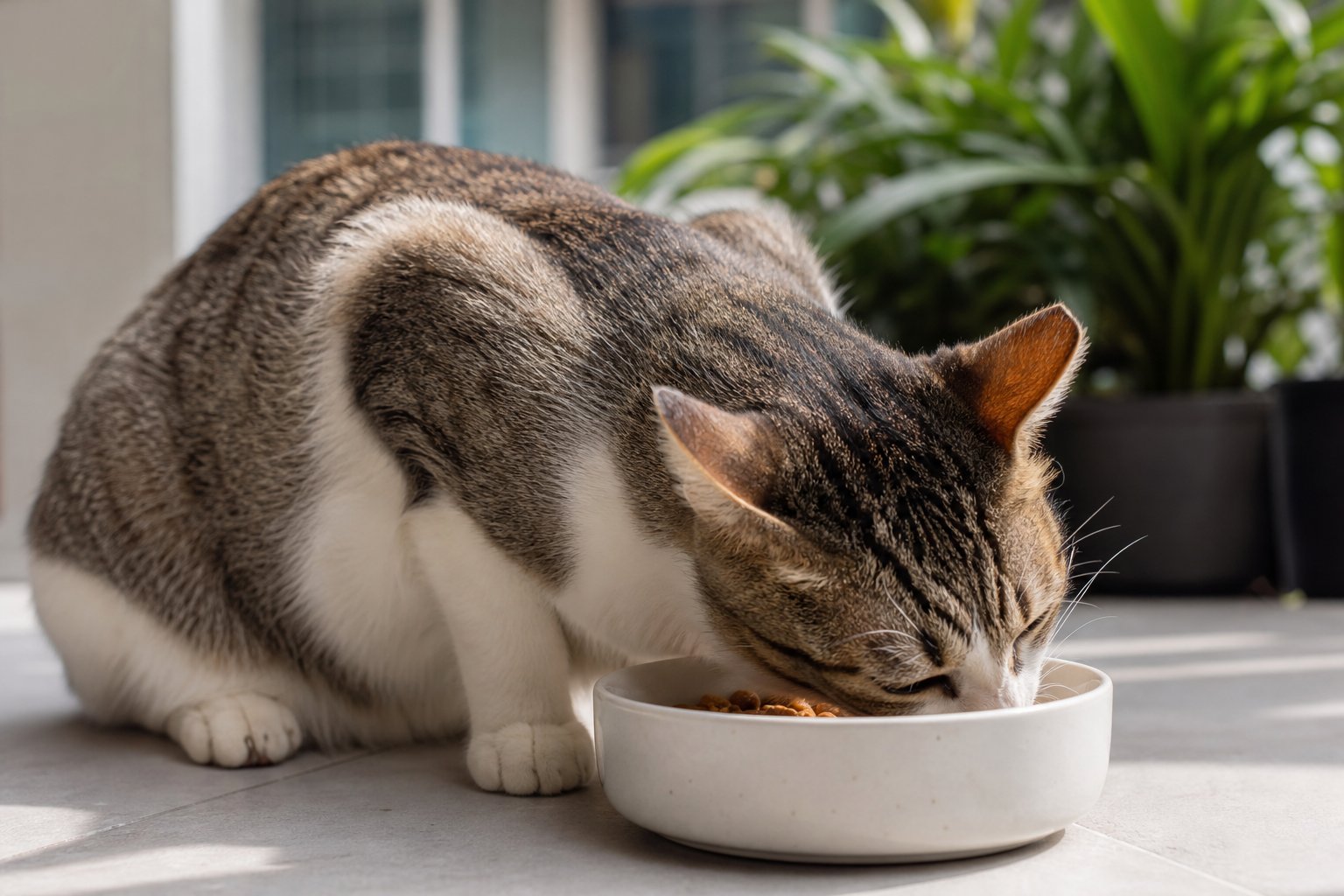
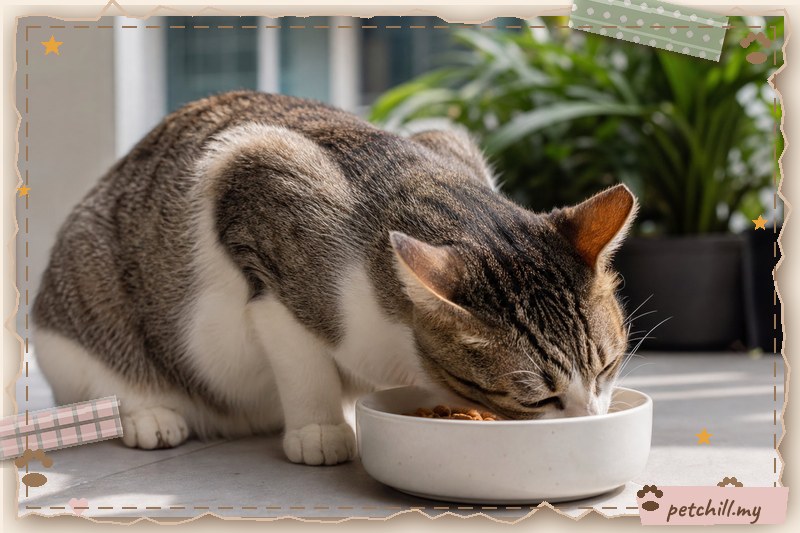
Dry cat food works well when you treat it as a measured diet, not an endless buffet. Feed adult cats two to three measured meals a day, base the amount on the pack guide plus your cat's body condition, and keep fresh water available at all times. Kittens, seniors, overweight cats and cats with health conditions need tailored plans, so confirm portions with your vet.
Why dry food needs a plan
Dry food is convenient, shelf-stable and often cheaper per meal than wet food. Those advantages can quietly encourage overfeeding. Kibble is calorie-dense, so a small extra scoop adds up over weeks. Cats are also natural nibblers, and a constantly full bowl removes the structure that helps you notice changes in appetite.
A feeding plan does three things. It controls calories so your cat stays lean. It makes changes in appetite obvious, which is often an early sign of illness. And it protects food quality, because kibble left out in warm, humid air can lose freshness and absorb moisture.
Lean body condition matters throughout a cat's life. Extra weight raises the risk of diabetes and joint strain, while sudden weight loss in an older cat warrants a vet visit. Weighing your cat monthly, or simply feeling the ribs and waist, gives you a simple tracking tool.
How much dry food to feed
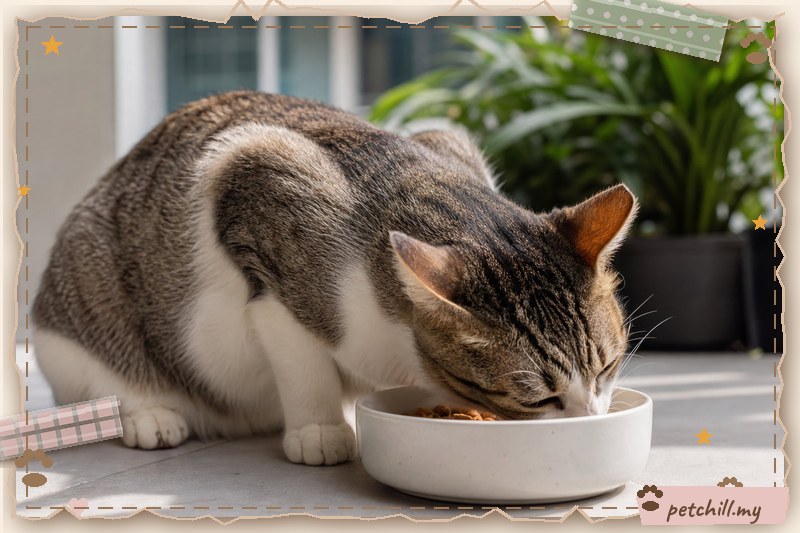
There is no single correct number of grams for every cat. Calorie needs depend on weight, age, activity, neuter status and health. The feeding guide on the pack is a starting point, not a prescription.
A practical approach:
- Weigh your cat, or ask your vet to weigh it at the clinic.
- Read the pack's guide for that weight and life stage.
- Divide the daily amount into two or three meals.
- Weigh the portion with a kitchen scale for the first two weeks rather than guessing with a cup.
- Recheck body condition after three to four weeks and adjust by about 10 percent up or down.
As a rough reference, many adult cats eat in the region of 40 to 60 grams of dry food per kilogram of body weight daily, but calorie density varies widely between brands and formulas. Always defer to the specific product's guide and your vet's advice.
| Cat profile | Typical meals per day | Portion approach | Watch for |
|---|---|---|---|
| Kitten under 6 months | 3 to 4 | Small meals, growth formula | Low energy, poor growth |
| Kitten 6 to 12 months | 2 to 3 | Transition toward adult portions | Weight gain after neutering |
| Adult, ideal weight | 2 | Measured, twice daily | Gradual weight creep |
| Adult, overweight | 2 | Vet-guided calorie reduction | Begging, rapid loss |
| Senior cat | 2 to 3 | Smaller, easier meals | Weight loss, thirst, appetite |
How often to feed
Adult cats generally do well on two measured meals a day, morning and evening. Three smaller meals can suit cats that beg, gulp food or have sensitive digestion. Kittens need more frequent meals because their stomachs are small and their energy needs are high.
Free-feeding, where a bowl is topped up all day, is common but has trade-offs. It can work for some relaxed adult cats at a healthy weight, but it makes portion control difficult, hides appetite changes and leaves kibble exposed to humid air for hours. If you free-feed, measure the daily amount each morning and do not refill until the next day.
Timed meals also build routine. Cats learn when food comes, which can reduce night-time demanding. If you work long hours, a timed feeder can help, but test it at home first and keep it clean.
Water is the missing piece
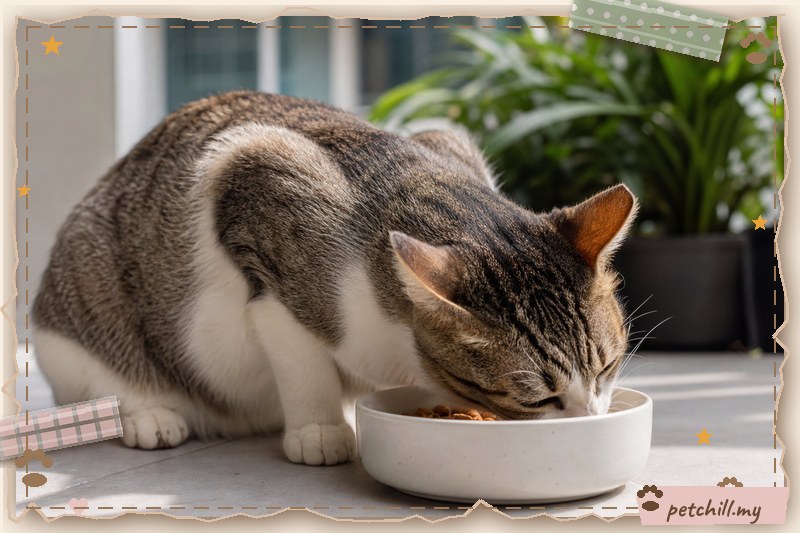
Dry food contains little moisture, often around 6 to 10 percent, while wet food is mostly water. Cats evolved to get much of their water from prey, and many do not drink enough to compensate for a dry-only diet. Chronic mild dehydration is a recognised concern, particularly for urinary and kidney health.
Practical hydration steps:
- Place several water bowls around the home, away from the food bowl and litter tray.
- Use wide, shallow bowls; some cats dislike whiskers touching the sides.
- Refresh water daily and wash bowls regularly.
- Try a pet water fountain if your cat shows interest in running water.
- Offer wet food as part of the diet, or add a small amount of water to kibble if your vet agrees.
- Watch litter tray output; small, frequent urination or straining needs veterinary attention.
If your cat rarely drinks and eats only dry food, raise it at the next check-up. Your vet can assess hydration and urinary health and advise whether to add wet food.
Choosing a dry food
Look for a complete and balanced diet labelled for your cat's life stage. The label should state that the food meets a recognised nutrient profile for complete nutrition. Avoid choosing on packaging alone; marketing terms like premium or natural are not guarantees of nutritional adequacy.
Key things to compare:
- Life stage: kitten, adult, senior or all life stages.
- Calorie content per 100 grams, which lets you compare foods fairly.
- Protein source and overall nutrient profile.
- Kibble size and texture, especially for kittens, seniors or cats with dental issues.
- Pack size you can finish while the food is fresh.
There is no need to chase exotic ingredients. A complete diet from a reputable manufacturer, suited to your cat's needs, is a sound base. If your cat has kidney disease, diabetes, allergies or urinary problems, a therapeutic diet prescribed by your vet is different from a general maintenance food.
Switching dry foods safely
Sudden food changes can upset digestion. Transition over seven to ten days:
| Day | Old food | New food |
|---|---|---|
| 1 to 3 | 75% | 25% |
| 4 to 6 | 50% | 50% |
| 7 to 9 | 25% | 75% |
| 10 onward | 0% | 100% |
Slow down if you see vomiting, loose stools or refusal. Some cats are suspicious of new kibble; mixing thoroughly and warming wet food slightly, if used, can help. Never starve a cat to force a switch, as cats can become seriously ill if they stop eating for more than a day or two.
Feeding by life stage
Kittens grow quickly and need energy-dense food formulated for growth, fed three to four times daily when very young. Follow the pack guide by age and weight, and ask your vet about when to move to adult food.
Adult cats need maintenance feeding with portions matched to activity. Neutered cats often need fewer calories than before surgery, so reassess portions afterwards.
Senior cats may benefit from smaller, more frequent meals and easier-to-chew kibble. Older cats are also more prone to dental disease, kidney disease and arthritis, so appetite and weight changes deserve prompt attention.
Pregnant and nursing cats have high energy needs and should be fed a suitable diet under veterinary guidance.
Storing dry food in Malaysia's climate
Heat and humidity are hard on kibble. Moisture can make food stale or mouldy, and fats can turn rancid. Good storage protects both nutrition and safety.
- Keep food in its original bag; the bag is designed to preserve freshness.
- Place the sealed bag inside an airtight container, stored in a cool, dry cupboard.
- Avoid direct sunlight, the top of the fridge and damp corners.
- Reseal tightly after every meal.
- Buy smaller bags if your cat eats slowly.
- Wash and dry the container between refills.
- Discard food that smells off, clumps or shows mould.
In a Kuala Lumpur apartment, cupboard space is often limited, so a small airtight container in a shaded kitchen cabinet works better than a large bag left open near the stove. In a Johor terrace house, keep food away from outdoor heat and pests, and check bags for gnaw marks.
Common feeding mistakes
- Guessing portions with a mug instead of weighing.
- Topping up the bowl without measuring the daily total.
- Ignoring the calorie difference between brands when switching.
- Leaving kibble out all day in humid air.
- Forgetting water bowls or placing them beside the food.
- Feeding too many treats without reducing the main meal.
- Assuming a cat that begs is hungry rather than bored.
Treats should be a small part of daily calories. If you use treats for training, break them into smaller pieces and reduce the main meal slightly.
When to see a vet
Contact a veterinarian if your cat shows any of the following:
- Refusing food for more than 24 hours, or any food refusal in a kitten.
- Sudden weight loss or gain.
- Increased thirst or urination.
- Straining to urinate, or urinating outside the litter tray.
- Vomiting or diarrhoea that persists or recurs.
- Difficulty chewing, dropping food or bad breath.
- Persistent scratching, hair loss or skin problems that may relate to diet.
- Any reaction after a food change.
Urinary blockage, especially in male cats, is an emergency. If your cat is straining and producing little or no urine, seek veterinary care immediately.
A simple daily routine
Morning: weigh or scoop the measured portion, serve, and refresh water bowls. Remove uneaten food after about 30 minutes if your cat walks away.
Evening: serve the second measured portion. Note appetite and litter tray habits.
Weekly: check body condition, wash water bowls and inspect the food container.
Monthly: weigh your cat if possible, and review whether portions still match its condition.
This routine takes a few minutes a day and makes health changes easier to spot.
Final thoughts
Dry cat food can be part of a healthy diet when portions are measured, meals are structured and water is always available. Adjust for life stage, watch body condition and store food carefully in Malaysia's humid climate. When in doubt, ask your vet rather than guessing.
This article is general information only and is not a substitute for veterinary advice. Always consult a licensed veterinarian about your cat's diet and health.
Related reading
- Cat Food Guide Malaysia 2026: How to Choose Dry, Wet & Prescription Food
- Dry Cat Food for Cats in Malaysia: A Practical Feeding Guide
- How to Choose Kitten Food for Cats: A Practical Malaysian Guide
- Kitten Food Feeding Guide for Cats in Malaysia: How Much, How Often, and What to Feed
- Wet Cat Food Feeding Guide for Cats: How Much, How Often and How to Switch
- Wet vs Dry Cat Food in Malaysia: Water, Cost and How to Choose
- Best Dry Cat Food for Cats in Malaysia: A Practical Buying Guide
- Best Hairball Control Food for Cats in Malaysia: A Practical Buying Guide
- Best Halal Cat Food in Malaysia: A Practical Buying Guide
- Best High-Protein Cat Food in Malaysia: How to Choose (2025 Guide)
- Best Kitten Food for Cats in Malaysia: A Complete Buying Guide
- Cat Food in Malaysia: How to Read the Label, Compare Protein and Budget Monthly

