
Quick answer
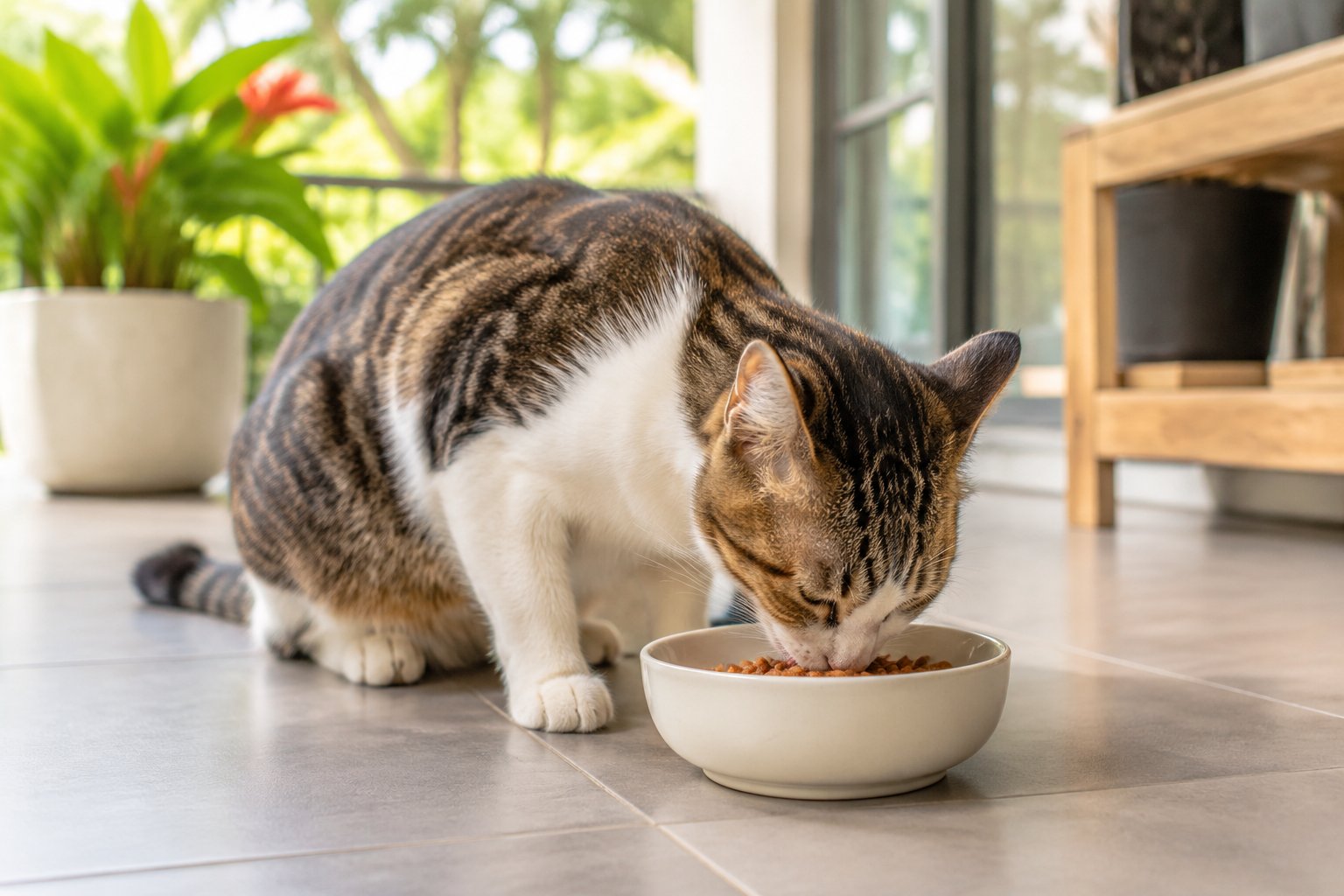
Switching cat food too quickly is one of the most common reasons cats vomit or get diarrhoea. The fix is simple: transition gradually over 7–10 days, mixing increasing amounts of the new food with the old. Start at 25% new and 75% old, then adjust every 2–3 days. This gives your cat's digestive system time to adapt and makes refusal less likely.
Why a gradual transition matters
A cat's gut is home to a complex community of bacteria that help break down food. When you change the diet suddenly, that community is thrown off balance. The result can be loose stool, vomiting, gas or a cat that simply walks away from the bowl.
A gradual switch does three things:
- Lets gut bacteria adjust to the new ingredients and nutrient profile.
- Gives digestive enzymes time to adapt to different protein and fat levels.
- Reduces stress for a cat that is sensitive to change in routine, texture or smell.
Some cats seem to handle an abrupt switch fine, but you cannot predict which cat will react badly. A slow transition costs you nothing and prevents a messy clean-up.
The 7–10 day transition schedule
Use this as a starting point. Adjust the pace based on your cat's stool quality and willingness to eat.
| Day | Old food | New food | What to watch |
|---|---|---|---|
| 1–2 | 75% | 25% | Normal appetite, firm stool |
| 3–4 | 50% | 50% | Stool consistency, no vomiting |
| 5–6 | 25% | 75% | Energy level, appetite |
| 7–10 | 0% | 100% | Stable stool, good appetite |
How to mix: For wet food, stir the two foods together thoroughly so your cat cannot pick out the old food. For dry food, mix the kibble in a container or bowl and shake gently. If your cat picks out the old kibble, try slightly warming the new food or adding a small amount of warm water to soften it.
Measure accurately. Use a kitchen scale or measuring cup. Eyeballing "a quarter of the bowl" often leads to uneven ratios, which slows adaptation.
Adjusting the pace for sensitive cats
Some cats need a slower schedule. Extend each step to 4–5 days, making the full transition 14–21 days. Signs you should slow down:
- Soft or loose stool that does not firm up within 2 days.
- Occasional vomiting after meals.
- Your cat eats less than usual or leaves food behind.
- Increased gas or gurgling stomach sounds.
If you see any of these, stay at the current ratio for a few more days before increasing the new food. Never rush the final step just because you are near the end of the old bag.
Wet food vs dry food transitions
Wet to wet: The easiest transition. Mix thoroughly and serve at room temperature. In Malaysia's warm climate, do not leave wet food out for more than 30 minutes.
Dry to dry: Mix kibble well. Some cats sort pieces by shape or size, so choose a new kibble with a similar shape if possible, or transition slowly.
Dry to wet: This is a bigger change in texture and water content. Start by offering a small amount of wet food as a treat alongside the normal dry ration, then gradually replace dry meals with wet. Expect a slower timeline (2–3 weeks).
Wet to dry: Cats can be reluctant to eat dry food if they are used to wet. Try moistening the dry food slightly at first, then reducing the water over time. Always provide fresh drinking water.
How much to feed during the transition
Keep the total daily calories roughly the same. If the new food has a different calorie density, calculate the correct portion. The feeding guide on the pack is a starting point, not a rule. Adjust based on your cat's body condition: you should be able to feel the ribs easily but not see them, and there should be a visible waist from above.
Practical tip: Use a consistent measuring cup or scale. In a multi-cat household, feed separately so you can monitor each cat's intake and stool.
Troubleshooting common problems
Cat refuses the new food: Go back to a ratio your cat accepts. Warm wet food slightly to enhance aroma. Try mixing a tiny amount of a strong-smelling topper (like a little tuna water) into the new food. Do not starve your cat to force acceptance; cats can develop serious liver problems if they stop eating for more than 24–48 hours.
Diarrhoea: Mild soft stool is common in the first few days. Pause the increase and hold at the current ratio. If diarrhoea is watery, bloody, or lasts more than 48 hours, see a vet.
Vomiting: Occasional vomiting after a meal may mean your cat ate too fast or the new food is too rich. Slow the transition and try smaller, more frequent meals. Persistent vomiting needs veterinary attention.
Constipation: A sudden switch to a low-fibre food can cause constipation. Ensure fresh water is always available and consider a gradual increase in fibre if recommended by your vet.
Gas: Some gas is normal as gut bacteria adjust. Persistent gas with discomfort warrants a vet check.
Special cases: kittens, seniors and cats with health conditions
Kittens: Growing kittens have high energy and nutrient needs. Transition slowly (14 days) and keep them on kitten-formulated food unless your vet advises otherwise. Never put a kitten on an adult diet without veterinary guidance.
Senior cats: Older cats may have dental issues, reduced kidney function or a sensitive stomach. Choose a senior-appropriate diet and transition over 14 days. Softer textures may help.
Cats with medical conditions: If your cat has kidney disease, diabetes, allergies or inflammatory bowel disease, your vet may prescribe a therapeutic diet. Follow your vet's transition plan, which may be slower and more structured. Do not switch a prescription diet without veterinary advice.
Picky eaters: Some cats are highly sensitive to texture and smell. Try offering the new food in a separate bowl next to the old food, or hand-feed a few pieces as a treat. Patience is key.
Keeping the transition safe in a Malaysian home
Malaysia's hot and humid climate affects food storage and safety. Here are practical tips:
- Store dry food properly: Keep kibble in an airtight container in a cool, dry place. Avoid leaving the bag open. Humidity can make kibble stale or mouldy.
- Handle wet food safely: Serve wet food at room temperature and discard leftovers after 30 minutes. In warm weather, bacteria multiply quickly.
- Fresh water daily: Wash water bowls daily and refill with fresh water. Some cats prefer running water; a pet fountain can encourage drinking.
- Monitor in multi-cat homes: In a Kuala Lumpur apartment with several cats, feed in separate rooms or use microchip feeders so you can track who eats what.
- Watch for heat stress: Cats may eat less in hot weather. If your cat is off food during a transition, ensure they are drinking and not overheated.
When to see a vet
Contact a veterinarian if you notice any of the following during or after a food transition:
- Vomiting that persists for more than 24 hours or is repeated.
- Diarrhoea that is severe, bloody or lasts more than 48 hours.
- Complete refusal to eat for more than 24 hours.
- Lethargy, weakness or hiding.
- Signs of pain, such as crying when picked up or reluctance to move.
- Weight loss or poor body condition.
- Any signs of an allergic reaction: facial swelling, hives, difficulty breathing.
These signs can indicate a more serious problem than a simple dietary upset. Your vet can rule out infections, obstructions or organ disease.
Building a long-term feeding routine
Once your cat is fully on the new food, keep meals consistent. Cats thrive on routine. Feed at the same times each day, measure portions, and monitor body condition monthly. If you need to switch again in future, repeat the gradual transition. Keep a simple log of food changes and any symptoms; it helps your vet if problems arise.
A note on treats: Introduce new treats one at a time and in small amounts. Treats should make up no more than 10% of daily calories.
Frequently asked questions
How long should I take to switch my cat's food? Aim for 7–10 days. Start with 25% new food mixed with 75% old, then increase the new proportion every 2–3 days. Cats with sensitive stomachs may need 14 days or more.
Can I switch my cat's food overnight? No. An abrupt switch often causes vomiting, diarrhoea or food refusal because the gut bacteria and digestive enzymes need time to adjust. Always transition gradually unless your vet advises otherwise.
What if my cat refuses the new food? Slow down the transition. Go back to a ratio your cat accepts, warm the food slightly, or mix in a little of a strong-smelling topper. Never starve a cat to force acceptance; seek vet advice if refusal lasts more than 24 hours.
My cat has diarrhoea during the switch. What should I do? Mild soft stool can happen. Pause the increase and stay at the current ratio for a few more days. If diarrhoea is severe, bloody, lasts more than 48 hours, or your cat is lethargic or vomiting, see a vet.
Can I mix wet and dry food during the transition? Yes, as long as you mix the same type (wet with wet, dry with dry) and keep the total daily calories similar. Mixing wet and dry in the same bowl is fine but remove uneaten wet food within 30 minutes to prevent spoilage in Malaysia's heat.
Do senior cats or kittens need a different transition plan? Yes. Kittens and senior cats are more sensitive. Use a slower schedule (14 days) and smaller steps. Kittens should stay on growth-formulated food unless your vet recommends otherwise. Senior cats may need softer textures and more frequent small meals.
Disclaimer
This article provides general information only and is not a substitute for veterinary advice. Always consult a licensed veterinarian for diagnosis and treatment of your cat's health conditions. Individual cats may have specific needs that require professional guidance.
Related reading
- Cat Food Guide Malaysia 2026: How to Choose Dry, Wet & Prescription Food
- Best Senior Cat Food in Malaysia: A Practical Buying Guide
- Dry Cat Food for Cats in Malaysia: A Practical Feeding Guide
- Hairball Control Food for Cats in Malaysia: What It Does and When It Helps
- How to Choose Hairball Control Food for Cats: A Practical Guide for Malaysian Owners
- How to Choose Raw Cat Food for Cats: A Practical Malaysian Guide
- How to Choose Senior Cat Food for Cats in Malaysia
- How to Choose Wet Cat Food for Cats in Malaysia: A Practical Guide
- Wet Cat Food for Cats in Malaysia: A Practical Feeding Guide
- ACANA Cat Food in Malaysia: Is This Canadian High-Protein Kibble Right for Your Cat?

