
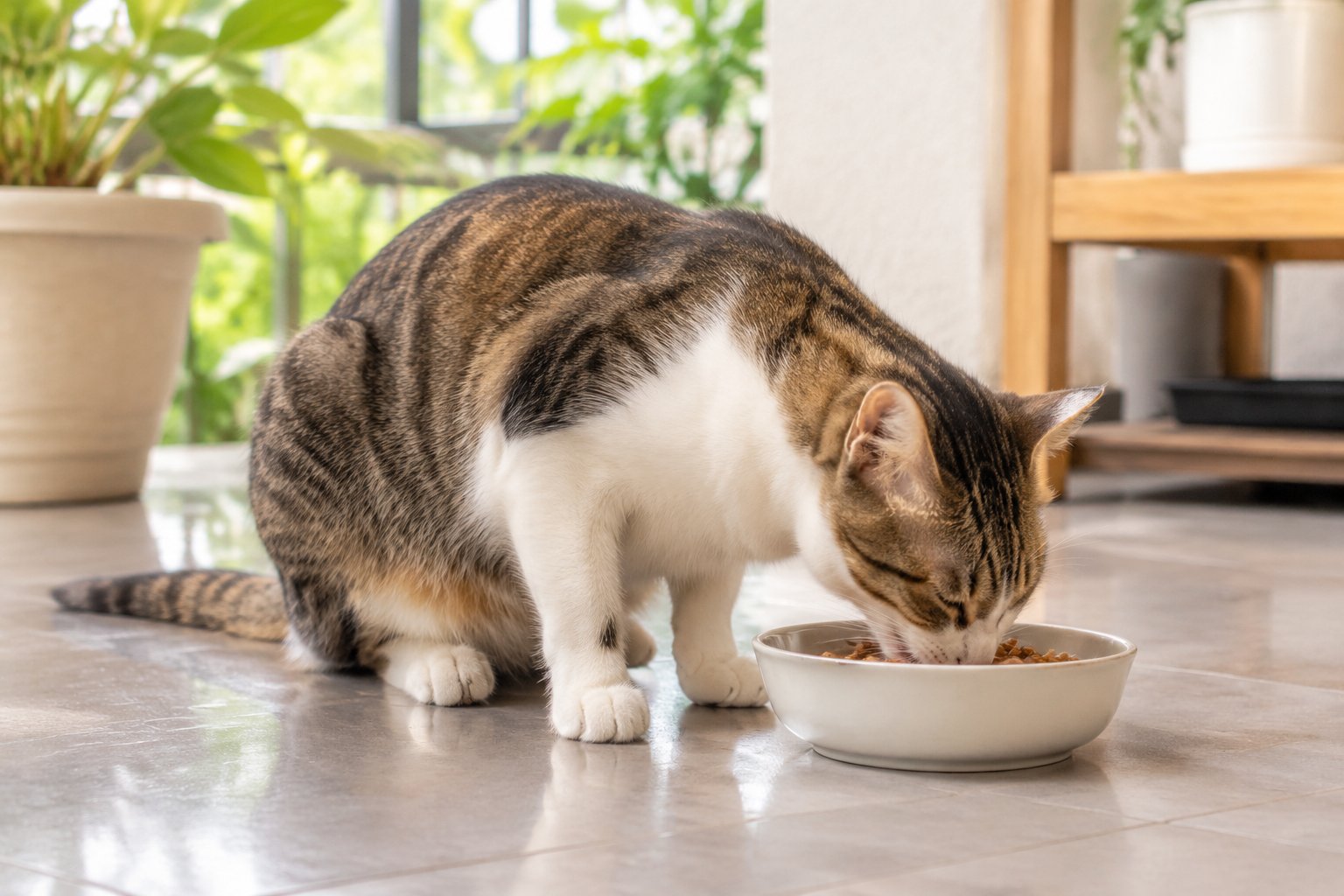
Start with the diet, not the trend
Raw feeding is popular, but the label "raw" tells you almost nothing about whether a food is good for your cat. Cats are obligate carnivores, which means they need nutrients found in animal tissues, but they still need a complete and balanced diet. A bowl of minced chicken breast is raw, yet it is not a cat diet. The first question to ask is not "raw or not?" but "is this complete and balanced for my cat's life stage?"
A good raw food for cats should meet a recognised nutrient standard, be made from ingredients you trust, be handled and stored safely, and be portioned to your cat's age, weight and health. Everything else, including brand, format and price, comes after those basics.
This guide walks through how to evaluate raw cat food options, whether commercial or homemade, with practical notes for Malaysian homes and climate.
What "complete and balanced" actually means
Complete and balanced means the food supplies all the nutrients a cat needs in the right amounts and proportions. Two widely used standards are AAFCO nutrient profiles and FEDIAF guidelines. A raw food that claims to meet one of these has at least been formulated against a recognised target.
Key nutrients in a raw cat diet include:
- Protein and amino acids, especially taurine and arginine, which are found in meat and organs.
- Fat and essential fatty acids, including omega-3s.
- Calcium and phosphorus in a suitable ratio, usually supplied by bone or a calcium source.
- Vitamins, including A, D, E and B vitamins.
- Minerals, including iodine, zinc, copper and iron.
Meat alone is low in calcium and some vitamins. Liver is rich in vitamin A and copper but should not be fed in large amounts. Bone supplies calcium but too much bone causes constipation and an unbalanced ratio. This is why raw recipes combine muscle meat, organ meat, bone or calcium, and supplements in specific proportions.
If a commercial raw food does not state a nutrient standard or provide a full nutritional profile, treat it as incomplete until proven otherwise. If you make food at home, have the recipe reviewed by a veterinarian with nutrition training.
Commercial raw food vs homemade raw food
Both routes can work. They fail in different ways.
| Factor | Commercial raw food | Homemade raw food |
|---|---|---|
| Nutritional balance | Formulated to a standard if reputable | Depends entirely on your recipe |
| Convenience | Portioned and ready to thaw | Requires sourcing, prep and storage |
| Cost | Usually higher per meal | Can be lower if you source well |
| Traceability | Depends on brand transparency | You control ingredients |
| Safety | Depends on manufacturer hygiene | Depends on your kitchen hygiene |
| Flexibility | Fixed recipes | Easy to adjust with guidance |
| Risk of imbalance | Lower if complete and balanced | Higher without professional formulation |
Commercial raw foods are convenient, especially for busy households, but quality varies. Look for clear labelling, a named nutrient standard, a stated life stage, and a manufacturer who answers questions about sourcing and testing. Avoid products with vague ingredient lists or claims that sound impressive but say nothing about nutrition.
Homemade raw food gives you control, but it is easy to get wrong. Common mistakes include feeding only muscle meat, using too much bone, skipping taurine, or guessing supplement doses. If you want to cook at home, ask a veterinary nutritionist to formulate a recipe for your cat, then follow it precisely.
Reading a raw cat food label
A useful label tells you more than "100% natural". Check for:
- A nutritional adequacy statement. It should say the food is complete and balanced for a specific life stage, such as adult maintenance or growth, and name the standard used.
- A full ingredient list. Named meats and organs are better than vague terms. "Chicken, chicken liver, chicken heart" is clearer than "poultry by-products".
- Guaranteed analysis. This gives minimum protein and fat and maximum fibre and moisture. It is a starting point, not a full nutrient profile.
- Feeding guidance. A responsible manufacturer gives amounts by weight and notes that amounts vary with age and activity.
- Handling instructions. Raw food should state storage temperature, thawing guidance and use-by information.
- Contact details. A brand that is reachable and willing to answer nutrition questions is a better bet.
If a label makes health claims without a nutritional adequacy statement, be cautious. Marketing language is not a substitute for formulation.
Sourcing meat and ingredients in Malaysia
Malaysian cat owners have access to fresh poultry, fish, beef and organ meats in wet markets, supermarkets and specialist pet food suppliers. Freshness matters, but so does handling.
Practical sourcing tips:
- Buy from suppliers with reliable cold chains. Avoid meat that has been sitting at ambient temperature.
- Keep raw meat separate from ready-to-eat food in your shopping bag and fridge.
- Choose organs such as liver and heart from reputable sources, and use them in the amounts your recipe specifies.
- If you use fish, keep it occasional and account for it in the recipe, because some fish can affect thiamine and other nutrients.
- Avoid feeding raw fish containing thiaminase regularly, and never feed spoiled or suspect meat.
In a hot, humid climate, the window for safe handling is short. Plan your shopping so raw meat goes straight into a cooler bag or fridge. Do not leave raw food in a car while you run other errands.
Food safety at home
Raw meat can carry bacteria such as Salmonella, Campylobacter and E. coli, and parasites such as Toxoplasma. Freezing helps with some parasites but does not sterilise food. Hygiene is therefore non-negotiable.
A simple home routine:
- Designate a clean prep area and wash it before and after handling raw food.
- Use separate boards and knives for raw meat and ready-to-eat food.
- Wash hands with soap and water after handling raw food, and supervise children around pets during feeding.
- Clean bowls after every meal. Raw residue in a warm bowl is a bacterial playground.
- Thaw food in the fridge, not on the counter. If you need speed, use a sealed bag in cool water and feed immediately.
- Do not refreeze thawed raw food unless it was thawed in the fridge and still cold, and even then, quality suffers.
- Discard any food that has been out at room temperature for too long. When in doubt, throw it out.
If anyone in the household is pregnant, elderly, very young or immunocompromised, discuss the risks with a doctor and vet before bringing raw food into the home.
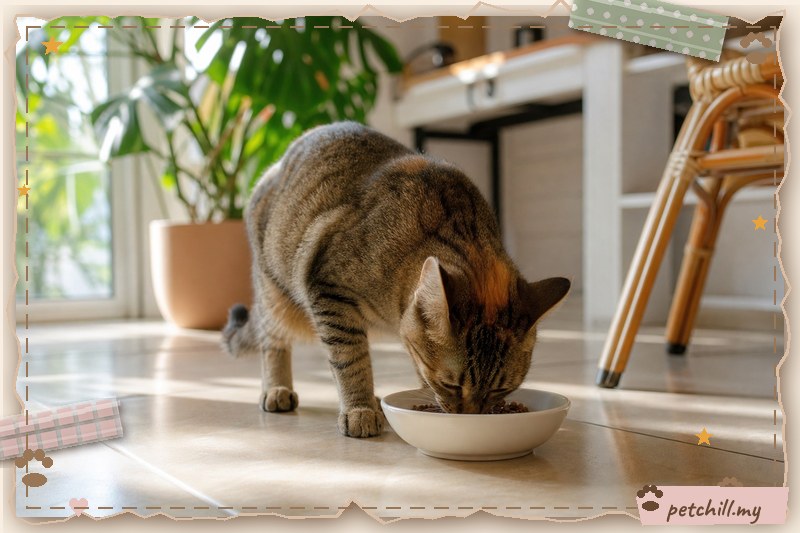
Portioning and body condition
A common starting point for adult cats is roughly 2 to 4 percent of body weight per day, split into two or more meals. A 4 kg cat might start around 80 to 160 g per day, then be adjusted based on body condition. These are starting points, not rules. Activity, age, neuter status and food energy density all change the amount.
Weigh your cat regularly and check body condition. You should be able to feel the ribs with light pressure and see a waist from above. If your cat is gaining or losing weight, adjust portions and ask your vet to review the diet.
Kittens, pregnant and nursing cats need more energy and different nutrient balances. Senior cats and cats with health conditions need individual plans. Do not apply adult maintenance portions to a growing kitten.
Transitioning to raw food
Sudden diet changes can cause vomiting or diarrhoea. A gradual transition over one to two weeks suits many cats, but every cat is different.
A practical approach:
- Start with a small amount of raw food mixed into the current food.
- Increase the raw proportion slowly over several days if stools remain normal.
- Keep meals at consistent times and remove uneaten raw food after about 20 to 30 minutes.
- Watch for vomiting, diarrhoea, lethargy or refusal to eat.
- If your cat has a sensitive stomach, slow down or pause and consult your vet.
Some cats take to raw food immediately; others need patience. Never starve a cat to force a transition. Cats that stop eating can become seriously ill.
Red flags to avoid
Be cautious when a raw food or recipe:
- Claims to cure diseases or replace veterinary treatment.
- Gives no nutritional adequacy statement or full nutrient profile.
- Relies on a single meat source with no organs, bone or supplements.
- Uses vague ingredient terms or hides the manufacturer.
- Gives no feeding or storage guidance.
- Is sold without cold-chain handling.
- Encourages feeding large amounts of liver or bone without proportions.
A raw diet is a tool, not a philosophy. If a product or recipe cannot answer basic nutrition and safety questions, look elsewhere.
When to see a vet
Speak to a veterinarian before starting raw food if your cat is very young, pregnant, nursing, senior, or has kidney disease, diabetes, pancreatitis, gastrointestinal disease, cancer or a weakened immune system. Seek veterinary advice promptly if your cat vomits repeatedly, has diarrhoea lasting more than a day, refuses food for more than 24 hours, loses weight, or shows lethargy or pain. These signs can have many causes, and raw feeding should not delay diagnosis or treatment.
Malaysian context
In a Kuala Lumpur apartment, freezer space is often limited, so buying smaller amounts more frequently and portioning before freezing works better than bulk buying. In a Johor terrace house, a chest freezer can make batch preparation practical, but the same hygiene rules apply. During the Penang rainy season, power interruptions are possible, so keep ice packs and a cooler bag ready and check that frozen food has not thawed and refrozen.
Local prices for raw ingredients and commercial raw food vary widely, so compare suppliers and ask your vet or a trusted retailer for current guidance rather than relying on online figures.
Bottom line
Choose raw cat food by checking nutritional completeness, ingredient quality, hygiene and portion fit. Commercial raw food can be convenient if it is properly formulated and labelled. Homemade raw food can work if a veterinary nutritionist formulates the recipe and you follow it carefully. In all cases, handle raw meat safely, transition slowly, monitor body condition, and involve your vet, especially for kittens, seniors and cats with health conditions.
This article is general information, not veterinary advice. Always consult a licensed veterinarian about your cat's diet and health.
Related reading
- Cat Food Guide Malaysia 2026: How to Choose Dry, Wet & Prescription Food
- Best Dry Cat Food for Cats in Malaysia: A Practical Buying Guide
- Best Food Transition for Cats in Malaysia: A Step-by-Step Guide
- Best Homemade Cat Food for Cats in Malaysia: A Practical Vet-Informed Guide
- Best Raw Cat Food for Cats in Malaysia: A Practical Buying Guide
- Best Wet Cat Food in Malaysia: A Practical Buying Guide
- Food Transition for Cats in Malaysia: A Safe, Step-by-Step Guide
- High-Protein Cat Food Feeding Guide for Cats: How Much, Which Type, and What to Watch
- High-Protein Cat Food in Malaysia: A Practical Guide for Cat Owners
- Homemade Cat Food for Cats in Malaysia: A Practical, Vet-Informed Guide
- How to Choose Dry Cat Food for Cats: A Malaysian Guide
- How to Choose High-Protein Cat Food for Cats: A Malaysian Owner's Guide

