
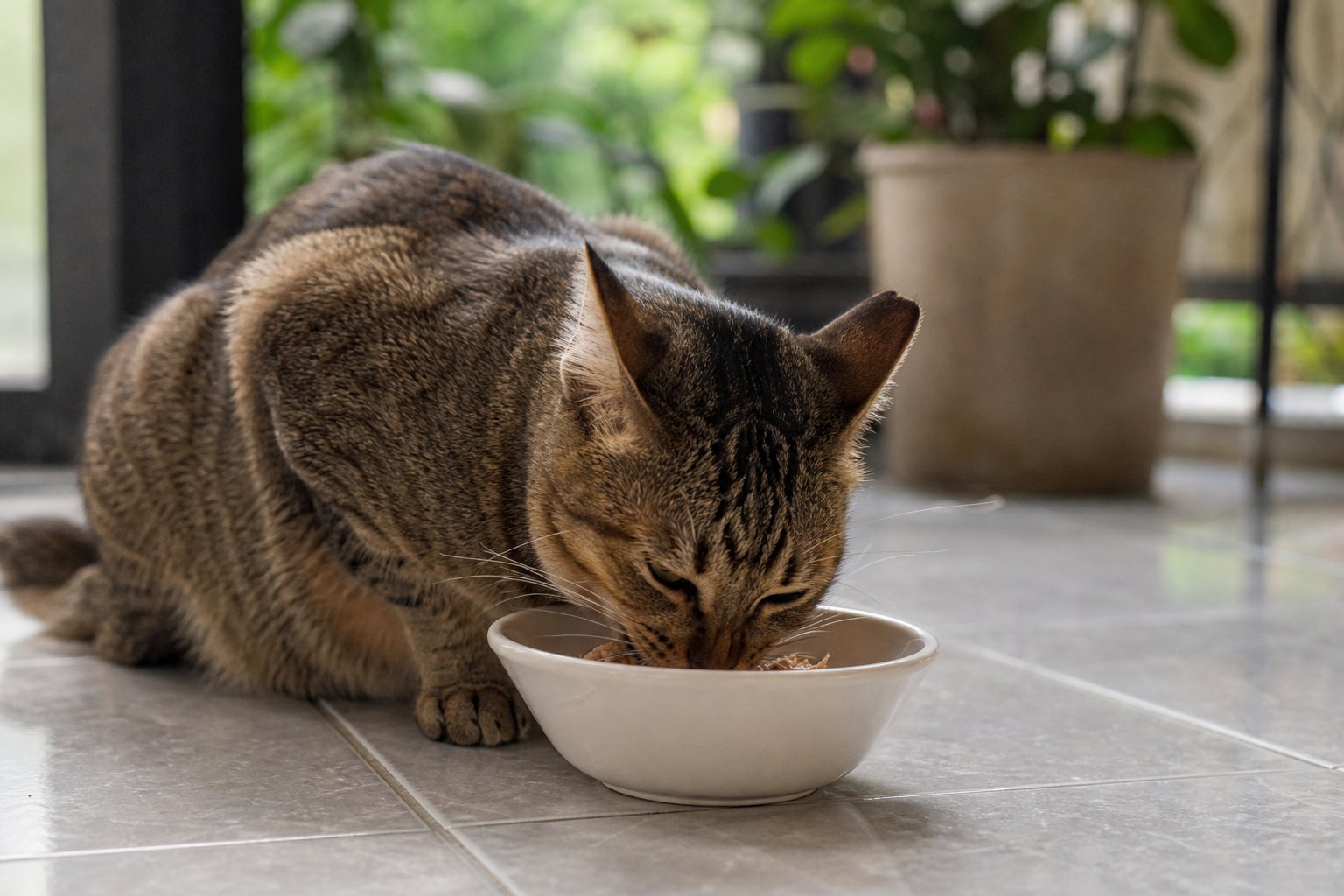
The short answer
Caring for a cat in Malaysia comes down to four basics: a complete diet in measured portions, fresh water and shade in the heat, a clean litter routine, and regular veterinary checks. Add daily play, safe indoor space, and parasite prevention. Most problems are easier to prevent than to treat, so build these habits from day one.
1. Feeding your cat: what, how much, and how often
Cats are obligate carnivores. They need animal protein and specific nutrients such as taurine, arachidonic acid, vitamin A and niacin that plant foods cannot supply in the right form. That is why a complete commercial cat food, or a properly balanced home-prepared diet made with veterinary guidance, matters more than any single ingredient trend.
Choosing a food
Look for a label that states the food is complete and balanced for your cat's life stage: kitten, adult, or senior. The label should name the species (cat) and give a nutritional adequacy statement. Avoid buying loose or repackaged food with no label, because storage and expiry are unknown.
| Food type | Strengths | Watch-outs |
|---|---|---|
| Dry kibble | Convenient, stable, can help with plaque | Easy to overfeed; some cats drink too little |
| Wet food (cans, pouches) | High moisture, palatable, useful for urinary health | Spoils quickly once opened; costs more per meal |
| Mixed feeding | Combines moisture and convenience | Calories add up; measure both parts |
| Home-prepared | Owner controls ingredients | Needs a vet-formulated recipe to avoid deficiencies |
Portion control
Obesity is one of the most common nutrition problems vets see. Free-feeding a bowl of kibble all day makes it hard to notice how much your cat eats, and it hides early signs of illness. Instead, measure meals. A typical adult cat needs roughly 200–300 kilocalories a day, but the correct number depends on weight, age, neuter status and activity. Use the feeding guide on the pack as a starting point, then ask your vet to fine-tune it.
Kittens need more calories per kilogram and should eat kitten-formulated food until they are about a year old, or as your vet advises. Senior cats may need softer food or a diet tailored to kidney or dental health.
Water and hydration
Cats evolved as desert hunters and often drink less than dogs. Low water intake can contribute to urinary problems. Encourage drinking with:
- Multiple water bowls in different rooms, refreshed daily.
- A wide, shallow bowl so whiskers do not touch the sides.
- A pet water fountain if your cat prefers running water.
- Wet food as part of the daily ration.
In Malaysia's warm climate, water evaporates and grows bacteria faster. Wash bowls daily and top them up more often than you would in a cooler country.
Foods to avoid
Keep these away from cats: chocolate, onions, garlic, grapes and raisins, alcohol, caffeine, xylitol (a sweetener in some human foods), and raw dough. Bones can splinter. Milk is not a good staple because many adult cats are lactose intolerant. If you are unsure whether something is safe, ask your vet rather than testing it.
Changing food
Switch diets gradually over about seven days, mixing increasing amounts of the new food with the old. A sudden change can cause vomiting or diarrhoea. If your cat refuses food for more than a day, especially a kitten or an overweight cat, contact a vet.
2. Litter, toileting and hygiene in a humid home
A litter box is not just a toilet; it is a health monitor. Daily scooping lets you notice changes in urine clumps, stool consistency, or how often your cat goes.
Box basics
- One box per cat, plus one spare.
- Place boxes in quiet, accessible spots away from food and water.
- Use a box large enough for your cat to turn around.
- Most cats prefer fine, unscented clumping litter, but individual preferences vary.
- Scoop at least once daily; wash the box monthly with mild soap and water.
Malaysia's humidity means litter can absorb moisture and smell faster. Keep the box ventilated, avoid sealing it in a hot bathroom, and replace clumping litter before it becomes saturated. If odour persists despite cleaning, check for urinary or digestive issues rather than simply adding more fragrance.
Warning signs in the box
Straining to urinate, crying while urinating, frequent tiny clumps, blood in urine, or urinating outside the box can signal a urinary blockage, which is an emergency, especially in male cats. Do not wait overnight. Diarrhoea lasting more than a day, or stool with blood or mucus, also warrants a vet call.
3. Grooming, parasites and tropical living
Coat and skin
Short-haired cats usually need a weekly brush; long-haired cats need daily grooming to prevent mats. Regular brushing also lets you check for fleas, ticks, wounds and lumps. Bathe only when needed, using a cat-safe shampoo, and dry your cat thoroughly afterwards to prevent skin problems in humid weather.
Fleas and ticks
Fleas thrive in warm environments and can cause itching, anaemia in kittens, and tapeworm infection. Use a flea product recommended by your vet and follow the weight-based dose exactly. Never use dog flea products on cats; some contain permethrin, which is toxic to cats. Ticks can transmit disease, so check ears, neck and paws after outdoor exposure.
Deworming
Intestinal worms are common, especially in cats that hunt or go outdoors. Your vet can advise on a deworming schedule based on your cat's lifestyle. Pregnant cats and kittens need specific protocols.
Heat and ventilation
Cats tolerate warmth better than dogs, but they still suffer in hot, poorly ventilated spaces. Provide shade, airflow and cool floor spots. Avoid leaving a cat in a parked car. Long-haired and flat-faced breeds may struggle more in heat. Heavy panting, drooling, weakness or collapse are emergency signs.
4. Health checks, vaccination and preventive care
The first vet visit
Bring a new cat or kitten to a vet soon after adoption. The vet will check weight, teeth, ears, eyes, coat and general health, discuss vaccination and parasite control, and advise on neutering. Bring any records from a shelter or breeder.
Vaccination
Core vaccines protect against serious viral diseases. Kittens usually start a course and receive boosters; adult cats need regular boosters based on risk. Even indoor cats can be exposed through visitors, other pets, or an accidental escape, so do not skip vaccination simply because your cat stays inside.
Neutering
Neutering reduces roaming, fighting, urine marking and unwanted litters, and it lowers the risk of some reproductive cancers. Ask your vet about the right age for your cat.
Dental care
Dental disease is common and often painful. Brush your cat's teeth with pet toothpaste if your cat tolerates it, offer dental-friendly food or chews recommended by your vet, and ask for a dental check at each visit. Bad breath is not normal.
Weight and body condition
Weigh your cat regularly or check body condition by feeling the ribs. You should be able to feel ribs easily without seeing them sharply. Ask your vet to show you how to score body condition at home.
5. Cat-proofing a Malaysian home
Windows, balconies and doors
High-rise living is common in Malaysian cities, and falls are a serious risk. Install secure screens or grilles on windows and balconies. Cats can slip through gaps you might not expect. Keep doors closed or use a screen door.
Household hazards
- Lilies are highly toxic to cats; avoid them in homes with cats.
- Keep cleaning products, pesticides and medicines locked away.
- Secure dangling cords and blind strings.
- Check washing machines and dryers before closing the door.
- Store small objects that can be swallowed, such as hair ties and rubber bands.
Enrichment
Indoor cats need outlets for hunting and climbing. Provide scratching posts, vertical space, puzzle feeders and daily interactive play. Rotate toys to keep interest. A bored cat may over-groom, vocalise or toilet outside the box.
Multi-cat homes
Provide separate resources: food stations, water bowls, litter boxes and resting spots. This reduces competition and stress. Introduce new cats gradually, using scent swapping and supervised meetings.
6. Kitten care basics
Kittens grow quickly and need frequent small meals, gentle handling, and early veterinary checks. Socialise them to different people, sounds and handling while they are young. Start parasite prevention and vaccination on the schedule your vet recommends. Provide safe toys and avoid small objects that can be swallowed. Kittens should stay with their mother and littermates until they are old enough, as this period teaches important social skills.
7. Travel, boarding and emergencies
If you travel, arrange a trusted pet sitter or boarding facility in advance. Leave written feeding and medication instructions. For car travel, use a secure carrier and never let a cat loose in the vehicle. Keep a basic pet first-aid kit and your vet's contact details handy. In an emergency, call ahead so the clinic can prepare.
When to see a vet
Seek veterinary care promptly if your cat shows any of the following:
- Not eating or drinking for more than 24 hours.
- Repeated vomiting or diarrhoea, especially with blood.
- Straining to urinate, or no urine produced.
- Difficulty breathing, coughing or open-mouth breathing.
- Sudden weakness, collapse, seizures or disorientation.
- Wounds, abscesses, swelling or lameness.
- A change in thirst, appetite, weight or litter habits that lasts more than a few days.
- Any suspected poisoning or exposure to a toxic plant or product.
Cats are good at hiding discomfort. Trust your instincts: if something feels wrong, a check-up is safer than waiting.
Quick daily checklist
- Fresh water in clean bowls.
- Measured meals at set times.
- Litter box scooped.
- Play and interaction.
- Quick visual check of eyes, nose, coat and behaviour.
Quick weekly checklist
- Brush coat and check skin.
- Wash water bowls thoroughly.
- Check litter box condition and replace litter as needed.
- Inspect toys for damage.
- Review food and medication supplies.
A note on local prices and products
Prices for food, litter, grooming and veterinary care vary by location and clinic in Malaysia. Ask your local vet or retailer for current recommendations and costs rather than relying on online figures. Product availability also differs between shops and online sellers.
Vet disclaimer
This article provides general educational information and is not a substitute for professional veterinary advice. Every cat is different. Always consult a licensed veterinarian for diagnosis, treatment and a care plan tailored to your cat.