
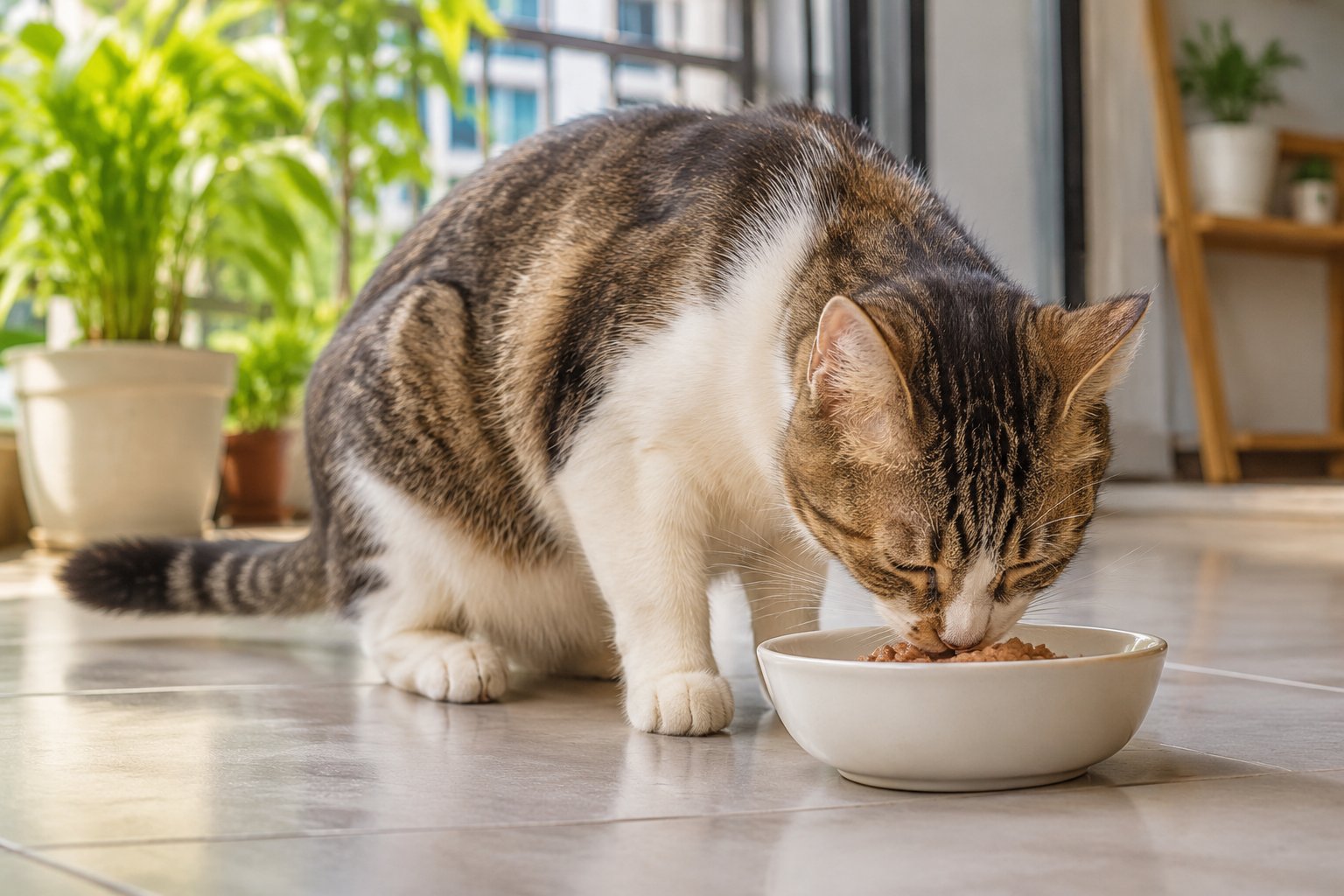
What is kitten wet food and why does it matter?
Kitten wet food is a moisture-rich commercial diet formulated for cats under one year of age. It typically contains 70-80% water, which helps keep kittens hydrated, and is often more aromatic and palatable than dry food. During the rapid growth phase, kittens need energy-dense, nutrient-rich food to support bone development, muscle growth, and a strong immune system. Wet food can be a valuable part of that diet, especially for fussy eaters or kittens that need extra hydration.
In Malaysia's warm climate, hydration is particularly important. Cats have a low thirst drive, and kittens may not drink enough water on their own. Wet food can help bridge that gap. However, not all wet foods are created equal. Some are labelled as "complementary" or "topper" and are not nutritionally complete. For kittens, always choose a product that states it is complete and balanced for growth or for all life stages.
Nutritional requirements for growing kittens
Kittens have specific nutritional needs that differ from adult cats. They require higher levels of protein, fat, and certain minerals like calcium and phosphorus to support growth. According to general veterinary guidelines, kitten food should contain at least 30% protein and 9% fat on a dry matter basis, though many quality products exceed these minimums. Wet food typically has lower dry matter percentages because of its high water content, so it's important to compare nutrients on a dry matter basis rather than as-fed.
Key nutrients for kittens include:
- Protein: From animal sources like chicken, fish, or beef, to provide essential amino acids.
- Fat: For energy and to supply essential fatty acids like DHA, which supports brain and vision development.
- Calcium and phosphorus: In the correct ratio (around 1:1 to 1.2:1) for bone growth.
- Taurine: An essential amino acid for heart and eye health.
- Vitamins and minerals: Including vitamin A, vitamin D, and zinc.
A complete and balanced kitten food will have an AAFCO (Association of American Feed Control Officials) statement or equivalent certification on the label. In Malaysia, look for products that state they meet AAFCO standards or are formulated to meet the nutritional levels established by AAFCO for growth.
Types of kitten wet food available
Wet food comes in several forms:
- Pâté: Smooth, ground texture, easy for kittens to lap up.
- Morsels in gravy: Chunks of meat in a sauce, often highly palatable.
- Shredded or flaked: Pieces of meat in broth or jelly.
- Loaf: Similar to pâté but firmer.
Kittens with small mouths may prefer pâté or finely shredded textures. As they grow, they can handle chunkier varieties. Many brands offer kitten-specific formulas, while some adult maintenance foods are also suitable for kittens if they are complete and balanced for all life stages. Always check the label.
When choosing, consider your kitten's age and size. Very young kittens (under 8 weeks) should still be with their mother and nursing; if orphaned, consult a vet for a milk replacer. From around 4 weeks, kittens can start eating wet food as part of weaning.
How to choose a good kitten wet food
With so many options on the market, it can be overwhelming. Here's a checklist to help you evaluate products:
- Life stage statement: The label should clearly state the food is for kittens or for growth, or for all life stages.
- Complete and balanced claim: Look for a statement that the food provides complete and balanced nutrition.
- Named protein source: The first ingredient should be a named animal protein (e.g., chicken, turkey, fish) rather than a by-product or vague term like "meat."
- Guaranteed analysis: Check the minimum protein and fat percentages. Remember to convert to dry matter basis for accurate comparison.
- No unnecessary fillers: Avoid products with excessive grains, artificial colours, or preservatives if you prefer natural options.
- Palatability: Kittens can be picky; you may need to try a few brands.
- Cost and availability: Choose a product that fits your budget and is readily available in Malaysia.
It's also wise to introduce new foods gradually to avoid digestive upset.
Feeding guidelines and portion sizes
The amount to feed depends on the food's calorie content and your kitten's age and weight. As a general guide, growing kittens need about 200-250 kcal per kilogram of body weight per day. However, individual needs vary. Most wet food labels provide a feeding chart based on kitten weight and age. Start with the recommended amount and adjust based on your kitten's body condition.
A typical feeding schedule for a kitten:
- Under 4 months: 4 meals per day.
- 4-6 months: 3 meals per day.
- 6-12 months: 2-3 meals per day.
You can mix wet and dry food, but ensure the total daily intake meets nutritional requirements. If feeding both, reduce the amount of each accordingly. Always provide fresh water in a clean bowl.
Here's a sample daily feeding guide for a 2 kg kitten eating a typical kitten wet food (approximately 80 kcal per 100g):
| Kitten weight | Approx. daily calories | Wet food amount (if fed alone) |
|---|---|---|
| 1 kg | 200-250 kcal | 250-310 g |
| 2 kg | 400-500 kcal | 500-625 g |
| 3 kg | 600-750 kcal | 750-940 g |
Note: These are estimates. Always follow the product label and adjust based on your kitten's condition. Consult your vet if unsure.
Transitioning to wet food and mixing with dry
If your kitten is used to dry food, introduce wet food gradually. Start by offering a small amount of wet food mixed with a little warm water to make it aromatic. You can also mix a teaspoon of wet food into the dry food and gradually increase the proportion over 7-10 days. Some kittens take to wet food immediately; others need time.
Mixing wet and dry food is a common practice. It provides the benefits of both: hydration and palatability from wet, and convenience and dental benefits from dry. However, avoid leaving wet food out for more than 30 minutes, especially in Malaysia's warm climate, as bacteria can multiply quickly. Discard any uneaten portion.
If you feed both, divide the daily ration: for example, feed wet food in the morning and evening, and leave a measured amount of dry food for free-feeding during the day. Monitor your kitten's weight to ensure they are not overeating.
Common mistakes to avoid
- Feeding adult food: Adult maintenance foods may not have the right nutrient balance for growing kittens.
- Overfeeding: Kittens should be lean and active; obesity can lead to health problems later.
- Not providing water: Even with wet food, fresh water should always be available.
- Sudden diet changes: Always transition gradually to prevent diarrhoea.
- Ignoring label instructions: Each product has specific feeding guidelines; follow them.
- Assuming all wet food is complete: Some products are intended as supplements or treats.
Wet food vs dry food: a comparison
| Aspect | Wet food | Dry food |
|---|---|---|
| Moisture content | High (70-80%) | Low (10%) |
| Hydration support | Excellent | Limited |
| Palatability | Often higher | Variable |
| Convenience | Requires refrigeration after opening | Easy to store and serve |
| Cost per calorie | Generally higher | Generally lower |
| Dental health | Less abrasive | Helps reduce plaque |
| Shelf life | Shorter after opening | Longer |
Both can be part of a healthy diet. The best choice depends on your kitten's needs and your lifestyle.
When to see a vet
Consult a veterinarian if your kitten shows any of the following signs:
- Refusal to eat for more than 24 hours.
- Persistent diarrhoea or vomiting.
- Weight loss or failure to gain weight.
- Lethargy or weakness.
- Difficulty chewing or swallowing.
- Signs of pain when eating.
Also, if you are unsure about the right diet for your kitten, especially if they have special needs, a vet can provide personalised advice.
Local considerations for Malaysian cat owners
In Malaysia, the warm and humid climate means food spoils faster. Always refrigerate opened wet food and use within 24-48 hours. When feeding, offer food at room temperature or slightly warmed, but avoid leaving it out for long periods. If your kitten is a fussy eater, try different textures and brands available locally. Many pet shops and online stores carry a range of kitten wet foods. Always check expiration dates and storage conditions.
For example, in a Kuala Lumpur apartment, space may be limited, so buying smaller cans or pouches can reduce waste. In a Johor terrace house with multiple cats, you may need to feed separately to ensure each kitten gets its share.
Conclusion
Kitten wet food can be a nutritious and hydrating part of your kitten's diet. Choose a complete and balanced product, feed appropriate portions, and transition gradually. Always provide fresh water and monitor your kitten's health. With the right approach, wet food can help your kitten grow into a healthy adult cat.
Disclaimer: This article is for informational purposes only and does not replace veterinary advice. Always consult a licensed veterinarian for health and nutrition concerns specific to your pet.
Related reading
- Cat Food Guide Malaysia 2026: How to Choose Dry, Wet & Prescription Food
- Best Wet Cat Food in Malaysia: A Practical Buying Guide
- How to Choose Dry Cat Food for Cats: A Malaysian Guide
- How to Choose High-Protein Cat Food for Cats: A Malaysian Owner's Guide
- Best Dry Cat Food for Cats in Malaysia: A Practical Buying Guide
- Best Food Transition for Cats in Malaysia: A Step-by-Step Guide
- Best Hypoallergenic Cat Food in Malaysia: A Practical Guide for Itchy, Scratching Cats
- Best Raw Cat Food for Cats in Malaysia: A Practical Buying Guide
- Best Weight Control Cat Food in Malaysia: A Practical Buying Guide
- Food for Picky Cats in Malaysia: A Practical Feeding Guide
- Food Transition for Cats in Malaysia: A Safe, Step-by-Step Guide
- High-Protein Cat Food Feeding Guide for Cats: How Much, Which Type, and What to Watch

