
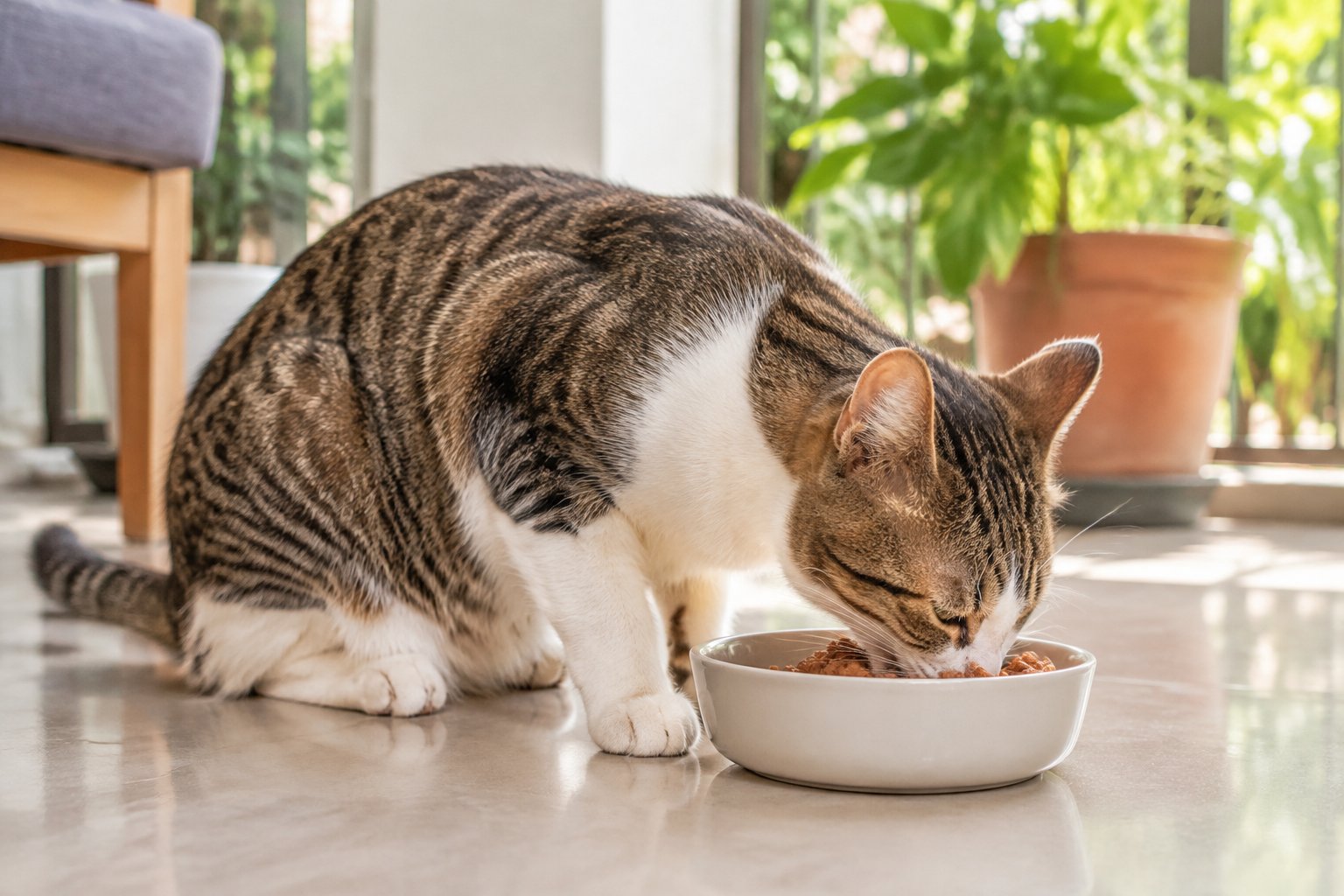
Start with the label, not the badge
Grain-free cat food is a label claim, not a nutritional guarantee. It tells you the recipe contains no wheat, rice, corn, barley, oats or other grains. It does not tell you the food is low in carbohydrate, high in meat, hypoallergenic or better for every cat. To choose well, treat grain-free as one filter among several and read the whole label.
A useful order of checks is: complete and balanced statement, named animal protein, carbohydrate sources, taurine and other key nutrients, calorie density, texture, and finally your cat's individual health. If a product fails the first check, the grain-free badge does not rescue it.
Check the nutritional adequacy statement first
In Malaysia, cat foods sold as complete feeds should carry a nutritional adequacy statement. Look for wording such as "complete and balanced" and the life stage it suits, for example growth, adult maintenance, or all life stages. This statement is more important than any marketing phrase on the front of the pack.
A food that is only for intermittent or supplemental feeding is a treat or topper, not a sole diet. Feeding it as the main meal risks deficiencies over time, even if it is grain-free and expensive.
What to look for
- A clear life-stage claim: kitten, adult, senior or all life stages.
- A statement that the food is complete and balanced.
- A manufacturer or importer name and contact details.
- A batch or best-before date that is legible.
What to be cautious about
- Front-of-pack claims like "natural" or "premium" without a nutritional adequacy statement.
- Very small print that says the food is complementary.
- Imported labels with no local importer information.
Put a named animal protein first
Cats are obligate carnivores. They need animal protein for essential amino acids, including taurine, and for nitrogen balance. A grain-free food should still be a meat-based food. The first ingredient should ideally be a named animal source such as chicken, turkey, duck, fish, beef or lamb.
Ingredients are listed by weight before cooking. Fresh meat contains a lot of water, so it can appear first while a named meat meal appears later and contributes more protein by dry weight. That is not automatically bad. What matters is that the animal source is named and that the recipe has a meaningful total animal protein content.
Vague terms such as "meat and animal derivatives", "poultry meal" without a species, or "animal by-products" tell you little about quality. They are not necessarily unsafe, but they make comparison harder.
A simple protein checklist
| Label feature | Better sign | Weaker sign |
|---|---|---|
| First ingredient | Named animal protein | Cereal, potato or pea first |
| Protein sources | One or more named species | Unnamed "meat" or "poultry" |
| Meat meals | Named, e.g. chicken meal | Generic animal derivatives |
| Plant proteins | Limited and disclosed | Several isolates high in the list |
| Taurine | Added or naturally assured | Not mentioned |
Understand what replaces the grains
Grain-free recipes still need energy and texture. Many replace grains with peas, chickpeas, lentils, faba beans, potato, sweet potato or tapioca. These ingredients are not poisonous, but they change the nutritional profile. Some legume-rich foods are high in plant protein and fibre, and some are still high in carbohydrate.
If your reason for choosing grain-free is to reduce carbohydrate, do not assume the badge does it. Compare the guaranteed analysis and, where available, the manufacturer's carbohydrate figure. A grain-free food with potato first and pea fibre high on the list may have more carbohydrate than a grain-containing food with rice.
Grain-free versus low-carbohydrate
These are different claims. A food can be grain-free and moderate or high in carbohydrate. A food can contain rice and still be relatively low in carbohydrate if it is very meat-rich. Decide which feature you actually need, then check that feature directly.
Look for taurine and other critical nutrients
Taurine is an essential amino acid for cats. Deficiency can cause heart disease and retinal problems. Complete cat foods should provide adequate taurine, whether from animal ingredients or added taurine. Check that taurine appears in the ingredient list or that the manufacturer confirms adequate levels.
Other nutrients worth checking include vitamin A, vitamin D, vitamin E, the B vitamins, calcium, phosphorus, zinc and iron. A complete and balanced statement covers these, but if you are comparing premium products, a manufacturer that publishes a full nutrient profile is easier to trust.
Moisture matters
Wet food is roughly 75 to 85 percent water, so its guaranteed analysis looks very different from dry food. Do not compare protein percentages between wet and dry food directly. Compare them on a dry-matter basis, or simply use the complete-and-balanced statement and your cat's response.
Match texture and format to your cat
Grain-free food comes as dry kibble, wet pouches, cans, freeze-dried pieces and raw-style frozen products. The best format is the one your cat will eat, that suits your routine and that you can store safely in a Malaysian climate.
Dry food is convenient and can be left out briefly, but it is calorie-dense and easy to overfeed. Wet food supports water intake, which matters for cats with urinary or kidney concerns. Freeze-dried and frozen products need careful handling and thawing.
Practical Malaysian considerations
- Kuala Lumpur apartment: storage space is limited and humidity is high. Buy smaller bags, keep dry food sealed in an airtight container, and use wet food within the time stated on the label after opening.
- Penang rainy season: ants and moisture are common. Wipe up spills, avoid leaving wet food out for long, and check seals on imported bags that may have travelled far.
- Johor terrace house: if your cat has outdoor access, other cats or wildlife may eat the food. Feed indoors and remove leftovers to avoid attracting pests.
Compare calories, not just cups
Overweight cats are common, and grain-free food is not automatically lower in calories. Check the metabolisable energy figure on the pack, usually given per 100 grams or per kilogram. Then weigh your cat's food rather than scooping by eye.
A simple comparison table helps. Ask your vet or vet nurse to help you estimate your cat's ideal weight and daily calorie target. Do not copy a target from another cat, because age, neuter status and activity change needs.
| Feature to compare | Why it matters | How to check |
|---|---|---|
| Calories per 100 g | Controls weight gain | Pack or manufacturer data |
| Protein source | Supports muscle and taurine | Ingredient list |
| Carbohydrate sources | Affects digestibility and blood sugar | Ingredient list and analysis |
| Fat level | Energy and palatability | Guaranteed analysis |
| Fibre | Stool quality and satiety | Guaranteed analysis |
| Water content | Urinary and kidney health | Wet versus dry format |
Do not use grain-free as an allergy shortcut
Food allergy in cats is uncommon compared with flea allergy and environmental allergy, but it does happen. The most common triggers are animal proteins such as chicken, beef and fish, not grains. A grain-free food can still contain the protein your cat reacts to.
If your cat has itchy skin, recurrent ear problems, vomiting or diarrhoea, do not switch foods randomly. Ask your vet about an elimination diet using a novel protein or a hydrolysed diet. A proper trial takes weeks and must be strict, including no treats or table food.
Grain-free food is also not a treatment for inflammatory bowel disease, pancreatitis or kidney disease. These conditions need veterinary assessment and often a specific therapeutic diet.
Watch for red flags in marketing
Grain-free shelves are crowded with claims. Some are useful, some are noise. Be sceptical of claims that grains are toxic to cats, that grain-free cures allergies, or that a food is "biologically appropriate" without a complete nutritional statement.
Also be cautious with very large bags bought at a discount if you have one cat. Dry food oxidises over time, and Malaysian humidity speeds spoilage once a bag is opened. A fresher, smaller bag is often a better buy than a cheap giant one.
Questions to ask the retailer or importer
- Is this food complete and balanced, and for which life stage?
- Who is the local importer and how is stock stored?
- Is there a manufacturer nutrient profile available?
- What is the recommended transition method?
- Is the food suitable for kittens, pregnant cats or seniors?
Transition slowly and monitor
Sudden diet changes can cause vomiting or diarrhoea. Mix the new grain-free food with the old food over seven to ten days. Start with about a quarter of the new food, then half, then three quarters, then all new food if stools remain normal.
Keep a simple log for two weeks: food amount, stool quality, appetite, vomiting and scratching. This helps you and your vet decide whether the change helped. If your cat refuses to eat for more than a day, contact your vet, because cats can become seriously ill when they stop eating.
When grain-free may be a reasonable choice
Grain-free can be a reasonable option if the product is complete and balanced, meat-based, suits your cat's calorie needs and your cat does well on it. Some owners choose it because their cat prefers the taste or because the recipe uses ingredients they prefer to feed.
It is not a requirement. Many cats thrive on grain-containing foods. The decision should be based on the whole diet, not on fear of grains.
When to see a vet
See a vet if your cat has persistent vomiting, diarrhoea, weight loss, poor appetite, increased thirst, breathing difficulty, weakness, a heart murmur, or itchy skin that does not settle. Also seek advice before switching diets if your cat is a kitten, pregnant, nursing, senior, or has kidney, heart, urinary, pancreatic or gastrointestinal disease. Bring the food label and your feeding log to the appointment.
Bottom line
Choose grain-free cat food by checking the complete-and-balanced statement, named animal protein, carbohydrate sources, taurine and calorie density. Match the format to your cat and your home, transition slowly, and do not treat grain-free as a cure for allergies or a guarantee of quality. If in doubt, ask a Malaysian veterinarian who knows your cat.
This article is general information, not veterinary advice. Always consult a licensed veterinarian for diagnosis and diet decisions for your cat.
Related reading
- Cat Food Guide Malaysia 2026: How to Choose Dry, Wet & Prescription Food
- Best Homemade Cat Food for Cats in Malaysia: A Practical Vet-Informed Guide
- Grain-Free Cat Food Feeding Guide for Cats: What Malaysian Owners Need to Know
- Grain-Free Cat Food for Cats in Malaysia: What It Is, Who It Suits, and How to Choose
- Halal Cat Food Feeding Guide for Cats: What Malaysian Owners Need to Know
- Best Grain-Free Cat Food for Cats in Malaysia: What to Look For
- Best High-Protein Cat Food in Malaysia: How to Choose (2025 Guide)
- Best Senior Cat Food in Malaysia: A Practical Buying Guide
- Cat Staple Canned Food in Malaysia: How to Pick a Complete & Balanced Wet Food
- Homemade Cat Food Feeding Guide for Cats: A Practical Malaysian Owner's Handbook

