
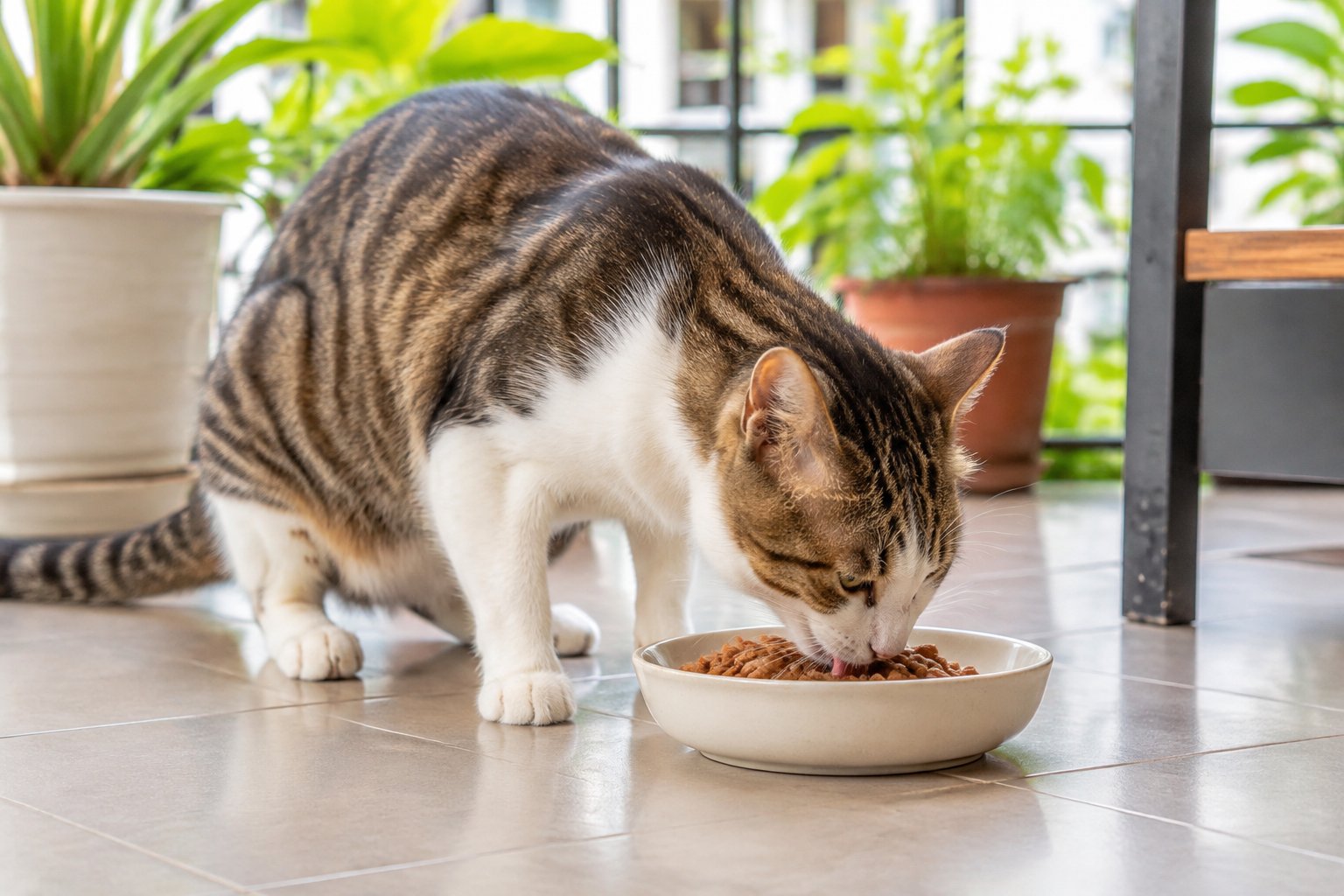
What does grain-free cat food actually mean?
Grain-free cat food is simply food that does not contain grains such as wheat, corn, rice, barley, or oats. Instead, manufacturers use other carbohydrate sources like potatoes, peas, lentils, tapioca, or sweet potatoes. It does not mean the food is carbohydrate-free, and it does not automatically mean it is higher in protein or better for your cat.
The term 'grain-free' is a marketing and formulation label, not a nutritional guarantee. For cats, the most important factor is a complete and balanced diet that meets their nutritional needs, with animal protein as the foundation. Cats are obligate carnivores, meaning they require nutrients found in animal tissues, such as taurine, arginine, and certain vitamins. Grains are not essential, but they are not inherently harmful either.
In Malaysia, grain-free cat food is widely available, from premium imported brands to local options. Many owners choose it because they believe it is closer to a natural diet or because their cat has a sensitive stomach. This guide will help you understand when grain-free might help, when it might not, and how to feed it safely.
Why do some cat owners choose grain-free?
Owners often switch to grain-free for several reasons:
- Suspected grain allergy or intolerance: True grain allergy is uncommon in cats, but some cats may have adverse reactions to certain grains. Symptoms can include itching, digestive upset, or ear infections. However, these signs can also be caused by other ingredients or conditions.
- Belief that it is more natural: Cats in the wild eat prey, which may contain small amounts of grains from the prey's stomach, but not large amounts. Grain-free diets are sometimes marketed as more species-appropriate.
- Perceived health benefits: Some owners believe grain-free diets improve coat condition, reduce stool volume, or help with weight management. These benefits are not guaranteed and depend on the overall formulation.
- Palatability: Some cats prefer the taste of grain-free foods, especially those with higher meat content.
It is important to separate marketing claims from nutritional science. A grain-free diet is not automatically healthier, and a diet containing grains can be perfectly balanced and appropriate.
When might grain-free be helpful?
Grain-free food may be beneficial in specific situations:
- Diagnosed grain allergy or intolerance: If your vet has confirmed that your cat reacts adversely to a specific grain, a grain-free diet can help avoid that trigger. However, true food allergies in cats are more commonly to animal proteins (like chicken or beef) than to grains.
- Certain gastrointestinal conditions: Some cats with inflammatory bowel disease or chronic enteritis may improve on a novel protein or grain-free diet, but this should be guided by a vet.
- Owner preference: If you prefer to feed a grain-free diet for personal reasons, that is acceptable as long as the food is complete and balanced and your cat thrives on it.
It is crucial to remember that grain-free is not a treatment for all digestive issues. Many cats with sensitive stomachs do better on a highly digestible diet with a single novel protein, regardless of grain content.
When grain-free may not be necessary
Most cats do not need grain-free food. Grains can be part of a healthy diet, providing energy, fibre, and essential nutrients. Some points to consider:
- Grains are not fillers: High-quality grains like rice and oats can be nutritious. They are not simply 'fillers' if included in appropriate amounts.
- Grain allergy is rare: True allergy to grains is uncommon in cats. If your cat has skin or digestive problems, the cause is more likely to be environmental or a protein allergy.
- Grain-free does not mean low-carb: Many grain-free foods replace grains with potatoes, peas, or tapioca, which can be high in carbohydrates. If you are concerned about carbohydrate content, check the guaranteed analysis and ask your vet.
- Potential link to heart disease: In dogs, there have been investigations into a possible link between grain-free diets (especially those high in legumes) and dilated cardiomyopathy (DCM). The evidence in cats is less clear, but it is worth discussing with your vet, especially if your cat has a heart condition.
How to read a grain-free cat food label
When choosing any cat food, including grain-free, check the following:
- Nutritional adequacy statement: Look for a statement that the food is 'complete and balanced' for your cat's life stage (e.g., growth, maintenance, all life stages). This is often based on AAFCO or equivalent standards.
- Protein source: The first ingredient should ideally be a named animal protein (e.g., chicken, fish, beef). Avoid vague terms like 'meat meal' unless the source is specified.
- Guaranteed analysis: Check the minimum crude protein and fat percentages. For adult cats, protein should generally be at least 26% on a dry matter basis, but higher is often better. However, the quality of protein matters more than the percentage alone.
- Taurine: Taurine is an essential amino acid for cats. Ensure the food contains added taurine or naturally high levels from animal ingredients.
- Carbohydrate sources: Identify what replaces the grains. Common substitutes include peas, lentils, potatoes, sweet potatoes, and tapioca. Some cats may do better with certain carbohydrate sources than others.
- Life stage: Kittens, pregnant or nursing cats, and senior cats have different nutritional needs. Choose a food appropriate for your cat's life stage.
Here is a simple comparison table to help you evaluate grain-free vs. grain-inclusive foods:
| Feature | Grain-free cat food | Grain-inclusive cat food |
|---|---|---|
| Carbohydrate sources | Potatoes, peas, lentils, tapioca | Rice, corn, wheat, barley, oats |
| Protein content | Variable; can be high or low | Variable; can be high or low |
| Fibre content | Variable; legumes add fibre | Variable; grains add fibre |
| Potential allergens | Alternative proteins and legumes | Grains and proteins |
| Suitable for grain allergy | Yes, if truly grain-free | No |
| Risk of DCM (heart disease) | Under investigation (mainly dogs) | No known link |
| Cost | Often higher | Often lower |
Remember that the table is a general guide. Always read the specific product label and consult your vet.
How to transition your cat to grain-free food
Switching cat food should be done gradually to avoid digestive upset. Here is a step-by-step plan:
- Start with a vet check: Before changing your cat's diet, especially if your cat has health issues, consult your veterinarian.
- Mix gradually: Over 7–10 days, gradually increase the proportion of new food while decreasing the old food. A common schedule:
- Days 1–2: 25% new, 75% old
- Days 3–4: 50% new, 50% old
- Days 5–6: 75% new, 25% old
- Days 7–10: 100% new
- Monitor your cat: Watch for vomiting, diarrhoea, constipation, refusal to eat, or changes in behaviour. If problems occur, slow down the transition or consult your vet.
- Keep fresh water available: Always provide clean, fresh water.
- Be patient: Some cats are picky and may take longer to accept the new food. Do not starve your cat; if your cat refuses to eat for more than 24 hours, contact your vet.
Common mistakes to avoid
- Switching too quickly: This is the most common cause of digestive upset.
- Assuming grain-free is always better: Focus on overall nutritional adequacy, not just the absence of grains.
- Ignoring portion sizes: Grain-free food is not calorie-free. Overfeeding can lead to obesity. Follow the feeding guidelines on the package and adjust based on your cat's body condition.
- Not checking for taurine: Taurine deficiency can cause heart and eye problems. Ensure the food meets AAFCO or equivalent standards.
- Falling for marketing hype: Terms like 'natural' and 'holistic' are not regulated. Look for nutritional adequacy statements.
Practical feeding tips for Malaysian cat owners
Malaysia's hot and humid climate can affect food storage. Here are some tips:
- Store food properly: Keep dry food in an airtight container in a cool, dry place. Avoid storing it in direct sunlight or near heat sources. Humidity can cause mould and spoilage.
- Refrigerate wet food: Once opened, wet food should be refrigerated and used within 24–48 hours. Discard any uneaten portions.
- Watch for ants and pests: In Malaysian homes, ants and cockroaches can be attracted to cat food. Keep feeding areas clean and store food securely.
- Consider feeding schedules: Free-feeding dry food can lead to overeating, especially in multi-cat households. Scheduled meals help control portions and monitor appetite.
- Fresh water: Always provide clean water. Some cats prefer running water; a pet fountain can encourage drinking.
Grain-free and specific health conditions
If your cat has a health condition, dietary choices should be made with veterinary guidance.
- Kidney disease: Cats with kidney disease often need restricted protein and phosphorus. Grain-free diets are not automatically suitable; your vet may recommend a prescription diet.
- Diabetes: Some cats with diabetes benefit from low-carbohydrate diets. Grain-free does not always mean low-carb; check the carbohydrate content.
- Obesity: Weight management depends on calorie intake, not grain content. Choose a food with appropriate calorie density and measure portions.
- Food allergies: If your cat has a diagnosed allergy, choose a diet that avoids the allergen. This may be grain-free or not, depending on the allergen.
When to see a vet
Consult a veterinarian if you notice any of the following:
- Your cat has persistent vomiting, diarrhoea, or constipation.
- Your cat refuses to eat for more than 24 hours.
- Your cat shows signs of skin problems, such as itching, hair loss, or recurrent ear infections.
- Your cat has difficulty breathing, lethargy, or weakness (possible signs of heart disease).
- You are unsure about your cat's nutritional needs or have questions about grain-free diets.
Your vet can help you choose an appropriate diet and rule out underlying health issues.
Frequently asked questions
Q: Is grain-free cat food better for cats? A: Not necessarily. Grain-free is not automatically healthier. What matters is a complete and balanced diet with high-quality animal protein. Some cats with grain intolerance may benefit, but most cats do fine on well-formulated food containing grains.
Q: Can cats eat grains? A: Yes, cats can digest and utilise grains. They are obligate carnivores, so animal protein is essential, but grains in moderate amounts can provide energy and fibre. True grain allergy is uncommon in cats.
Q: How do I switch my cat to grain-free food? A: Transition gradually over 7–10 days. Start with 25% new food mixed with 75% old food, then increase the new food every few days. Watch for vomiting, diarrhoea, or refusal to eat. Slow down if problems occur.
Q: What should I look for on a grain-free cat food label? A: Look for a named animal protein first, a nutritional adequacy statement (e.g., 'complete and balanced'), and the AAFCO or equivalent statement. Check for taurine, and avoid vague terms like 'meat by-products' if you prefer named sources.
Q: Are grain-free diets linked to heart disease in cats? A: There have been concerns about grain-free diets and dilated cardiomyopathy (DCM) in dogs, and investigations are ongoing. In cats, the evidence is less clear. Discuss with your vet if you are concerned, especially if your cat has a heart condition.
Q: Do grain-free cat foods contain more protein? A: Not always. Some grain-free foods replace grains with peas, potatoes, or legumes, which may lower protein. Always check the guaranteed analysis for protein percentage and ensure it meets your cat's needs.
Final thoughts
Grain-free cat food can be a suitable choice for some cats, but it is not a necessity for all. The key is to focus on a complete and balanced diet that meets your cat's individual needs. Always read labels carefully, transition gradually, and consult your veterinarian with any concerns. In Malaysia, where humidity and heat can affect food storage, proper handling is also important. By making informed choices, you can help your cat thrive.
Disclaimer: This article is for general information only and is not a substitute for professional veterinary advice. Always consult a licensed veterinarian for diagnosis and treatment of your cat's health conditions.
Related reading
- Cat Food Guide Malaysia 2026: How to Choose Dry, Wet & Prescription Food
- Grain-Free Cat Food for Cats in Malaysia: What It Is, Who It Suits, and How to Choose
- High-Protein Cat Food Feeding Guide for Cats: How Much, Which Type, and What to Watch
- Homemade Cat Food Feeding Guide for Cats: A Practical Malaysian Owner's Handbook
- How to Choose Grain-Free Cat Food for Cats: A Practical Malaysian Guide
- Senior Cat Food Feeding Guide for Cats: What Malaysian Owners Need to Know
- Best Dry Cat Food for Cats in Malaysia: A Practical Buying Guide
- Best Food Transition for Cats in Malaysia: A Step-by-Step Guide
- Best High-Protein Cat Food in Malaysia: How to Choose (2025 Guide)
- Best Raw Cat Food for Cats in Malaysia: A Practical Buying Guide
- Best Senior Cat Food in Malaysia: A Practical Buying Guide
- Best Wet Cat Food in Malaysia: A Practical Buying Guide

