
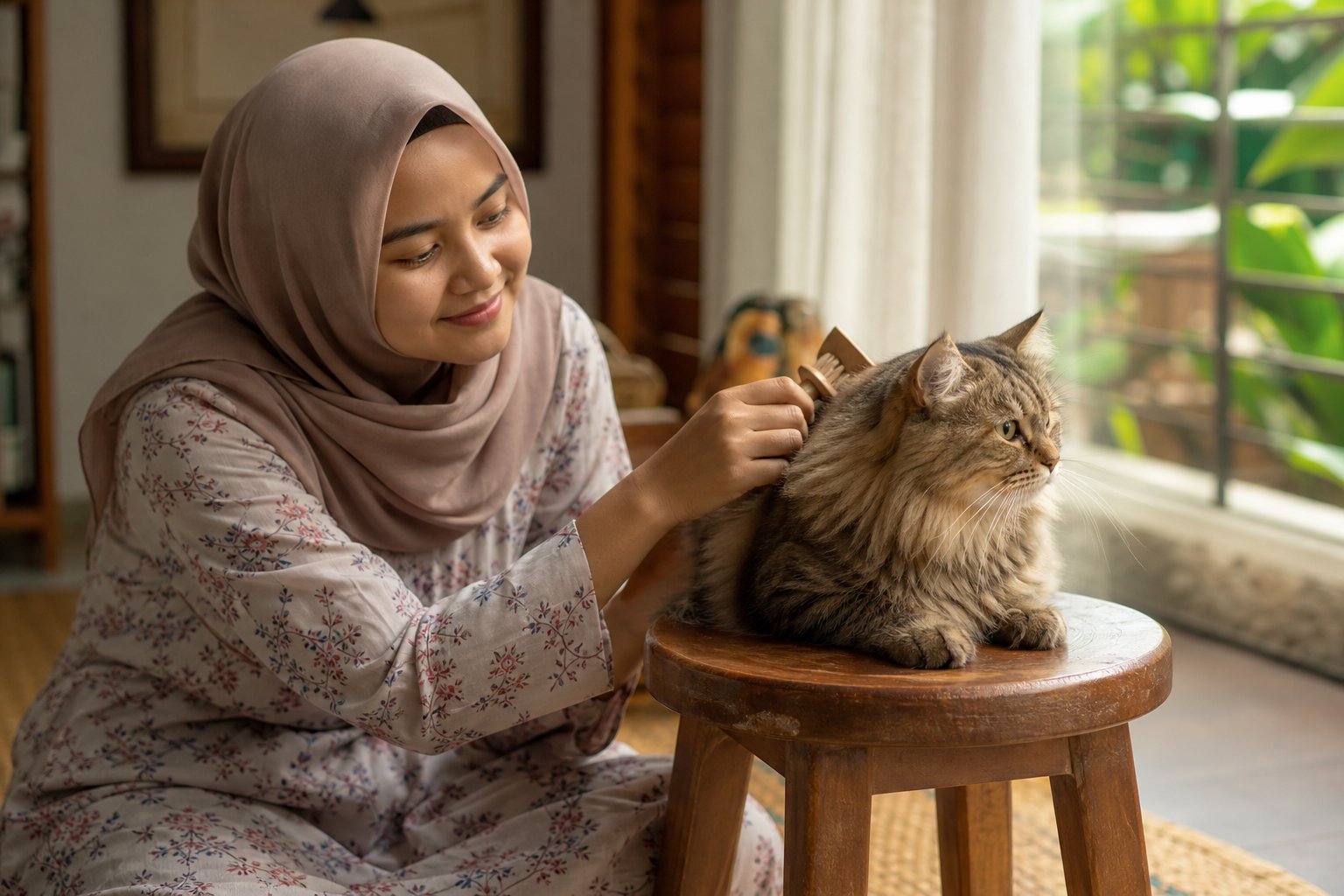
Chapter 1: Setting up for a cat or dog at home
Before your pet arrives, walk through your home and think like them. Cats climb, squeeze into gaps and chew on anything loose; dogs explore with their mouths and can dash out the door. Secure balcony grilles, tuck away electrical cords, store cleaning products high up, and remove toxic houseplants such as lilies, which are dangerous even in small amounts to cats.
Set up a quiet, comfortable zone where your pet can settle. A cat needs a litter box placed away from food and water, a scratching post, and a high perch to observe the room. A dog needs a bed or crate in a calm corner, a collar with an identification tag, and a secure gate or leash by the door for safe trips outside. Keep the area consistent so your pet always knows where to rest.
Malaysia's warm, humid weather means ventilation matters. Provide fresh shade, never leave pets in parked cars, and make sure water bowls are refilled often. Plan for rain and festival periods too, since loud fireworks and thunder can startle nervous pets — keep them indoors and calm.
Setting up your home before a cat or dog arrives is really a job of seeing your space through their eyes. A home that feels tidy and safe to you can still hide hazards for a curious animal: a gap behind the washing machine, a loose curtain cord, a balcony grille with a gap wide enough to squeeze through. This chapter walks you through the practical preparation — securing the home, creating a settling zone, and adapting to Malaysia's climate and routines — so that day one is calm for both of you. Take it room by room, and don't rush; a few hours of preparation now saves a lot of worry later.
Securing the home before day one
Walk through every room and think like your pet. Cats climb, squeeze into gaps and chew on anything loose; dogs explore with their mouths and can dash out the door. Secure balcony grilles so there are no gaps a cat or small dog could slip through, and check window openings too. Tuck away electrical cords — behind furniture, in cable covers, or clipped out of reach — because chewing on a live cord is dangerous. Store cleaning products, detergents, and other household chemicals high up, ideally in a closed cupboard rather than under the sink. Remove toxic houseplants such as lilies, which are dangerous even in small amounts to cats; if you're unsure whether a plant is safe, it's better to move it out of reach or out of the home entirely.
For dogs, the front door is a major risk point. Practise closing doors behind you, and consider a baby gate or barrier so your dog can't bolt into the corridor or lift lobby when someone arrives. In apartments, also think about the main door, the service balcony, and any open windows. Small items — hair ties, rubber bands, sewing supplies, coins, plastic bags — should be kept in drawers, since cats and dogs alike will investigate them with paws and mouths.
Creating a quiet settling zone
Set up a quiet, comfortable zone where your pet can settle, away from heavy foot traffic and loud appliances. A cat needs a litter box placed away from food and water, a scratching post, and a high perch to observe the room. Put the litter box somewhere private but accessible, and keep it there — cats dislike a box that moves around. A dog needs a bed or crate in a calm corner, a collar with an identification tag, and a secure gate or leash by the door for safe trips outside. If you use a crate, leave the door open at first so it becomes a familiar resting place rather than a cage.
Keep the area consistent so your pet always knows where to rest. Resist the urge to move the bed, crate, or litter box around in the first weeks. For apartment living, a perch by a window gives a cat safe entertainment, and a crate in a quiet corner gives a dog a retreat when the household is busy. Introduce family members and visitors calmly, and give a newly arrived pet space to retreat when it has had enough.
Handling heat, humidity and loud weather
Malaysia's warm, humid weather means ventilation matters. Provide fresh shade, never leave pets in parked cars, and make sure water bowls are refilled often — in hot weather, water can warm up or run low quickly, so check more than once a day. Keep resting areas out of direct sun and make sure air can move through the room; if you rely on air-conditioning, give your pet a choice of a cooler spot and a naturally ventilated one.
Plan for rain and festival periods too, since loud fireworks and thunder can startle nervous pets — keep them indoors and calm. During thunderstorms and festive seasons with fireworks, close windows and curtains, keep your pet inside, and provide a safe hiding spot or crate they can retreat to. A calm, familiar voice and a normal routine help more than fussing. If your pet is very frightened, note it and mention it to your vet at the next visit.
Checklist: before your pet comes home
- Balcony grilles and window openings secured, with no gaps a pet could squeeze through.
- Electrical cords tucked away or covered.
- Cleaning products and chemicals stored high up or in a closed cupboard.
- Toxic houseplants, including lilies, removed or made completely inaccessible.
- Small swallowable items put away in drawers.
- Cat: litter box placed away from food and water, scratching post, high perch.
- Dog: bed or crate in a calm corner, collar with an identification tag, gate or leash by the door.
- Quiet settling zone chosen and kept consistent.
- Shade and airflow arranged; water bowls ready to be refilled often.
- A plan for thunderstorms and festival fireworks: keep pets indoors and calm.
- Practical check: note one change you can make this week.
- Local context: adapt the advice to your home, climate and routine in Malaysia.
Common mistakes to avoid
- Assuming a closed door or grille is secure without checking for gaps.
- Putting the litter box next to the food and water bowls, or moving it frequently.
- Leaving a pet alone in a parked car "just for a minute" — never do this.
- Filling the water bowl once in the morning and forgetting it in the afternoon heat.
- Letting a dog off-leash near the main door or lift lobby before it has learned to wait.
- Leaving lilies or other toxic plants within reach because they look decorative.
- Crowding a new pet with visitors in its first days instead of letting it settle.
When to ask a vet
Ask a vet promptly if your pet eats something it shouldn't, chews an electrical cord, or shows signs of illness such as vomiting, drooling, lethargy, or difficulty breathing. If you're unsure whether a plant or household product is toxic, contact your vet rather than waiting for symptoms. Also seek advice if your pet seems very distressed by thunder or fireworks, if a cat stops using its litter box, or if a new pet isn't eating or settling after arrival. Your vet can guide you on what's normal and what needs attention.