
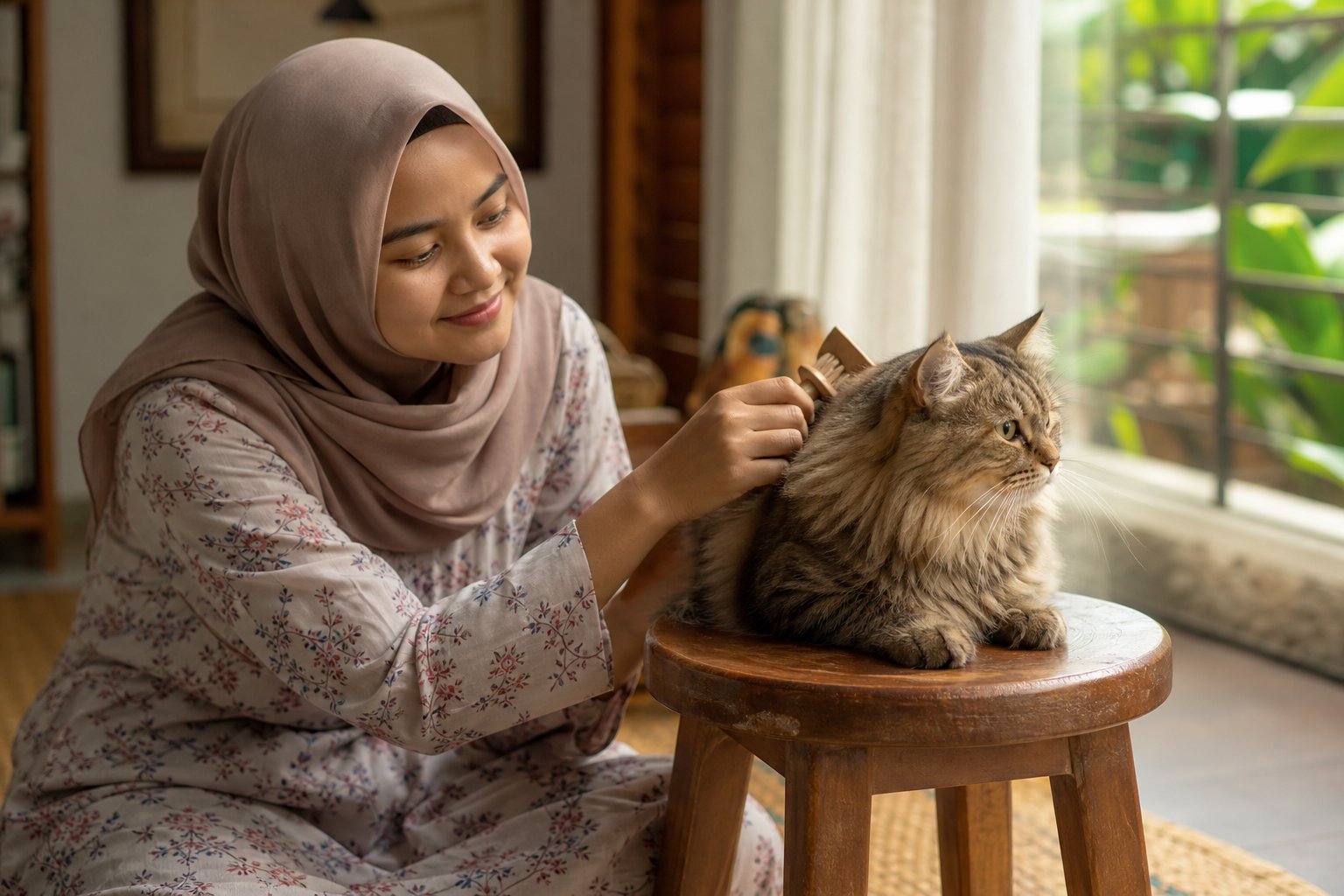
Chapter 5: Grooming for Humid Weather
Grooming in Malaysia is less about making your pet look tidy and more about keeping skin and coat healthy through heat, rain and constant humidity. A coat that stays damp, matted or clogged with loose fur is the perfect place for skin problems to start, and it also hides ticks and other parasites. The good news is that a simple routine — brushing, drying, bathing and checking — covers most of what a cat or dog needs here. This chapter builds on the basics and adds practical detail for apartment living, tiled floors and our wet-season walks.
Brushing: The Foundation of the Routine
Brush your pet several times a week to clear loose fur and let air move through the coat. Airflow is what keeps the skin underneath dry, and in Malaysia's humidity that matters more than in cooler countries. For double-coated dogs, a slicker brush or undercoat rake lifts out dead fur before it mats; for short-coated pets, a rubber curry brush or a soft bristle brush is usually enough. Long-haired cats benefit from a wide-toothed comb followed by a finer comb, working in small sections rather than tugging through tangles.
Make brushing a calm, short session — five to ten minutes is plenty — and reward your pet afterwards. In an apartment, brush on a tiled bathroom floor or lay down an old towel first, because loose fur will otherwise drift into corners and onto fabric. If you find a mat, don't yank it; work at the edges gently or ask a groomer for help, since pulling on mats hurts the skin and can leave it raw.
Drying and Bathing in a Humid Climate
In Malaysia's humidity, skin often stays damp, so dry the folds around the face, ears and tail after baths or a walk in the rain. Use a towel first, then pat the folds dry — a soft cloth or even a paper towel works well for skin creases on flat-faced breeds. Don't rub hard; patting is gentler and avoids irritating the skin.
Bathe dogs every few weeks with a mild shampoo, and avoid using human products on cats. Human shampoo and soap can strip the coat and upset the skin's natural balance, so stick to products made for pets. When you bathe, rinse thoroughly — leftover shampoo residue is a common cause of itching — and dry the coat properly afterwards, especially in the undercoat and around the neck and belly where dampness lingers. Cats generally groom themselves well, so they rarely need baths; if a cat does get dirty or soiled, use a pet-safe product or ask your vet for advice rather than reaching for your own shampoo.
Paws, Ears and the Weekly Check
Trim the hair between paw pads so your dog does not slip on tiled floors, and check ears weekly for wax build-up or a sour smell. Tiled floors are common in Malaysian homes and can be slippery for a dog with overgrown paw-pad fur, so keep that hair short and level with the pad. While you're at the paws, look for small cuts, grit or grass seeds caught between the toes.
For ears, lift the flap gently and look and smell — you're checking for excess wax, redness or a sour odour. Don't push cotton buds deep into the ear canal; wipe only what you can see at the outer edge with a soft cloth. Regular grooming also makes it much easier to spot ticks hiding near the neck and ears, so run your fingers through the coat in those areas each time you brush, and check the armpits, belly and between the toes too.
A Simple Weekly Grooming Checklist
- Brush your pet several times a week, in short, calm sessions.
- After a bath or a walk in the rain, towel dry and pat dry the folds around the face, ears and tail.
- Bathe dogs every few weeks with a mild pet shampoo; never use human products on cats.
- Rinse shampoo out completely and dry the undercoat, neck and belly.
- Trim the hair between your dog's paw pads so it doesn't slip on tiled floors.
- Check ears weekly for wax build-up or a sour smell; wipe only the outer ear.
- Run your hands over the neck, ears, armpits, belly and toes to look for ticks.
- Clear loose fur from brushes and floors so it doesn't build up in the apartment.
Common Mistakes to Avoid
The most frequent slip is skipping the drying step — a pet that stays damp after a bath or a rainy walk is more likely to develop skin irritation, especially in skin folds. Another is bathing too often with strong products, which can dry out the coat and skin; every few weeks with a mild shampoo is the guide for dogs. Using human shampoo on cats is a common error and should be avoided. Tugging at mats instead of working them out gently is another; it hurts and can damage the skin. Finally, many owners check ears only when they notice a problem — a quick weekly look and sniff catches issues earlier.
When to Ask a Vet
Grooming is not a substitute for veterinary care. Speak to your vet if you notice persistent scratching, redness, bald patches, a rash, or skin that stays damp or smells unpleasant despite drying. A sour smell or discharge from the ear, head shaking, or sensitivity when you touch the ear should be checked rather than treated at home. If you find a tick, remove it carefully and watch the area; ask your vet if the skin becomes inflamed or your pet seems unwell. Any lump, wound that isn't healing, or sudden change in coat condition is also worth a professional opinion. When in doubt, a quick call to your vet is always the safer choice.