
Chapter 6: Exercise and Walks in the Heat
Exercise keeps your pet healthy, but in Malaysia the weather decides how and when you move. Heat, humidity, haze and sudden monsoon rain all shape a sensible routine, especially for dogs who need walks and for cats living entirely indoors. The good news is that you can keep every pet active with a little planning around the cooler hours and the space you actually have at home. This chapter builds on the basics: when to walk, how to test the ground, how to exercise indoors, and the warning signs that mean stop.
Timing Walks Around the Tropical Day
Plan walks for the cooler parts of the day, ideally early morning or after 7pm. In most of Malaysia the sun is strong well before midday and the ground holds heat long after the air feels cooler, so the early morning and evening windows are your safest bets. Test the pavement with the back of your hand before letting your dog stand on it. Hold your hand flat against the surface for a few seconds; if it is too hot for your hand, it is too hot for paws. This matters on tarmac, concrete, paving stones and even sandy paths near the beach.
On very hot or hazy days, shorten the session and stick to shaded paths. Choose routes with tree cover, walk on the grass verge where it is safe to do so, and avoid long stretches of open road. Carry water for your dog and offer it during the walk, not only at the end. For apartment dwellers, a shorter loop around the compound or a nearby park is often enough; the goal is a good sniff and a stretch, not distance. Dogs cool themselves mainly by panting, and humid air makes that harder, so watch your dog rather than the clock.
Indoor Exercise for Dogs and Cats
Indoors, games of fetch down a hallway or quick training drills keep a dog busy without the heat. Short, frequent sessions work better than one long one: a few minutes of fetch, some sit-and-stay practice, or a scatter of kibble across a tiled floor for your dog to sniff out. Puzzle feeders and chew toys also burn energy and mental focus. If you live in a condo or apartment, check house rules about pets in common areas and keep hallway play clear of neighbours and lift lobbies.
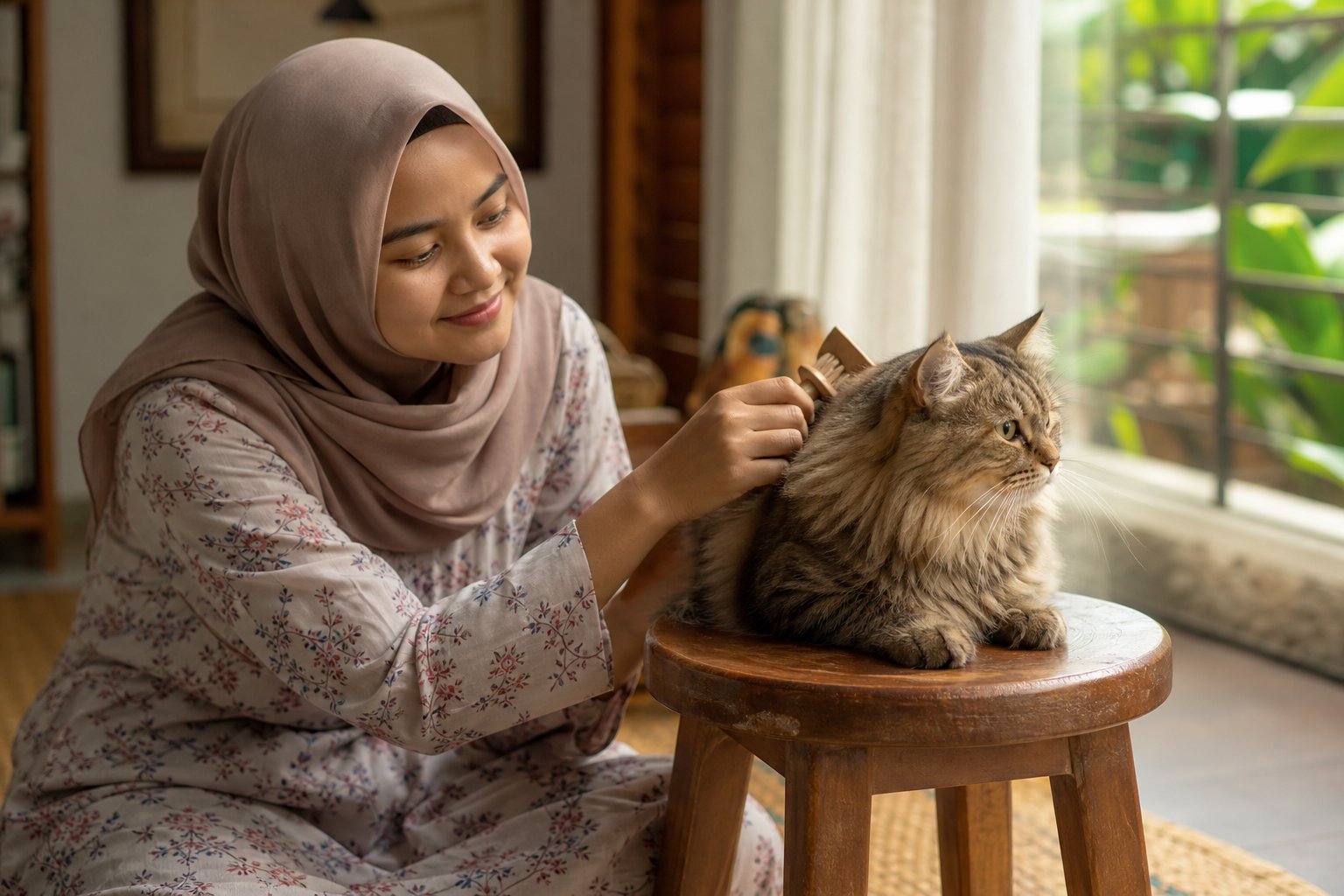
Cats stay fit with a scratching post, a high perch by the window and moving toys. A window perch gives an indoor cat a view and a place to climb, which is exercise in itself. Rotate toys so they stay interesting, and use a wand toy or a laser pointer (finishing on a toy your cat can catch) for short bursts. Scratching posts keep claws healthy and stretch the back and shoulders. For both species, a few short play sessions spread through the day beat one long session, especially when it is too hot or rainy to go out.
Heat, Haze and Monsoon Safety
If your pet pants heavily, drools or refuses to move, stop at once, offer water and let it rest in a fan-cooled or air-conditioned room. These are signs of overheating, and they can worsen quickly in tropical humidity. Do not force a reluctant dog to keep walking. Cool the pet gradually: move to shade or indoors, offer small amounts of water, and wet the paws, belly and neck with cool (not ice-cold) water. If your pet does not improve, contact your vet.
During heavy monsoon downpours, indoor play beats wading through flooded streets. Floodwater can hide sharp debris and carry contamination, and drains and kerbs become hazards. Keep dogs on a lead near swollen drains and avoid standing water altogether. On hazy days, keep sessions short and indoors where possible, and avoid strenuous activity when the air looks thick.
Checklist before and during exercise
- Walk early morning or after 7pm, never in the midday heat.
- Test the pavement with the back of your hand before your dog stands on it.
- Bring water and offer it during the walk.
- Choose shaded paths; shorten sessions on hot or hazy days.
- Keep indoor options ready: hallway fetch, training drills, puzzle feeders, scratching post, window perch, moving toys.
- Watch for heavy panting, drooling or refusal to move, and stop at once.
- During monsoon downpours, play indoors instead of walking through flooded streets.
Common mistakes
- Walking at midday because it "looks cloudy" — the ground can still be hot.
- Assuming grass is always cool; check it the same way.
- One long weekend walk instead of short daily sessions.
- Leaving a cat without vertical space or scratching outlets, then wondering why it is restless.
- Pushing a panting dog to "finish the loop".
- Letting a dog wade through floodwater or drink from it.
When to ask a vet If your pet's heavy panting, drooling or reluctance to move does not settle after rest in a cool room, or if it seems weak, confused, vomits or collapses, seek veterinary help promptly. Ask your vet for advice on exercise limits if your pet is very young, elderly, overweight, flat-faced (such as certain brachycephalic breeds) or has heart or breathing conditions, since these pets struggle more in heat and humidity.