
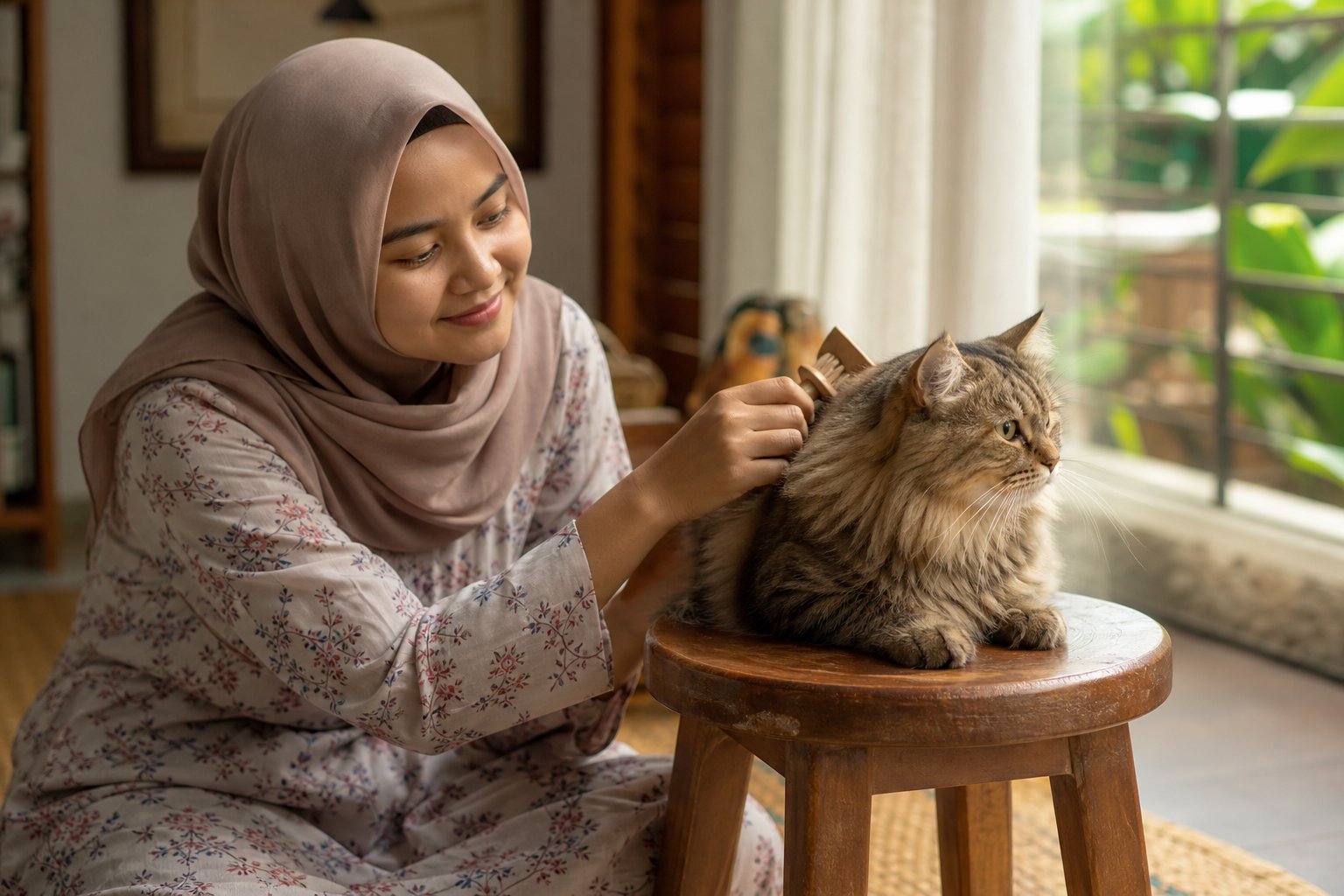
Chapter 9: Everyday Training and Calm Alone Time
Chapter 9: Everyday Training and Calm Alone Time
Training in a Malaysian home works best when you keep it short, calm and woven into the day. A few minutes of clear, kind practice repeated often will do more than one long, tiring session. The same principle applies to teaching a pet to be comfortable alone: small, gentle steps build confidence faster than rushing. This chapter covers how to train in our climate, how to build calm alone time, and how to handle the thunderstorms that roll in most afternoons.
Short, Cool Training Sessions
Short training sessions suit our climate best. Teach one cue at a time using small treats and plenty of praise, and keep each session to about five minutes so neither of you overheat. Reward the behaviour you want instead of shouting, and never rub a dog's nose in an accident.
Choose a cool time of day — early morning or after the sun has eased off — and train indoors or in the shade rather than on hot tiles or paving. Keep treats small and soft so they are quick to eat, and have fresh water nearby for both of you. End every session while your pet is still enjoying it, so the next one starts on a good note.
- One cue at a time. Practise a single word or hand signal until it is reliable before adding another.
- Reward what you want. Mark the moment your pet gets it right with a treat and calm praise, and ignore the behaviour you don't want rather than shouting.
- Never punish accidents. Never rub a dog's nose in an accident. Clean up quietly and take your pet to the right spot next time.
- Keep it short. About five minutes is plenty; stop sooner if either of you is panting or losing focus.
A fixed routine gets puppies using their litter or toilet spot within weeks. Take your puppy to the same place at the same times — after waking, after meals, after play and before bed — and reward success calmly. For cats, keep the litter tray in a quiet, accessible spot away from food and water, and scoop it daily.
Building Calm Alone Time
Most Malaysian homes are quiet during the day, which can leave a new pet anxious when left alone. Start with brief absences, provide a safe spot with a chew toy and a fan, then extend the time gradually.
Begin with absences of just a few minutes, even moving to another room at first, and return before your pet becomes distressed. Leave the safe spot set up with a familiar-smelling blanket, a chew toy and a fan for air movement, and give your pet something to do before you go. Build up the time slowly over days and weeks, and vary the length so your pet learns that your leaving is ordinary and your return is calm. Keep goodbyes and greetings low-key — a quiet word rather than a big fuss — so comings and goings stay unremarkable.
Apartment living brings its own considerations. Neighbours are close, so a pet that barks or cries when alone can become a strain for everyone. Practise quiet time early, keep the safe spot away from the main door and corridor noise, and let your pet settle before you leave. If you live in a high-rise, make sure windows and balconies are secure so a anxious pet cannot slip out.
Thunderstorms and Frightening Noises
When thunderstorms roll in, stay relaxed, close the curtains and offer steady reassurance rather than fussing over the fear. Our afternoon storms can be loud and sudden, so it helps to have a plan ready before the first rumble. Close the curtains to block the flashes, keep the fan or some soft background sound going to muffle the thunder, and let your pet settle in its safe spot. Stay calm yourself — pets read our mood closely — and offer quiet reassurance without over-comforting, which can accidentally reward the fear. If your pet prefers to hide in a safe place, let it.
Checklist: Before You Leave Your Pet Alone
- Safe spot set up with a familiar blanket, a chew toy and a fan
- Fresh water available
- Curtains closed and background sound on if storms are forecast
- Windows and balconies secure
- Goodbye kept calm and brief
- Absence length matched to what your pet has already coped with
Common Mistakes to Avoid
- Long training sessions in the heat. Keep to about five minutes and train in the cool of the day.
- Shouting or punishing accidents. Reward the behaviour you want instead, and never rub a dog's nose in an accident.
- Rushing alone time. Jumping straight to long absences undoes the gradual work; extend the time slowly.
- Big emotional goodbyes. These raise anxiety; keep departures and returns calm.
- Fussing over storm fear. Stay relaxed and offer steady reassurance rather than over-comforting.
- Skipping the routine. A fixed routine is what gets puppies using their toilet spot within weeks.
When to Ask a Vet
Ask your vet if your pet shows signs of distress that don't ease with gradual practice — such as persistent crying or barking when alone, destructive behaviour, loss of appetite, or attempts to escape. Seek advice too if storm fear is severe, if your pet injures itself during a storm, or if a puppy or kitten is not settling into its toilet routine after several weeks of consistent practice. Your vet can check for underlying health issues and advise on the next steps.