
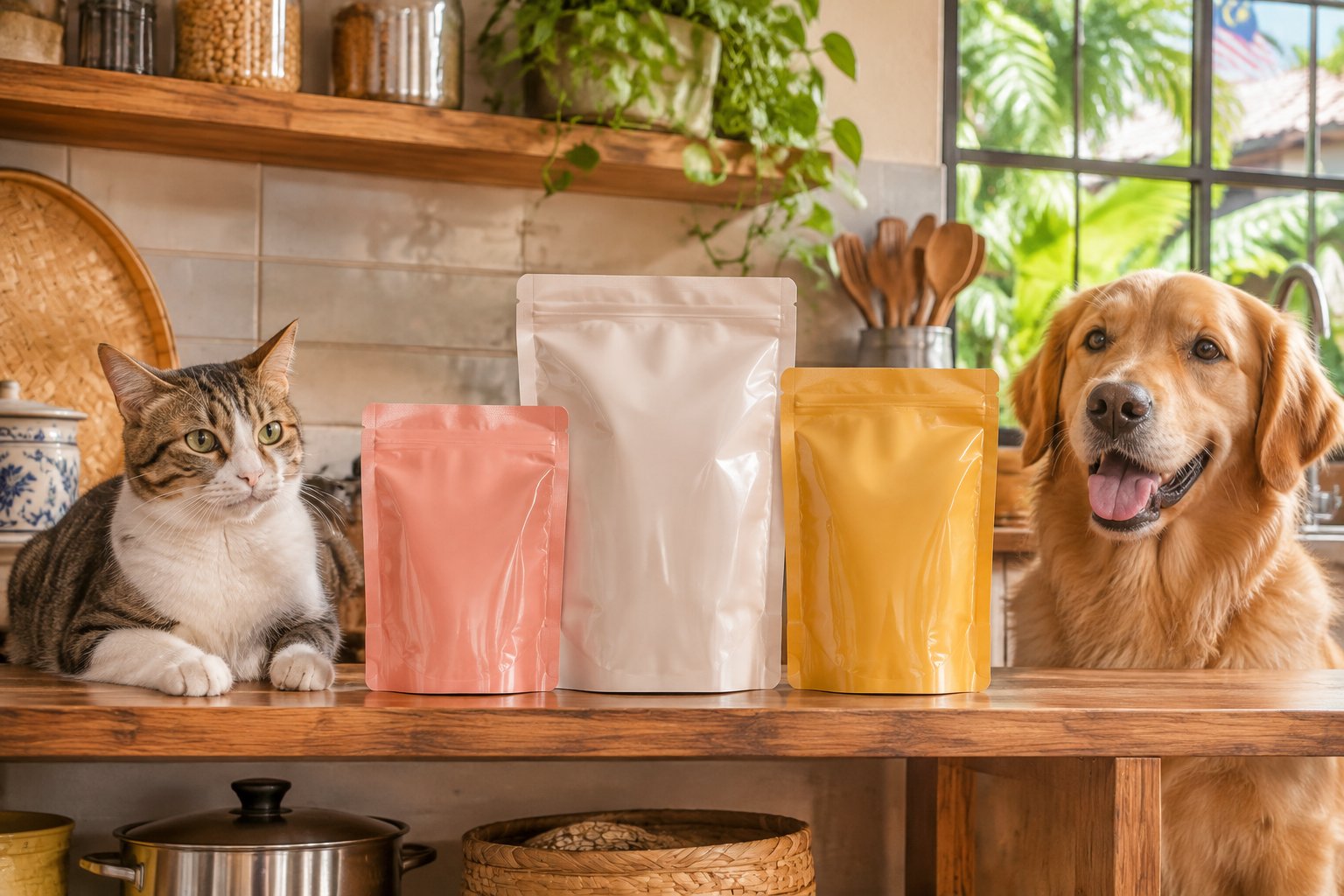
Chapter 6: Local and Asian Brands — Value Choices
Malaysian and regional brands — including locally manufactured dry foods and those from neighbouring countries — offer affordable everyday feeding with fresher stock and easier restocking, which matters during monsoon flooding or when imported shipments are delayed. Quality varies widely, so read the label: look for a named meat source near the top of the ingredient list, a stated life stage (growth, adult, all life stages), and a nutritional adequacy statement. Be cautious of vague terms like "meat meal" without a species, and of very cheap foods that lean heavily on cereals and colourings. Many local brands now publish feeding guidelines and contact details, which is a good sign. For budget-conscious owners with healthy adult pets, a well-chosen local food plus clean water and portion control can work well. Ask your vet to review the label if unsure.
This chapter is about making that choice calmly rather than by price alone. In a tropical climate, with many of us living in apartments and shopping close to home, a local or regional brand can be a sensible everyday option — provided you check a few things on the pack and watch how your pet actually does on the food.
Reading the label like a checklist
The ingredient list and the small print around it tell you most of what you need. Work through these points in order:
- Named meat source near the top. "Chicken," "fish" or "beef" as a named ingredient is clearer than a generic term. Ingredients are usually listed by weight, so a named source high on the list is a better sign than one buried at the bottom.
- A stated life stage. Look for "growth," "adult" or "all life stages." A food labelled for growth is formulated for puppies and kittens; adult maintenance foods are not a substitute for growing animals.
- A nutritional adequacy statement. This is the sentence confirming the food meets a recognised nutrient profile for the stated life stage. If you cannot find it, treat that as a question to ask the seller or your vet.
- Vague terms are a warning. Be cautious of vague terms like "meat meal" without a species, and of very cheap foods that lean heavily on cereals and colourings.
- Contact details and feeding guidelines. Many local brands now publish feeding guidelines and contact details, which is a good sign. A brand that answers questions and prints a local address or phone number is easier to deal with if something goes wrong.
Local brands in a Malaysian routine
Local and regional foods often reach the shop with fresher stock, and restocking is easier — which matters during monsoon flooding or when imported shipments are delayed. That reliability is a real practical advantage when you feed the same food daily and don't want to switch abruptly because your usual brand is out of stock.
For apartment dwellers, dry food is convenient: it stores in a sealed container, doesn't spoil as fast in the heat, and portioning is straightforward. But tropical humidity is hard on any food. Keep the pack closed, store it somewhere cool and dry rather than next to the stove or in direct sun, and don't buy more than you can use within a reasonable time. If the food smells off, looks clumped or has visible mould, discard it.
Portion control matters as much with value foods as with premium ones. Use the feeding guidelines on the pack as a starting point, then adjust to your pet's body condition — you should be able to feel the ribs without pressing hard and see a waist from above. Clean, fresh water should always be available, especially with dry food.
Matching the food to the pet, not just the budget
For budget-conscious owners with healthy adult pets, a well-chosen local food plus clean water and portion control can work well. The key words are "healthy adult." Growing puppies and kittens, pregnant or nursing animals, seniors, and pets with a diagnosed condition have different needs, and a value food chosen on price alone may not meet them.
Watch your pet rather than the marketing. Over a few weeks, note stool quality, coat condition, appetite, weight and energy. A food that suits one cat or dog may not suit another. If you change brands, do it gradually over several days, mixing old and new, to avoid digestive upset.
Common mistakes to avoid
- Buying purely on price without reading the life stage or adequacy statement.
- Assuming "local" means low quality, or "imported" means better — judge the label, not the flag.
- Feeding a growth food to an adult, or an adult food to a puppy or kitten, because it was on offer.
- Leaving dry food in an open bag in a hot, humid kitchen, where it spoils faster.
- Free-feeding from a full bowl all day, which makes portion control impossible.
- Switching brands abruptly when the usual one is out of stock, instead of transitioning gradually.
When to ask a vet
Ask your vet to review the label if unsure — this is always the right move when the pack is unclear. Speak to your vet before choosing a food if your pet is very young, pregnant or nursing, elderly, or has a health condition. See a vet promptly if you notice weight loss or gain, persistent loose stools, vomiting, scratching or coat problems after a food change, or if your pet refuses food for more than a day. And if a pack's labelling, storage or condition seems wrong, don't feed it — ask instead.