
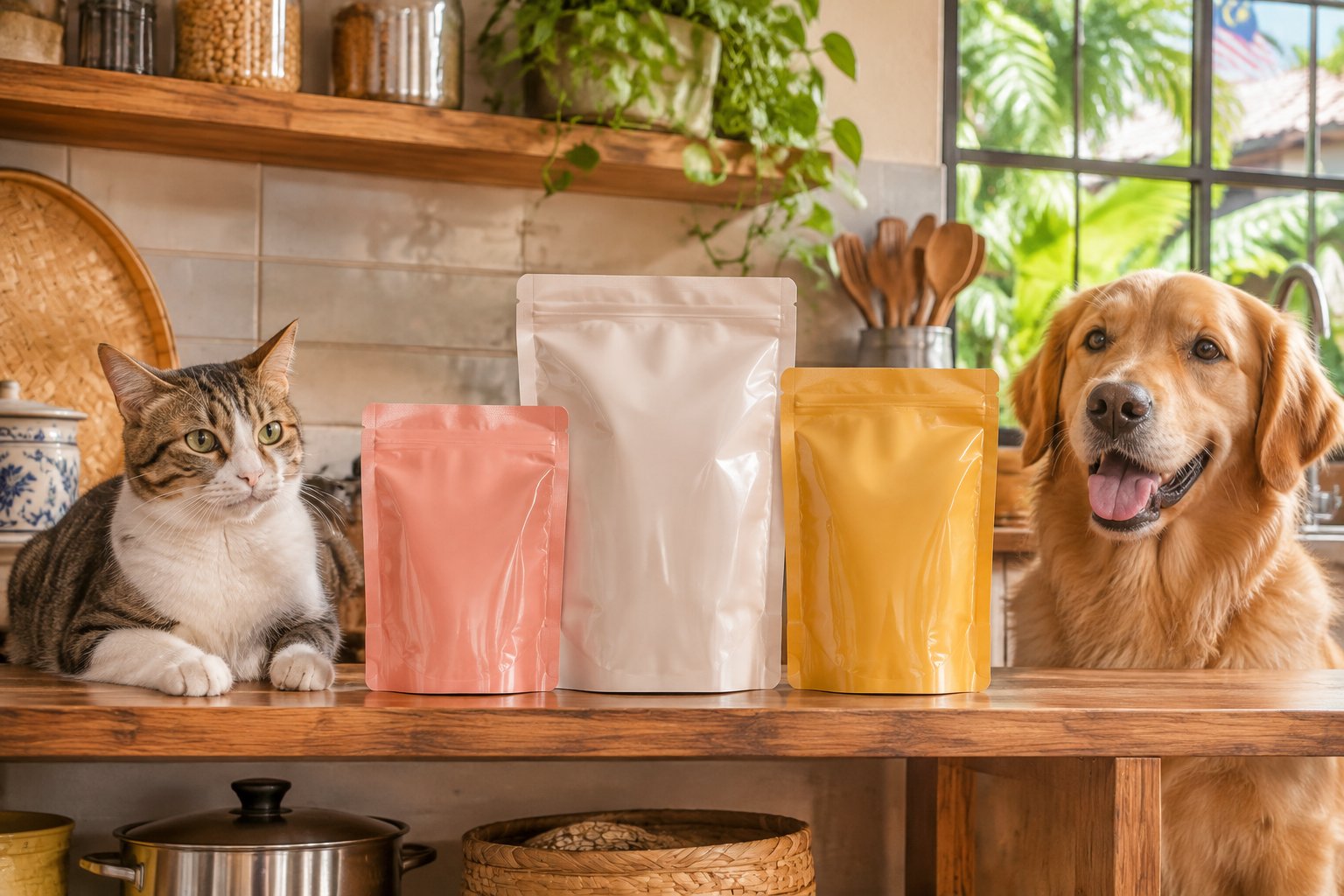
Chapter 7: Treats and Canned Ranges — The Side Lines
Treats and canned foods are where brand loyalty often starts, but they are side dishes, not the main event. They sit on the side lines of your pet's bowl for good reason: they add enjoyment, variety, and sometimes useful moisture, but they should never quietly take over the job of a complete, balanced main food. In Malaysia's heat and humidity, how you store and serve these extras matters as much as what you choose. This chapter helps you use treats and canned ranges sensibly — for training, bonding, and hydration — without upsetting the diet that keeps your cat or dog healthy.
Canned Food: Moisture Support, Not a Main Event
Canned food can be genuinely useful for adding moisture, which helps cats with urinary health and pets that drink little in hot weather. A cat in a warm apartment may simply not drink enough from a bowl, and a spoonful of wet food stirred through the day's ration is one practical way to raise water intake. The same applies to dogs that are fussy drinkers, especially during hot spells.
The critical point is the word "complementary." Some brands sell "complementary" cans that are not complete diets — these must not replace a balanced main food. A complementary can is a topper or a treat in a can; it is not formulated to meet all of your pet's nutritional needs on its own. Read the label and look for wording that identifies the product as complete, versus one described as complementary, a topper, or a mixer. If you are unsure, treat it as a side dish and keep the complete main food as the base of the meal.
In Malaysia's heat, canned food spoils fast once opened — refrigerate leftovers immediately and discard anything left in the bowl for more than an hour or two. Practically, that means:
- Scoop out only what you will serve, then seal and refrigerate the rest straight away.
- Don't leave an open can sitting on the counter while you finish other chores.
- Take the chill off refrigerated portions by letting them stand briefly or mixing with a little warm (not hot) water before serving.
- Wash the bowl after each meal so residue doesn't attract ants or spoil in the warmth.
Treats: Small Fraction, Careful Choice
Treats should make up only a small fraction of daily calories. Think of them as a garnish, not a course. Many local treats are high in salt, sugar, or artificial colouring, so check labels and favour simple, meat-based options. A short ingredient list you can actually read is usually a better sign than a bright packet with a long list of additives.
Use treats for training and bonding, and keep the main diet consistent. A treat given as a reward for coming when called, or as a calm moment of connection, does its job well. What it should not do is steadily replace meals or push the daily ration out of balance. If you are training often, break treats into tiny pieces so the total stays small, and consider setting aside part of the normal daily ration to use as rewards instead of adding extra food on top.
Keep the main diet consistent. Sudden switches and a rotating cast of treats and cans can upset digestion and make it hard to tell what suits your pet. Introduce any new treat or canned product gradually, one at a time, so you can spot what agrees with them.
A Practical Checklist
- Main food is a complete diet and forms the bulk of every meal.
- Canned products are checked on the label: complete versus complementary.
- Opened cans are refrigerated immediately; bowl leftovers are discarded within an hour or two.
- Treats are a small fraction of daily calories and mostly simple, meat-based.
- Labels are checked for high salt, sugar, or artificial colouring.
- Treats are used for training and bonding, in small pieces.
- Fresh water is always available, especially in hot weather.
- New treats or cans are introduced one at a time.
- Bowls are washed after meals to discourage ants and spoilage.
Common Mistakes
- Treating a complementary can as a full meal. Toppers and complementary cans are side dishes; they don't carry a complete diet.
- Leaving opened cans out. In the heat, spoilage is quick — refrigerate leftovers at once.
- Letting the bowl sit. Food left out for more than an hour or two should be discarded, not saved for later.
- Free-feeding treats. Topping up treats through the day quietly adds calories and unbalances the diet.
- Chasing colourful packaging. Bright, highly coloured treats are often the ones high in salt, sugar, or artificial colouring.
- Constant switching. Rotating many treats and cans makes digestion and preferences hard to manage.
- Assuming wet food means enough water. Canned food helps, but fresh water should still always be available.
When to Ask a Vet
Speak to your veterinarian if your pet shows signs of stomach upset after a new treat or can — vomiting, diarrhoea, or refusing food — or if you are unsure whether a product is a complete diet. Ask for guidance if your cat or dog is drinking very little, if you are managing a urinary or other health condition and want to use canned food for moisture, or if your pet is gaining or losing weight unexpectedly. A vet can also advise on suitable treat portions for your pet's size and health, and on what to do if you suspect your pet has eaten spoiled food.