
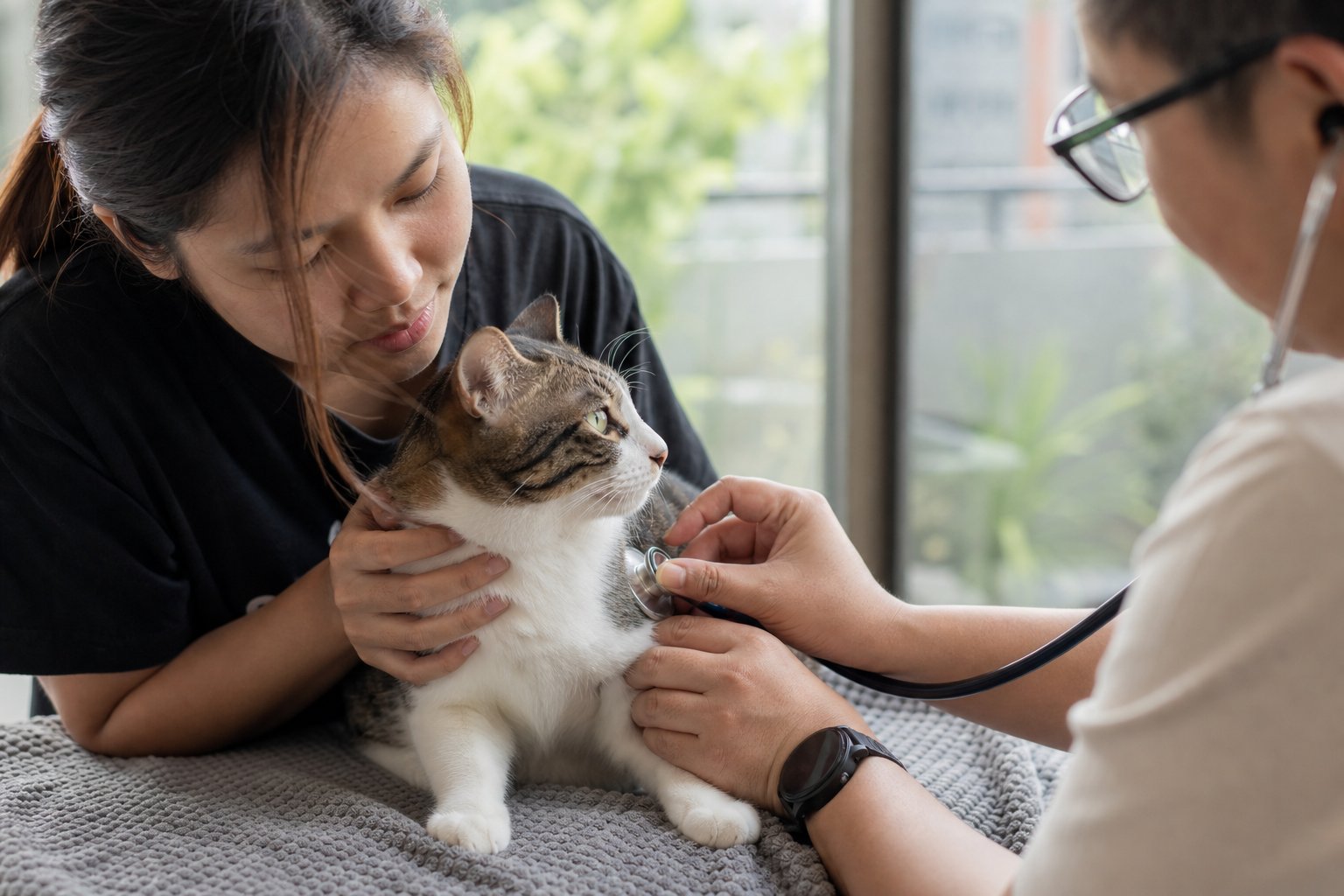
Quick answer: Give the first combination vaccine at about 2–3 months old, the second around 3 months, the third one year after the second, then a booster every year for life. Collect the vaccination card on the day you take your kitten home, book a health check within the first few days, and keep indoor cats on exactly the same schedule as outdoor ones.
Why 2–3 months is the critical window
A newborn kitten is protected by antibodies absorbed from its mother's milk during the first day or two of life. Those maternal antibodies do useful work, but they are temporary: they decline steadily and are largely gone by around 10 to 12 weeks of age, which is the two-and-a-half to three-month mark.
That decline creates two problems at once. Before it happens, maternal antibodies can neutralise a vaccine before it takes effect, so very early shots may not stick. After it happens, the kitten's own immune system has nothing to fall back on. The first vaccination is therefore timed to land right as the maternal cover is fading — the moment protection hands over from mother to vaccine.
This is also why the schedule is a series, not a single event. One injection rarely produces strong, lasting immunity in a young animal whose immune system is still maturing; repeat doses at intervals are what build and then lock in the response.
Practical consequence: if you collect a kitten from a pet shop, a cattery, a friend or a rescue group, ask on the spot whether anything has already been given, and ask for the card. A kitten that has already had its first shot needs the series continued, not repeated; a kitten with no record needs a plan drawn up from scratch. Guessing either way risks over-vaccinating or leaving a gap.
The kitten vaccine schedule
The rhythm below is the standard first-year pattern most vets follow. Exact products and intervals are decided by your vet based on the kitten's age, health and lifestyle.
| Age | What happens | Why it matters |
|---|---|---|
| 2–3 months | First combination vaccine | Given as maternal antibodies fade |
| Around 3 months | Second combination vaccine | Consolidates the immune response |
| First few days at home | General health check | Confirms the kitten is well enough to vaccinate |
| One year after the second dose | Third combination vaccine | Completes the primary course |
| Every year thereafter | Annual booster | Immunity wanes over time; adults need topping up |
| From 7 years onwards | Health checks every 3–6 months in addition to boosters | Early detection of age-related disease |
Two details in that table are easy to miss:
- The health check comes first. A kitten that is lethargic, vomiting, has diarrhoea, a discharge from the eyes or nose, or an obvious fever should be treated before it is vaccinated. Vaccinating an unwell animal gives poor protection and confuses the clinical picture.
- The annual booster never stops. Adult cats that have completed the primary course still need a shot once a year. Skipping years is one of the most common reasons a cat turns up at the clinic unprotected.
Write the due date for the next dose on the card the moment you leave the clinic, and set a phone reminder. Memory is unreliable; a calendar is not.
Taking in a rescued or adopted kitten: extra steps
A kitten picked up from the street or adopted through a rescue group needs more than a vaccination appointment. Street kittens very often carry external parasites, internal worms, or both, and these must be dealt with alongside — not instead of — the vaccine plan.
Ask your vet to cover, at the first visit:
- Flea and mite treatment. Almost every street kitten arrives with fleas; ear mites are common too. Parasites sap appetite and weight gain, which in turn weakens the kitten's response to everything else you are trying to do.
- Deworming. Intestinal worms are widespread in young cats and directly affect growth. Your vet will choose an appropriate product and schedule for the kitten's age.
- A general health check to confirm the kitten is stable enough for vaccination. Kittens found outdoors may be underweight, dehydrated, or carrying an infection that needs addressing first.
- Feeding and weight monitoring. Weigh the kitten weekly at home and note it down. Steady gain is the simplest sign that the plan is working.
Do not delay vaccination indefinitely while sorting out parasites — but do not vaccinate a kitten that is clearly unwell either. This is exactly the kind of sequencing decision that is best made in the consulting room with the kitten in front of the vet.
If the kitten is still very young and small, the vet may prioritise stabilising it first and start the vaccine course once it is thriving. Keep a written record of every treatment given, with dates; it becomes the backbone of the kitten's lifelong health file.
Before and after the shot: an owner's checklist
Before the visit:
- Confirm the kitten is bright, eating normally, and has no diarrhoea or vomiting. If it is off colour, postpone and call the clinic instead.
- Bring the vaccination card or any paperwork you were handed when you collected the kitten.
- Ask beforehand what the fee covers: does it include the consultation, is the second dose priced separately, and what is included in the combination vaccine.
- Ask which diseases the combination covers, and whether your vet recommends any additional vaccine for your specific situation — for example, a kitten that will later mix with other cats.
- Use a secure carrier lined with a towel that smells like home. Keep the journey calm and short.
After the visit:
- Expect 24–48 hours of mild listlessness or slightly reduced appetite. This is common and usually resolves on its own.
- Offer the kitten's usual favourite food; a little extra appetite appeal helps if eating is sluggish.
- Keep the day quiet — no rough play, no visitors, no introducing new animals.
- Check the injection site. A small firm lump can appear and typically settles within a few weeks. If it grows, persists beyond a month, becomes hot or painful, have it examined.
- Emergency signs: facial swelling, repeated vomiting, difficulty breathing, collapse or extreme lethargy. These suggest an allergic reaction and warrant an immediate return to the clinic.
- Until the primary course is complete, avoid contact with unfamiliar cats for about two weeks after each dose. This matters most in multi-cat households and in homes with unvaccinated cats.
- Record the next due date straight away and set a reminder.
Myths worth clearing up
| Myth | Reality |
|---|---|
| "My cat never goes outside, so it doesn't need vaccines." | Viruses arrive on shoes, clothing, hands and other pets. Records are also required by boarding and many medical facilities. |
| "One vaccination protects for life." | Antibody levels fall over time. The primary course needs completing, then annual boosters for life. |
| "Street cats are too dirty or too weak to vaccinate." | They need it most. Stabilise, deworm and de-parasitise first, then vaccinate once the kitten is well. |
| "Vaccination is dangerous." | Serious reactions are rare. Waiting at the clinic for 15–30 minutes after the injection lets staff respond quickly if one occurs. |
| "It doesn't matter if I'm a few months late." | Late is better than never, and you do not restart the course — but the kitten stays unprotected until the schedule is back on track. |
Fitting vaccines, deworming and neutering into one year
Vaccination is only one strand of the first-year plan, and the strands are easier to manage when they are booked together.
A workable order of operations:
- Days 1–7 at home: settle, observe, weigh, then the initial health check. Start parasite treatment as advised.
- Weeks 2–4: first combination vaccine if the kitten is 2–3 months old and well.
- Around 3 months: second combination vaccine; continue deworming and flea control on the vet's schedule.
- 6 months to 1 year: neutering. Most vets prefer the primary vaccine course to be finished before surgery, since anaesthesia is smoother in an animal whose immune status is stable.
- One year after the second dose: third combination vaccine.
- Annually: booster plus a general check, continuing for life.
At the first appointment, ask the vet to lay out the whole year in writing — vaccine dates, parasite control, neutering window, and expected weigh-ins. One conversation at the start prevents a year of scattered notes and forgotten appointments. When you book the neuter, mention the vaccine dates so the two can be coordinated rather than clashing.
The clinic visit and caring for your kitten afterwards
Choosing and booking: Book ahead and say it is a kitten's first vaccination, so the clinic allows extra time for a proper examination. Ask how the vet handles nervous kittens — a clinician who lets a kitten explore the table for a few minutes before starting makes a lasting difference to how the cat treats every future visit. Price should not be the only factor; the first experience shapes a cat's attitude to the clinic for life.
On the day: Travel in a secure carrier with a familiar-smelling towel. Keep voices low, avoid letting strangers handle the kitten on the way in, and ask to wait in a quiet corner if the waiting room is busy. If the clinic offers a short observation period after the injection, take it.
At home: Offer food and water as normal, provide a warm, quiet resting place away from household traffic, and monitor for the next 48 hours. Note energy level, appetite, stool quality and any swelling at the injection site. A simple daily log for a week after each dose makes any later conversation with the vet far more productive.
Keep the paperwork together: Store the vaccination card, deworming records, weight notes and any test results in one folder — physical or digital. Photograph the card so you always have a copy. Boarding facilities, catteries, clinics and any future travel or transfer of ownership will all ask for it, and a complete record means no one has to guess about protection status.
Special situations and life after the first year
A missed or delayed dose. Do not restart. Contact the clinic, book the next available appointment, and let the vet reschedule the remaining doses around your kitten's age. Keep the kitten isolated from unfamiliar cats until the course catches up.
A lost vaccination card. Request a replacement from the original clinic. If nothing can be found, your vet will likely recommend a fresh full course, because protection cannot be assumed without evidence.
Boarding or fostering. Most facilities will not accept a cat without vaccination records, and many require the course to have been completed a set period before arrival — you cannot vaccinate one day and board the next. Plan boarding well ahead and check the facility's requirements in writing.
Moving home or travelling. Records travel with the cat. If you are relocating or crossing borders, start the conversation with your vet early — some destinations require specific vaccines, blood tests or timing that must be arranged months in advance.
Beyond the first year. Adult cats continue with an annual booster. From around seven years old, add health checks every 3–6 months; the weight and appetite records you started as a kitten owner become genuinely valuable at this stage, because gradual change is far easier to spot against a documented baseline.
When to see a vet
Contact your vet promptly if any of the following occur:
- Facial swelling, hives, repeated vomiting, difficulty breathing, collapse or pale gums after a vaccination — this is an emergency; return immediately
- Lethargy or appetite loss lasting more than 48 hours
- A lump at the injection site that enlarges, persists beyond a month, or becomes hot and painful
- Fever, coughing, nasal or eye discharge, or diarrhoea before a scheduled dose — postpone and get assessed first
- Any injury, bite wound or sudden change in behaviour in a kitten that is not yet fully vaccinated
- Weight loss or failure to gain weight despite normal eating
It is always reasonable to call the clinic and ask whether a visit is needed. When in doubt, get the kitten checked.
Key takeaways
- First shot at 2–3 months, second around 3 months, third one year later, then annual boosters for life.
- Ask for the vaccination card the day you collect the kitten — it is the record everything else depends on.
- Indoor cats need vaccinations too; viruses and paperwork requirements both travel indoors.
- Vaccinate only healthy kittens; handle parasites and illness first.
- Mild tiredness for a day is normal; facial swelling, vomiting or breathing trouble is not.
- Book the whole first year — vaccines, parasite control, neutering, weigh-ins — in one conversation with your vet.
This article is for general information only and does not replace veterinary diagnosis or treatment. Vaccination choices, timing and products should be decided with your own veterinarian based on your kitten's individual health, age and lifestyle. If your kitten is unwell or shows any alarming symptoms, seek veterinary care promptly.
Related reading
- Kitten Care Guide Malaysia: 0–12 Month Feeding, Vaccination, Deworming & Growth Timeline
- Kitten Weight Chart Malaysia: Weekly Targets from Birth to 1 Year
- Kitten Weight Chart Malaysia: Week-by-Week Standards and How to Weigh at Home
- Best Kitten Food in Malaysia: A Practical Buying Guide (2026)
- Kitten Care Hub Malaysia: First-Year Feeding, Vaccines, Deworming and Growth Timetable
- Kitten Feeding Schedule in Malaysia: How Many Meals and How Much Per Day
- Kitten Feeding Schedule Malaysia: Meals per Day and Grams by Weight
- Kitten Month-by-Month Guide for Malaysian Owners: Growth Milestones, Weight Checks and Care Checklist
- Kitten Month-by-Month in Malaysia: 0–12 Months, Weight Standards and Milestones
- Kitten Home-Proofing in Malaysia: A Room-by-Room Safety Checklist