
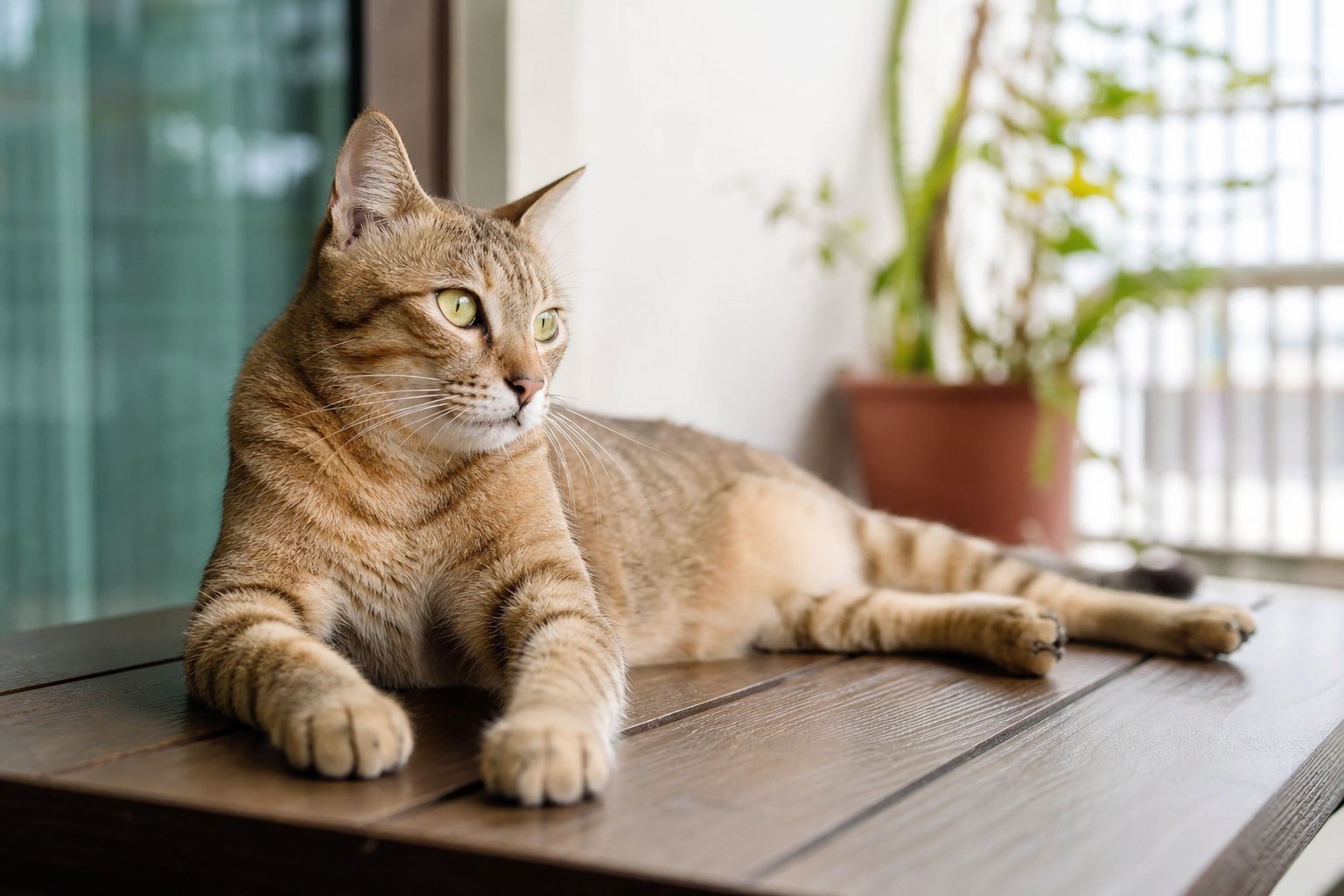
Quick answer: Kitten socialisation runs from about 3 weeks to 3 months, with 5-7 weeks the most critical stretch. During that window, offer a few gentle new experiences daily — different people, sounds, handling, objects — each kept short and paired with a treat. A kitten that meets a wide range of things calmly grows into an adult that copes with visitors, carriers and clinic visits. Miss the window and you can still catch up, just more slowly.
What socialisation actually means
Socialisation is the process where a kitten learns that the world is safe. It is not training in the usual sense — you are not teaching tricks. You are teaching categories: human hands are friendly, doorbells are ordinary, being picked up is survivable, a carrier is a snack dispenser.
The timing matters because it is how kittens decide what counts as normal. Anything they experience gently during the socialisation period gets filed under "part of life". Anything they never meet, or meet while frightened, tends to be filed under "threat" for good.
A well-socialised adult cat generally:
- Accepts strangers in the home without bolting
- Tolerates being held, weighed and examined
- Recovers quickly from loud or unexpected noises
- Comes out of a carrier at the clinic instead of flattening against the floor
- Has fewer stress-related problems such as hiding, over-grooming or litter box avoidance
Socialisation also builds resilience. A cat that has learned small, manageable surprises are survivable will handle bigger ones later — a move to a new home, a new baby, a trip to the vet — with less fallout.
The golden period, week by week
The schedule below keeps each session short. If your kitten walks away, the session is over — that is information, not disobedience.
| Age | Focus | What to do |
|---|---|---|
| 3-5 weeks | Handling | Several times a day, gently touch ears, muzzle, belly, paws and the base of the tail for 1-2 minutes, then offer a treat |
| 5-7 weeks | People and sounds | Invite one or two calm visitors at a time; play doorbell and vacuum sounds quietly, starting at low volume; let the kitten explore different rooms |
| 7-12 weeks | Expanding the list | Feed treats inside the crate; introduce grooming, the sound of nail clippers, a hairdryer on a cool low setting held at a distance |
| 3-4 months | Consolidation | Keep the daily rhythm going, but you can ease off the novelty. Do not stop entirely |
Two details are worth underlining.
Handling comes first. You will be handling this cat for years — flea treatment, tooth checks, mat removal, blood draws. A kitten that has been touched all over since arrival will tolerate this; one that has not will fight. Keep sessions to a minute or two and always end with something good.
The 5-7 week window is the peak. If your kitten arrived at 5 weeks, start immediately. If it arrived at 10 weeks, you are still inside the window but working with less time — prioritise handling, carrier, and calm human contact over everything else.
Three rules that keep it working
Almost every failed socialisation attempt breaks one of these three rules.
- Gentle. The moment a kitten puffs up, bolts or freezes, it is learning that the thing was dangerous. That is worse than doing nothing. Let it leave.
- Short and frequent. Three sessions of three minutes across a day beats one thirty-minute ordeal. Young kittens tire and overstimulate quickly.
- Paired with something good. New experience plus treat equals a positive association. This is the entire engine of the process, and it works in the opposite direction too — which is why frightening a kitten on purpose sets you back.
A useful test: end every session while your kitten still wants more. If it is still chasing the toy or still rubbing against your hand when you stop, you have hit the right length.
Indoor socialisation: sounds, handling and the carrier
Most of the work happens inside your home, which is convenient in a Malaysian climate where midday heat and sudden thunderstorms make outdoor sessions unreliable.
Household noise. Vacuum cleaners, blenders, hairdryers, doorbells, video calls, delivery riders and neighbours' renovation work are all socialisation material. Play recordings quietly at first, paired with food, and raise the volume over days rather than minutes.
Touch drills. Work through the whole body: ears, mouth, paws, claws, belly, tail base. Two seconds on a paw, treat, done. Repeat across the week until the kitten stops objecting.
The carrier. This is the most overlooked item on the list. Leave the carrier out with the door open and a soft bed inside, drop treats in daily, then practise closing the door for thirty seconds before opening it again. Within a week you should be able to close it for five minutes and lift it a few steps. A cat that rides calmly to the clinic has had one major lifetime stressor removed.
The scale. Leave a flat kitchen scale in a walkway with a treat on it. The kitten steps on voluntarily, and daily weighing later becomes effortless instead of a wrestling match.
Travel and vet visits. A carrier trip with no poking and a treat at the end is a socialisation event. Keep the first few outings short and low-drama.
Adding a second cat (and other pets)
Many households add a kitten to an existing resident cat, or bring a kitten into a home with a dog. Go slowly and in this order:
- Separate for about three days. The new kitten stays in one room with its own litter, food and water. The cats smell each other under the door.
- Swap scents first. Trade bedding or rub both cats with the same towel before they ever see each other.
- Meet through a barrier. A crate or baby gate lets them see one another with no contact. Feed them on opposite sides so the other's presence predicts food.
- Supervised close contact. Hold the new kitten and let the resident cat approach. Any hissing, flattened ears or swatting means separate and try again the next day.
- Resident cat gets priority. Food, laps and play go to the established cat first. This is not favouritism — it prevents the older cat from developing stress-related problems.
With a dog, keep the lead on for the first week, always give the kitten a high escape route such as a cat tree, and never leave them unsupervised. Do not assume an easygoing dog or a cat that grew up with dogs means an easy introduction — every new pairing deserves a fresh, gradual process.
Until vaccinations are complete, keep the kitten away from unknown animals and off the ground outside.
Malaysian home contexts
Two situations come up repeatedly here.
A Kuala Lumpur apartment with thin walls and shared corridors. Renovation drilling, lifts, rubbish collection and neighbours' music are part of daily life. Start sound exposure early at low volume so drilling does not become a lifelong trigger. Because space is limited, also teach an explicit retreat: a high shelf or the top of a cat tree that belongs only to the kitten. When visitors arrive and the kitten has somewhere to go, it is far less likely to swat or bite from a corner.
Penang during the rainy season. Afternoon downpours bring thunder, heavy rain on zinc roofs and, in some areas, frequent lightning. Record or play storm sounds softly while the kitten eats, and increase intensity gradually over several days. The same applies to festivals with fireworks and processions: a kitten that has heard fireworks paired with dinner will be an adult that does not hide under the sofa for hours.
In both cases the pattern is identical — small, predictable exposures plus a reward, repeated often enough that the event becomes background noise.
If your cat missed the golden period
Cats picked up after 4 months, or cats with a rough start, need a slower approach. The principle is low intensity, high frequency: a little bit every day rather than a lot occasionally. Never force contact.
- Week 1 — Co-existence only. You share the space and do your own thing. No eye contact, no reaching. Put food down at fixed times so you become a predictor of good things.
- Week 2 — Level with them. Sit on the floor, place a treat near you, and wait. The kitten approaching you is the success criterion, not you closing the distance.
- Week 3 — Short interaction. Five minutes of wand play, or a two-second head stroke before you move away. Finish while interest is still high.
- Week 4 — One new experience. Grooming, a weigh-in, or a crate session, always paired with treats and always ended before signs of stress appear.
Progress here is measured in weeks. Expect setbacks after a loud night or a busy weekend — return to the previous week's step and continue.
The same logic applies to play biting: hands are never toys, and the game stops the instant teeth touch skin.
When to see a vet
Socialisation is a behaviour topic, but it sits alongside physical health. Contact your vet promptly if your kitten:
- Hides constantly and refuses food or water for more than a day
- Shows sudden aggression, freezing, or panic responses with no obvious trigger
- Has not gained weight steadily, or has persistent diarrhoea or vomiting
- Has discharge from the eyes or nose, sneezing fits, or a change in breathing
- Stops using the litter box, or strains without passing urine
- Is listless, off its feet, or has a noticeably cool or hot body
Also speak to your vet about a vaccination and deworming schedule before any contact with other cats or outdoor ground. Ask your vet when socialisation outings are safe for your specific kitten, and mention any handling you attempted that triggered a strong fear response — early advice is easier to correct than a settled pattern.
Local prices for consultations, vaccinations and parasite control vary between clinics and states, so ask your Malaysian vet or pet retailer for current figures rather than relying on figures quoted elsewhere.
Related reading
- Kitten Care Guide Malaysia: 0–12 Month Feeding, Vaccination, Deworming & Growth Timeline
- Kitten Month-by-Month Guide for Malaysian Owners: Growth Milestones, Weight Checks and Care Checklist
- Kitten Care Hub Malaysia: First-Year Feeding, Vaccines, Deworming and Growth Timetable
- Kitten Feeding Schedule Malaysia: Meals per Day and Grams by Weight
- Kitten First Year Checklist in Malaysia: Supplies, Vet Schedule and Monthly Milestones
- Kitten's First Year Checklist for Malaysian Homes: Supplies, Vaccines and a Month-by-Month Plan
- Kitten Month-by-Month in Malaysia: 0–12 Months, Weight Standards and Milestones
- Kitten Weaning in Malaysia: When to Start, What to Feed and Why Cow's Milk Fails
- Best Kitten Food in Malaysia: A Practical Buying Guide (2026)
- Kitten Feeding Schedule in Malaysia: How Many Meals and How Much Per Day
- Kitten Home-Proofing in Malaysia: A Room-by-Room Safety Checklist
- Kitten Vaccine Schedule in Malaysia: First Shot at 2–3 Months, Then Every Year