
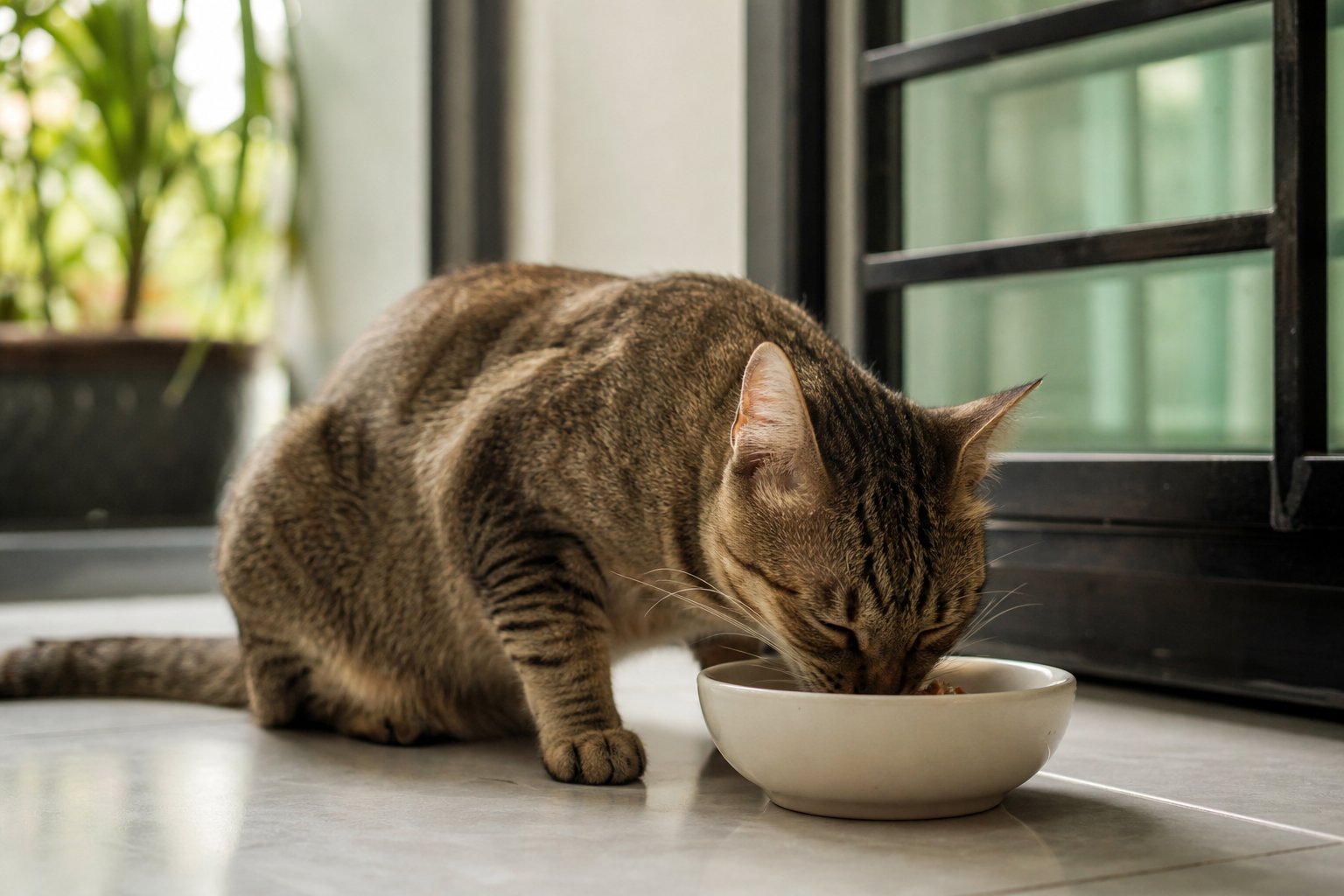
Quick answer: Look for protein at or above 35%, fat at or above 20%, the first three ingredients listed as named meats, and kibble under about 1cm across. Then match the bag to your kitten's stomach, appetite and your household budget across brands such as Orijen, Royal Canin, Hill's Science Diet, Wellness Core and Instinct. Prices vary by pack size and retailer, so confirm current pricing with your vet or pet shop.
Why a kitten needs its own food
A cat in its first year is building muscle, bone, brain tissue and an immune system at a pace it will never repeat. That is why a kitten formula is not simply adult food in a smaller bag. Protein is the raw material: aim for at least 35% on the label, where an adult maintenance diet typically sits closer to 30%. Fat at 20% or more supplies the dense calories a tiny stomach cannot hold in large volumes. DHA, usually sourced from fish ingredients, supports brain and vision development, while a calcium-to-phosphorus ratio of roughly 1.2:1 keeps the skeleton and teeth developing evenly.
Feeding adult food to a growing kitten over weeks and months can leave it short of energy and protein, with knock-on effects on growth and immunity. The reverse mistake matters too: an adult cat eating kitten food regularly takes in more calories than it needs and tends to become overweight. A stray piece or two is never a crisis. The daily staple is what counts.
How to read the ingredient list
You do not need to memorise brand names. Four checks work on almost any bag in the shop:
- The first three ingredients should be named meats — chicken, turkey, salmon, duck — rather than vague wording such as "meat by-products" or "animal derivatives".
- Cheap fillers should not dominate the top of the list. Corn, wheat and similar ingredients push up the protein percentage on paper without feeding the cat the way meat does.
- The pack must say it is complete and balanced, meaning it can be the only food you offer, not a treat, a mixer or a food topper.
- Kibble should measure under about 1cm across, so a small mouth can grip and chew it instead of swallowing pieces whole.
Use this checklist every time you pick up a new bag:
| Check | Minimum pass | Ideal target |
|---|---|---|
| Protein | 35% or more | 38 to 40% |
| Fat | 20% or more | 20 to 25% |
| First ingredient | A meat | A named fresh meat |
| Kibble size | Under 1cm | Small or soakable pieces |
| Label claim | Complete and balanced | Complete plus added DHA |
If a bag fails two or more of these lines, put it back on the shelf and keep looking. It takes about ninety seconds to check, and it saves you from guessing.
Five kitten foods worth shortlisting
These five international brands turn up in most comparisons. None of them wins every category, so treat the table as a shortlist rather than a ranking, and check the guaranteed analysis printed on the current pack before buying.
| Brand | Protein | Known for | Suits |
|---|---|---|---|
| Orijen | Around 40% | Grain-free recipe, rich in fish-derived DHA | Owners prioritising maximum nutrition |
| Royal Canin | Around 36% | Very small kibble, high digestibility | Kittens with sensitive stomachs |
| Hill's Science Diet | Around 34% | Antioxidant support for immunity | Weakened or recently weaned kittens |
| Wellness Core | Around 38% | Grain-free, high meat content | Kittens that do poorly on grain |
| Instinct | Around 37% | Raw-coated pieces, strong palatability | Fussy or hesitant eaters |
A few notes on how to read that table. Orijen sits at the top of the protein range, which suits fast-growing kittens but is not automatically necessary for every cat. Royal Canin's tiny pieces and easy digestibility make it a common suggestion for kittens with delicate digestion. Hill's leans on antioxidants, which is handy for a frail or newly weaned kitten that needs extra support. Wellness Core suits grain-sensitive kittens or owners who simply prefer a grain-free, meat-forward formula. Instinct's coating is designed to be tempting, which earns it a place on this list for households where mealtime has become a standoff.
Budget is a legitimate deciding factor. Premium bags cost more per kilogram, but a kitten eats a small daily amount, so the real monthly figure depends on pack size, your cat's weight and how much you feed. Ask your vet or a pet retailer for current local pricing before you commit, and remember that the cheapest bag is poor value if half of it ends up in the bin because your kitten refuses it.
How much and how often to feed
Kittens have small stomachs but high energy needs, so the working rule is little and often. Follow the age bands below and adjust using the feeding guide printed on the pack, which is calibrated to your kitten's weight.
| Age | Meals per day | What to watch |
|---|---|---|
| 2 to 3 months | 4 | Small portions, soak pieces in warm water if needed |
| 3 to 6 months | 3 | Measure against the pack's weight chart |
| 6 to 12 months | 2 to 3 | Moderate the calories as growth slows |
Practical details that make a real difference:
- Soak with warm water, never boiling. Boiling water destroys nutrients and risks scalding a kitten that dives in eagerly.
- If you free-feed, measure the total daily amount. An open bag left out all day is the fastest route to a chubby kitten.
- Keep feeding times consistent. Kittens settle into routines quickly, and a predictable schedule makes appetite changes obvious.
- Remove wet or soaked food after about an hour. Leftovers in a warm kitchen spoil quickly and attract insects.
- Separate meals into a few smaller servings rather than one large one, which reduces the chance of a kitten eating too fast and bringing food straight back up.
Switching foods over seven days
A kitten's digestion is more delicate than an adult cat's, so abrupt changes often end in soft stools or vomiting. Use a seven-day transition and move at your kitten's pace:
| Days | New food to old food |
|---|---|
| Days 1 and 2 | 1 part new to 3 parts old |
| Days 3 and 4 | Equal parts |
| Days 5 and 6 | 3 parts new to 1 part old |
| Day 7 | Fully new food |
Check the litter tray daily during the switch. If stools soften, drop back to the previous ratio and hold there for another two days before moving forward again. Slow is faster than cleaning up diarrhoea for a week.
When moving from milk or wet food to dry kibble, soak the new pieces in warm water first so the texture is familiar. That softened food works as a bridge and gives a reluctant weaning kitten time to work out that the bowl now contains dinner.
Bowls, water and the feeding station
The hardware is cheap and simple, but getting it right reduces stress and mess for months to come.
- Choose a shallow, wide bowl. Whisker fatigue is real: deep, narrow bowls press against a kitten's whiskers and put some cats off eating entirely. Ceramic or stainless steel wipes clean easily; discard any plastic bowl with scratches, which harbour bacteria.
- Keep food and water well away from the litter tray. Cats will not happily eat next to a toilet, and the proximity can put them off both eating and drinking.
- Wash bowls and refresh water daily. A fountain can encourage drinking, which supports urinary health, but it still needs regular cleaning.
- Place the station in a fixed, quiet corner. Kittens are watchful in new surroundings, and a busy hallway with constant foot traffic is a poor dining room.
- Rinse the bowl after each meal. Leftover wet food residue hardens and turns into a bacterial layer by the next serving.
Two local situations are worth planning for. In a Kuala Lumpur apartment, floor space is tight, so resist the temptation to tuck the feeding bowls beside the litter box for convenience; move the station to a quiet corner of the living room or a spare bathroom instead, well out of the main walkway. During the Penang rainy season, humidity climbs and dry kibble absorbs moisture faster than you expect. Store the bag sealed inside an airtight container, keep it off the floor, and check for stale smell or clumping before each refill — damp food is a common trigger for a kitten turning up its nose.
Five common mistakes new owners make
- Serving treats or snack cans as the main meal. Products without a complete and balanced claim will leave a kitten deficient over time. Read the label and reserve treats for training, in small amounts.
- Offering cow's milk. Most cats cannot digest lactose properly, and milk commonly causes diarrhoea. Before weaning, use a pet-specific milk replacer instead.
- Grabbing the adult bag by mistake. Check the front of the pack for the words kitten or life stage every single time, especially in a household with more than one cat.
- Filling the bowl and walking away. Kittens often eat too quickly and regurgitate. Smaller, more frequent meals solve most of this, and slow-feeder bowls help the speed eaters.
- Leaving wet food out all day. It spoils in warm conditions within hours. Serve the portion, wait about an hour, then clear the bowl and rinse it. Anything refrigerated overnight must return to room temperature before serving.
Also resist the idea that the priciest bag is automatically the best one. The right food is the one that matches your kitten's age, is confirmed complete on the label, is eaten willingly, and produces firm stools and steady weight gain. That combination beats a premium price tag every time.
When to see a vet
Stop experimenting with food and contact a registered veterinarian promptly if any of the following appear:
- Refusing food for more than 24 hours, or appetite clearly declining over consecutive days
- Repeated vomiting or watery diarrhoea — kittens become dehydrated far faster than adult cats
- Flatness and low energy, weak response when you call, or ears and paw pads that feel noticeably cool
- Persistent soft stools after a transition, or weight that fails to rise and instead drops
- Difficulty chewing or dropping pieces from the mouth, which can signal dental pain or an oral injury
- Sudden avoidance of a food previously eaten happily, alongside any change in drinking or litter tray habits
Start today: turn your current bag around and run it through the four ingredient checks; write your kitten's meal times and portions on a note by the fridge; and plan your next food change using the seven-day table above.
Vet disclaimer
This article is general information only and is not a substitute for professional advice. For diagnosis, treatment or diet changes for your individual cat, consult a registered veterinarian.
Related reading
- Kitten Care Guide Malaysia: 0–12 Month Feeding, Vaccination, Deworming & Growth Timeline
- Kitten Care Hub Malaysia: First-Year Feeding, Vaccines, Deworming and Growth Timetable
- Kitten Feeding Schedule Malaysia: Meals per Day and Grams by Weight
- Kitten Feeding Schedule in Malaysia: How Many Meals and How Much Per Day
- Kitten's First Year Checklist for Malaysian Homes: Supplies, Vaccines and a Month-by-Month Plan
- Kitten Month-by-Month Guide for Malaysian Owners: Growth Milestones, Weight Checks and Care Checklist
- Kitten Month-by-Month in Malaysia: 0–12 Months, Weight Standards and Milestones
- Kitten Home-Proofing in Malaysia: A Room-by-Room Safety Checklist
- Kitten Socialisation in Malaysia: The 3-Week to 3-Month Golden Period, Week by Week