
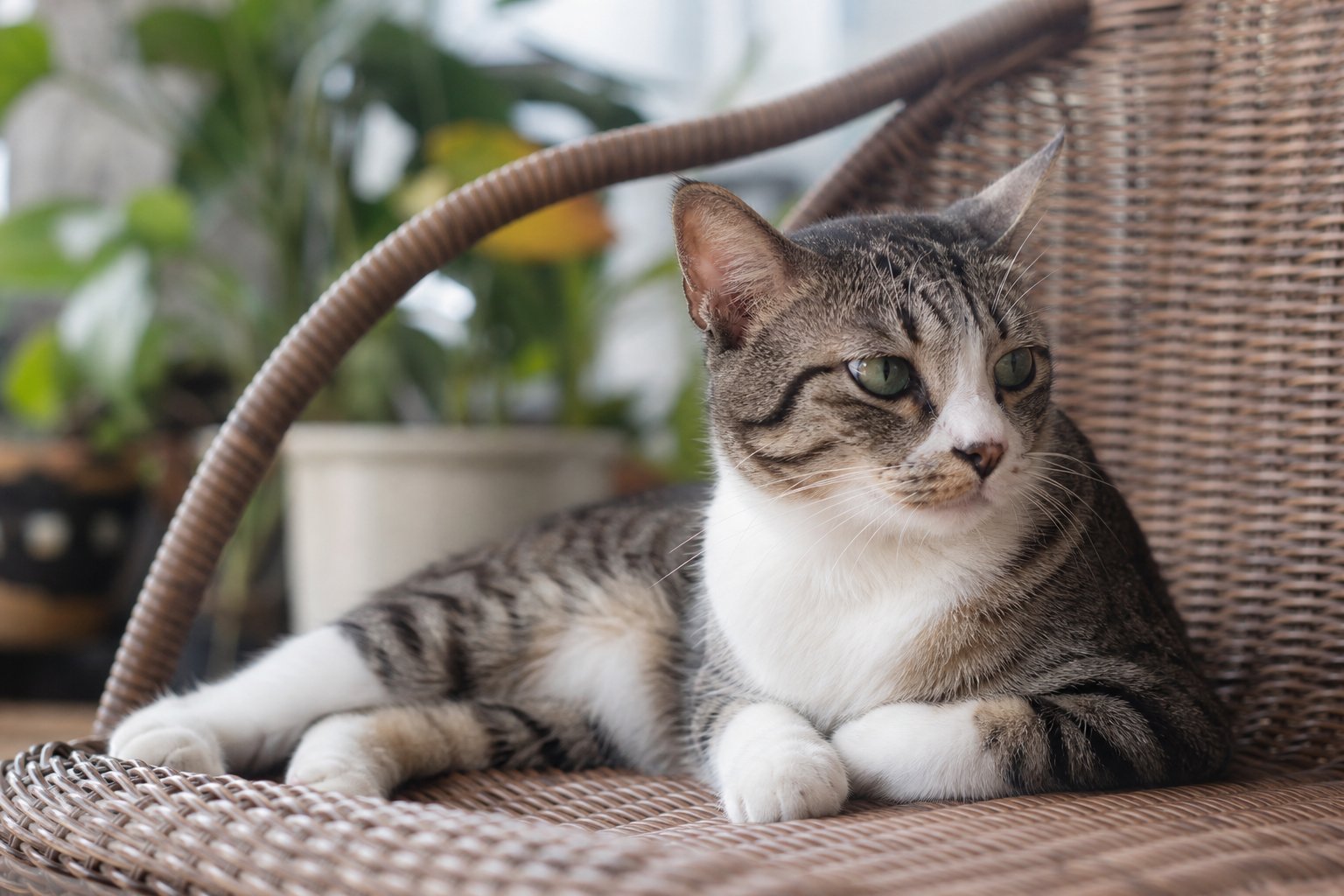
A cat's first year is the fastest growing year it will ever have. A kitten is born at around 100–120g, opens its eyes at two weeks, starts sampling solid food at about three weeks, is fully weaned by two months, takes its first vaccination at two to three months, is usually neutered between six months and one year, and moves onto adult food at ten to eleven months. Follow the milestones below month by month and you will not miss a critical window.
Why care should follow the calendar
A cat's first twelve months roughly equal 16 to 18 human years. One month old is about a human one-year-old, three months is about five, six months is about ten, and one year is about seventeen. So every single month of kittenhood is worth several years of a child's development.
That is why "roughly the right age" is not good enough. If you miss the socialisation window or drag out weaning, the gap is very hard to make up later. A kitten handled gently and exposed to everyday life between five and seven weeks grows into a confident adult; one raised in isolation can stay fearful for life. Work from the calendar, and write things down.
Weeks 0 to 8: the milk and weaning stage
Ideally, kittens spend this whole period with their mother. Use this weekly chart to check that yours is on track.
| Week or age | What is happening | Approximate weight |
|---|---|---|
| Birth | Eyes and ears closed, finds the teat by smell and warmth | 100–120g |
| Week 1 | Navel area dries, gains 10–20g every day | 200–250g |
| Week 2 | Eyes open, hearing starts working | 250–300g |
| Week 3 | Milk teeth appear, claws become retractable, first interest in soft food, socialisation begins | around 500g |
| Week 4 (one month) | Milk teeth mostly in, littermates start wrestling, can hold its own body temperature | 500–700g |
| Two months | Fully weaned, eating kitten food, very curious about everything | 700–1000g |
If the mother is not around: use a kitten-specific milk replacer warmed to about 38°C, and feed little and often. After each feed, gently wipe the genital and anal area with a soft cloth dampened with warm water. That is the job the mother cat normally does with her tongue, and without it the kitten will not urinate or pass stool.
Never feed human drinking milk. Many cats stop making lactase once they are weaned, so cow's milk leads to diarrhoea, and a tiny dehydrated kitten can go downhill within a day.
Earliest separation is eight weeks. Before that, the kitten still needs its mother's milk for immunity and its littermates for social skills. If someone offers you a kitten at four or five weeks, ask how it will be fed — the answer tells you a lot.
Months 3 to 6: vaccines, teething and socialisation
| Month | What to do | Weight reference |
|---|---|---|
| 3 months | Book the first vaccination plus a full health check; settle meal times and litter routine | over 1kg |
| 4 months | Adult teeth start pushing through; a female kitten may show her first heat | over 2kg |
| 5–6 months | Fully independent of the mother; milk teeth replaced by adult teeth | steady gain |
Two easily missed jobs sit in this window.
The vaccination window. Antibodies inherited from the mother fade at about two and a half to three months, which is exactly when the first vaccine should go in — ideally not later than three months. If your kitten came from a rescue or was found on the street, ask straight away what has been given and when, so the schedule can be completed rather than restarted.
Socialisation wrap-up. The sharpest window is five to seven weeks, but it still matters at three months and is basically closed by four months. Keep introducing the kitten to different people, gentle handling, the sound of the vacuum, being picked up, being brushed, sitting in a carrier and riding in a car. Make every new experience end with a treat.
Also begin simple routines here: meal times at set hours, a litter tray kept scrupulously clean, and short play sessions twice a day. Kittens learn manners fast at this age — scratching furniture or biting hands is much harder to unlearn at ten months than at four.
Months 7 to 12: heading for adulthood
- Up to seven months the body is still building fast, so keep it on nutrient-dense kitten food rather than switching early.
- Six months to one year is the usual neutering window for both males and females. Males sexually mature at six to eight months, and from about ten months an unneutered male commonly starts spraying to mark territory. Females can come into heat as early as four months, so if you want to avoid yowling nights and accidental litters, arrange it before the first heat.
- Ten to eleven months the frame is essentially set. You can now move onto adult food, usually two meals a day. Change gradually over about a week by mixing increasing proportions of the new food, to avoid stomach upset.
- One year old your cat is officially an adult, about seventeen in human terms — and still has a teenager's energy.
Weight standards and how to track them
| Stage | Age | Weight range |
|---|---|---|
| Milk-fed kitten | 0–2 months | 100–700g |
| Growing kitten | 3 months–1.5 years | 1–5.5kg |
| Adult cat | 1.5–7 years | 3.5–5.5kg |
A healthy kitten should put on 10–20g every day. The simplest home monitoring method: a kitchen scale accurate to one gram, weighed at the same time each day, with the number written down. Missed two days of gains, or any drop, is your signal to call the vet.
While you are at it, check body condition. You should feel the ribs easily under a thin layer of fat, see a slight waist when looking down from above, and see a small tummy tuck from the side. Ribs showing plainly means too thin; no waist at all means too heavy.
Weight also decides portions. If your kitten finishes every meal and licks the bowl, add roughly a tenth to the next serving and watch for a week. If it leaves food behind, cut back. Adjust in small steps rather than guessing.
Everyday care in a Malaysian home
In a Kuala Lumpur apartment, space is tight, so set up the nest in a quiet corner well away from the front door and any window ledge, with the litter tray on the opposite side. Fit window grilles or keep upper-floor windows closed — a startled kitten can bolt through a gap. Air-conditioning should never blow directly onto a kitten under one month old, because it cannot yet hold its own body temperature; from one month it adjusts gradually to room temperature. Offer several water bowls, keep one out of direct sun, and include wet food so the kitten takes in moisture with its meals.
During the Penang rainy season, humidity and damp are the bigger risks. Keep dry food in a sealed container so it does not go stale or mouldy, scoop the litter tray more often so it stays dry, and towel-dry the kitten after any outdoor exposure. Heavy rain and thunderstorms frighten young cats, so keep the kitten indoors, cover exposed electrical cords, and check hiding spots — behind the fridge, under the bed, inside wardrobes — before you close any door.
Across all homes, the first-year basics stay the same: a scratching post placed where the kitten already scratches, daily play with a wand toy, gentle nail trims, a weekly brush, carrier training with the door left open as a nap spot, and an identity tag or microchip. Requirements for registration and identification differ, so check the current position with the Department of Veterinary Services Malaysia, and ask your own vet what applies to you.
If you are getting a kitten rather than buying one, adoption groups such as the SPCA generally release kittens at around two to three months, by which point they are weaned and using a litter tray on their own.
When to see a vet
Kittens are small, and a day lost matters far more than it would in an adult cat. Do not wait for the next monthly check if you see any of these:
- Any age: no weight gain for two consecutive days, refusing food for more than 24 hours, repeated vomiting, or persistent diarrhoea.
- Under two months: ears and paws feel cold, refusing to nurse, crying constantly, or lying flat and unresponsive.
- Three to six months: refusing to eat during teething, or bleeding from the mouth that does not stop.
- Six to twelve months: prolonged yowling with no appetite during a heat, or swelling, discharge or an opening at a neutering wound.
- Any time: difficulty breathing, pale or white gums, blood in urine or stool, worms visible in the stool, eye discharge that sticks the eyelids shut, or sneezing with thick nasal discharge.
Arrange the visit sooner rather than later — kittens dehydrate quickly, and small bodies have very little reserve.
Your month-by-month checklist
- Birth–2 weeks: warm, quiet nest; weighed daily; gaining 10–20g a day.
- 3–4 weeks: soft food introduced; socialisation begins; claws and teeth appearing.
- 6–8 weeks: fully weaned; ready to leave the mother — not earlier.
- 3 months: first vaccination and health check; over 1kg.
- 4 months: adult teeth coming in; socialisation nearly complete.
- 6–8 months: neutering discussed with your vet; play and training well established.
- 10–11 months: transition to adult food; two meals a day.
- 1 year: adult weight check and annual vaccination.
Five questions to ask on collection day: 1) exact date of birth, 2) what food and how many meals a day, 3) any vaccinations and is there a card, 4) has it been dewormed, 5) how long it stayed with its mother and littermates. Match the answers against this chart and you will know exactly which month your kitten is in and what comes next.
Frequently asked questions
Q: When can a kitten leave its mother? A: Not before eight weeks old. Weaning starts around three weeks and finishes at six to eight weeks. Earlier separation harms socialisation and immunity.
Q: When is the first vaccination? A: At two to three months, once maternal antibodies fade. Boosters follow your vet's schedule, then annual boosters as an adult.
Q: What weight is normal? A: 100–120g at birth, gaining 10–20g daily; 500–700g at one month, 700–1000g at two months, over 1kg at three months.
Q: When is the best time to neuter? A: Between six months and one year, based on weight and health. Females can first heat at four months, so schedule before then.
Q: Is my kitten eating enough? A: Weight gain tells you — 10–20g a day is normal. Add about a tenth to the portion if it licks the bowl clean, then recheck.
Q: What milk is safe? A: Kitten milk replacer at about 38°C. Never cow's milk; most cats lack lactase after weaning and get diarrhoea.
This article is general information only and does not replace veterinary diagnosis or treatment. Vaccination, feeding and neutering schedules should be agreed with your own vet, and any sick or injured kitten should be examined as soon as possible.
Related reading
- Kitten Care Guide Malaysia: 0–12 Month Feeding, Vaccination, Deworming & Growth Timeline
- Kitten Month-by-Month Guide for Malaysian Owners: Growth Milestones, Weight Checks and Care Checklist
- Kitten Weight Chart Malaysia: Week-by-Week Standards and How to Weigh at Home
- Kitten Care Hub Malaysia: First-Year Feeding, Vaccines, Deworming and Growth Timetable
- Kitten's First Year Checklist for Malaysian Homes: Supplies, Vaccines and a Month-by-Month Plan
- Kitten Socialisation in Malaysia: The 3-Week to 3-Month Golden Period, Week by Week
- Kitten Weight Chart Malaysia: Weekly Targets from Birth to 1 Year
- Best Kitten Food in Malaysia: A Practical Buying Guide (2026)