
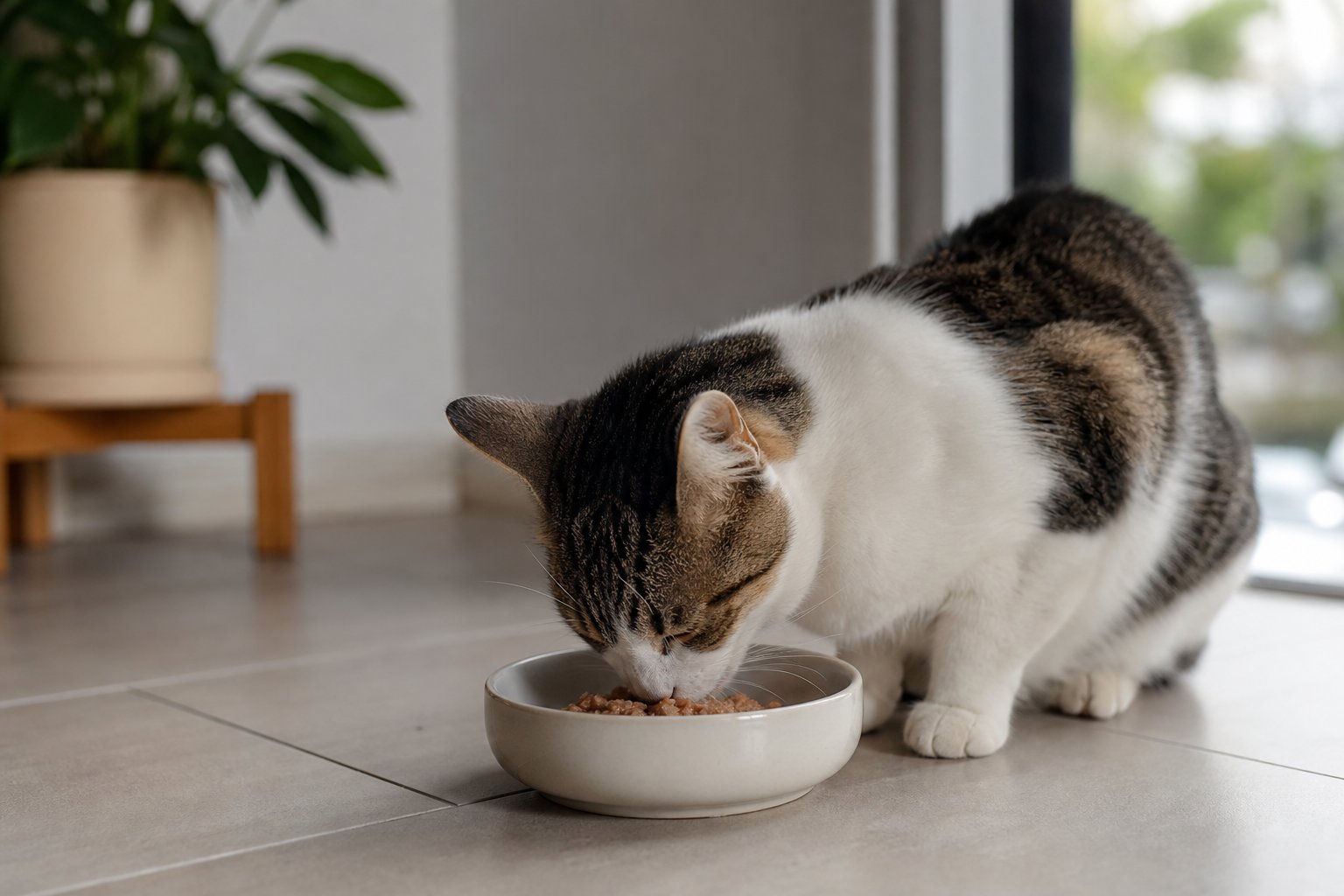
Start with the right expectation
Hairball control food is a support tool, not a magic fix. It works best when paired with regular brushing, good hydration and a calm grooming routine. If your cat brings up hairballs now and then, a hairball formula can reduce frequency. If your cat is vomiting often, losing weight or straining, food is not the answer — a vet visit is.
This guide covers what to look for on a label, how to compare products, how to switch foods safely, and when a hairball is actually a warning sign. It is written for Malaysian cat owners in apartments, terrace houses and landed homes, where heat, shedding and indoor living all affect grooming.
Why hairballs happen
Cats are fastidious groomers. Their tongues have tiny hook-like papillae that catch loose fur. Most swallowed hair passes through the digestive tract and out in stool. When too much hair accumulates in the stomach, it can clump into a trichobezoar — a hairball — and be vomited up, usually as a tubular mass.
Hairballs are more common in:
- Long-haired breeds and mixes, such as Persians, Maine Coons and Ragdolls
- Cats that shed heavily, especially during seasonal coat changes
- Overgroomers, including cats with skin allergies or stress
- Cats fed low-fibre, low-moisture diets
- Older cats with slower gut motility
- Cats living in hot, humid conditions where coat turnover can be constant
In Malaysia, indoor cats may shed year-round because temperatures stay warm. Air-conditioned rooms can also dry out the coat, leading to more loose fur. That makes grooming and diet especially relevant.
What “hairball control” actually means on a label
There is no single legal definition of “hairball control” across all markets. In practice, these foods usually use one or more of these strategies:
- Higher fibre — often from cellulose, beet pulp, psyllium or rice bran — to help move hair through the gut.
- Moderate fat — to support coat health without excessive calories.
- Added moisture or wet formats — to support digestion and hydration.
- Coat-supporting nutrients — such as omega-3 and omega-6 fatty acids, zinc and vitamin A.
Some products combine fibre with a “hairball” claim but are otherwise maintenance diets. Others are higher-fibre formulas intended for regular use. Read the guaranteed analysis and ingredient list rather than relying on the front of the pack.
Key label checks before you buy
1. Named animal protein first
Look for a named source such as chicken, fish, turkey or lamb as the first ingredient. “Meat and animal derivatives” is legal but less informative. Cats are obligate carnivores, so protein quality matters more than a hairball claim.
2. Fibre level and type
Crude fibre is listed on the guaranteed analysis. Many hairball formulas sit in the moderate range, roughly 5–10% on a dry matter basis. Very high fibre can cause loose stools, gas or reduced absorption of some minerals. If your cat has a sensitive gut, start lower and transition slowly.
Fibre sources matter too:
- Psyllium husk — soluble fibre that gels with water; useful but needs good hydration
- Beet pulp — moderately fermentable fibre; common in cat foods
- Cellulose — insoluble fibre; can help bulk and movement
- Rice bran — affordable fibre source; check the overall carbohydrate load
3. Moisture
Dry food typically contains around 8–12% moisture. Wet food is usually 70–85% moisture. If your cat rarely drinks, adding wet food is one of the simplest hairball measures. It also supports urinary health, which matters for many indoor cats.
4. Fat and calories
Hairball diets are not automatically low-calorie. Some are quite energy-dense. If your cat is overweight, compare calories per 100 g and ask your vet for a target weight. Obesity can slow activity and grooming efficiency.
5. Life stage
Choose adult formulas for adult cats and senior formulas where appropriate. Kittens should stay on growth diets unless a vet advises otherwise. Pregnant or nursing cats have different needs and should not be switched to a hairball diet without veterinary guidance.
6. Digestive support
Prebiotics, probiotics and highly digestible proteins can help cats with sensitive stomachs. If your cat has a history of vomiting or loose stool, a gentle transition matters as much as the formula itself.
Comparison table: what to compare
| Feature | Why it matters | What to check |
|---|---|---|
| First ingredient | Indicates main protein source | Named meat or fish, not vague derivatives |
| Crude fibre | Supports hair passage | Moderate range; avoid extreme levels unless advised |
| Moisture | Hydration and digestion | Wet food or added water helps |
| Fat content | Coat health and calories | Match to body condition and activity |
| Calories per 100 g | Weight management | Compare across products |
| Life stage | Nutritional adequacy | Adult, senior or kitten-specific |
| Fibre source | Gut tolerance | Psyllium, beet pulp, cellulose, rice bran |
| Coat nutrients | Skin and coat health | Omega-3, omega-6, zinc, vitamin A |
| Palatability | Long-term compliance | Small bag first; cats can be fussy |
| Local availability | Consistent feeding | Buy from a reliable Malaysian retailer |
Prices vary widely in Malaysia depending on brand, pack size and where you shop. Ask your local retailer or vet clinic for current pricing rather than relying on overseas figures.
Dry vs wet vs mixed feeding
There is no rule that hairball control must be dry. In fact, many cats do better on a mixed routine.
Dry hairball formula
- Convenient and easy to portion
- Often higher in fibre
- Lower moisture, so hydration must be managed
Wet hairball or high-moisture food
- Supports water intake
- Often more palatable
- More expensive per calorie and needs refrigeration after opening
Mixed feeding
- Combine a measured amount of dry hairball food with wet food
- Helps hydration and fibre at the same time
- Requires careful calorie counting to avoid weight gain
A practical Malaysian routine: feed wet food in the cooler morning and evening, and leave a measured portion of dry food for grazing only if your cat self-regulates. In hot, humid weather, discard uneaten wet food after about 30 minutes.
How to switch foods safely
Sudden diet changes can cause vomiting or diarrhoea. Transition over seven to ten days:
| Day | Old food | New food |
|---|---|---|
| 1–2 | 75% | 25% |
| 3–4 | 50% | 50% |
| 5–6 | 25% | 75% |
| 7–10 | 0% | 100% |
If your cat has a sensitive stomach, extend each stage. Keep a simple log of stool quality, appetite and vomiting. Stop and consult a vet if diarrhoea lasts more than a day or two, or if your cat stops eating.
Grooming and environment: the other half of the plan
Food alone rarely solves a hairball problem. Grooming removes loose fur before it is swallowed.
- Brush regularly. Short-haired cats: two to three times weekly. Long-haired cats: daily, especially in warm months.
- Use the right tool. A slicker brush or rubber grooming glove works for most coats; a metal comb helps with undercoat.
- Bathe only if needed. Cats usually self-clean; frequent bathing can dry the coat.
- Manage shedding seasons. Increase brushing when you notice more loose fur on furniture.
- Provide water sources. Multiple bowls, a fountain or added water in wet food all help.
- Reduce stress. Overgrooming is often stress-related. Enrichment, scratching posts and routine can help.
In a Kuala Lumpur apartment, space is limited, so a covered litter box and a quiet grooming corner can make routine care easier. In a Johor terrace house, cats may have more room but also more exposure to outdoor heat and insects; keep grooming tools clean and check the coat for ticks and fleas.
Hairball remedies and supplements
Beyond food, some owners use hairball gels, pastes or malt-based products. These can lubricate the gut and help hair pass, but they are not a substitute for fibre and grooming. Some are high in sugar or calories. Ask your vet before using them long term, especially if your cat has diabetes or pancreatitis.
Psyllium husk can be added to wet food in small amounts, but it must be paired with water. Too much can cause constipation or bloating. Never add human supplements without veterinary advice.
When food is not enough
Some cats continue to have hairballs despite a good diet. Consider:
- Underlying allergies causing overgrooming
- Parasites such as fleas
- Gastrointestinal disease
- Stress or behavioural issues
- Anatomical problems, especially in flat-faced breeds
If hairballs are frequent, your vet may recommend further investigation rather than another food switch.
When to see a vet
See a vet promptly if your cat:
- Vomits hairballs more than once every week or two
- Retches or gags without producing anything
- Has a hard, distended or painful abdomen
- Stops eating or drinking
- Loses weight
- Has diarrhoea or constipation that persists
- Seems lethargic or hides
- Has blood in vomit or stool
A hairball can occasionally cause an intestinal obstruction, which is serious. Repeated unproductive retching is a red flag, not a normal hairball.
A practical shopping checklist for Malaysian cat owners
Before buying hairball control food, check:
- Named animal protein is first on the ingredient list
- Fibre level is moderate and the source is listed
- Moisture content suits your feeding style
- Calories match your cat’s body condition
- Life stage is appropriate
- Pack size is manageable for freshness
- Retailer stores it correctly and stock is consistent
- You have a transition plan
- You have a grooming routine
- You know your vet’s contact details
Bottom line
The best hairball control food for your cat is one that fits its life stage, protein needs and digestion, with moderate fibre and good hydration. Combine it with regular brushing and watch for warning signs. If hairballs are frequent or your cat seems unwell, get veterinary advice before spending more on food.
This article is general information only and is not a substitute for veterinary advice. Always consult a licensed veterinarian about your cat’s health and diet.
Related reading
- Cat Food Guide Malaysia 2026: How to Choose Dry, Wet & Prescription Food
- Best Cat Milk for Cats in Malaysia: What to Buy and What to Avoid
- Best Grain-Free Cat Food for Cats in Malaysia: What to Look For
- Best High-Protein Cat Food in Malaysia: How to Choose (2025 Guide)
- How to Choose Cat Milk for Cats: A Practical Guide for Malaysian Owners
- Wet vs Dry Cat Food in Malaysia: Water, Cost and How to Choose
- Best Dry Cat Food for Cats in Malaysia: A Practical Buying Guide
- Best Food for Picky Cats in Malaysia: A Practical Feeding Guide
- Best Food Transition for Cats in Malaysia: A Step-by-Step Guide

