The short answer
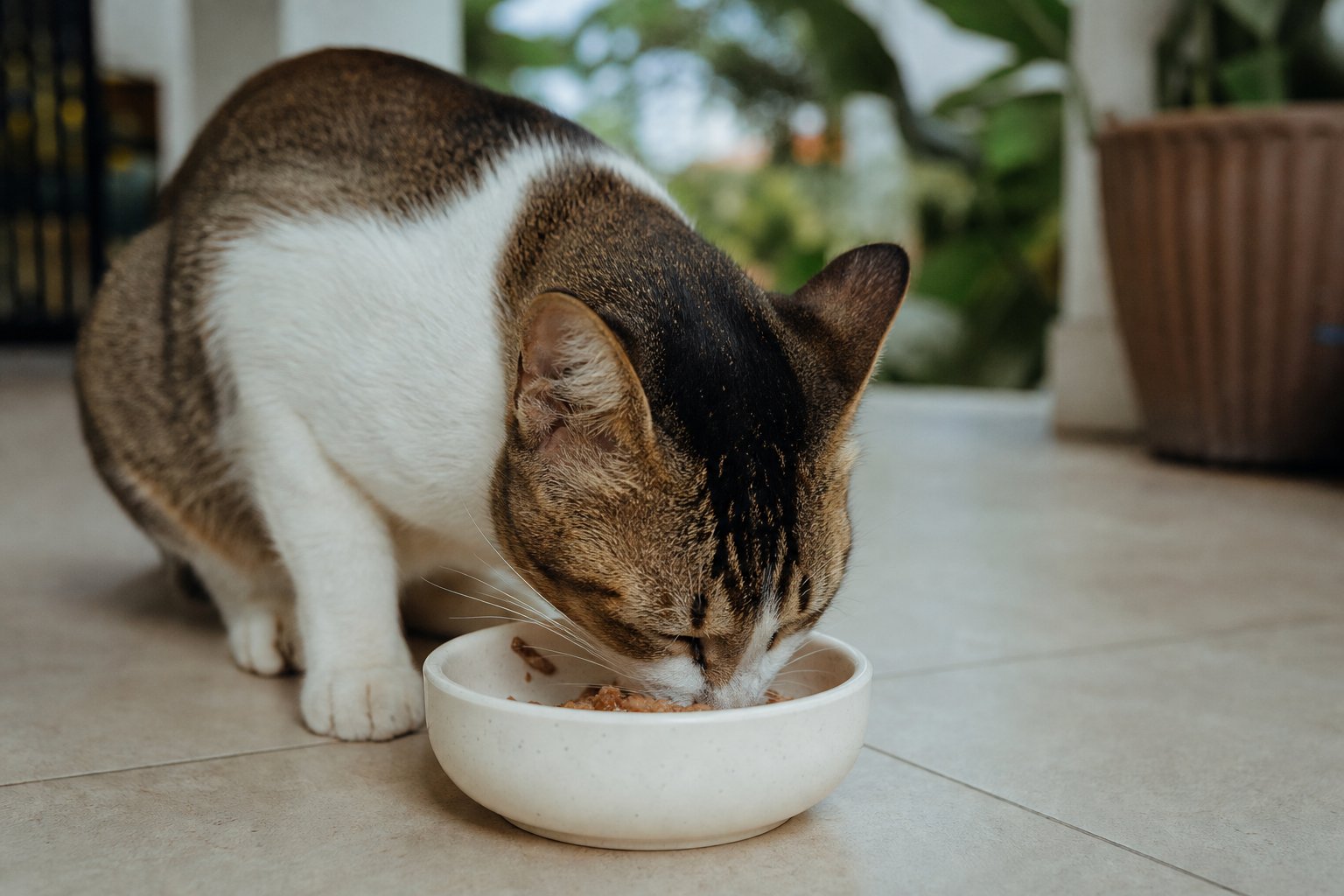
High-protein cat food works best when the protein comes from named animal sources and the overall diet fits your cat's age, weight and health. In Malaysia, where heat and humidity make hydration important, many owners do well combining a protein-rich wet food with a good dry food. The label matters more than the marketing.
This guide explains what high protein really means, how to compare wet and dry food fairly, what to look for on Malaysian shelves, and when to ask a vet first.
Why protein matters for cats
Cats are obligate carnivores. Their bodies are built to use animal protein for energy, muscle maintenance, skin and coat, and immune function. Unlike dogs, cats do not efficiently spare protein, so they need a steady supply in the diet.
Protein also supplies essential amino acids, including taurine, arginine and methionine. Taurine deficiency can cause heart and eye problems, which is why complete cat foods are formulated to include it. A high-protein food that is not complete and balanced is not automatically better.
Protein quality matters as much as quantity. Animal proteins such as chicken, fish, turkey, beef and egg provide a fuller amino acid profile than plant proteins alone. When a label lists "meat and animal derivatives" without naming the animal, you cannot judge quality.
How much protein is "high protein"?
There is no single legal definition of high protein. In practice, many vets and nutritionists treat the following as useful reference points on a dry-matter basis:
| Life stage or situation | Typical protein range (dry matter) | Notes |
|---|---|---|
| Adult maintenance minimum | About 26% | Meets basic needs, not necessarily optimal |
| Healthy adult, higher protein | About 35-45% | Common target for active adult cats |
| Kittens and growth | About 30-45% | Energy-dense, complete kitten diets |
| Senior cats | Varies | Depends on kidney and muscle condition |
| Kidney disease | Controlled, vet-guided | Often lower or restricted protein |
These are general reference ranges, not prescriptions. Your vet can tailor the target to your cat.
Reading a Malaysian cat food label properly
Labels can be confusing because wet and dry foods report protein differently. Wet food looks low in protein because it is mostly water. To compare fairly, convert to dry matter.
Dry matter protein formula:
- For dry food: dry matter is roughly 100 minus moisture (often 8-12%).
- For wet food: dry matter is 100 minus moisture (often 75-85%).
- Divide the protein percentage by the dry matter percentage, then multiply by 100.
Worked example:
- Wet food: 11% protein, 80% moisture. Dry matter = 20%. Dry-matter protein = 11 ÷ 20 × 100 = 55%.
- Dry food: 36% protein, 10% moisture. Dry matter = 90%. Dry-matter protein = 36 ÷ 90 × 100 = 40%.
On paper the wet food is higher in protein, even though the can looks lower. This is why comparing the number on the front of the pack is misleading.
Checklist for the label:
- A named animal protein appears first in the ingredient list.
- The food states it is complete and balanced for the life stage.
- Taurine is included or guaranteed.
- Analytical constituents show protein, fat, fibre, ash and moisture.
- Feeding guidelines are clear and realistic.
- The manufacturer provides a contact or nutritional statement.
Wet food vs dry food for high protein
Both can be high protein. The trade-offs matter in Malaysia's climate.
| Factor | Wet food | Dry food |
|---|---|---|
| Protein on dry matter | Often higher | Variable |
| Water content | High, supports hydration | Low, needs fresh water |
| Cost per meal | Usually higher | Usually lower |
| Storage in humidity | Must refrigerate after opening | Keep sealed and dry |
| Convenience | Less convenient | Easy to portion |
| Dental effect | Minimal | Some mechanical scraping |
| Palatability | Often high | Variable |
In a hot, humid country, wet food spoils quickly once opened. Refrigerate leftovers and discard food left out for long periods. Dry food should be stored in a sealed container away from heat and moisture, not in direct sunlight.
Many Malaysian owners feed a mix: a protein-rich wet food for hydration and palatability, plus a measured portion of dry food for convenience. This can work well if total calories are controlled.
Choosing a high-protein food in Malaysia
Malaysian pet shops and online sellers stock a wide range, from budget local brands to international names. Availability changes, so treat brand names as examples of label styles, not endorsements.
What to prioritise:
- Named protein first. Chicken, tuna, salmon, turkey, beef or egg should lead the ingredient list.
- Complete and balanced claim. Look for a statement of nutritional adequacy for the life stage.
- Suitable protein level. Aim for the dry-matter range that fits your cat.
- Taurine included. Essential for cats.
- Realistic price. High protein does not have to mean premium imported. Compare dry-matter protein per ringgit rather than per bag.
- Fresh stock. Check expiry dates, especially for wet food bought online.
Red flags:
- Vague terms such as "meat meal" with no animal named.
- Protein boosted mainly by peas, lentils or potato protein isolate.
- No feeding guidelines or nutritional adequacy statement.
- Claims like "veterinary approved" with no explanation.
- Sudden recipe changes without updated labels.
Prices vary widely in Malaysia and depend on pack size, import status and retailer. Ask your local retailer or vet for current pricing rather than relying on online figures.
Matching protein to your cat
Kittens. Growing cats need energy-dense, protein-rich food labelled for kittens or all life stages. Feed small meals often and follow the pack guide, adjusting for body condition.
Adult indoor cats. Indoor cats can gain weight easily. High protein can help maintain muscle, but calories still matter. Measure portions and weigh your cat occasionally.
Senior cats. Older cats often lose muscle. A moderately high-protein diet can help, but kidney function should be checked first. Ask your vet before increasing protein in a senior cat.
Cats with kidney or urinary disease. Protein should be controlled, not maximised. Prescription diets exist for these conditions and should be chosen with veterinary advice.
Overweight cats. A high-protein, calorie-controlled diet can support weight loss while preserving muscle. Do not free-feed dry food.
Practical Malaysian contexts
Kuala Lumpur apartment. In a high-rise flat, storage space is limited and rubbish chutes make disposal easy. Keep wet food in the fridge, seal dry food in a cupboard away from the afternoon sun, and feed measured portions to prevent weight gain in less active indoor cats.
Penang rainy season. Humid, rainy weather encourages mould in opened dry food. Buy smaller bags, reseal tightly, and check for clumping or a sour smell. Wash bowls daily to reduce bacterial growth.
Johor terrace house. Cats with outdoor access may hunt or scavenge. A high-protein diet still needs portion control, and outdoor cats should be checked for parasites and injuries. Keep food indoors to avoid attracting strays and pests.
Transitioning to a high-protein food
Switch gradually over seven to ten days to avoid stomach upset:
- Days 1-2: 25% new food, 75% old.
- Days 3-4: 50% new, 50% old.
- Days 5-6: 75% new, 25% old.
- Days 7-10: 100% new.
Watch for vomiting, diarrhoea, refusal to eat or lethargy. If these occur, slow down or stop and consult your vet. Never starve a cat to force a switch, as cats can develop serious liver problems from not eating.
When to see a vet
Speak to a veterinarian before changing to a high-protein diet if your cat:
- Has been diagnosed with kidney disease, urinary crystals or bladder stones.
- Is a senior cat with unexplained weight loss.
- Has vomiting, diarrhoea or poor appetite.
- Is pregnant, nursing or a growing kitten with health concerns.
- Has a heart condition or is on medication.
Seek urgent care if your cat stops eating for more than 24 hours, strains to urinate, or shows blood in the urine. These can be emergencies.
Building a simple feeding plan
- Weigh your cat and record body condition.
- Calculate daily calories using your vet's guidance or the food's feeding guide.
- Split into two or more meals.
- Offer wet food for hydration and dry food for convenience if mixing.
- Recheck weight monthly and adjust portions.
- Review the diet at least yearly, or sooner if health changes.
Common myths about high-protein cat food
Myth: More protein is always better. In healthy cats, higher protein can help, but excess is not automatically beneficial and may be unsuitable in some diseases.
Myth: High protein causes kidney disease. There is no simple evidence that normal high-protein diets cause kidney disease in healthy cats. However, cats with existing kidney disease may need controlled protein.
Myth: Grain-free means high protein. Grain-free foods can be low or high in protein. Read the analytical constituents.
Myth: Wet food is always best. Wet food helps hydration but costs more and spoils faster. Dry food can be complete and balanced.
Final checklist before you buy
- Named animal protein first.
- Dry-matter protein suits your cat's life stage.
- Complete and balanced statement present.
- Taurine included.
- Expiry date and storage suitable for Malaysia's climate.
- Portion size and cost per meal considered.
- Vet consulted if any health condition exists.
Choosing the best high-protein cat food in Malaysia is less about the flashiest label and more about matching a well-formulated diet to your cat's needs, budget and environment.
This article is general information only and is not a substitute for veterinary advice. Always consult a licensed veterinarian about your cat's diet and health.
Related reading
- Cat Food Guide Malaysia 2026: How to Choose Dry, Wet & Prescription Food
- Best Cat Milk for Cats in Malaysia: What to Buy and What to Avoid
- Best Food for Picky Cats in Malaysia: A Practical Feeding Guide
- Best Food Transition for Cats in Malaysia: A Step-by-Step Guide
- Best Grain-Free Cat Food for Cats in Malaysia: What to Look For
- Best Hairball Control Food for Cats in Malaysia: A Practical Buying Guide
- Best Wet Cat Food in Malaysia: A Practical Buying Guide
- High-Protein Cat Food Feeding Guide for Cats: How Much, Which Type, and What to Watch
- High-Protein Cat Food in Malaysia: A Practical Guide for Cat Owners
- Homemade Cat Food Feeding Guide for Cats: A Practical Malaysian Owner's Handbook
- Homemade Cat Food for Cats in Malaysia: A Practical, Vet-Informed Guide