
The short answer
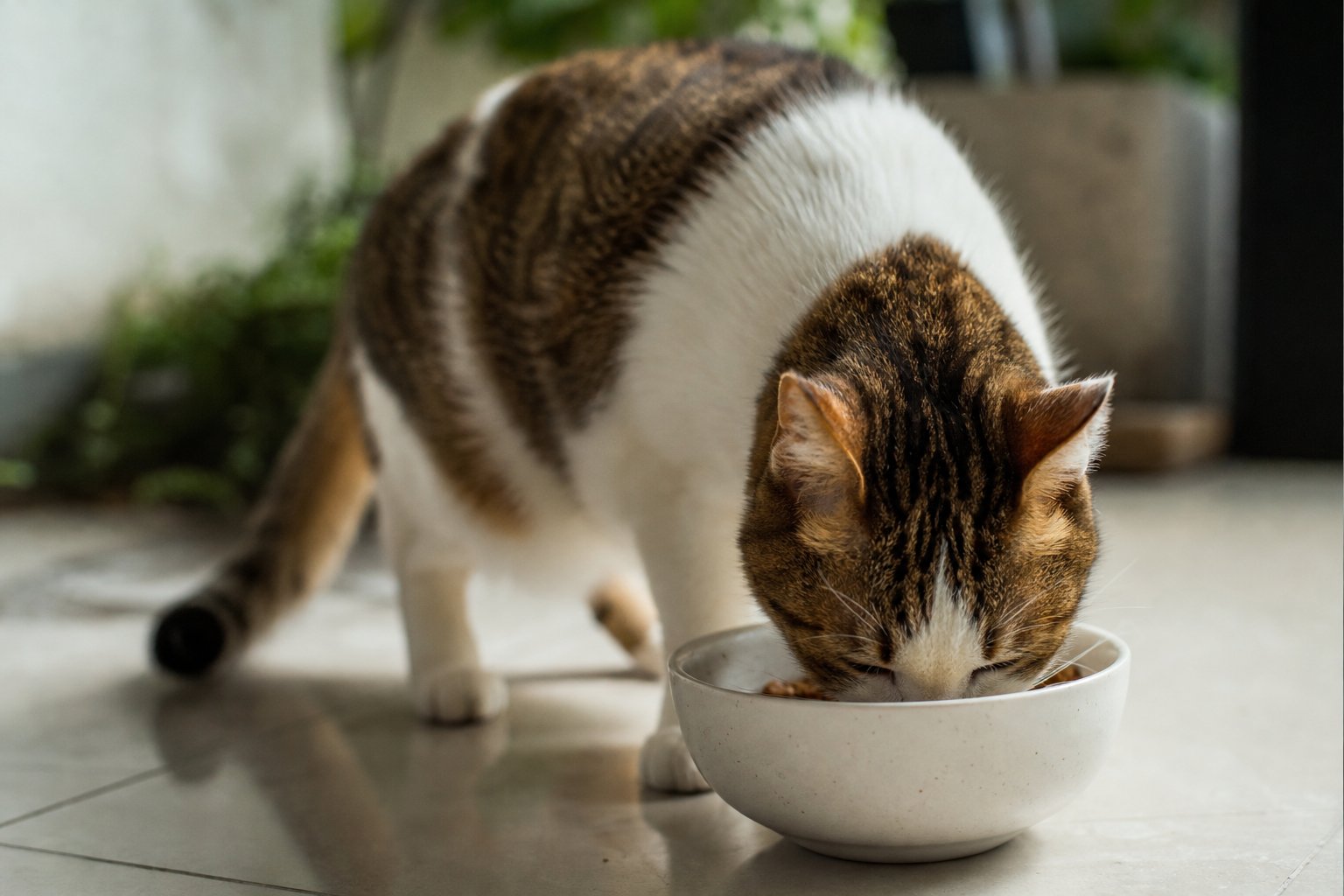
There is no single best senior cat food, because "senior" describes an age band, not a health status. The best choice for your cat is one that matches its body condition, appetite, dental health, kidney function and any diagnosed disease. Start with a complete food that names an animal protein first, keeps phosphorus moderate, controls calories, and — in Malaysia's climate — delivers plenty of moisture. Then confirm the plan with your vet.
This guide walks through what actually changes as cats age, how to read a Malaysian pet food label, how wet and dry options compare, and how to switch foods without upsetting a sensitive older stomach.
What changes as a cat gets older
Cats are usually considered mature from around seven years and senior from about eleven, but the numbers matter less than the body in front of you. Two cats of the same age can be in very different shape.
The changes that most affect food choice are:
- Muscle loss. Older cats often lose lean muscle even when their weight looks stable. Protein quality and total intake matter.
- Kidney function. Kidney capacity tends to decline with age. Phosphorus and protein levels become a real conversation, not a marketing slogan.
- Digestion. Fat digestibility and nutrient absorption can drop, so highly digestible ingredients help.
- Dental disease. Missing teeth, tartar and gum pain are common. Hard kibble is not a substitute for dental care, and some cats need softer food.
- Appetite and senses. Smell and taste can dull, so a warm, moist, strongly scented food may get a fussy cat eating again.
- Weight drift. Some cats gain; many lose weight. Both directions need attention.
- Thyroid and other disease. Hyperthyroidism, diabetes and arthritis all influence what and how much a cat should eat.
A food labelled "senior" is a starting point, not a diagnosis. If your cat has a confirmed condition, a therapeutic diet chosen by your vet usually beats a general senior formula.
How to read a senior cat food label in Malaysia
Labels vary between imported and locally produced foods, but the useful information is consistent.
Look for a named protein first. "Chicken", "chicken meal" or "fish" is more informative than "meat and animal derivatives". Named sources are easier to assess and to avoid if your cat has an allergy.
Check the guaranteed analysis. You want protein, fat, fibre, moisture, and ideally phosphorus and sodium. If phosphorus is not printed, ask the manufacturer or your vet before assuming it is suitable for a cat with kidney concerns.
Compare on a dry matter basis. Wet food looks low in protein only because it is mostly water. To compare fairly, convert both foods to dry matter. A simple method: divide the nutrient percentage by (100 minus moisture percentage), then multiply by 100.
Watch the calorie density. Senior foods are often lower in calories, which suits a sedentary indoor cat but is wrong for a thin cat losing muscle. Match calories to body condition, not to the word "senior".
Check the life stage statement. A food stating "complete and balanced for adult maintenance" is fine for many healthy seniors. "All life stages" foods are richer and may oversupply a couch-loving older cat.
Be sceptical of claims. Words like "holistic", "natural" and "premium" are marketing. Look for a nutritional adequacy statement, a manufacturer contact and a clear ingredient list.
Quick label comparison
| What to check | Better sign | Caution sign |
|---|---|---|
| First ingredient | Named animal protein or meal | Unnamed "meat derivatives", excess cereal |
| Life stage | Adult maintenance or senior, stated clearly | Vague or missing adequacy statement |
| Phosphorus | Printed, moderate for healthy seniors | Not disclosed, especially for kidney-prone cats |
| Moisture | Higher in wet food, supports hydration | Very dry diet with a cat that drinks little |
| Calories | Fits your cat's body condition | Very low calorie food for a thin, losing cat |
| Protein | Good quality, adequate amount | Excessively low protein in a muscle-losing cat |
| Fibre | Moderate, helps hairballs and stool quality | Extremely high fibre without a reason |
| Manufacturer | Traceable, contactable | No clear responsible company |
Wet food versus dry food for senior cats
Malaysia's heat and humidity make hydration a practical concern. Many senior cats drink little, and kidney and urinary issues are common in older animals. Wet food is a simple way to add water without forcing it.
Wet food strengths: higher moisture, strong aroma that tempts fussy cats, softer texture for dental cases, easier portion control, often lower carbohydrate.
Wet food weaknesses: costs more per calorie, spoils quickly once opened, needs refrigeration and prompt disposal in a tropical kitchen, and some cats refuse pate textures.
Dry food strengths: convenient, stays fresh in the bowl, useful for puzzle feeders and calorie measurement, and some dental kibble shapes may help mildly with plaque (though brushing matters more).
Dry food weaknesses: low moisture, easy to overfeed, and less appealing to a cat with a dulled sense of smell.
A common middle path is a wet meal in the morning and evening with a measured amount of dry food available or offered at midday. The right split depends on your cat's teeth, kidneys, weight and willingness to eat.
Matching food to common senior cat problems
Weight loss and muscle wasting
A thin older cat needs more calories and highly digestible protein, not a light senior formula. Ask your vet to check for hyperthyroidism, diabetes, dental pain, inflammatory bowel disease and cancer before assuming the food is at fault.
Weight gain
An indoor senior that sleeps most of the day needs measured meals and fewer treats. Use a kitchen scale for portions rather than a scoop, and weigh the cat monthly.
Kidney concerns
If kidney disease is diagnosed, your vet may recommend a therapeutic diet with restricted phosphorus and controlled protein. These diets work best started early and monitored with bloodwork. Do not restrict protein in a healthy senior cat on the assumption it protects the kidneys.
Dental disease
Soft wet food or kibble softened in warm water helps a cat with sore gums. That said, food does not treat dental disease. Book a dental check; extractions and cleaning are often what actually restores appetite.
Fussy appetite
Warm the food slightly, offer smaller and more frequent meals, and rotate textures and proteins. Never let a senior cat go more than about a day without eating — hepatic lipidosis is a serious risk in cats that stop eating.
Hairballs and constipation
Older cats groom less efficiently and move less. Moderate fibre and added moisture help. Persistent constipation needs a vet, not just a new bag of food.
A practical feeding routine for Malaysian homes
Small apartments and warm climates shape how we feed cats. A few habits make senior feeding easier and safer.
- Feed measured meals, at least twice daily. Free-feeding hides appetite changes, which are one of the earliest signs of illness.
- Keep water stations in several rooms. In a Kuala Lumpur apartment, place bowls away from the litter tray and food, and refresh them daily.
- Refrigerate opened wet food immediately. In Malaysian humidity, leftovers left out spoil fast. Serve at room temperature or slightly warmed.
- Store dry food sealed and dry. Airtight containers in a cupboard, not next to the stove or in direct sun, keep kibble fresh and reduce mould risk.
- Weigh your cat monthly. A cheap baby scale or a trip to the vet gives you a trend line, which is more useful than a single number.
- Track intake for a week. Note how much is offered and eaten. This is gold for your vet.
- Keep a stool and vomit log. Frequency and appearance help distinguish a food issue from disease.
In a Johor terrace house, cats may roam between indoor and outdoor areas, which makes portion control harder. Keep senior meals indoors and separate from any outdoor feeding, so you know exactly what your cat eats.
How to switch to a new senior food
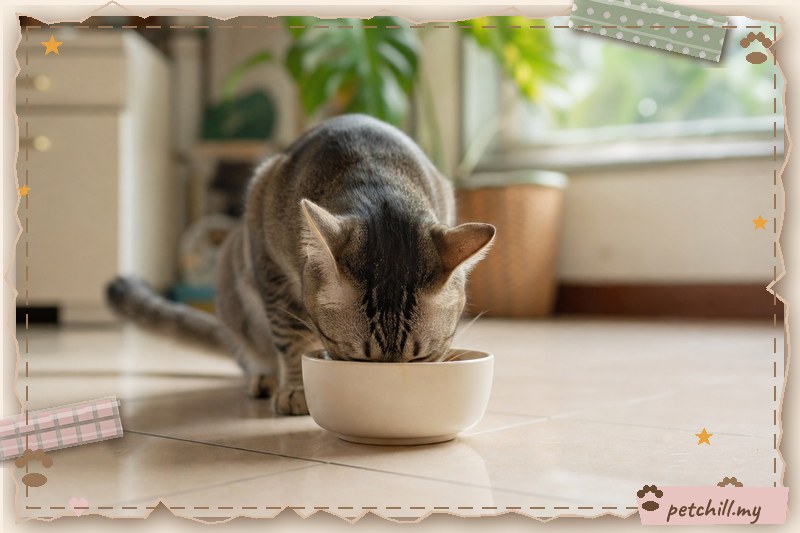
Senior cats are creatures of habit, and sudden changes cause vomiting and diarrhoea.
- Days 1–3: 25% new food, 75% old.
- Days 4–6: 50/50.
- Days 7–9: 75% new, 25% old.
- Day 10 onward: all new food, if stools are normal and appetite is good.
If your cat refuses the mix, slow down. If diarrhoea lasts more than two days, or your cat stops eating, pause and speak to your vet.
What to ask your vet at the next visit
Bring a short list. It makes the appointment more useful and the food decision clearer.
- Is my cat's body condition and muscle mass appropriate for its age?
- Are kidney values, thyroid and blood glucose within range?
- Is there dental disease that could be reducing appetite?
- Does my cat need a therapeutic diet, or is a general senior food fine?
- What daily calorie target should I aim for?
- How often should we recheck bloodwork?
When to see a vet
Contact a veterinarian promptly if your senior cat shows any of the following:
- Weight loss despite a good appetite, or weight gain with a reduced appetite
- Drinking and urinating much more than usual
- Vomiting or diarrhoea lasting more than a day or two
- Refusing food for more than 24 hours
- Bad breath, drooling, dropping food or chewing on one side
- Straining in the litter tray, or accidents outside it
- New lethargy, hiding, or reluctance to jump
- Any sudden change in appetite or water intake
These signs are not solved by changing food alone. Food is supportive care; diagnosis comes first.
Bottom line
The best senior cat food in Malaysia is the one that fits your individual cat: a named protein first, appropriate calories, moderate phosphorus unless your vet advises otherwise, and enough moisture to support hydration in a hot climate. Wet food suits many seniors, dry food suits others, and a measured mix works for plenty. Weigh your cat, watch its appetite, and let bloodwork and a veterinary exam guide the final choice.
This article is general information only and is not a substitute for veterinary advice. Always consult a licensed veterinarian about your cat's diet, especially if it has a diagnosed health condition.
Related reading
- Cat Food Guide Malaysia 2026: How to Choose Dry, Wet & Prescription Food
- How to Choose Senior Cat Food for Cats in Malaysia
- How to Choose Wet Cat Food for Cats in Malaysia: A Practical Guide
- Senior Cat Food in Malaysia: A Practical Feeding Guide for Older Cats
- Wet Cat Food for Cats in Malaysia: A Practical Feeding Guide
- Best Halal Cat Food in Malaysia: A Practical Buying Guide
- Cat Food in Malaysia: How to Read the Label, Compare Protein and Budget Monthly
- Cat Food Recommendation Malaysia: 8 Scenarios, Label Checks and Daily-Cost Thinking
- Dry Cat Food for Cats in Malaysia: A Practical Feeding Guide
- Food Transition Feeding Guide for Cats: How to Switch Diets Safely
- Grain-Free Cat Food Feeding Guide for Cats: What Malaysian Owners Need to Know
- How to Choose Grain-Free Cat Food for Cats: A Practical Malaysian Guide

