
Start with the source, not the spray
Cat odour is almost never solved by air fresheners. It is solved by finding where the smell comes from and fixing the routine that created it. In Malaysian homes, the usual suspects are a litter box that is scooped too rarely, high indoor humidity that traps odour in soft furnishings, a diet that does not suit the cat, or an undiagnosed health problem. Work through the steps below in order. Each step builds on the last, and most households notice a clear improvement within one to two weeks.
Step 1: Audit the whole house before you clean
Before buying anything, walk through your home and identify every odour source. This prevents the common mistake of scrubbing the litter box while the smell is actually coming from a sofa cushion or a wall skirting board.
Use this checklist:
- Litter box area: smell at nose level, not just when you bend down.
- Around the box: floor, wall, grout, and the underside of the box.
- Soft furnishings: sofa, curtains, cushions, cat beds, blankets.
- Carpets and rugs, especially in corners.
- Cat trees and scratching posts, which absorb oils and urine.
- Corners, doorways and vertical surfaces where a cat may have sprayed.
- Bin areas and food bowls.
- Air-conditioner filters and drains, which can add their own musty smell.
Write down what you find. If the smell is sharp and ammonia-like, suspect urine. If it is sour and faecal, suspect stool or litter hygiene. If it is musty and general, suspect humidity and soft furnishings.
Step 2: Fix the litter box setup
Most odour problems are litter box problems. Get the basics right before trying any product.
Box count and placement
The common guideline is one box per cat plus one extra. Two cats should have three boxes. Place them in quiet, accessible places, not next to food and water, and not in a sealed cupboard. A covered box in a hot, humid room traps odour and ammonia, which is unpleasant for the cat and for you.
Litter depth and type
Fill the box with enough litter, usually around five to eight centimetres, so the cat can dig and bury waste properly. Unscented clumping litter is a good default. Strongly perfumed litters may deter cats, and a cat that avoids the box will urinate elsewhere, which creates a bigger odour problem.
Box size
The box should be roughly one and a half times the length of your cat, nose to base of tail. Many commercial boxes are too small. A larger box means waste is spread out and less concentrated.
Daily scooping
Scoop at least twice a day, morning and evening, and remove solid waste as soon as you notice it. In a warm Malaysian home, waste left in the box for a full day produces noticeable ammonia by evening. Twice-daily scooping is the single most effective odour-control habit.
Weekly deep clean
Once a week, empty the box completely, wash it with mild unscented detergent and water, rinse well, dry it fully in the sun if possible, and refill with fresh litter. Avoid harsh bleach or strong disinfectants that leave residue; cats are sensitive to strong smells and may refuse the box.
Replace worn boxes
Plastic scratches and holds odour over time. If a box still smells after washing, replace it. This is inexpensive and often solves a stubborn smell.
Step 3: Control humidity and ventilation
Malaysia's climate is the hidden driver of many odour complaints. High humidity keeps odour molecules in fabrics and slows drying, so smells linger far longer than in dry climates.
Practical steps:
- Open windows and use fans to move air through the litter area.
- Use a dehumidifier in the room with the litter box if the room feels damp.
- Run the air-conditioner in the litter room for part of the day, but do not seal the room completely.
- Avoid placing the box in a closed bathroom with no ventilation.
- Dry washed bedding and cat beds fully, ideally in sunlight, before bringing them back indoors.
- Wipe condensation from windows and walls, which can carry odour.
A simple test: if the litter room feels stuffy and warm, odour will build up. Airflow and dryness do more than any air freshener.
Step 4: Build a cleaning routine that actually works
Odour control is a routine, not a one-off deep clean. Use a simple schedule.
| Task | Frequency | Notes |
|---|---|---|
| Scoop solid waste | At least twice daily | Remove immediately when noticed |
| Stir and top up litter | Daily | Keeps depth consistent |
| Wipe box exterior and floor | Every 1–2 days | Mild unscented detergent |
| Full litter change and box wash | Weekly | Dry fully before refilling |
| Wash cat bedding | Weekly | Hot wash if possible, dry fully |
| Vacuum soft furnishings | Weekly | Use a brush attachment |
| Mop hard floors around box | Every 2–3 days | Check grout and skirting |
| Clean cat tree and scratchers | Monthly | Wipe or vacuum |
| Check air-con filters | Monthly | Dust and odour control |
For urine accidents on hard floors, clean with an enzymatic cleaner designed for pet mess, following the label. Enzymatic cleaners break down the compounds that cause smell. Avoid ammonia-based cleaners on urine, because ammonia smells like urine and can encourage repeat marking.
For washable fabrics, remove solids, blot urine, pre-soak if the label allows, and wash. Dry completely. If the smell persists after two washes, the item may need professional cleaning or replacement.
Step 5: Review diet and digestion
Diet affects stool volume and odour. A sudden change in food, overfeeding, or food that does not suit your cat can produce looser, smellier stool. Keep the diet consistent, transition to a new food gradually over about a week, and avoid constant switching. Fresh water and regular feeding times support digestion. If stool odour changes suddenly or is accompanied by diarrhoea, vomiting or weight loss, see a vet rather than reaching for supplements.
Step 6: Manage stress and marking behaviour
Stress is an underrated cause of odour. Cats that feel threatened may spray urine on vertical surfaces, which smells strong and is hard to remove. Common triggers include a new pet, a new baby, moving house, renovation, or too few resources.
Reduce stress by providing enough litter boxes, separate feeding and resting spots, scratching posts, and hiding places. Use pheromone products only as a support, not a substitute for fixing the environment. If spraying continues, see a vet to rule out medical causes and discuss behaviour.
Step 7: Handle the cat itself
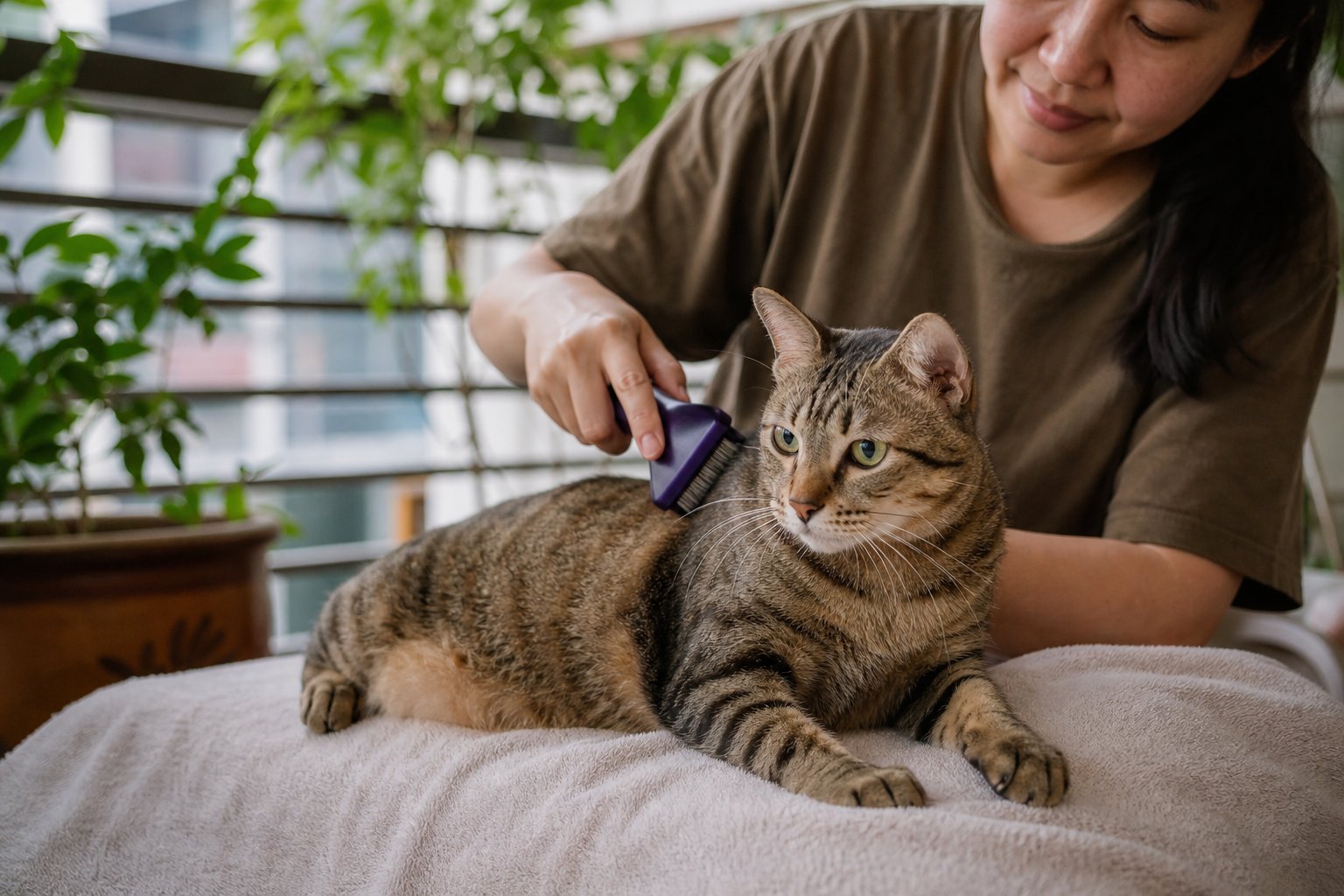
Most cats groom themselves well. You do not need frequent baths, and bathing too often can dry the skin. Brush your cat regularly to remove loose fur and reduce hairballs and shedding. Check the mouth, ears and skin during grooming. Bad breath or a greasy, smelly coat can signal a health issue rather than a hygiene problem. If your cat cannot reach to groom due to age or weight, gentle wiping with a damp cloth may help, but ask your vet first.
Step 8: Choose products sensibly
Odour products are support tools, not solutions. Use them after the routine is fixed.
- Air purifiers with a carbon filter can reduce airborne odour in the litter room.
- Odour-absorbing gels or charcoal bags can help in small spaces.
- Enzymatic cleaners are useful for accidents.
- Avoid plug-in air fresheners and strong sprays near the cat; some cats are sensitive to volatile compounds.
- Never use products that mask odour as a substitute for scooping.
Local prices for litter, boxes, dehumidifiers and cleaners vary widely, so compare retailers and ask a Malaysian vet or pet shop for advice suited to your home.
Step 9: Track progress for two weeks
Keep a simple log for fourteen days: scooping times, box cleaning, laundry, any accidents, and whether the smell improved. This helps you see which step made the difference and gives your vet useful information if a health issue is suspected.
Common mistakes that keep the smell alive
- Scooping once a day or less.
- Using too little litter.
- Covered boxes in hot, unventilated rooms.
- Washing the box with strong bleach and not rinsing well.
- Forgetting soft furnishings and cat trees.
- Using ammonia-based cleaners on urine.
- Ignoring sudden changes in urine or stool smell.
- Adding a second cat without adding boxes.
When to see a vet
See a vet promptly if you notice any of the following:
- Urine that smells strongly of ammonia or is suddenly much stronger.
- Straining to urinate, urinating outside the box, or frequent small urinations, especially in male cats.
- Blood in urine or stool.
- Very foul or greasy stool, diarrhoea, or vomiting.
- Bad breath, drooling, or difficulty eating.
- A sudden change in grooming, appetite or weight.
- Persistent spraying despite environmental changes.
These signs can indicate urinary, dental, digestive or other medical problems. Odour control routines help the home, but they do not treat illness.
A realistic two-week plan
Week one: audit the house, fix box count and placement, start twice-daily scooping, do a full box wash, and wash all bedding. Week two: add ventilation or a dehumidifier, clean soft furnishings and cat trees, review diet consistency, and log progress. Most homes see a clear improvement by the end of week two. If not, revisit the audit and consider a vet check.
Frequently asked questions
See the FAQ section above for quick answers on scooping frequency, scented litter, diet, health signs, box count and lingering smells.
Vet disclaimer
This article provides general information for cat owners and is not a substitute for veterinary advice. If your cat shows signs of illness, pain, urinary problems or a sudden change in litter box habits, consult a licensed veterinarian in Malaysia.
Related reading
- Daily Care Guide Malaysia: A Practical Routine for Dogs and Cats
- How to Control Cat Odour in a Malaysian Home: A Practical Guide
- Cat Carrier for Cats: A Practical Buying Guide for Malaysian Owners
- Cat Fur Matting: Causes, Fixes and Daily Grooming Tips for Malaysian Cats
- Cat Water Intake: Essential Tips for Malaysian Pet Owners
- Multi-Cat Household for Cat Owners in Malaysia: A Practical Guide
- Pet Daily Care Guide Malaysia: Brushing, Nails, Ears, Eyes, Teeth and Weight (2026)
- Best Cat Carrier for Cats in Malaysia: A Practical Buying Guide
- Cat Fur Matting: A Step-by-Step Guide for Malaysian Cat Owners
- Cat Sitter for Cat Owners in Malaysia: A Practical Guide



