
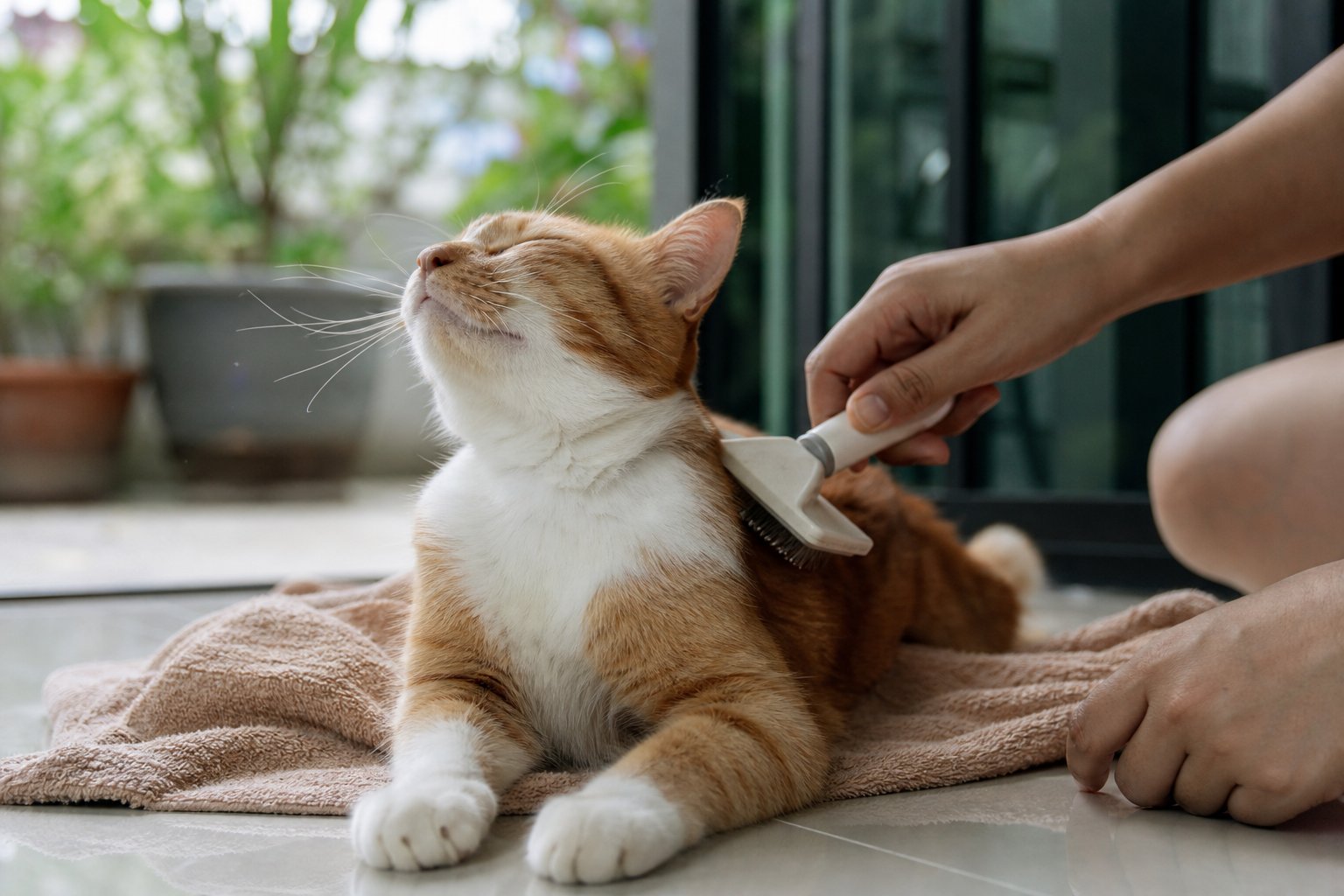
Can cats get sunburn? Yes — and some need protection
Cats love a warm sunny spot, but in Malaysia's strong sun, pale or thin-coated cats can burn. This guide walks you through cat-safe sunscreen choices, a step-by-step application routine, and the warning signs that mean a vet visit.
Why sunscreen matters for some cats
Cats are not all equally sun-sensitive. The risk rises when skin is pale, fur is thin, or the cat spends long periods in direct sun. The most common trouble spots are the ear tips, the bridge of the nose, the eyelids, and any area where fur has thinned.
Sun damage in cats can build up quietly over years. Early signs include redness, scaling, and crusty patches on sun-exposed skin. Over time, chronic sun damage can contribute to skin changes that need veterinary assessment. Sunscreen is one part of a wider sun-safety plan that also includes shade, timing, and regular checks.
Which cats are at higher risk?
- White or cream cats, especially those with pink skin on ears and nose
- Cats with sparse fur on the ears, face, or belly
- Hairless or short-haired breeds with little protection
- Cats who insist on lying in direct sun for hours
- Older cats with thinning coats
- Cats with a history of skin problems or previous sun damage
If your cat fits one or more of these, a conversation with your vet about sun protection is worthwhile.
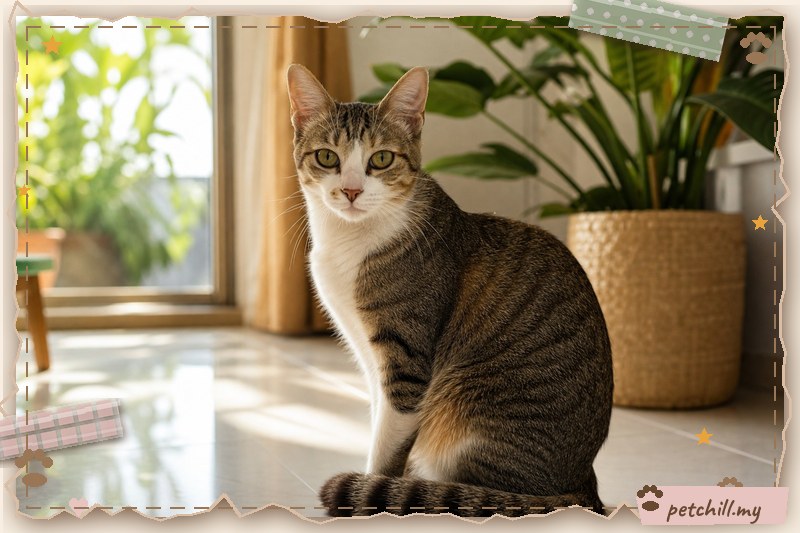
Step 1: Check with your vet before you buy
Before buying any product, ask your vet whether sunscreen is appropriate for your cat. Some cats have skin conditions that need treatment first, and some products are not suitable for broken or inflamed skin. Your vet can also tell you whether a particular ingredient is safe for your cat's health history.
Bring a list of any medications your cat takes. This helps your vet flag possible interactions or sensitivities. If your cat is pregnant, nursing, very young, or unwell, get advice before applying anything new.
Step 2: Choose a cat-safe sunscreen
Not all sunscreens are created equal. Human sunscreens are designed for human skin and often contain ingredients that are risky for cats, particularly zinc oxide and salicylates. Cats groom themselves constantly, so anything you put on their skin may end up in their mouth.
Look for products specifically labelled for pets or cats. Fragrance-free and dye-free formulas are gentler. A pet sunscreen that is water-resistant can help in humid weather, but it still needs reapplying.
Ingredients to avoid
- Zinc oxide: common in mineral sunscreens; can be toxic if ingested in significant amounts
- Salicylates: related to aspirin; not safe for cats
- Fragrances and essential oils: many are irritating or toxic to cats
- Alcohol-heavy formulas: can dry and irritate skin
- Human-only chemical filters: not tested for cats
What to look for
- A label that clearly states the product is safe for cats
- Fragrance-free and dye-free
- A texture that spreads thinly and dries without a heavy residue
- Clear instructions for reapplication
- A vet's recommendation if possible
If you cannot find a cat-specific product locally, ask your vet for a suitable alternative rather than guessing. Prices vary, so check with your vet or a trusted pet retailer in Malaysia.
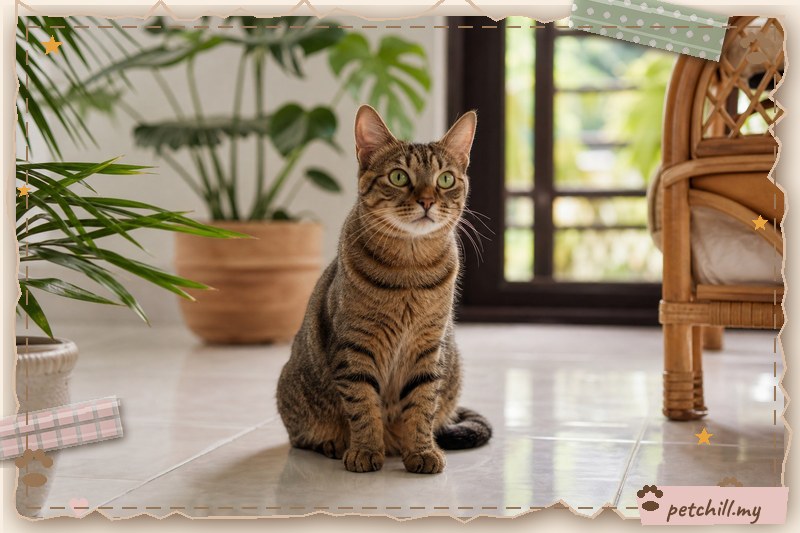
Step 3: Patch-test before full application
A patch test helps you spot a reaction before you apply sunscreen to sensitive areas. Choose a small, easy-to-reach spot such as the outer ear or a small area on the back of the neck. Apply a tiny amount and watch for 24 hours.
Signs of a reaction include redness, swelling, scratching, or restlessness. If you see any of these, stop and contact your vet. Do not apply more product to the same area.
Step 4: Prepare your cat and the area
Choose a calm moment, ideally when your cat is relaxed after a meal or a play session. Have a towel or mat ready so your cat does not slip. Wash your hands before you start.
If your cat is wriggly, ask a second person to help gently. Never force a cat who is panicking; stop and try again later. A stressed cat is more likely to lick the product off immediately.
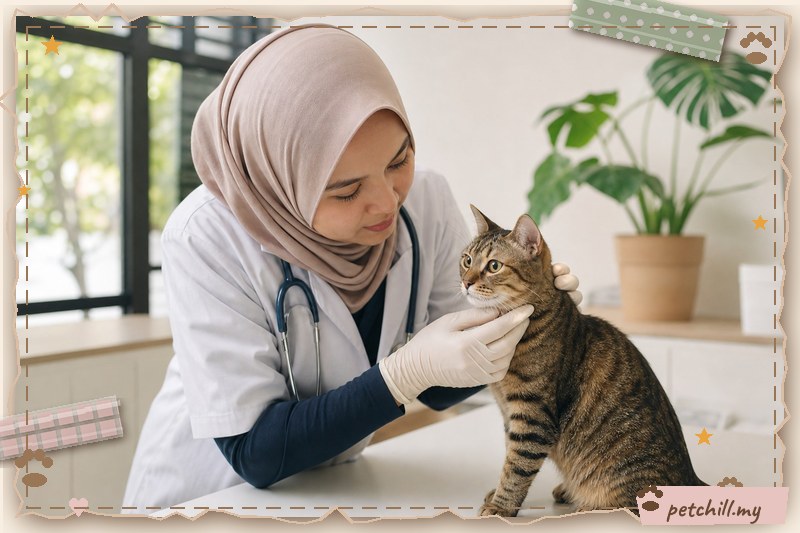
Step 5: Apply a thin layer to exposed areas
Sunscreen should go only on areas that are exposed to the sun and safe to apply. Common spots are the ear tips, the bridge of the nose, and the top of the head where fur is thin. Avoid the eyes, eyelids, mouth, and nostrils.
Use a small amount and spread it thinly. A little goes a long way. Do not rub hard; gentle strokes are enough. If your cat has long fur, part it gently so the product reaches the skin.
Areas to treat and avoid
| Area | Apply? | Notes |
|---|---|---|
| Ear tips | Yes, if pale or thin-furred | Use a tiny amount; avoid the ear canal |
| Bridge of nose | Yes, if exposed | Avoid nostrils and eyes |
| Top of head | Sometimes | Only if fur is thin and skin is exposed |
| Eyelids | No | Too close to the eye; ask your vet for guidance |
| Mouth and lips | No | High risk of licking and ingestion |
| Belly | Rarely | Only if hairless and exposed; ask your vet |
Step 6: Distract and reward
After application, give your cat a favourite toy or a small treat to redirect attention. This reduces the chance of immediate licking. Praise calm behaviour and keep the session short.
If your cat licks a small amount, watch for stomach upset. A one-off tiny lick is usually not a crisis, but repeated licking or eating the product warrants a call to your vet.
Step 7: Reapply as directed
Reapplication depends on the product and the situation. Most pet sunscreens need reapplying every few hours during sun exposure, and after swimming or grooming. Check the label for specific guidance.
In Malaysia's climate, humidity and sweat can affect how long a product stays on. If your cat is outdoors for long periods, plan for reapplication. Indoors, sun through windows can still expose cats to UV, so consider shade and blinds.
Step 8: Build a sun-safety routine
Sunscreen is only one layer of protection. A good routine includes:
- Providing shade at all times, especially between late morning and mid-afternoon
- Encouraging indoor rest during peak sun hours
- Checking ears and nose weekly for redness, scaling, or new lumps
- Keeping fur tidy but not shaved too short unless your vet advises it
- Booking regular vet checks, especially for pale or older cats
Quick daily checklist
- Shade available and easy to reach
- Sunscreen applied thinly to exposed areas if needed
- Cat distracted after application
- Ears and nose checked for changes
- Fresh water available
- Reapplication planned if outdoors for long
Common mistakes to avoid
- Using human sunscreen because it is handy
- Applying thick layers that encourage licking
- Putting product near the eyes or mouth
- Skipping patch tests
- Relying on sunscreen alone without shade
- Ignoring redness or crusty patches on ears
When to see a vet
Contact your vet if you notice any of the following:
- Redness, swelling, or hives after sunscreen application
- Excessive scratching, rubbing, or head shaking
- Crusty, scabby, or bleeding patches on ears or nose
- New lumps or sores on sun-exposed skin
- Vomiting, drooling, or lethargy after licking sunscreen
- Your cat seems painful when you touch the ears or face
If you are unsure whether a product is safe, call your vet before applying it. Bring the product label to your appointment so your vet can check the ingredients.
Living with sun-sensitive cats in Malaysia
Malaysian homes often have bright windows and warm balconies, which cats love. In a Kuala Lumpur apartment, afternoon sun can stream through glass for hours; closing curtains or providing a shaded bed helps. In a Johor terrace house, a cat may have access to a sunny courtyard, so a shaded corner and a midday indoor rest routine make a difference. During the Penang rainy season, sun exposure may drop, but UV can still be strong between showers, so keep checking ears and nose.
A simple comparison: cat-safe vs human sunscreen
| Feature | Cat-safe sunscreen | Human sunscreen |
|---|---|---|
| Labelled for cats | Yes | Rarely |
| Zinc oxide | Usually avoided | Common |
| Salicylates | Avoided | Sometimes present |
| Fragrance | Usually fragrance-free | Often fragranced |
| Licking risk | Lower, but still a risk | Higher risk of toxicity |
| Reapplication | Follow label | Follow label |
Final word
Sunscreen can be a helpful tool for sun-sensitive cats, but it must be the right product, applied gently, and combined with shade and regular vet checks. When in doubt, ask your vet. Your cat's skin will thank you.
This article is for general information only and is not a substitute for veterinary advice. Always consult a licensed veterinarian about your cat's health and any products you use.
Related reading
- Daily Care Guide Malaysia: A Practical Routine for Dogs and Cats
- Cat Odour Control: Practical Cat Tips for Malaysian Homes
- Cat Sitter for Cat Owners in Malaysia: A Practical Guide
- Cat Sunscreen & Sun Safety Tips for Malaysian Cats: What Actually Works
- Ear Cleaning Cat Tips Malaysia: Safe At-Home Routine for Malaysian Owners
- How to Control Cat Odour in a Malaysian Home: A Practical Guide
- Monsoon Season Tips for Cat Owners in Malaysia: A Practical Wet-Weather Care Guide
- Multi-Cat Household Tips for Cat Owners: A Practical Guide for Malaysian Homes
- Best Cat Carrier for Cats in Malaysia: A Practical Buying Guide
- Best Cat Tree for Cats in Malaysia: A Practical Buying Guide
- Cat Fur Matting: A Step-by-Step Guide for Malaysian Cat Owners



