
The short answer
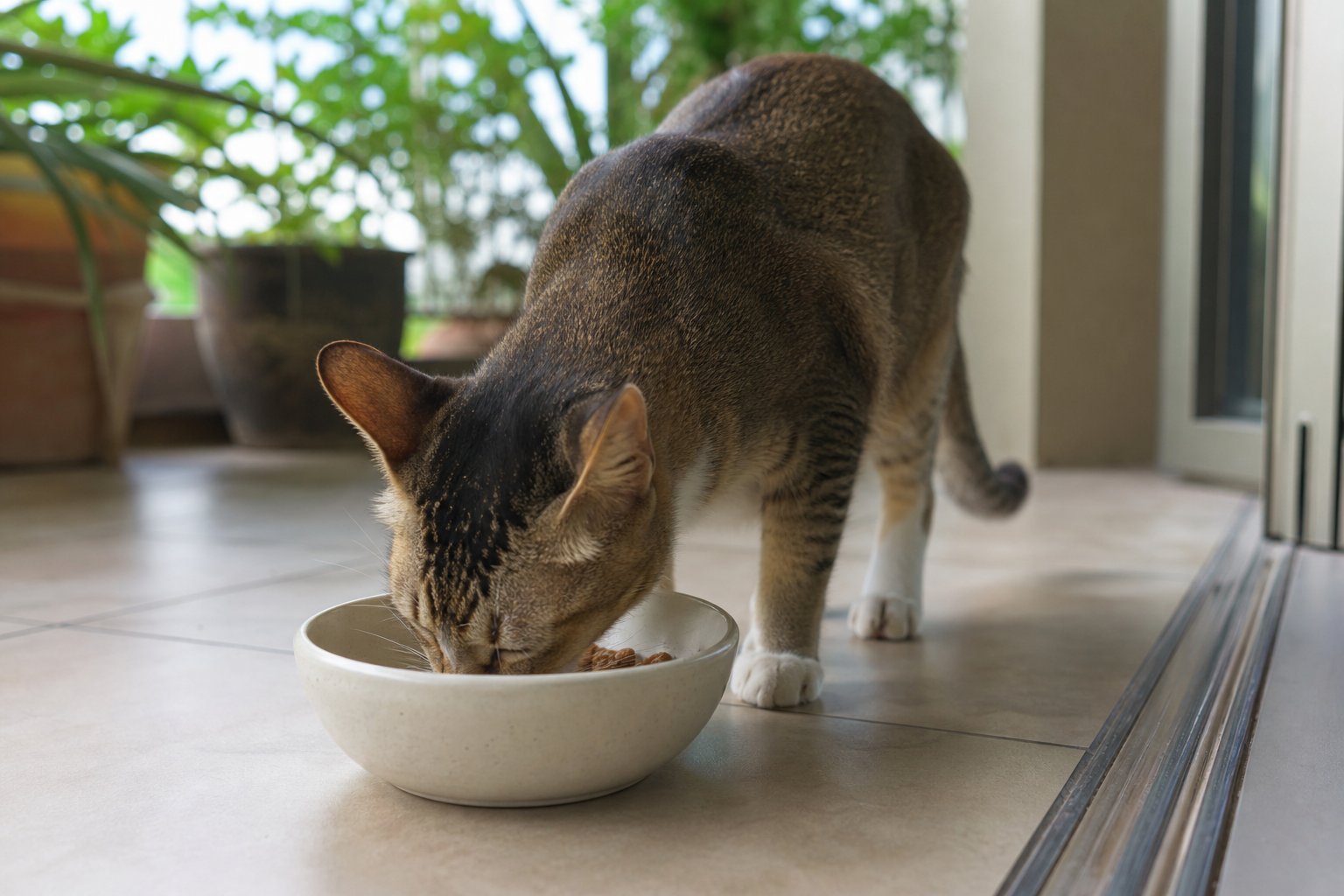
Dry cat food can be a perfectly good staple diet for a Malaysian cat, provided it is a complete and balanced product suited to the cat's life stage, fed in measured amounts, and paired with plenty of fresh water. The real risks are not the kibble itself but overfeeding, poor storage in a hot, humid climate, and ignoring early signs of urinary or dental problems.
This guide walks through how to read a label, how much to feed, how to handle water intake, how to store kibble in Malaysian weather, and when a dry diet is not the right choice.
What "complete and balanced" actually means
A dry food is only a full diet if the label says it is complete and balanced for a specific life stage. Look for a nutritional adequacy statement, typically referencing AAFCO nutrient profiles or a comparable recognised standard, such as "formulated to meet the nutritional levels established by the AAFCO Cat Food Nutrient Profiles for maintenance" or "for all life stages".
If a pack only says "complementary", "treat" or "snack", it is not a sole diet. Many local supermarket shelves mix these categories, so read the small print on the back, not the marketing on the front.
Useful label checks:
- Life stage statement — growth, maintenance or all life stages.
- Named animal protein first — for example chicken, fish or egg, rather than vague "meat and animal derivatives".
- Guaranteed analysis — crude protein, fat, fibre, moisture and ash percentages.
- Feeding guide — a weight-based table, not just "feed as needed".
- Batch and expiry date — legible and not close to expiry.
WSAVA, the global small animal veterinary association, publishes questions owners can ask manufacturers, such as whether they employ a full-time qualified nutritionist and whether they run feeding trials. You do not need to interrogate every brand, but a manufacturer that answers these questions clearly is usually a safer bet.
Dry vs wet: an honest comparison
Neither format is inherently better. The right choice depends on the cat, the household and the budget.
| Factor | Dry food | Wet food |
|---|---|---|
| Water content | Roughly 6–12% moisture | Usually 70–80% moisture |
| Cost per calorie | Generally lower | Generally higher |
| Convenience | Can be left out briefly; easy to portion | Must be refrigerated after opening; spoils fast in heat |
| Dental effect | Some dental diets have proven abrasive or chemical anti-plaque action; ordinary kibble does little | Minimal |
| Storage in humidity | Needs airtight, cool storage | Cans and pouches keep well unopened |
| Picky eaters | Aroma is lower | Often more palatable |
| Urinary health | Lower water intake unless the cat drinks well | Supports hydration |
A common Malaysian compromise is a base of dry food with one or two small wet meals a day, or dry food with added water. Both work, as long as total calories are controlled.
How much to feed: portions, not guesswork
Feeding guides on packs are a starting point, not a prescription. They are usually based on active adult cats and can overestimate for indoor, neutered or sedentary cats.
A practical approach:
- Weigh your cat — a bathroom scale works if you weigh yourself holding the cat, then subtract your own weight.
- Start at the pack's guide for that weight.
- Measure with a kitchen scale or a marked scoop — cups vary wildly.
- Split into two meals where possible.
- Re-weigh every two to four weeks and adjust by about 10% up or down.
As a rough reference, many typical adult maintenance dry foods sit around 350–400 kcal per 100 g, and a 4 kg indoor cat may need roughly 180–220 kcal a day. That is a broad range, not a rule — senior, pregnant, growing and very active cats differ substantially. Your vet can calculate a target more precisely.
Body condition matters more than the number on the scale. You should be able to feel the ribs easily without seeing them, see a waist from above, and find a slight tummy tuck from the side.
Water intake: the biggest dry-food consideration
Cats evolved as desert hunters and have a naturally low thirst drive. A dry-only diet means most of their water must come from the bowl, and many cats simply do not drink enough.
Ways to raise water intake:
- Place several water bowls around the home, away from food.
- Try a pet fountain — many cats prefer running water.
- Use wide, shallow ceramic or stainless steel bowls; some cats dislike whiskers touching the sides.
- Add warm water to kibble and let it soften for a few minutes.
- Offer wet food as part of the daily ration.
- Change water at least twice daily; in Malaysian heat, bowls get warm and stale quickly.
Signs of inadequate hydration include small, hard stools, concentrated urine, and in more serious cases lethargy or straining to urinate. Straining in a male cat is an emergency — see the vet section below.
Life stages: kitten, adult, senior
Kittens need growth or all-life-stages food with higher protein, energy, calcium and phosphorus. Free-feeding dry food is common for kittens because their energy needs are high, but measured meals help prevent obesity later. Small kibble size helps small mouths.
Adults (roughly one to seven years) do well on maintenance food, portioned to keep body condition ideal. Neutered cats need fewer calories than entire cats, often noticeably so.
Seniors (from around seven to ten years, depending on the cat) may benefit from senior formulas, but age alone is not a reason to switch. Older cats often have dental disease, reduced kidney function or reduced appetite, and a vet check plus bloodwork is more useful than a bag label. Some seniors do better on wet food or a mixed diet.
Pregnant and nursing queens need kitten or growth food and often free access to it.
Health diets and prescription dry food
Prescription dry foods exist for kidney disease, urinary crystals, food allergies, gastrointestinal disorders, obesity, diabetes and dental disease. These are therapeutic tools, not premium upgrades. Using the wrong one can be harmful — for example, a urinary diet used in a cat with a different crystal type, or a kidney diet fed to a healthy cat.
If your vet recommends a therapeutic dry food, ask:
- What is the goal, and how will we measure success?
- How long should the trial run?
- Can it be mixed with anything else?
- What is the local price and pack size, and is there a suitable alternative?
Prices for therapeutic diets vary by brand, pack size and retailer in Malaysia, so compare with your vet clinic and local pet shops rather than assuming one source is cheapest.
Storing dry cat food in Malaysian heat and humidity
Kibble is shelf-stable but not indestructible. Heat accelerates fat rancidity, and humidity invites mould and pests.
A storage routine that works here:
- Keep the original bag. It carries the batch number and expiry date, and its lining resists fat migration.
- Put the bag inside an airtight container rather than pouring loose kibble in.
- Store in a cool, dry cupboard — not above the stove, not in a car, not in a bathroom, not in direct sun.
- Buy smaller bags if your cat is a solo eater; a 10 kg bag can go stale before a single cat finishes it.
- Reseal tightly after every scoop and keep the scoop dry and clean.
- Use within about six weeks of opening for best freshness, and always by the expiry date.
- Watch for warning signs — a sour or rancid smell, clumping, discolouration, webbing or live insects.
- Freeze only if necessary and only in well-sealed portions; repeated thawing causes condensation.
In a Kuala Lumpur apartment, cupboard space is often tight and kitchens run warm, so a high shelf away from the cooker is usually the best spot. In a Johor terrace house, ants and rodents are a real concern — a hard-sided airtight container with a locking lid beats a clip-top bag.
Common myths about dry food
"Dry food cleans teeth." Ordinary kibble has minimal dental benefit. Only diets specifically formulated and tested for dental health, plus brushing, make a real difference.
"Cats on dry food don't need much water." They need more, not less, because kibble supplies so little moisture.
"Grain-free is always better." Grain-free is not inherently superior. Some cats with confirmed allergies benefit from specific limited-ingredient diets, but grain is not a proven villain for most cats.
"Cats should only eat one food forever." Variety can help prevent fussiness, but abrupt changes cause stomach upset. Transition over seven to ten days, mixing increasing proportions of the new food.
"Senior food is for any cat over seven." Age is a guide, not a diagnosis. Bloodwork and body condition matter more.
A simple buying checklist
Before you commit to a bag, run through this:
- Complete and balanced statement for the right life stage
- Named protein source near the top of the ingredient list
- Guaranteed analysis and calorie content visible
- Feeding guide with weight ranges
- Clear expiry date and batch code
- Pack size your cat can finish in about six weeks
- Manufacturer contact details or a website with nutrition information
- Price per kilogram compared across at least two retailers
- A plan for water intake and, if needed, wet food
When to see a vet
Contact a veterinarian promptly if you notice any of the following:
- Straining to urinate, crying in the litter box, or no urine produced — this is an emergency, especially in male cats.
- Blood in the urine or unusually frequent small urinations.
- Sudden weight loss or gain, or a noticeable change in body shape.
- Poor appetite lasting more than a day or two, or refusing food entirely.
- Vomiting or diarrhoea that persists beyond 24–48 hours.
- Bad breath, drooling, dropping food or chewing on one side — possible dental disease.
- Increased thirst and urination — possible kidney disease or diabetes.
- Scratching, hair loss or digestive upset after a diet change — possible food allergy.
- Lethargy, hiding or behaviour change in a normally active cat.
Bring the food label or a photo of it to the appointment. It helps the vet assess what your cat has been eating and make a practical plan.
Bringing it together
Dry cat food is a practical, affordable staple for most Malaysian households. The keys are choosing a complete diet for the right life stage, measuring portions, supporting water intake, and storing kibble properly in a hot, humid climate. If your cat has a health condition, is very young or very old, or is showing warning signs, get veterinary advice before changing the diet.
This article is general information only and is not a substitute for veterinary advice. Always consult a licensed veterinarian about your cat's diet and health.
Related reading
- Cat Food Guide Malaysia 2026: How to Choose Dry, Wet & Prescription Food
- Dry Cat Food Feeding Guide for Cats: How Much, How Often and How to Do It Right
- Best Dry Cat Food for Cats in Malaysia: A Practical Buying Guide
- Best Halal Cat Food in Malaysia: A Practical Buying Guide
- Best Senior Cat Food in Malaysia: A Practical Buying Guide
- Best Urinary Care Cat Food in Malaysia: How to Choose (2025 Guide)
- Cat Milk Feeding Guide for Cats: What Malaysian Owners Need to Know
- Food Transition Feeding Guide for Cats: How to Switch Diets Safely
- Grain-Free Cat Food for Cats in Malaysia: What It Is, Who It Suits, and How to Choose
- Halal Cat Food Feeding Guide for Cats: What Malaysian Owners Need to Know
- Homemade Cat Food Feeding Guide for Cats: A Practical Malaysian Owner's Handbook

