
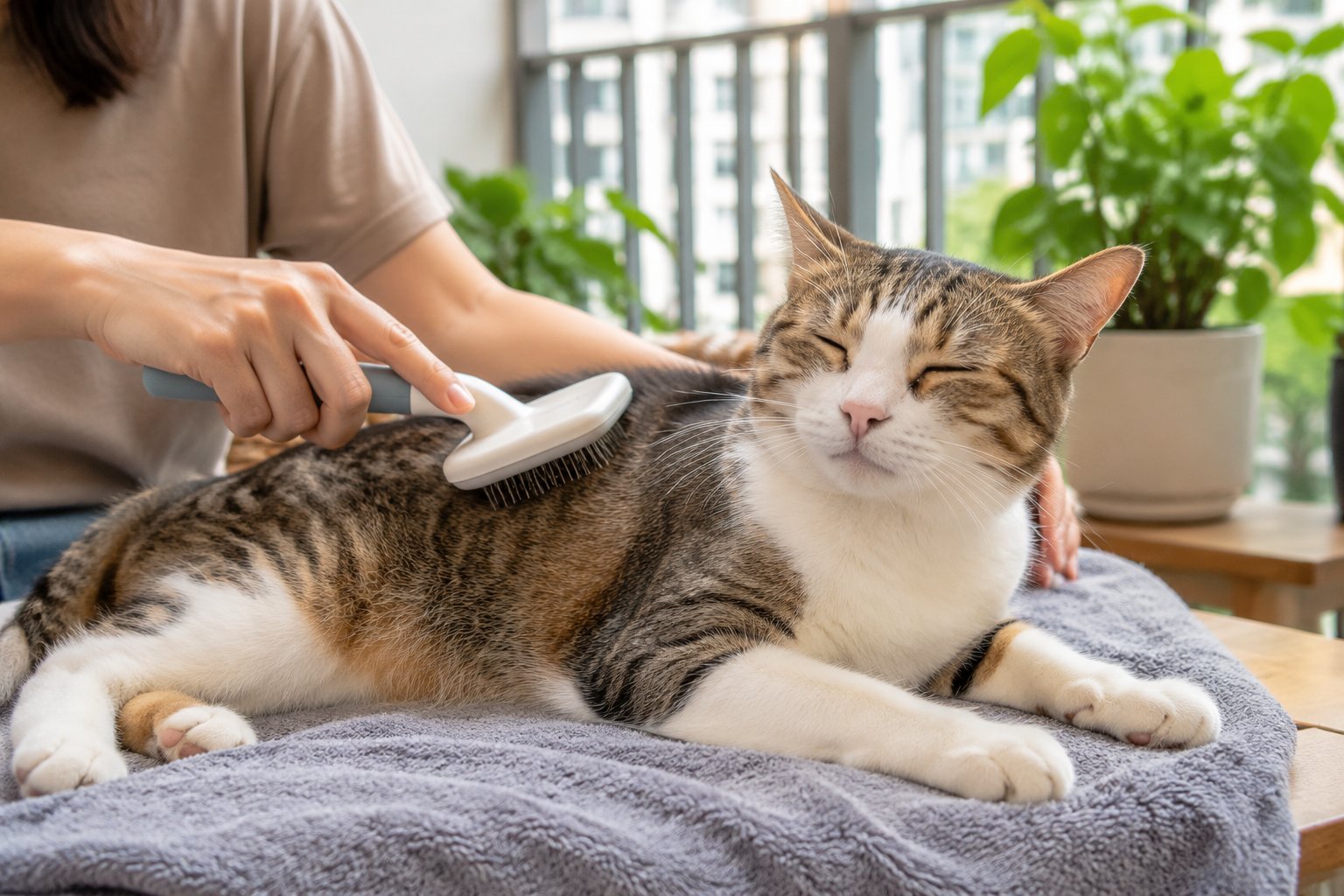
Why the monsoon matters for cats
Malaysia's wet season brings weeks of heavy rain, high humidity and, in low-lying areas, flash floods. For cats this changes daily life: coats stay damp, paws pick up mud, bedding smells musty, and outdoor territory becomes unsafe. Indoor cats feel the difference too, because doors and windows stay shut and the routine shifts.
The goal of monsoon cat care is simple: keep the cat dry, warm, well-fed and mentally settled, and have a plan for the worst weather. Most problems are preventable with small daily habits rather than expensive equipment.
Keep the coat and paws dry
A wet coat is uncomfortable and, in humid weather, slow to dry. It can also trap dirt and irritants against the skin.
- Towel-dry promptly. If your cat comes in wet, pat it dry with a clean towel, working from the back and sides down to the legs. Pay attention to the belly, armpits and between the hind legs.
- Check the paws. Mud, grit and small stones lodge between toe pads. Wipe paws with a damp cloth, dry them, and look for cuts, swelling or redness.
- Dry the ears gently. Do not push anything into the ear canal. Wipe only the visible outer part with a soft cloth.
- Avoid cold rooms. A wet cat in an air-conditioned room loses heat quickly. Dry the cat first, then let it settle in a warm, draught-free spot.
- Use a low-setting hairdryer only if tolerated. Many cats dislike the noise. Keep the dryer moving, keep it at a distance, and stop if the cat panics.
Long-haired cats need more attention. Brush them more often in humid weather to prevent matting, and check behind the ears and under the tail where dampness collects.
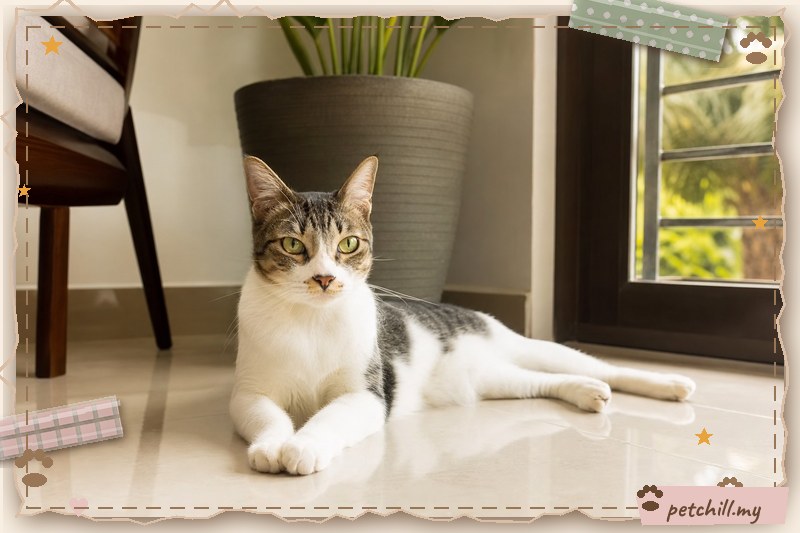
Manage damp indoors
Humidity affects bedding, litter, food and the cat itself. A few habits keep the home drier:
- Wash and fully dry bedding. Rotate two sets so one is always dry. Dry bedding in sunlight or a dryer if available.
- Scoop litter at least twice daily. Damp litter clumps poorly and smells stronger. Replace wet litter promptly and keep the tray in a dry, ventilated spot.
- Store food sealed. Dry food absorbs moisture and can go stale or mouldy. Keep it in an airtight container away from walls and floors.
- Ventilate when rain pauses. Open windows briefly to move air, but check screens and grilles first.
- Use a dehumidifier safely. Keep cables out of reach, cover the water tank, and give the cat a room it can leave. Never let a cat drink the collected water.
- Wipe condensation. Windows and floors can become slippery. Dry them to prevent slips and falls.
Watch for skin, ear and paw problems
Warm, damp conditions favour skin irritation and fungal growth. Cats with allergies, folds of skin or long coats are more vulnerable.
Check your cat weekly during the wet season:
- Part the coat and look for redness, scabs, bald patches or a musty smell.
- Check between the toes for swelling, discharge or licking.
- Look inside the ears for dark debris or redness, but do not clean deep inside.
- Note any change in scratching, grooming or licking.
Do not apply human creams, oils or medicated shampoos without veterinary advice. Some products are toxic to cats or worsen irritation. If a skin problem persists beyond a few days, or spreads, book a vet visit.
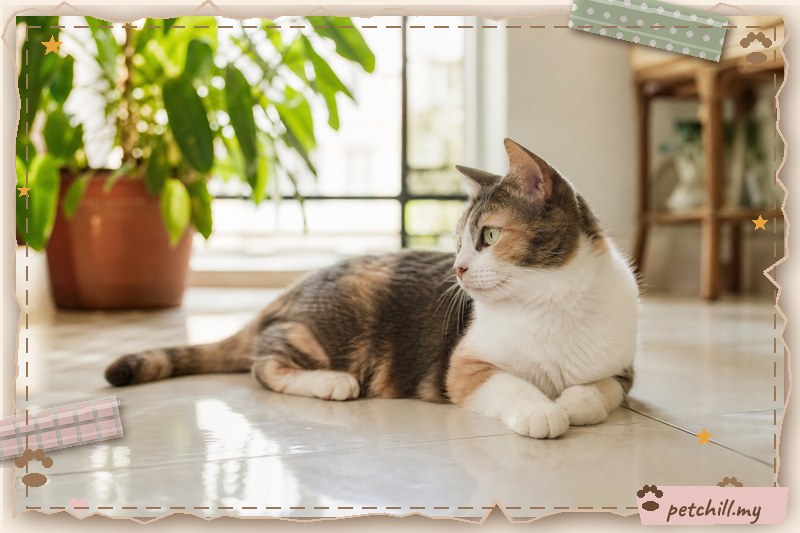
Parasites do not take a rain check
Fleas and ticks can remain active in warm, humid conditions, and outdoor cats may pick up more from damp ground and vegetation. Keep parasite prevention up to date as advised by your vet, and check your cat after any outdoor time. Wash bedding regularly and vacuum areas where the cat rests.
Mosquitoes breed in standing water, so empty pots, trays and containers around the home. Ask your vet about heartworm risk in your area and whether prevention is appropriate.
Keep outdoor cats safer
If your cat goes outside, the monsoon raises the risk of traffic, muddy water, fights and getting trapped.
- Supervise outdoor time. Short, supervised visits are safer than long free-roaming sessions.
- Provide shelter. A dry, raised shelter with a dry bed gives outdoor cats an alternative to lying in wet ground.
- Check before driving. Cats shelter under cars and in wheel arches during rain. Tap the bonnet and check underneath before starting the engine.
- Keep gates and drains in mind. Flood water can move fast and hide drains. Keep cats away from drains, drains and low walls during heavy rain.
- Bring cats in before storms. If thunder and heavy rain are forecast, call your cat in early and reward it for coming.
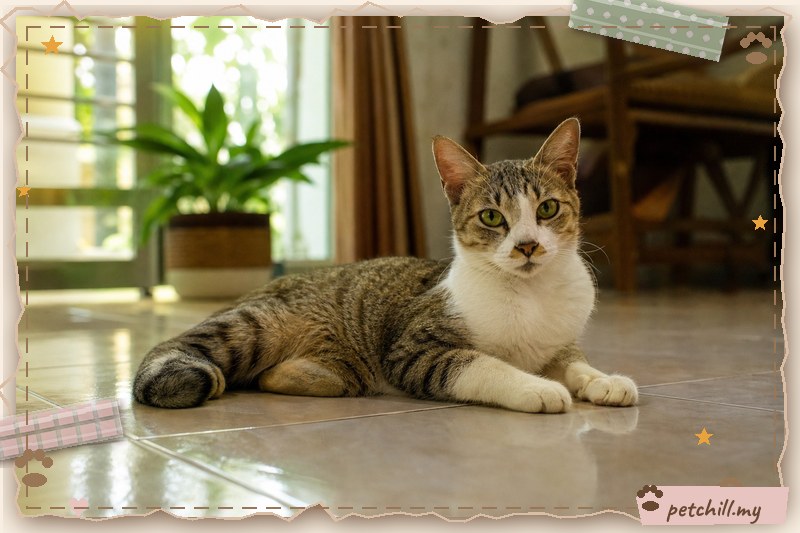
Reduce stress during storms
Cats notice changes in air pressure, noise and routine. Some become clingy, hide or pace during storms.
- Create a safe room. A quiet room with a bed, litter tray, water and a hiding box gives the cat control.
- Keep routines steady. Feed and play at the same times where possible.
- Use background sound. A fan or soft radio can mask thunder.
- Offer vertical space. Shelves and cat trees let cats feel safe above floor level.
- Do not force interaction. Let the cat come to you.
If your cat shows severe storm anxiety, ask your vet about options. Do not give human sedatives or supplements without veterinary guidance.
Prepare for floods and power cuts
Flooding can happen quickly. A simple plan makes a big difference.
| Item | Why it matters |
|---|---|
| Carrier | Safe transport and easy evacuation |
| Food and water for several days | Shops may be closed or roads blocked |
| Litter and a small tray | Keeps indoor toileting normal |
| Medicines and a first-aid kit | Continuity of care |
| Towel and blanket | Warmth and drying |
| Vaccination records and a photo | Identification and vet care |
| Contact list including your vet | Quick decisions |
| Torch and batteries | Power cuts |
Keep the kit in one bag that is easy to grab. Practise putting the cat in the carrier so it is not a struggle in an emergency. If you must evacuate, take the cat with you. Never leave a cat locked in a house or car during a flood warning.
Feeding and hydration in humid weather
Wet food spoils faster in warm, humid conditions. Put down only what the cat eats in one sitting, and remove leftovers within about half an hour. Wash bowls daily. Keep water bowls fresh and place several around the home so the cat drinks even if one is knocked over.
Some cats drink less in cooler weather. If your cat is on a prescription diet or has kidney or urinary issues, follow your vet's advice and monitor water intake.
Grooming and hygiene checklist
- Brush the coat several times a week, daily for long-haired cats.
- Check paws and ears after outdoor time.
- Bathe only when needed, using a cat-safe shampoo, and dry thoroughly.
- Wash bedding weekly and dry it completely.
- Clean litter trays regularly and replace damp litter.
- Wipe floors dry to prevent slips.
- Check for fleas and ticks after outdoor access.
When to see a vet
Contact a veterinarian promptly if your cat:
- has difficulty breathing, open-mouth breathing or persistent coughing;
- has repeated vomiting or diarrhoea, or stops eating or drinking;
- has painful, swollen or discharging paws, or is licking one area constantly;
- has spreading skin redness, scabs, hair loss or a musty odour;
- has ear discharge, head shaking or ear pain;
- has wounds or abscesses after a fight;
- was exposed to flood water, nearly drowned, or swallowed dirty water;
- shows severe anxiety, collapse or unusual weakness.
If you are unsure, call your vet. Early advice is often cheaper and safer than waiting.
A simple daily monsoon routine
- Morning: check the forecast, scoop litter, refresh water, check the coat and paws.
- Afternoon: supervised outdoor time if appropriate, dry the cat, check for ticks.
- Evening: play session, brush the coat, check skin and ears, top up food and water.
- Before bed: secure windows and balcony, check the emergency kit, keep the carrier accessible.
Final thoughts
Monsoon season does not have to be stressful for cats or their owners. Dry coats, dry bedding, steady routines and a prepared emergency kit cover most of the risk. Watch for skin and paw problems, keep parasite prevention current, and ask your vet when something changes. Small daily habits keep cats comfortable through the wettest weeks.
This article is general information only and is not a substitute for veterinary advice. Always consult a licensed veterinarian about your cat's health.
Related reading
- Daily Care Guide Malaysia: A Practical Routine for Dogs and Cats
- Cat Odour Control: Practical Cat Tips for Malaysian Homes
- Cat Sitter for Cat Owners in Malaysia: A Practical Guide
- Cat Sunscreen for Cats: Step-by-Step Guide for Malaysian Pet Parents
- Ear Cleaning Cat Tips Malaysia: Safe At-Home Routine for Malaysian Owners
- How to Cat Massage a Cat: A Gentle, Step-by-Step Guide for Malaysian Owners
- How to Control Cat Odour in a Malaysian Home: A Practical Guide
- How to Apply Sunscreen to a Cat: A Safe, Step-by-Step Guide for Malaysian Owners
- How to Monsoon-Care a Cat in Malaysia: A Practical Daily-Care Guide
- Monsoon Care for Cats Step by Step: A Practical Wet-Season Guide for Malaysian Homes
- Multi-Cat Household Tips for Cat Owners: A Practical Guide for Malaysian Homes



