
Chapter 1: Reading body language
Chapter 1: Reading body language
Cats and dogs talk constantly — just not with words. Before a hiss, a growl or a snap, there is almost always a quieter signal: a tail that stiffens, ears that flatten, pupils that widen, a body that freezes or shifts weight backward. Learning to read these early signals is the single most useful skill you can build as an owner, because it lets you step in before fear turns into a scratch or a bite — for your pet's sake and yours. This chapter walks through what to watch, how to practise at home, and when a change in body language is worth a call to your vet.
Tail, ears, pupils and posture: what a cat is telling you before it hisses
A cat's body is a set of dials, and you read them together rather than one at a time. The tail is the most visible dial: a relaxed tail held loosely, often with a soft curve at the tip, suggests calm; a tail that puffs up, lashes quickly, or thumps against the floor signals rising tension. Ears tell you where attention is going — forward and slightly relaxed means curious, while ears rotated sideways or flattened back ("airplane ears") usually mean the cat is uncomfortable or overstimulated. Pupils widen in low light, but sudden wide pupils in a bright room, together with a still body, often mean fear or arousal. Posture ties it together: a cat leaning away, crouched low, or frozen mid-motion is giving you a warning, while a cat that rolls and shows its belly is usually inviting play, not a hand.
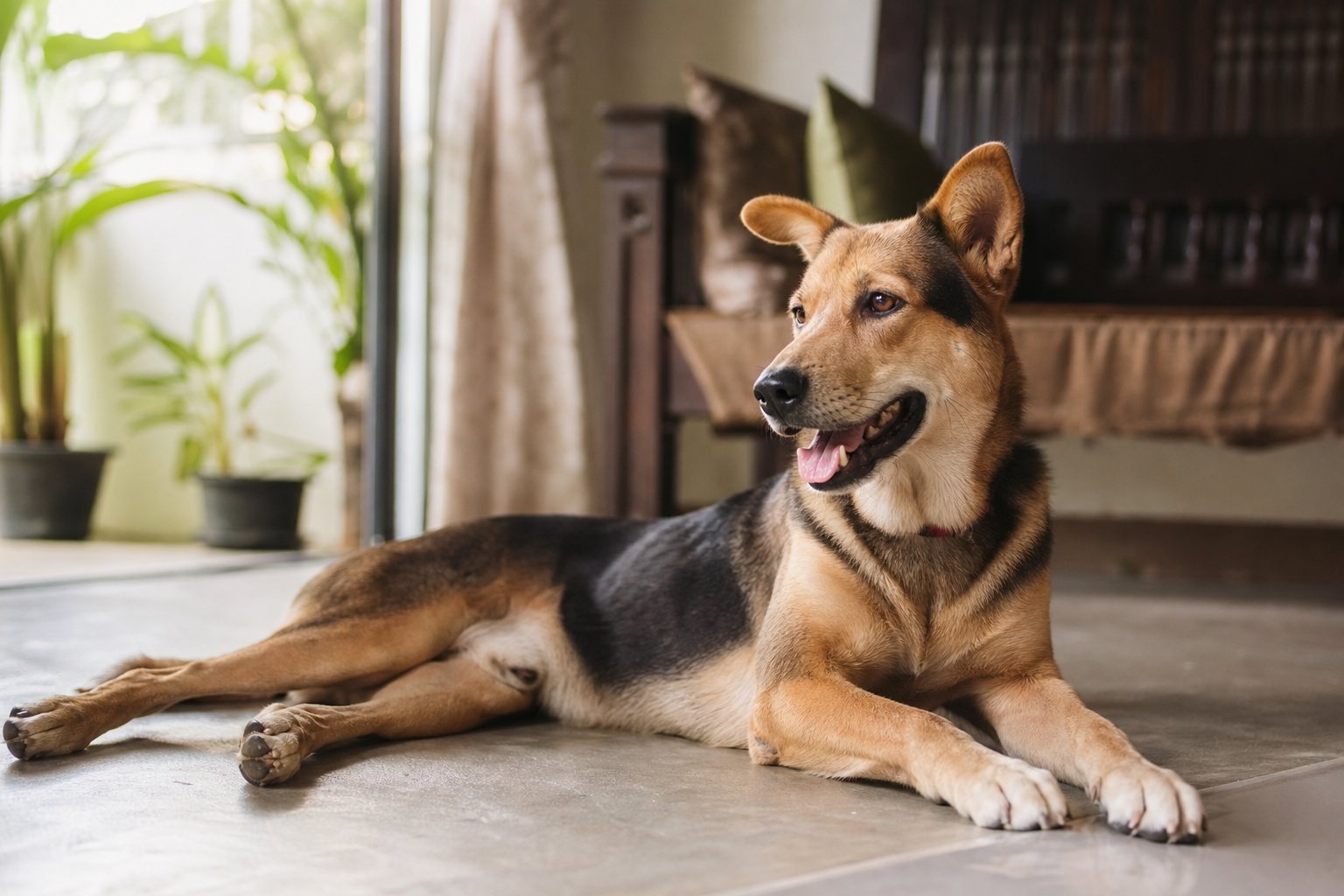
Dogs read a little differently. Watch the whole body: a loose, wiggly stance with a soft mouth is friendly; a stiff, still body with weight shifted back, a closed mouth and a hard stare is a dog asking for space. A tail held high and wagging in tight, fast arcs is not always happy — check the rest of the body. Yawning, lip-licking, turning the head away and "whale eye" (showing the whites of the eyes) are common stress signals in dogs, especially in busy or hot environments.
Practising at home in a Malaysian setting
You do not need special equipment — just a few minutes of quiet observation. Sit at a distance and watch your pet without reaching for them. Note the baseline: how does your cat hold its tail when relaxed on the tiled floor? How does your dog stand at the gate when the neighbour's motorcycle passes? Once you know the baseline, changes stand out.
Your home layout matters. In apartments and flats, space is limited, so give your pet somewhere to retreat — a high shelf or cat tree for a cat, a quiet corner or crate for a dog — and respect it when they go there. In a tropical climate, heat changes body language too: heavy panting, sprawling on cool floor tiles and seeking shade are normal cooling behaviour in dogs, but relentless panting, drooling or restlessness in the heat deserves attention. Watch how your pet behaves around the front door, the lift lobby, and during thunderstorms or festive periods with fireworks — these are common triggers for fear signals, and catching them early lets you create distance before panic sets in.
Practical check: note one change you can make this week
Pick one small, specific change and write it down. For example: "I will stop picking up the cat when its ears go flat and instead let it come to me," or "I will give the dog space when it lip-licks during visitors." Keep it simple enough to actually do, and review it at the end of the week. Small, consistent adjustments build trust faster than big gestures.
Local context: adapt the advice to your home, climate and routine in Malaysia
Every household is different. A terrace house with a garden, a high-rise apartment and a shared rental all shape how much space your pet has and what they hear and smell each day. Adapt the guidance to your routine: if your household is busy in the mornings, observe your pet at a quieter time; if visitors are frequent, plan a calm room for your pet during gatherings. Consider the climate — provide shade, fresh water and cool resting spots, and avoid vigorous play in the hottest part of the day. And remember that cultural norms around pets vary between neighbourhoods, so keep your pet secure and supervised outdoors.
Checklist
- Observe your pet for a few quiet minutes each day and note the relaxed baseline.
- Read tail, ears, pupils and posture together, not in isolation.
- Give your pet a retreat space and let them use it without interruption.
- Watch for early stress signals: freezing, lip-licking, flattened ears, wide pupils, tucked tail.
- Provide shade, fresh water and cool spots in hot weather.
- Keep interactions short and calm around visitors, storms and fireworks.
- Note one change to make this week and review it.
Common mistakes
- Assuming a wagging tail always means a happy dog.
- Reaching to pick up or pet a cat that has flattened ears or a lashing tail.
- Punishing a growl or hiss — these are warnings, and suppressing them removes your early signal.
- Staring directly at a nervous animal or crowding it into a corner.
- Ignoring heat-related panting or restlessness as "just the weather."
- Forgetting that children need supervision around pets, even calm ones.
When to ask a vet
Body language changes can be medical as well as behavioural. Contact your vet if your pet shows sudden aggression or fearfulness where there was none before, hides or withdraws persistently, stops eating or drinking, pants heavily or seems distressed in the heat, or shows pain signals such as guarding a body part, reluctance to move, or changes in posture that do not settle. If a bite or scratch breaks the skin, seek medical advice for the person involved and speak to your vet about your pet. When in doubt, a phone call to your clinic is always reasonable.