
Chapter 8: Health warning signs
Chapter 8: Health warning signs
Cats and dogs are good at hiding discomfort, and in Malaysia's heat and humidity that can work against you. A pet that seems "a bit quiet" may already be unwell. This chapter helps you notice the small changes early, especially in litter box habits, and know when to act rather than wait. It is a guide to observation, not a diagnosis; only a vet can confirm what is wrong.
Why litter box changes matter most in cats
Changes in litter box habits are often the first sign that something is wrong with your cat. Straining, crying while passing urine, very small or frequent clumps, blood in the urine, or regularly going outside the box all need attention. In hot weather cats may drink more and pass more urine, so a sudden increase can still signal trouble. If symptoms last more than a day, or your cat stops eating or becomes quiet, see a vet promptly; urinary blockages are an emergency.
In a Malaysian apartment, the litter box is often the easiest place to spot trouble because you see it every day. Scoop at the same time each day and look at the clumps, not just the smell. A cat that visits the box repeatedly and produces little or nothing may be blocked, and that cannot wait. Keep the box in a quiet, shaded spot away from direct sun so your cat uses it normally and you can observe without stress.
Everyday signs in cats and dogs
Watch eating and drinking. A pet that skips meals, eats less, or suddenly drinks far more than usual is telling you something. In tropical weather, fresh water should always be available, and bowls should be washed daily to discourage bacteria and mosquitoes.
Watch energy and behaviour. A dog that normally greets you at the door but stays on its bed, or a cat that stops jumping onto its favourite ledge, may be in pain. Restlessness at night, hiding in unusual places, or snapping when touched are also warnings.
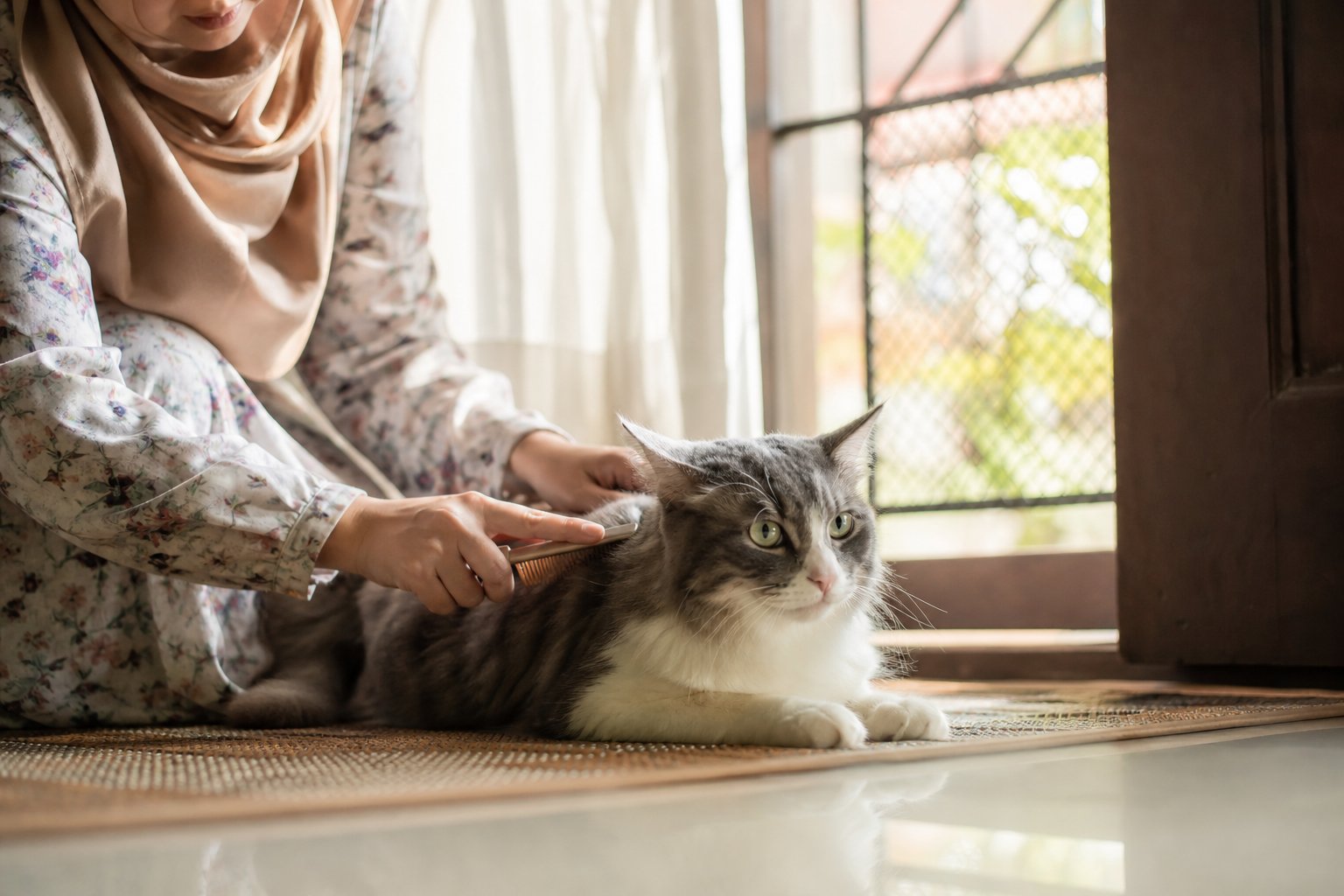
Watch the body. Check ears, eyes, gums, skin, and paws during your regular grooming or petting sessions. Look for discharge, redness, swelling, bald patches, fleas, ticks, or wounds that are not healing. In humid conditions, skin folds and ears can become moist and irritated, so dry your pet well after a bath or a walk in the rain.
Watch digestion and breathing. Vomiting or diarrhoea that repeats, blood in stool, or a pet that seems to strain to pass stool needs attention. Fast or noisy breathing, coughing, or panting when your pet has not been exercising are reasons to call your vet.
A simple daily checklist
- Fresh water available; note if your pet suddenly drinks much more or much less.
- Food eaten; note skipped meals or a sudden change in appetite.
- Litter box or toilet habits: clump size, frequency, straining, blood, or accidents outside the box.
- Energy level compared with yesterday: playful, quiet, hiding, restless.
- Eyes, ears, nose, gums, and skin checked briefly during petting.
- Breathing calm at rest; no coughing or laboured panting.
- Any new lumps, wounds, limping, or scratching.
- Grooming and parasite checks, especially after time outdoors.
Common mistakes
- Waiting "one more day" when a cat is straining to urinate. Blockages are an emergency.
- Assuming a quiet pet is just tired or sulking. Sudden withdrawal often means pain or illness.
- Changing food abruptly and blaming the new food for vomiting or diarrhoea without checking with a vet.
- Using human medicines or home remedies without veterinary advice; some are toxic to pets.
- Ignoring small changes because the pet still eats. Appetite can stay normal while other signs worsen.
- Letting a pet skip its routine check-ups because it "looks fine." Early problems are easier to manage.
When to ask a vet
Contact your vet promptly if symptoms last more than a day, if your cat stops eating or becomes quiet, or if you see straining, crying while passing urine, blood in urine, or repeated visits to the litter box with little result. For dogs, seek advice for repeated vomiting or diarrhoea, refusal to eat, laboured breathing, sudden lameness, or a wound that is not healing. If you are unsure, call the clinic and describe what you see; they can tell you whether to come in or monitor at home. Keep a simple note of dates and symptoms so you can explain clearly.