
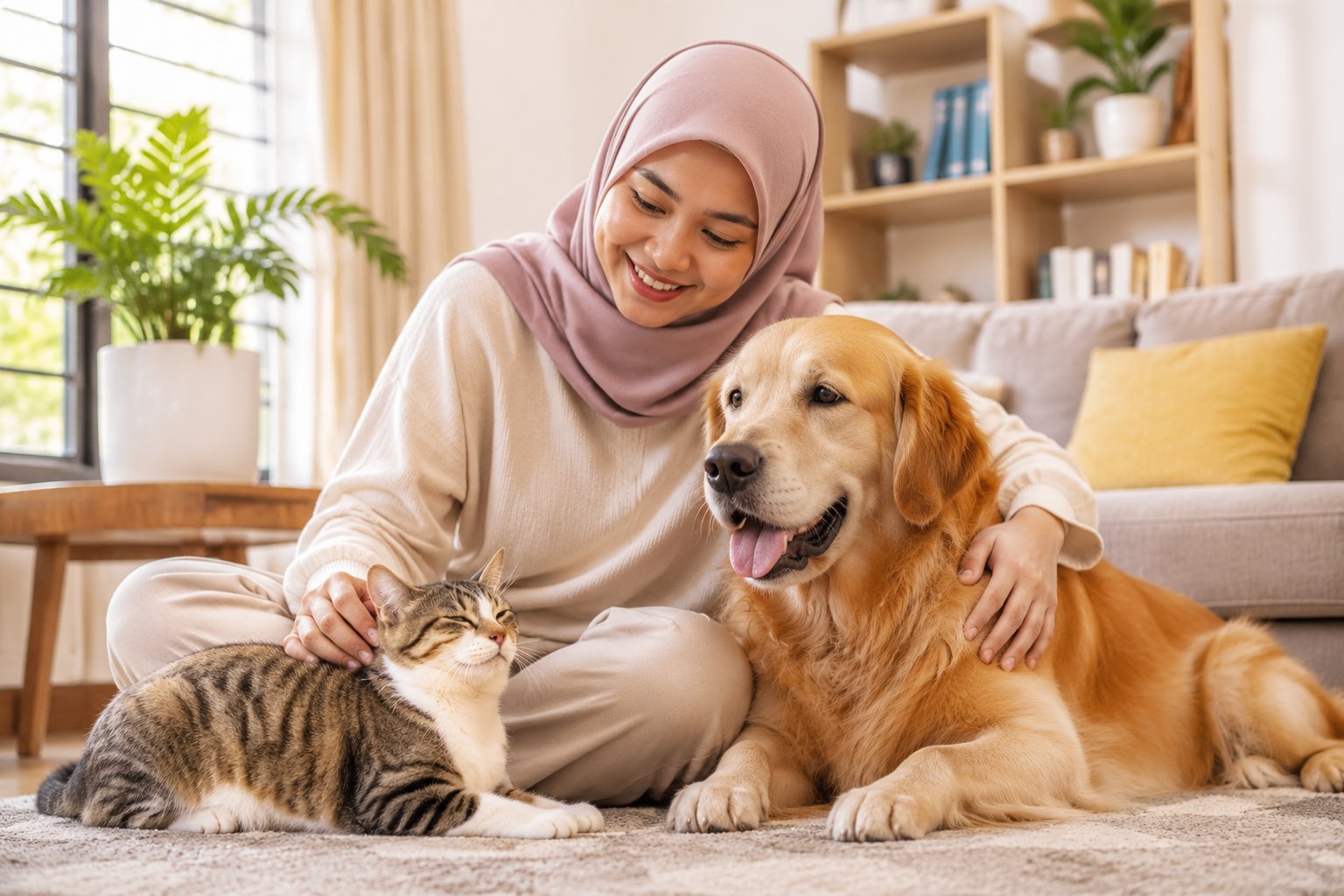
Chapter 6: Cooler and Rainy Days — Keeping Pets Warm and Dry
Malaysia rarely gets truly cold, but the wet season brings chill, damp, and drafty nights — and some pets, especially seniors, small breeds, short-coated dogs, and cats, feel it. The goal is not to make your pet tropical-proof against winter; it is to keep them dry, draft-free, and comfortable through the monsoon without overheating them in a humid climate. Most of the work is simple: a dry sleeping spot, a towel by the door, and a little attention to the weather forecast.
Setting Up a Dry, Warm Sleeping Area
Provide dry, elevated bedding away from tiled floors and open windows; a simple blanket or pet bed helps. In Malaysian homes, the coldest-feeling surfaces are usually ceramic floor tiles and the area near windows or sliding doors that catch rain and wind. A low platform bed, a raised basket, or even a folded blanket on a mat lifts your pet off the chill. Cats will often choose their own spot — a cardboard box with a blanket inside, placed in a quiet corner, is often more appealing than an expensive bed.
Watch for damp. In the wet season, bedding near windows, balconies, or bathrooms can absorb moisture and stay cold and clammy. Wash and fully dry bedding regularly, and rotate spare blankets so one is always dry. For senior pets with stiff joints, a slightly thicker pad helps them settle comfortably. If your home has air-conditioning running at night, keep the pet's bed out of the direct draft and set the room to a moderate temperature rather than very cold.
Drying Off After Rain Walks
Towel-dry pets after rain walks, paying attention to the belly, paws, and ears. These areas trap moisture and stay wet longest. Keep a dedicated towel by the door so drying becomes a habit the moment you come in. Check between the paw pads, where grit and wet grass collect, and dry inside the ears gently with a towel corner — never push anything into the ear canal. Short-coated dogs and cats dry quickly; long-haired pets may need a little more towel work and a dry, draft-free spot to finish drying. If your pet gets soaked through, a warm (not hot) rinse-free towel rub-down and a dry bed is usually enough.
Coats, Humidity, and Overheating
Avoid over-bundling: pets can overheat in coats in Malaysia's humidity, so use them only for genuinely chilly, damp conditions and never leave a coated pet unattended. A coat is most useful for short-coated, small, senior, or thin pets on a genuinely cool, rainy night or after a bath, not for everyday wear in a warm apartment. Signs of overheating include heavy panting, restlessness, seeking cool floor tiles, and drooling — remove the coat and let your pet cool down in a shaded, ventilated spot. Never leave a coated pet alone, and never put a coat on a pet that is unwell without checking with your vet first.
Health Routines During the Wet Season
Keep vaccination and deworming schedules on track — indoor time increases close contact and parasite risk. More time indoors and in shared spaces means more opportunity for fleas, ticks, and intestinal worms to spread, so stick to your vet's schedule. Damp weather can also aggravate skin folds and paws; dry your pet thoroughly and check for redness or itching.
Floods and Stagnant Water
During floods, keep pets away from stagnant water and move them to higher ground early; if your area floods, follow local evacuation advice and contact your vet about stress or skin issues afterward. Stagnant water can carry infection and hidden hazards, and flooded ground may hide sharp debris. Keep pets leashed and out of the water, and have a simple go-bag ready: food, water, medication, a towel, and a carrier or leash.
Quick Checklist
- Dry, elevated bed away from tiled floors, windows, and air-conditioning drafts
- Spare dry blankets; wash and dry bedding regularly
- Towel by the door; dry belly, paws, and ears after every rain walk
- Coat only for genuinely chilly, damp conditions — never left on unattended
- Vaccination and deworming schedules up to date
- Go-bag ready for flood season; pets moved to higher ground early
Common Mistakes
- Leaving bedding against a damp window or on bare tiles
- Skipping paw and ear drying after walks
- Leaving a coat on indoors or on an unattended pet
- Letting pets drink or wade in floodwater
- Assuming indoor time means parasite protection is less important
When to Ask a Vet
Contact your vet if your pet shivers persistently, seems lethargic or off food after cold, wet weather, develops red or itchy skin, has ear discharge or head-shaking after a wet walk, or shows signs of stress after a flood or evacuation. If you are unsure whether a coat is appropriate for your pet's age, coat type, or health, ask your vet for advice.