
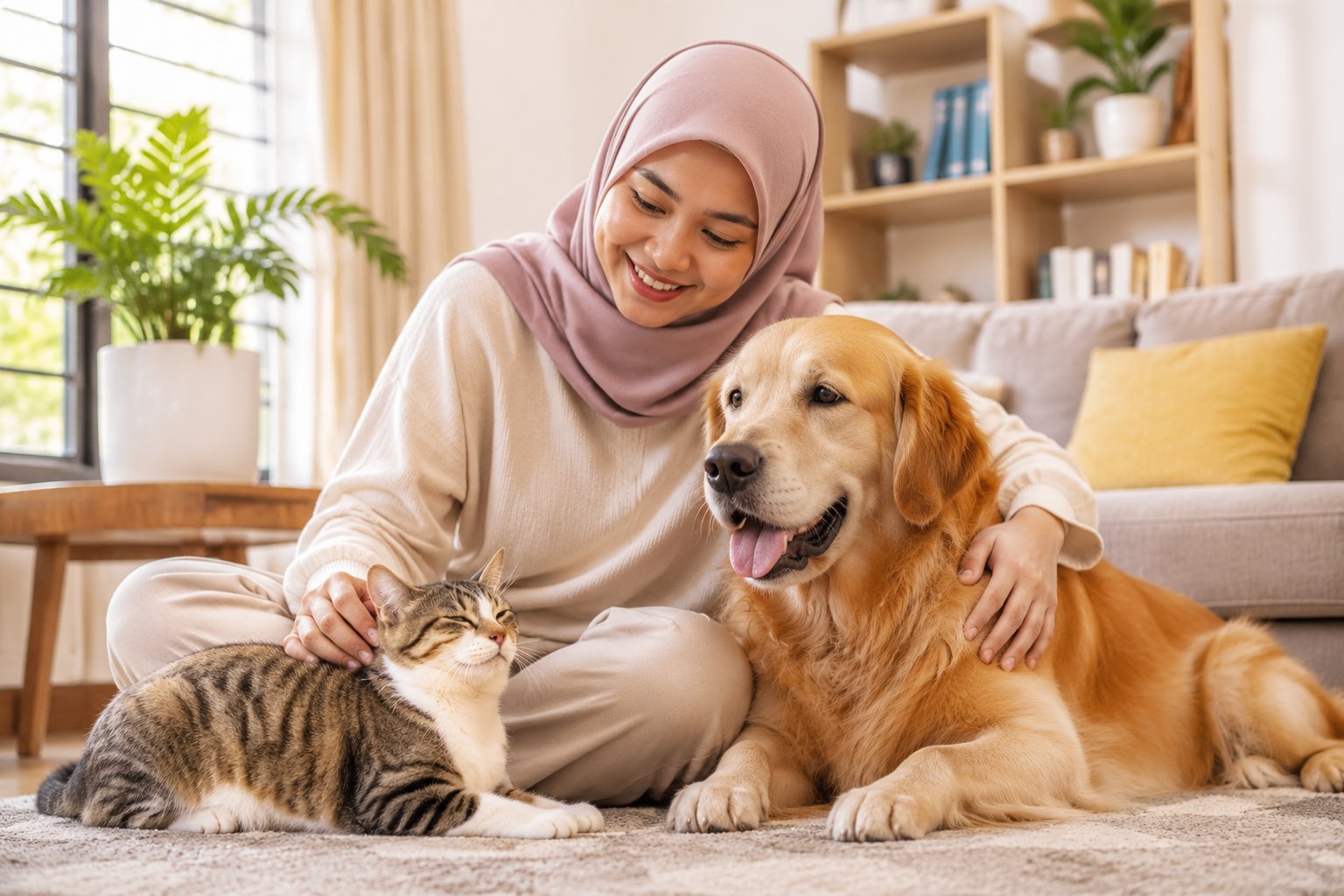
Chapter 7: Shedding Season — Grooming for a Tropical Coat
Grooming in Malaysia is not a seasonal project you can put away for most of the year. With warmth and humidity staying high, most cats and dogs shed steadily, with noticeable peaks when the weather turns hotter or muggier. That means brushing, nail care, ear checks and skin watching are ongoing habits rather than an annual event. The goal is simple: remove loose fur, keep skin healthy, catch problems early, and make grooming calm and manageable — especially in apartments where space is limited and fur ends up on everything.
Brushing: The Core Habit
Regular brushing is the backbone of coat care here. Aim for several times a week, and for double-coated breeds, treat brushing as a near-daily routine during peak shedding. Brushing removes loose fur before it lands on floors and furniture, reduces hairballs in cats (especially important for indoor cats and long-haired breeds), and gives you a hands-on check of skin and parasites. Run your fingers through the coat as you brush: part the fur and look at the skin for redness, flakes, scabs, fleas, ticks or unusual bumps. Pay attention to the armpits, belly, behind the ears and around the tail base, where problems often hide.
Choose tools that suit the coat — a slicker brush or fine comb for most cats and small dogs, an undercoat rake for double-coated dogs, a rubber curry for short coats. Brush in the direction of the coat, use gentle strokes, and keep sessions short (five to ten minutes) so the experience stays positive. In a flat, a lint roller and a quick daily sweep keep fur from building up, and brushing on a towel or mat makes cleanup easier. Never tug at mats; work them out slowly or ask a groomer or vet for help.
Bathing, Nails, Ears and Paws
Bathe only as often as your vet advises. Over-washing in humidity can strip natural oils and worsen skin issues, so resist the urge to bathe every time your pet looks dusty. When you do bathe, use a pet-appropriate shampoo, rinse thoroughly, and dry the coat properly — damp fur in a humid climate encourages fungal and bacterial problems, particularly in skin folds and thick coats.
Trim nails regularly, checking the quick (the pink part inside the nail) and taking small amounts at a time. If you are unsure, ask your vet or a groomer to show you once. Clean ears gently, especially for floppy-eared dogs, using a vet-recommended cleaner on a cotton pad — never push cotton buds deep into the ear canal. Check paw pads for cuts, cracks, thorns or irritation, and trim fur between the pads if it traps dirt or moisture. After walks in wet grass or rain, dry the paws and ears.
For double-coated breeds, never shave the coat down. The coat insulates against heat and protects the skin from sun and insects; shaving can disrupt regrowth and leave skin exposed. Instead, manage shedding with consistent brushing and good ventilation indoors.
Tools, Hygiene and Apartment Routines
Keep grooming tools clean and dry between uses to avoid spreading fungi. Wash brushes and combs in warm soapy water, rinse well, dry fully in the sun or a well-ventilated spot, and store them dry. Clean clippers and nail tools after each use. If your pet has a skin issue, use separate tools or disinfect thoroughly before using them on another animal.
Build grooming into your daily routine: a short brush in the evening, a paw and ear check after walks, a weekly nail check. In apartments, set up a grooming corner with a mat, a covered bin for fur, and a small caddy for tools. Keep the session calm and reward your pet with treats and praise. If your pet dislikes grooming, break it into shorter sessions and work on one area at a time.
Checklist
- Brush several times a week; daily for double-coated breeds during peaks.
- Check skin, ears, paws and tail base during each session.
- Bathe only as often as your vet advises; dry thoroughly.
- Trim nails regularly, taking small amounts.
- Clean ears gently with a vet-recommended cleaner.
- Check paw pads and dry paws after wet walks.
- Never shave a double-coated breed down.
- Clean and dry tools between uses; store dry.
- Watch for bald patches, persistent scratching or a dull coat.
Common mistakes
- Shaving a double coat to "cool" the pet — it removes insulation and protection.
- Over-bathing in humidity, which can worsen skin problems.
- Brushing only when fur is everywhere, letting mats form.
- Using dirty or damp tools, which can spread fungi.
- Pushing cotton buds deep into ears.
- Ignoring small skin changes until they become large ones.
When to ask a vet If you notice bald patches, persistent scratching, a dull coat despite good care, redness, scabs, unusual lumps, ear discharge or odour, or paw problems that do not settle, book a vet check. Underlying skin or nutritional issues are common in tropical climates, and early advice is easier than late treatment.