
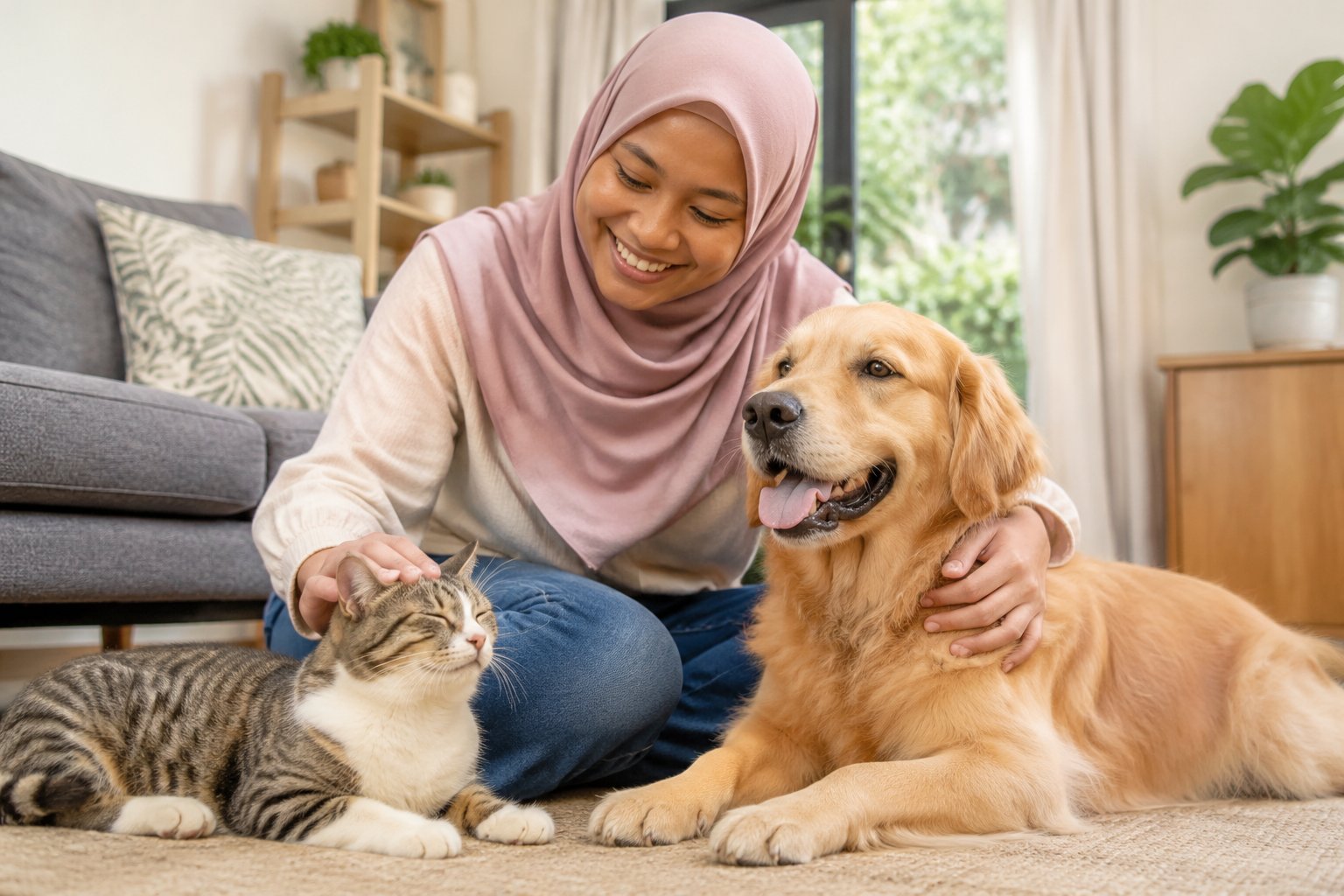
Chapter 8: Urinary Health in Cats
Urinary problems are common in Malaysian cats, particularly indoor males, and can become life-threatening if the urethra blocks. This chapter explains what to watch for, how to reduce risk in a tropical, often apartment-based household, and when to stop reading and call your vet instead.
Recognising the Signs Early
Signs include straining, frequent small urinations, crying in the litter box, and blood in urine. These require urgent veterinary care, not supplements. A cat that squats repeatedly and produces little or nothing is not "being fussy" — it may have a partial or complete urethral obstruction, which is an emergency.
Watch for these changes in your cat's litter box habits:
- Straining or squatting for a long time with little urine produced.
- Frequent small urinations — many trips to the box, small clumps.
- Crying or vocalising in the litter box, or restlessness before and after.
- Blood in urine — pink, red, or blood-tinged clumps or spots.
- Urinating outside the box, especially on cool tiles, in the bath, or on laundry.
- Excessive licking of the genital area.
- Reduced appetite, hiding, or low energy — these can accompany discomfort.
In a multi-cat apartment, you may not see the individual cat urinate. Check litter clumps and watch who visits the box. If you suspect a blockage — especially in a male cat — treat it as urgent and contact your vet immediately. Do not wait to see if it improves overnight.
Water Intake in a Hot Climate
For prevention, water intake is key: wet food, multiple water bowls, and fountains help in our hot climate. Cats evolved to get much of their water from food, so dry-food-only diets can leave them drinking less than ideal.
Practical ways to raise water intake:
- Feed wet food as part or all of the diet, and add a little extra water to it if your cat accepts it.
- Offer multiple water bowls in different rooms, away from food and litter boxes.
- Use a fountain if your cat prefers running water — many do.
- Refresh bowls daily and use wide, shallow bowls so whiskers don't touch the sides.
- Place bowls in quiet spots where the cat won't be startled, and keep them out of direct sun so water stays cooler.
- Consider the air-conditioning — cats in cooled apartments may drink less than expected, so keep water available in every room they use.
Stress, Enrichment, and Litter Box Hygiene
Stress is a real factor in apartment cats; provide enrichment and clean litter boxes. In Malaysian apartments, limited space, noise, and multi-cat households can all contribute.
- Scoop litter boxes at least daily and wash them regularly with unscented soap; avoid strong-smelling cleaners.
- Provide enough boxes — a common guide is one per cat plus one, placed in quiet, accessible spots.
- Keep boxes away from food and water and away from noisy appliances.
- Add enrichment: vertical space (shelves, cat trees), scratching posts, puzzle feeders, and scheduled play sessions.
- Keep routines predictable — feeding, play, and quiet time at similar hours.
- Reduce conflict in multi-cat homes by providing separate resources (food, water, beds, boxes).
Diet, Supplements, and What Not to Do
Some urinary diets and supplements aim to adjust urine pH or support bladder lining, but these should be chosen with veterinary guidance, as incorrect pH manipulation can worsen certain stone types. Never use human urinary products. If your cat has a history of urinary issues, ask your vet about appropriate long-term diet and monitoring rather than experimenting with supplements.
Checklist
- I know the emergency signs: straining, frequent small urinations, crying in the box, blood in urine.
- I check the litter box daily for clumps, blood, and changes.
- My cat eats wet food or has water added to meals.
- There are multiple water bowls, refreshed daily, plus a fountain if my cat prefers it.
- Litter boxes are scooped daily and cleaned regularly with unscented products.
- I have enough boxes (one per cat plus one) in quiet locations.
- My cat has enrichment: vertical space, scratching, play, and puzzle feeders.
- I do not give human urinary products.
- Any urinary diet or supplement is chosen with my vet.
- If my cat has a history of urinary issues, I have a long-term diet and monitoring plan from my vet.
Common Mistakes
- Waiting to "see if it passes" when a cat is straining — especially a male cat. This can become life-threatening quickly.
- Assuming a cat urinating outside the box is "naughty" — it is often a sign of discomfort or stress.
- Relying on dry food only and expecting the cat to drink enough on its own.
- Adding supplements or changing pH without veterinary advice, which can worsen certain stone types.
- Using human urinary products — never appropriate for cats.
- Too few or dirty litter boxes in a multi-cat apartment.
- Ignoring stress — enrichment and routine matter as much as diet.
- Missing subtle signs like hiding, reduced appetite, or excessive grooming.
When to Ask a Vet
Contact your vet promptly if you notice straining, frequent small urinations, crying in the litter box, blood in urine, urinating outside the box, or any combination of these. If a male cat is straining and producing little or no urine, seek urgent veterinary care immediately — do not wait. Also ask your vet if your cat has a history of urinary issues, if you are considering a urinary diet or supplement, if you are unsure whether a behaviour change is stress or discomfort, or if you need a long-term monitoring plan. Your vet can advise on diet, monitoring, and whether further investigation is needed — rather than experimenting with supplements at home.